


Sovereign Cloud vs Hyperscalers GCC: Smart Guide
Sovereign Cloud vs Hyperscalers GCC: Smart Guide

Sovereign Cloud vs Hyperscalers GCC: Smart Guide
Sovereign cloud vs hyperscalers GCC is mainly a choice between local control and global-scale innovation.
For Saudi, UAE, and Qatar organizations, sovereign cloud usually fits regulated data, government systems, financial workloads, and sensitive records. Hyperscalers often fit AI, analytics, mobile apps, SaaS platforms, e-commerce, and fast-scaling customer experiences.
In practice, many GCC enterprises do not need a one-cloud answer. They need a clear workload-by-workload decision.
Choosing the Right GCC Cloud Model
Cloud decisions in the GCC are no longer just technical choices. For CIOs, CTOs, founders, and board members in Riyadh, Dubai, Abu Dhabi, Doha, and Jeddah, cloud strategy affects compliance confidence, procurement risk, data sovereignty, and customer trust.
The right answer is rarely “sovereign cloud only” or “hyperscaler only.”
A Saudi fintech may need SAMA-aligned data controls. A Dubai e-commerce brand may need fast scaling for mobile apps and AI personalization. A Doha SME may prefer local cloud regions to support data residency and reduce latency.
For teams modernizing platforms, Mak It Solutions can support secure planning through custom software and web development services, mobile app development, and business intelligence solutions.
Sovereign Cloud vs Hyperscalers GCC Explained
Sovereign cloud focuses on local control: where data is stored, who operates the infrastructure, which jurisdiction applies, and how access is governed.
Hyperscalers such as AWS, Microsoft Azure, Google Cloud, Oracle Cloud, and others offer broad global services, mature automation, AI tooling, cybersecurity features, managed databases, and strong developer velocity.
What Sovereign Cloud Means in Saudi, UAE, and Qatar
In Saudi Arabia, sovereign cloud is closely tied to data localization, regulator comfort, and national cybersecurity expectations. For SAMA-regulated organizations, cloud use should include risk assessment, due diligence, contractual controls, and approval before using cloud services. SAMA’s cloud computing guidance also says, in principle, cloud services should be located in Saudi Arabia unless explicit approval is obtained for services outside the Kingdom.
In the UAE, sovereign cloud often means UAE-resident infrastructure, government-grade hosting, and alignment with TDRA, CBUAE, ADGM, or DIFC expectations. TDRA also provides FedNet and cloud services for government entities.
In Qatar, sovereign cloud thinking connects with CRA’s Cloud Policy Framework and Qatar’s cloud-first direction for public-sector cloud services.
What Hyperscalers Offer GCC Enterprises
Hyperscalers bring scale, security tooling, managed services, AI platforms, DevOps maturity, and global availability.
AWS lists Middle East regions in Bahrain and the UAE, with Saudi Arabia still listed as an announced future AWS Region. Microsoft lists Azure regions including UAE North, UAE Central, and Qatar Central. Google Cloud lists Middle East locations including Doha and Dammam. Oracle lists UAE Central in Abu Dhabi and UAE East in Dubai.
Why This Decision Matters
The wrong cloud model can slow procurement, trigger audit concerns, increase exit risk, or expose sensitive data to foreign jurisdiction questions.
The right model gives leaders a defensible architecture: sensitive systems stay controlled, while approved innovation workloads still move quickly.
Decision Matrix for GCC Cloud Buyers
To choose between sovereign cloud vs hyperscalers GCC, start by classifying workloads. Focus on sensitivity, regulator exposure, latency needs, integration complexity, and growth potential.
| Workload Type | Best-Fit Cloud Model | Why It Fits |
|---|---|---|
| Core banking records | Sovereign or locally approved cloud | High regulatory and audit sensitivity |
| Government citizen services | Sovereign or hybrid cloud | Strong data control and recovery needs |
| AI pilots and analytics | Hyperscaler or hybrid cloud | Faster access to advanced tools |
| Mobile and e-commerce apps | Hyperscaler or hybrid cloud | Better scalability and release speed |
| Legal archives and sensitive backups | Sovereign cloud | Stronger residency and access control |
| Cross-border SaaS platforms | Hyperscaler | Global reach and integration options |
When to Choose Sovereign Cloud
Choose sovereign cloud for core banking records, national identity data, citizen services, health records, payment infrastructure, legal archives, and high-risk regulated workloads.
A Riyadh fintech following SAMA expectations should prioritize local hosting, data segregation, audit rights, encryption key control, access logs, and exit planning.
When to Choose AWS, Azure, Google Cloud, Oracle, or Other Hyperscalers
Choose hyperscalers for AI pilots, analytics, customer apps, retail platforms, logistics dashboards, SaaS products, and global integrations.
A Dubai e-commerce brand scaling an Arabic-English app may combine hyperscaler infrastructure with React Native development services and e-commerce development for faster releases.
When Hybrid or Multi-Cloud Makes More Sense
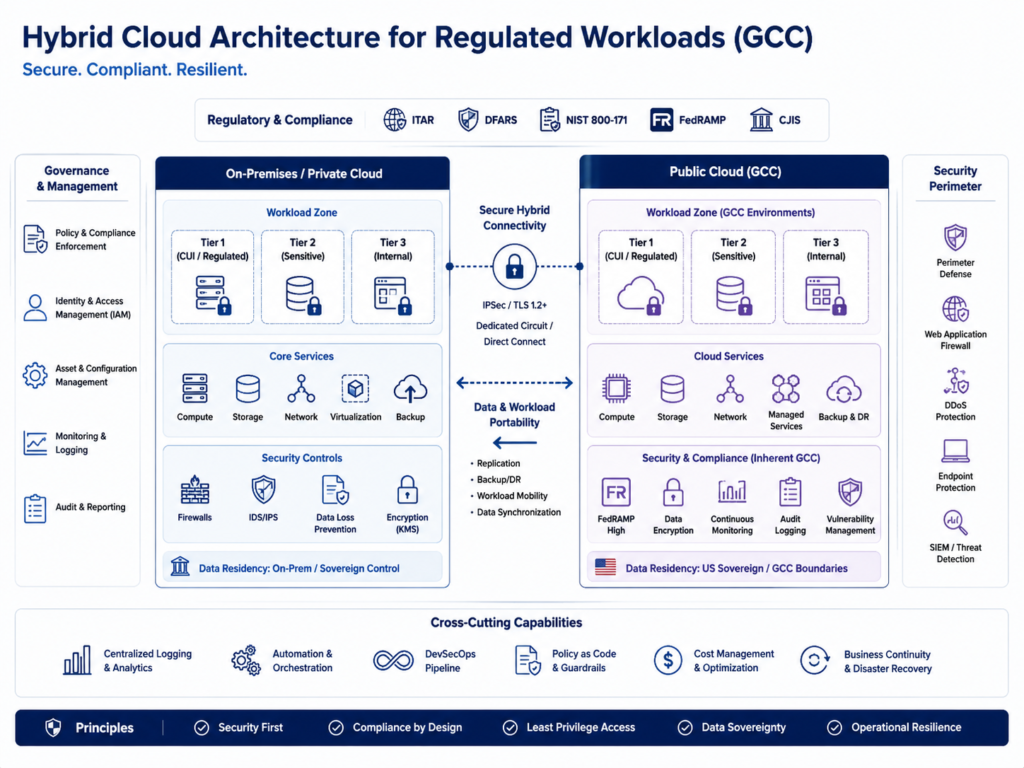
Hybrid cloud works when regulated systems must remain local, but customer engagement, reporting, or AI workloads need hyperscaler services.
Multi-cloud can reduce lock-in, but it also adds governance complexity. Teams need stronger identity management, monitoring, cost control, vendor oversight, and incident response. Mak It Solutions’ incident response guidance for GCC teams is a useful starting point.
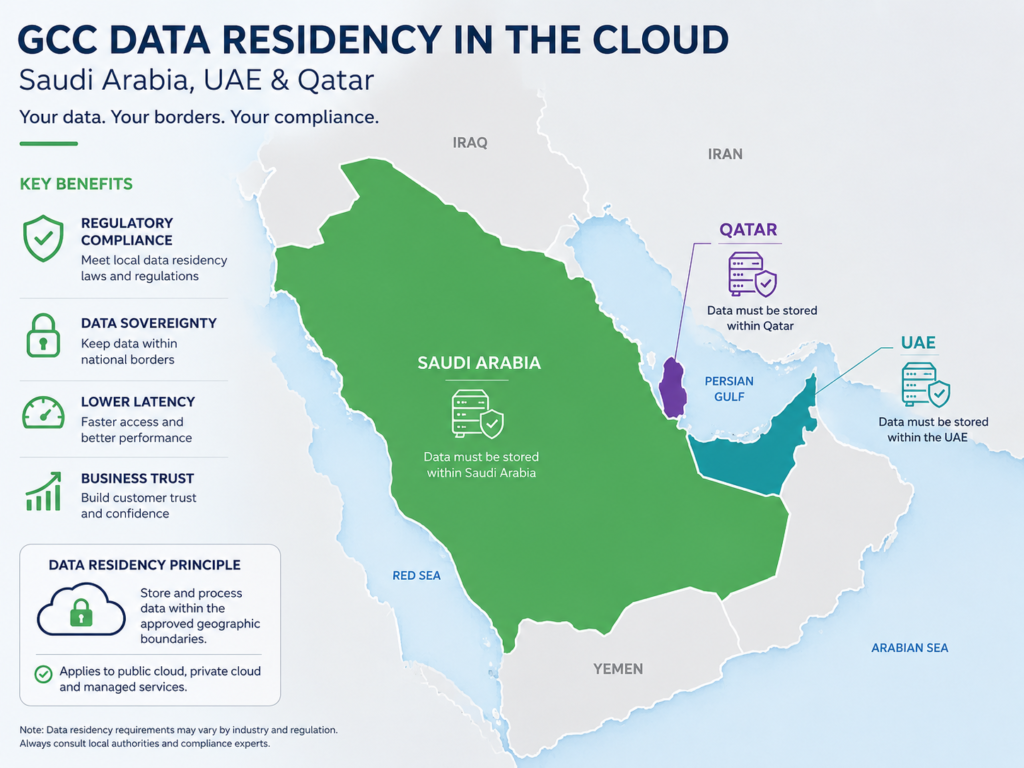
Data Residency and Compliance in Saudi, UAE, and Qatar
Saudi Arabia.
Saudi companies should map data classes before choosing a platform. That includes customer identity data, payment records, operational logs, backups, API data, and AI training data.
For SAMA-regulated organizations, cloud compliance is a board-level risk topic, not only an IT migration task. The architecture should show where data is stored, who can access it, how incidents are handled, and how the company can exit the provider if needed.
For broader security planning, see Mak It Solutions’ zero trust roadmap for GCC SMEs.
UAE.
UAE firms should separate public web workloads from regulated financial, government, or sensitive personal data.
TDRA’s Cloud Service Provider initiative aims to gather details about cloud providers operating in or engaging with the UAE market, while improving transparency, trust, and the cloud regulatory framework.
For banks and fintechs, CBUAE, ADGM, DIFC, legal, security, and procurement teams should review the model before regulated workloads go live.
Qatar.
Qatar organizations should align cloud decisions with CRA’s Cloud Policy Framework, QCB risk expectations, and available Doha-based cloud options.
Microsoft lists Qatar Central, and Google Cloud lists Doha as a Middle East cloud location. For government and regulated workloads, local or Qatar-approved models are usually the safer starting point.
Best Workloads for Sovereign Cloud vs Hyperscalers
Banking, Fintech, and Regulated Financial Data
Keep payment records, credit decisions, core banking systems, fraud systems, and regulator-facing audit logs on sovereign or locally approved cloud environments.
Hyperscalers can still support sandbox analytics, customer engagement, internal dashboards, and non-sensitive AI models, but only with proper data controls.
Government, Healthcare, and Citizen Services
Government portals, identity systems, health records, and citizen databases need strong digital sovereignty, encryption, access logs, monitoring, and local recovery plans.
In the UAE, TDRA’s role in federal digital transformation makes cloud governance especially important for public-sector projects.
Retail, Logistics, AI, and Customer-Facing Applications
Retail, logistics, and e-commerce teams often benefit from hyperscaler speed.
A Doha logistics SME, for example, may use local cloud regions for data residency while using analytics to improve delivery routes and customer updates. Teams should also protect AI workflows from leakage using AI data leakage prevention practices.
GCC Cloud Provider Selection Factors
Local Region Availability in Riyadh, Dubai, Abu Dhabi, and Doha
Check the actual cloud region, not only the sales promise.
A provider may offer an edge location, partner hosting, marketplace access, or future region announcement. Those are not always the same as a full production cloud region for regulated workloads.
Arabic UX, Local Support, and Procurement Readiness
A cloud platform is only useful if teams can operate it confidently.
For GCC organizations, Arabic UX, local invoicing, procurement documentation, regional support, compliance packs, and Arabic-English reporting can make adoption much smoother.
Exit Risk, Foreign Jurisdiction Exposure, and Contract Control
Review the contract as carefully as the architecture.
Look at.
Data portability
Termination rights
Audit rights
Backup ownership
Encryption key control
Subcontractor access
Cross-border support access
Incident notification timelines
For regulated workloads, the contract can be as important as the cloud design.
Cost, Timeline, and Migration Strategy
Cost Differences Between Sovereign Cloud, Hyperscalers, and Hybrid Cloud
Sovereign cloud can cost more because of specialized controls, local assurance, and tighter operating requirements.
Hyperscalers may look cheaper at first, but costs can rise with data transfer, managed services, observability, storage growth, and AI usage.
Hybrid cloud adds integration cost, but it often gives GCC enterprises the best balance between compliance and speed.
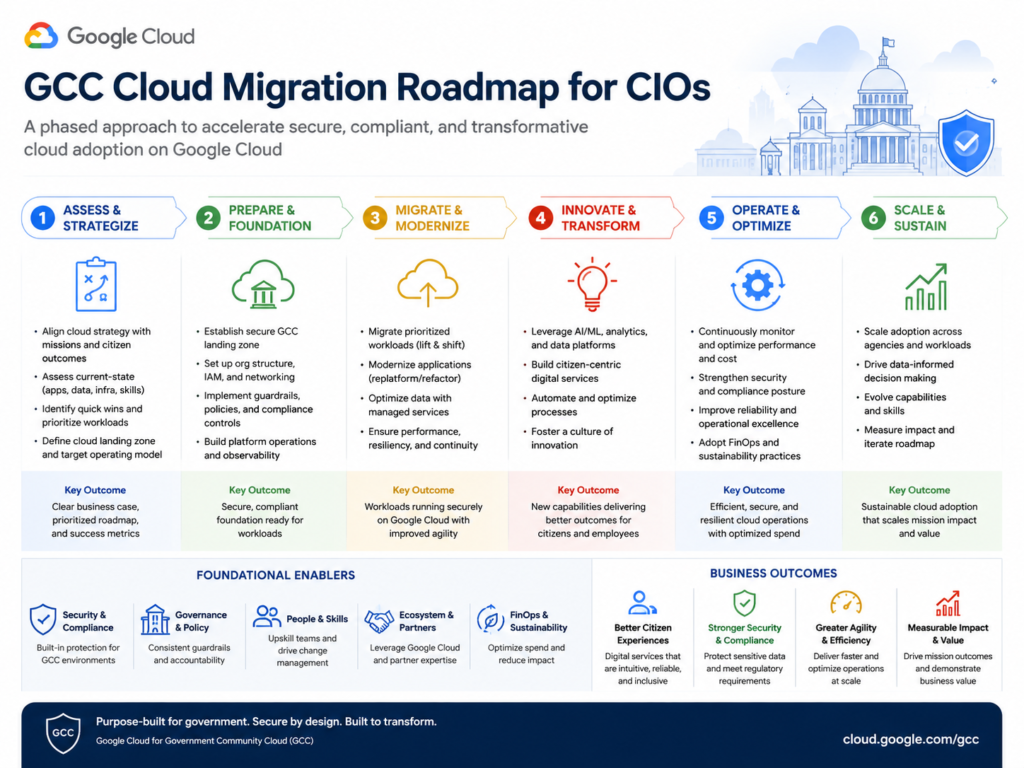
Migration Timeline for Regulated GCC Workloads
Regulated migrations should move in phases.
Assessment
Data classification
Architecture design
Regulator or compliance review
Pilot workload
Migration
Security testing
Audit readiness
Do not move sensitive workloads before identity, logging, encryption, backup, and recovery controls are validated.
How to Build a GCC Cloud Decision Matrix
Use a simple scoring model before selecting a provider.
Classify workloads by sensitivity and regulator exposure.
Map data residency, backup, and cross-border transfer needs.
Compare sovereign, hyperscaler, and hybrid options.
Score cost, latency, internal skills, compliance, and exit risk.
Pilot one low-risk workload before migrating critical systems.
This gives business, security, and compliance teams a shared decision framework.
Final Recommendation for GCC Enterprises
Best Choice for Saudi Companies
For Saudi companies, sovereign or Saudi-hosted cloud should lead for financial, government, and regulated workloads.
Hyperscalers are still useful for innovation, AI, analytics, customer apps, and platform modernization when the controls are approved and the data model is clear.
Best Choice for UAE Companies
For UAE companies, hybrid cloud is often the strongest model.
Keep regulated banking, government, or sensitive personal data under UAE-ready controls. Use hyperscalers for scale, marketing platforms, mobile commerce, analytics, and AI where the risk is lower.
Best Choice for Qatar Companies
For Qatar companies, Doha-based cloud options are attractive for government, QCB-regulated, and data residency workloads.
Hyperscalers can support analytics, app modernization, and cloud-first transformation when governance is clear.
Concluding Remarks
Choosing between sovereign cloud vs hyperscalers GCC should feel structured, not stressful.
The best cloud model depends on the workload. Keep sensitive and regulated data in controlled environments. Use hyperscalers where speed, AI, analytics, and customer scale matter. For many Saudi, UAE, and Qatar organizations, a well-governed hybrid model is the practical middle ground.
Mak It Solutions can help you assess workloads, design a GCC cloud decision matrix, plan secure migration, and build cloud-ready platforms. Contact Mak It Solutions to request a custom Saudi, UAE, or Qatar cloud strategy.
FAQs
Q : Is sovereign cloud required for Saudi financial services companies?
A : Not always for every workload, but Saudi financial services companies must treat sovereign cloud as a serious default option for regulated data. SAMA’s cloud computing guidance includes due diligence, risk assessment, contractual controls, approval, and local cloud location expectations unless explicit approval is obtained.
Q : Can UAE fintech companies use public hyperscalers for regulated workloads?
A : Yes, but not casually. UAE fintech companies should review CBUAE, ADGM, DIFC, and TDRA expectations around data residency, outsourcing, risk management, and operational resilience before using public hyperscalers for regulated workloads.
Q : What cloud model is best for Qatar government data?
A : For Qatar government data, sovereign, local, or Qatar-approved cloud models are usually the safest starting point. A hybrid model can also work when sensitive records stay controlled and approved innovation workloads use hyperscaler services.
Q : Do GCC companies need local cloud regions for data residency?
A : Often, yes. Local cloud regions make data residency easier to demonstrate, but they do not guarantee compliance by themselves. Companies still need encryption, access controls, logging, vendor due diligence, incident response, and contract protections.
Q : Is hybrid cloud better than sovereign cloud for MENA enterprises?
A : Hybrid cloud is often better for MENA enterprises that need both compliance and speed. It lets regulated workloads stay controlled while approved AI, analytics, customer apps, and reporting workloads use hyperscale services.