


WhatsApp Business API Chatbots for GCC Enterprises
WhatsApp Business API Chatbots for GCC Enterprises
WhatsApp Business API Chatbots for GCC Enterprises
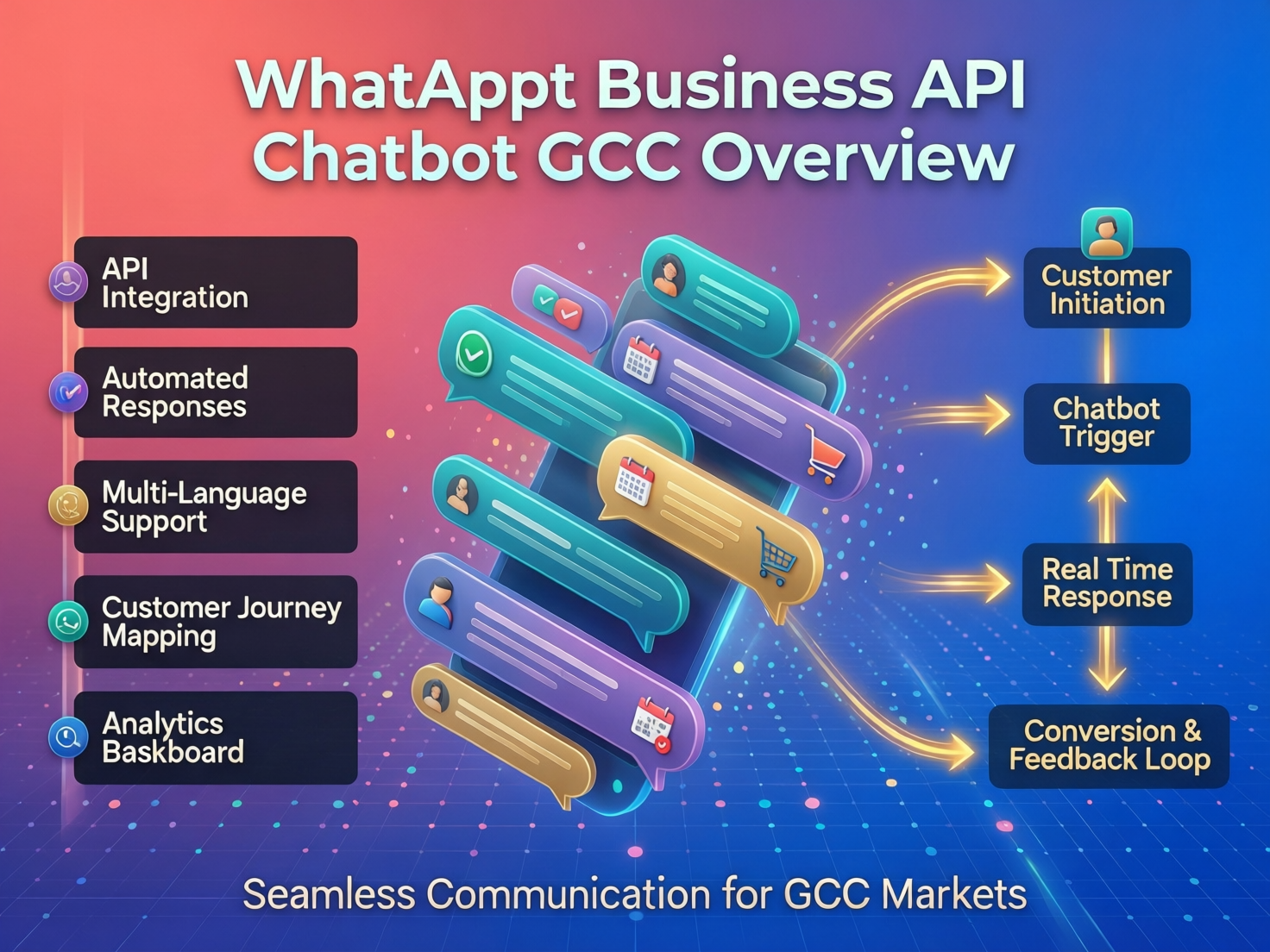
A WhatsApp Business API chatbot in the GCC is a secure, programmable WhatsApp channel that connects to your CRM, core systems, and AI engine so customers can get support and services in Arabic and English 24/7. For Saudi, UAE and Qatar enterprises, it can automate 70–80% of routine queries while respecting PDPL-style data laws and sector rules from bodies like SAMA and TDRA when designed with the right controls, hosting and consent flows.
Introduction
In KSA, UAE and Qatar, WhatsApp is often the default customer channel whether it’s a shopper in Riyadh checking an order, a Dubai resident renewing a service, or a student in Doha asking about fees. Yet many GCC enterprises still rely on IVR menus, overloaded call centers and slow email queues, even though customers clearly prefer a secure conversational experience on WhatsApp.
In simple terms, a WhatsApp Business API chatbot is a secure, programmable version of WhatsApp that enterprises use to build conversational AI agents connected to their own data and systems. For GCC organizations, the goal is to automate most repetitive questions in Arabic and English while staying compliant with Saudi PDPL, UAE PDPL and sector regulators such as SAMA, TDRA and the Qatar Central Bank (QCB)
What Is a WhatsApp Business API Chatbot in the GCC?
WhatsApp Business vs. WhatsApp Business API vs. AI Chatbots
A basic WhatsApp Business app is designed for small teams replying from a phone, with no deep system integration. The WhatsApp Business API, by contrast, is a server-side interface that lets larger brands in cities like Jeddah or Dubai plug WhatsApp directly into CRMs, ticketing tools and AI engines.
On top of that API, you deploy a conversational AI on WhatsApp the chatbot logic and gen-AI powered virtual agent for WhatsApp that understands intents, supports Arabic dialects and triggers workflows such as OTP verification, order lookups or complaint logging.
How a WhatsApp Business API Chatbot Works End-to-End
At a high level, the flow is.
The customer sends a message to your verified WhatsApp Business number.
The WhatsApp Business API forwards it to your platform, where an AI engine interprets the intent in Arabic/English.
The bot calls your internal systems (CRM, core banking, order management) via secure APIs.
It replies with personalized information, or escalates to a human agent with full context.
For non-technical GCC leaders, think of it as a secure customer messaging channel that plugs into existing systems rather than a “bot on someone’s phone.”
Why GCC Enterprises Need API-Level Automation, Not Just a Simple Bot
Simple FAQ bots can answer opening hours, but GCC banks, governments and logistics firms need authenticated self-service: account info, shipment status, IDs, documents. API-level automation lets you verify identity, log every action and control which systems the bot can touch critical for Saudi banks under SAMA’s Cyber Security Framework and cloud rules.
Why Saudi, UAE and Qatar Brands Are Moving from IVR to WhatsApp AI
Customer Expectations in Riyadh, Dubai and Doha
Customers in Riyadh and Dubai are used to on-demand apps and same-day delivery; they expect support to be just as instant. For many, opening WhatsApp and chatting in Arabic feels more natural than navigating IVR trees or filling web forms, especially for mobile-first audiences. In Doha, young customers increasingly expect bilingual (Arabic/English) customer support automation in Arabic-friendly flows, not just English-only chatbots on websites.
From Call Centers to Conversational AI on WhatsApp
Moving to conversational AI on WhatsApp can lower inbound call volumes, shorten average handling time and extend support hours without hiring dozens more agents. Instead of answering the same “Where is my order?” question hundreds of times, agents focus on exceptions while the WhatsApp AI agent handles routine queries and proactive notifications.
Real-World Impact.
A Riyadh fintech startup uses a Saudi-compliant WhatsApp AI chatbot for banks to share balances, card status and branch info, while keeping sensitive actions behind strong authentication under SAMA controls.
A Dubai e-commerce brand runs a WhatsApp AI agent for order tracking, cash-on-delivery confirmations and returns, integrated with its mobile app and web stack.
A Doha logistics SME uses WhatsApp to send live driver location, delivery windows and proof-of-delivery photos, reducing missed deliveries and call center congestion.
Security, Compliance & Data Residency for WhatsApp AI Chatbots
Core Security Basics.
WhatsApp already provides end-to-end encryption between user and platform; your responsibility starts behind the API. GCC-grade deployments enforce strong authentication (OTP, SSO, links to IAM), strict role-based access control for agents, and audit logs of every bot and human action to satisfy internal and regulator audits.

Mapping GCC Regulations.
For Saudi financial services, SAMA’s Cyber Security Framework and cloud guidance expect formal risk assessments, strong access controls and data protection when using cloud-based APIs, including messaging platforms. NDMO and Cloud First policies emphasize keeping government and many sensitive datasets inside the Kingdom’s borders.
In the UAE, TDRA regulates the telecom and messaging environment and, with new telemarketing rules and the UAE PDPL, puts stricter boundaries around unsolicited outreach and privacy. (U.AE) Free zones such as ADGM and DIFC often layer additional expectations around data handling and AI-based decisioning for regulated entities. In Qatar, QCB and the telecom regulator CRA play similar roles for financial and messaging oversight.
Note
This article is for general information only and does not constitute legal, regulatory or financial advice. Always consult your internal compliance and legal teams before going live.
Data Residency in Riyadh, Dubai and Doha Clouds
To meet residency expectations, many enterprises choose in-region cloud: AWS Bahrain, Azure UAE Central and GCP Doha regions are common landing zones for WhatsApp integration platforms and AI engines, as long as they align with Saudi and Qatari localization guidance. (mcit.gov.sa) The safest pattern is: WhatsApp traffic terminates into your GCC-region infrastructure, sensitive data never leaves KSA/UAE/Qatar, and only anonymized signals go to global AI services if needed.
Automation Use Cases for WhatsApp AI Chatbots in GCC CX Teams
Deflecting 70–80% of Repetitive Queries in Arabic and English
With the right training data and Arabic NLP, a WhatsApp AI support bot can automatically answer FAQs, resend links, check status, and route priority cases, often deflecting 70–80% of repetitive contacts. This frees your CX teams in Riyadh, Abu Dhabi and Doha to focus on complex, high-value interactions.
Industry Playbooks.
Banks & fintechs
A Saudi-compliant WhatsApp AI chatbot for banks can share mini-statements, card status, branch hours and basic dispute flows while keeping transactions gated behind secure channels.
Government
GCC government services use WhatsApp virtual agents for appointment booking, document checklists and status updates in line with national digital strategies.
Retail & e-commerce
Promotions, order updates, returns, warranties all handled through mobile-first WhatsApp experiences.
Logistics & healthcare
Delivery tracking, driver coordination, prescription reminders and clinic pre-screening can all be automated via conversational flows.
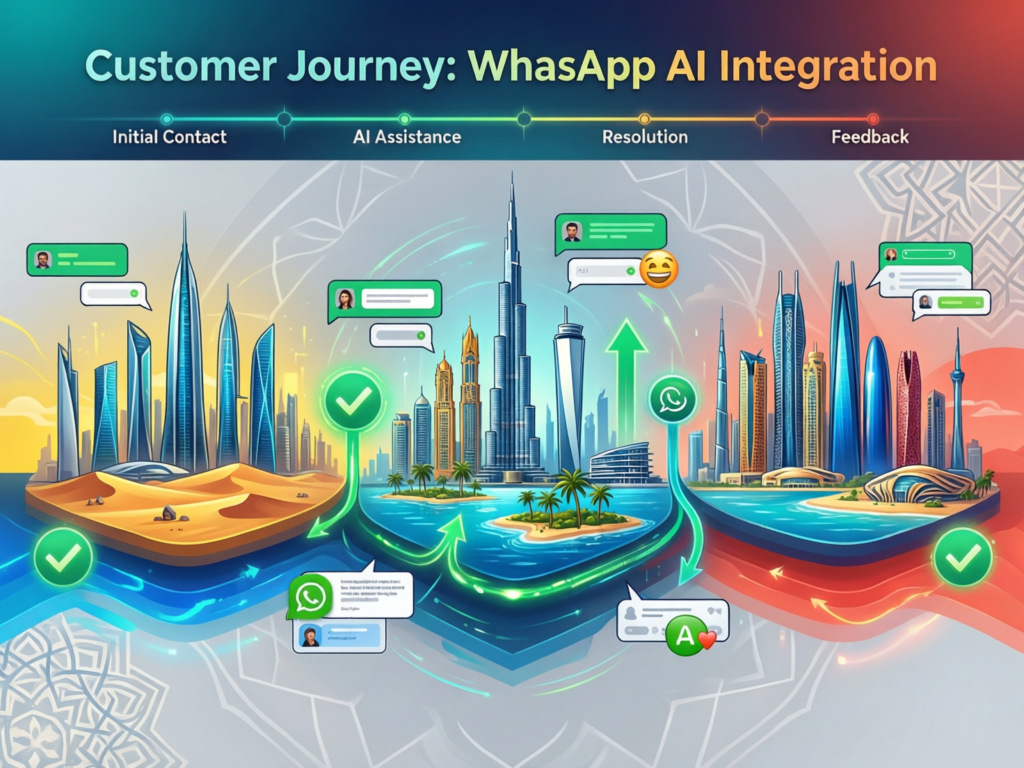
Customer Journey Examples in KSA, UAE and Qatar
Imagine a customer in Saudi Arabia discovering a new bank via Instagram, tapping a WhatsApp link, asking questions in Saudi Arabic, opening an account and later managing cards all within WhatsApp, with only a few handovers to human agents. In the United Arab Emirates, a WhatsApp AI chatbot might support the entire journey from marketing broadcasts (to opted-in lists) through onboarding, support and retention for a Dubai e-commerce brand. In Qatar, a telco can use a WhatsApp AI chatbot solution for GCC enterprises to handle SIM activations, balance checks and roaming packs.
Architecture & Deployment.
WhatsApp Business API, AI Engine, CRM/Ticketing, Analytics
A typical stack combines.
WhatsApp Business API connection via a BSP/CPaaS
AI/NLP engine tuned for Arabic and English
CRM/ticketing integration (for a 360° customer view)
Analytics & BI layer for measuring containment, CSAT and revenue (often backed by tools similar to those used in Mak It Solutions’s own Business Intelligence Services) (Mak it Solutions)
Hosting Models: SaaS, VPC, On-Prem for Regulated GCC Industries
SaaS
Fastest to launch; best for less-regulated sectors like general retail.
VPC in AWS Bahrain or Azure UAE Central
Better for banks and governments needing strict residency and isolation.
On-prem / government cloud
When policies require full in-country control.
Your architecture choice should be co-signed by security, compliance and IT, not CX alone.
Arabic NLP and Dialect Support for Saudi, Emirati and Qatari Customers
A GCC-ready WhatsApp AI chatbot must handle Modern Standard Arabic plus Saudi, Emirati and Qatari dialects in the same flow, with graceful fallbacks to human agents. Training on real, anonymized transcripts and continuously tuning intent models is essential to avoid misunderstandings in sensitive contexts like healthcare or finance.

Choosing a WhatsApp Business API Chatbot Provider in KSA, UAE and Qatar
Must-Have Capabilities for GCC.
Look for providers who:
Support in-region hosting (KSA/UAE/Qatar)
Have documented controls aligned to SAMA/NDMO, TDRA and QCB expectations
Offer strong Arabic NLP and bi-directional WhatsApp Business API integration with CRM
Questions to Ask Vendors About Security, Logging and Audits
Ask about.
How all admin and agent actions are logged and retained
How they segregate your data from other tenants
Whether they have passed any external audits or regulator reviews for similar deployments
Local vs Global Platforms: When a GCC-Native Partner Matters
Global tools can be powerful, but GCC-native partners often understand PDPL nuances, residency constraints and Arabic UX better. A regional provider backed by an engineering partner like Mak It Solutions, with experience in mobile app development and CX stacks can help orchestrate the full journey rather than just selling a chatbot license. (Mak it Solutions)
Governance, Consent and “Halal” WhatsApp Automation
Opt-In, Opt-Out and Consent Under Saudi, UAE and Qatar Rules
Under Saudi PDPL and UAE PDPL, consent and clear purpose are non-negotiable. In the UAE, TDRA-backed rules on telemarketing and “Do Not Contact” registries mean you must respect opt-outs and avoid unsolicited promotions, even on WhatsApp.In Qatar, aligning WhatsApp outreach with CRA and QCB expectations is equally important for regulated sectors.
Anti-Spam, Content Controls and “Halal” Use Cases for Automation
“Halal” here means automation that is respectful, transparent and value-adding—service alerts, transactional updates, support flows rather than aggressive spam. Build content guidelines for your WhatsApp AI agent: what it can say, how often it can send marketing broadcasts, and which topics always require a human.
Internal Governance: Who Owns the WhatsApp AI Agent in Your Organization?
Define clear ownership between CX, marketing, IT and compliance. Many GCC enterprises create a small “WhatsApp AI council” to approve new flows, monitor quality and review monthly dashboards across KSA, UAE and Qatar operations.
Getting Started Checklist and Next Steps for GCC Enterprises
Readiness Checklist for CX, IT and Compliance Teams
Before you write a single bot flow, align on.
Priority journeys (e.g. support, onboarding, collections)
Regulatory constraints by country and sector
Data residency and hosting options (KSA, UAE, Qatar clouds)
Integration scope with CRM, core systems and analytics
90-Day Roadmap from Pilot to Production in KSA/UAE/Qatar
A practical 90-day plan might be.
Days 1–30
Design high-impact flows, choose a hosting model, and pick a provider.
Days 31–60
Implement, integrate and test in a limited KSA/UAE/Qatar pilot.
Days 61–90
Tune intents, train agents, and roll out broadly with clear success KPIs.
How Our Team Supports Secure WhatsApp AI Projects in the GCC
Mak It Solutions can help you design the architecture, integrate the WhatsApp Business API with your existing web and mobile stack, and build governance playbooks tailored to Saudi, UAE and Qatar regulations. Our team combines CX strategy, secure software engineering and analytics so your WhatsApp AI agent becomes a trusted, compliant front door not another risky channel. To learn more, explore our Services overview and Mobile App Development Services.
If you’re exploring WhatsApp Business API chatbots for your GCC organization and want to stay firmly on the right side of SAMA, TDRA and QCB rules, you don’t have to figure it out alone. Reach out to Mak It Solutions to discuss your current CX stack, regulatory constraints and roadmap. Together we can design a secure, Arabic-first WhatsApp AI agent that fits your Saudi, UAE and Qatar operations—and scales with your growth.( Click Here’s )
FAQs
Q : Is a WhatsApp Business API chatbot allowed for banking customers under SAMA and QCB rules?
A : Yes, many Saudi and Qatari banks already use WhatsApp as a service channel, but they treat it like any other regulated interface. Under SAMA’s Cyber Security Framework, banks must assess cloud and API risks, protect customer data, and ensure strong authentication before exposing account information or actions. QCB takes a similar approach: WhatsApp can be a front door, but core transactions must follow existing risk, KYC and data protection controls. A Saudi or Qatari bank should document its architecture, log all interactions and get internal compliance approval before going live.
Q : How can UAE companies make WhatsApp AI marketing compliant with TDRA and UAE PDPL?
A : UAE companies need clear consent, clean lists and disciplined frequency. TDRA-backed rules around telemarketing and “Do Not Contact” registries make it risky to send unsolicited WhatsApp marketing, so campaigns should be limited to customers who opted in through transparent, documented flows. Under UAE PDPL, brands must explain what they’ll send, why, and how long data will be stored. Add easy opt-out keywords, honor unsubscribes automatically, and avoid sensitive topics unless you have explicit permission and sector approval (for example, in health or finance).
Q : What is the best hosting option for a WhatsApp AI chatbot if our data must stay in Saudi or UAE?
A : If your policies or contracts require strict data localization, a VPC or private cloud setup in Saudi or UAE is often the best balance between control and agility. For Saudi workloads, many organizations choose local providers or regional hyperscale regions while aligning with Cloud First and SAMA/NDMO expectations that sensitive government and financial data remain in-Kingdom. In the UAE, hosting in Azure UAE Central or similar regions, with clear residency guarantees and strong encryption, usually satisfies internal and client requirements—provided your architecture avoids sending personal data outside the country without a legal basis.
Q : Can a WhatsApp AI agent understand Saudi, Emirati and Qatari Arabic dialects in the same flow?
A : Yes, but it requires deliberate design, training data and continuous tuning. Off-the-shelf Arabic models often underperform on dialect-heavy slang, so GCC enterprises should feed anonymized transcripts from Saudi, Emirati and Qatari customers into their NLP pipeline. Over time, intent models learn which phrasing is common in Riyadh vs Dubai vs Doha. Pair this with clear fallbacks to human agents, A/B testing and ongoing quality review. As part of Saudi Vision 2030 and wider national AI strategies, there’s increasing focus on Arabic-first AI, making this investment both strategic and future-proof.
Q : How do GCC enterprises handle opt-out and spam complaints for automated WhatsApp campaigns?
A : Most GCC organizations implement standard keywords like “STOP” or “UNSUBSCRIBE” that instantly halt further marketing across KSA, UAE and Qatar segments. These rules are then synced to CRM profiles and honored across channels, not just WhatsApp. Under TDRA rules in the UAE and emerging enforcement of PDPL-style laws across the region, ignoring opt-outs or over-messaging can lead to complaints and, potentially, fines or reputational damage. A practical approach is to centralize consent, log every complaint, and review spam metrics monthly as part of your CX and compliance governance.