
IT Services GCC: A Smart Guide for Growing Businesses
IT Services GCC: A Smart Guide for Growing Businesses
IT Services GCC: A Smart Guide for Growing Businesses
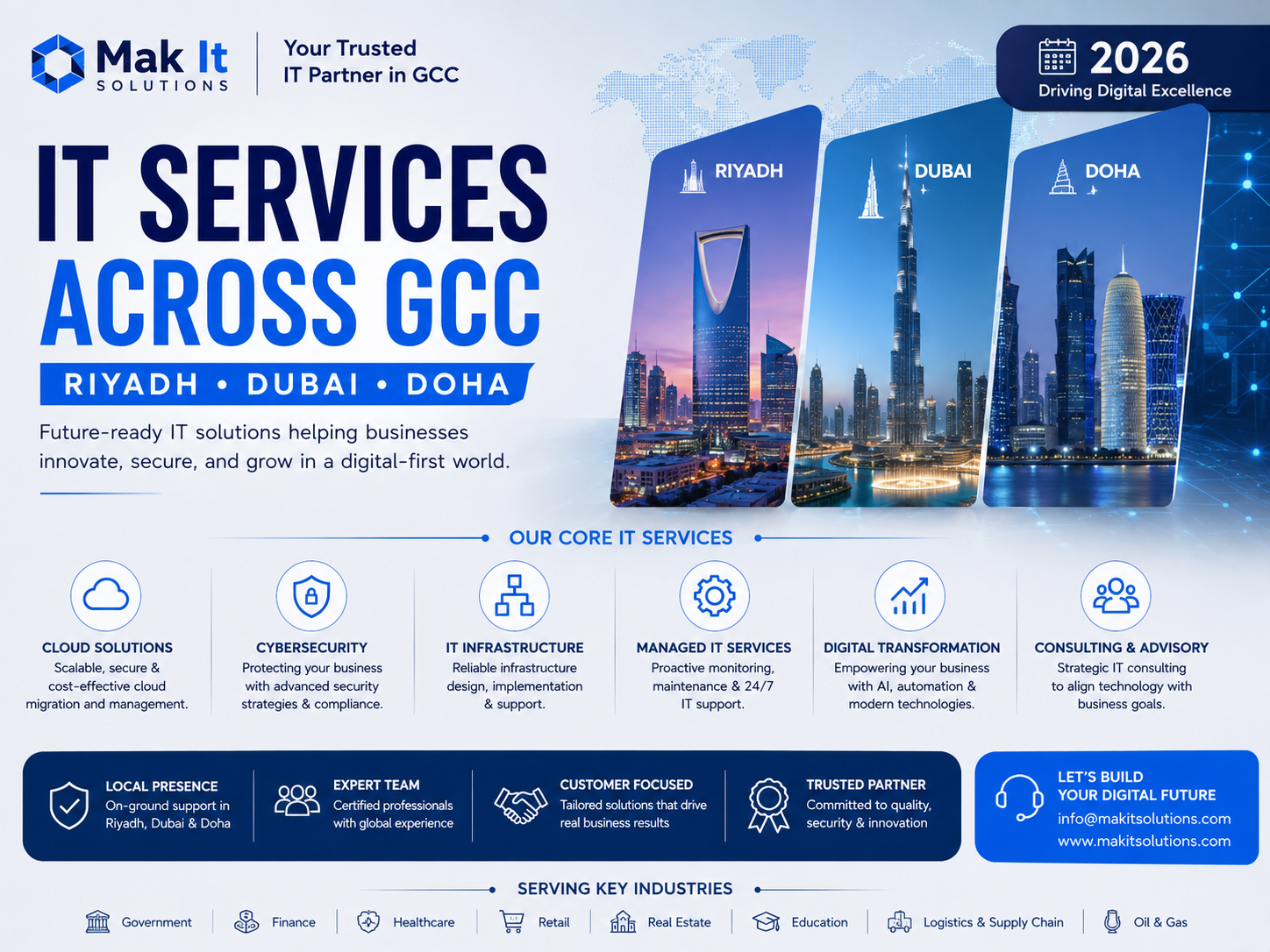
Businesses across Riyadh, Dubai and Doha rely on cloud platforms, Microsoft 365, cybersecurity tools, mobile systems and connected offices every day. That makes choosing the right IT services GCC partner less about fixing broken computers and more about protecting uptime, data and business continuity.
The best GCC IT service providers combine proactive support, cybersecurity, cloud expertise, clear SLAs and dependable onsite assistance. They should also understand the regulatory, data-residency and bilingual operating requirements that can differ across Saudi Arabia, the UAE and Qatar.
Companies planning wider digital projects can also explore Mak It Solutions’ technology and development services.
What Are IT Services in the GCC?
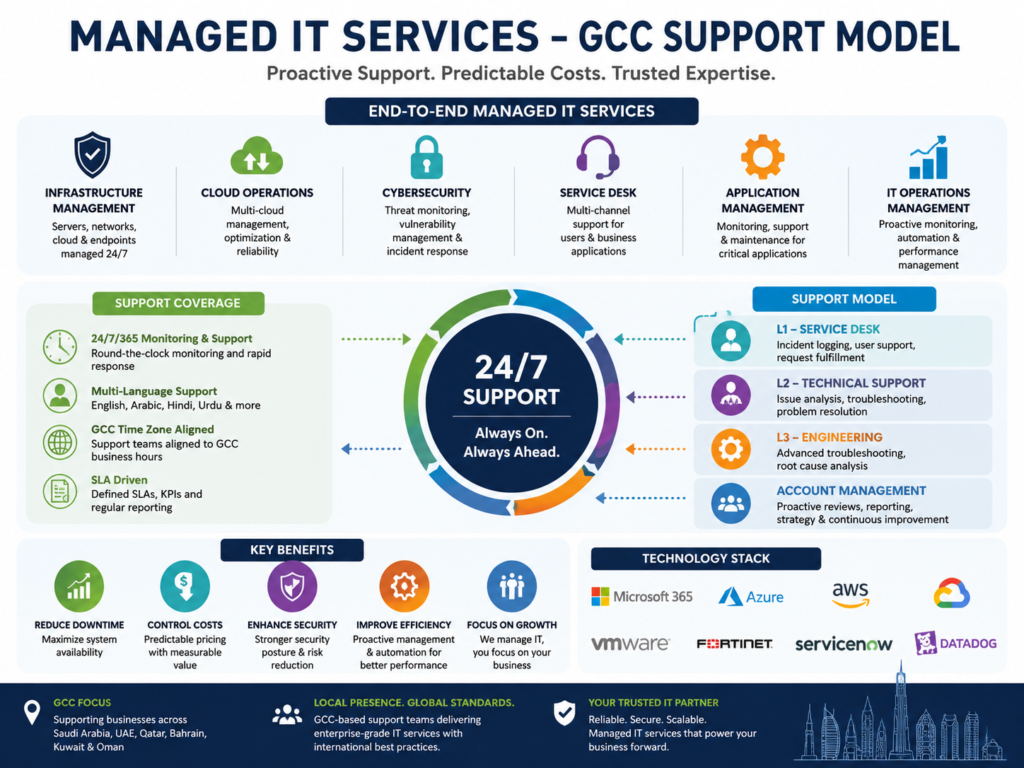
IT services cover the systems, support and security businesses need to keep their technology environment reliable. Depending on the company, that may include day-to-day user support, infrastructure management, cloud administration, cybersecurity, backups and disaster recovery.
Core Managed IT Services GCC Businesses Use
A managed IT agreement may include.
Remote helpdesk support
Endpoint monitoring and management
Network administration
Server maintenance
Microsoft 365 administration
Backup management
Cybersecurity monitoring
Patch and update management
Disaster recovery planning
The key difference is the operating model. Instead of waiting for something to fail, managed support focuses on monitoring, prevention and ongoing maintenance.
Businesses combining infrastructure with customer-facing platforms may also need web development support or business intelligence services as their technology environment becomes more complex.
Managed IT Services vs Traditional Break-Fix Support
Break-fix support is reactive: something stops working, and a technician is called.
An IT AMC typically provides contracted maintenance and support within an agreed scope. Fully managed services can go further by adding continuous monitoring, security oversight, reporting, preventive maintenance and SLA-based escalation.
For a growing company, that predictability can make both IT operations and budgeting easier to manage.
Why Local GCC Delivery Matters
Remote support solves many technical problems, but some incidents still require someone onsite.
A regional IT provider should be able to explain.
Where its engineers are located
Which cities receive onsite coverage
How urgent incidents are escalated
What support hours are included
Whether technicians are directly employed or subcontracted
How Arabic and English support is handled
That local context matters when technical teams need to coordinate with employees, management, vendors and regulators across GCC markets.
IT Services GCC Requirements in Riyadh, Dubai and Doha
The fundamentals of IT support remain similar across the Gulf, but compliance, onsite coverage and cloud requirements can vary by market.
IT Services Riyadh and Saudi Business Requirements
A Riyadh company may need Microsoft 365 administration, network management, endpoint security, backups, local engineering support and documented cybersecurity controls.
Saudi organizations should also identify which NCA, NDMO, DGA or sector-specific requirements apply to them. The Saudi National Cybersecurity Authority publishes its Essential Cybersecurity Controls and implementation guidance, while SAMA maintains an in-force Cyber Security Framework for organizations within its applicable financial-sector scope.
The practical point is simple: do not assume every Saudi company has identical compliance obligations. Your provider should be able to support the requirements that actually apply to your organization.
IT Services Dubai and the UAE Managed Support Market
Dubai businesses often compare traditional IT AMC contracts with broader managed-service agreements, especially when they need both onsite assistance and cloud or cybersecurity expertise.
A fast-growing e-commerce company, for example, might combine managed infrastructure with Mak It Solutions‘ e-commerce development services and mobile app development expertise.
UAE businesses should also identify whether federal, sector-specific, DIFC or ADGM requirements affect their systems and data. Cloud location can be part of that discussion. Microsoft currently lists UAE Central in Abu Dhabi and UAE North in Dubai.
Managed IT Services Doha and Qatar
Businesses in Doha may place particular value on predictable annual support, reliable infrastructure, secure cloud deployment and clear onsite escalation.
Microsoft currently lists Qatar Central in Doha, giving businesses another regional option when designing suitable cloud architectures.
Financial institutions should separately assess applicable QCB requirements instead of assuming those obligations apply to every business operating in Qatar.
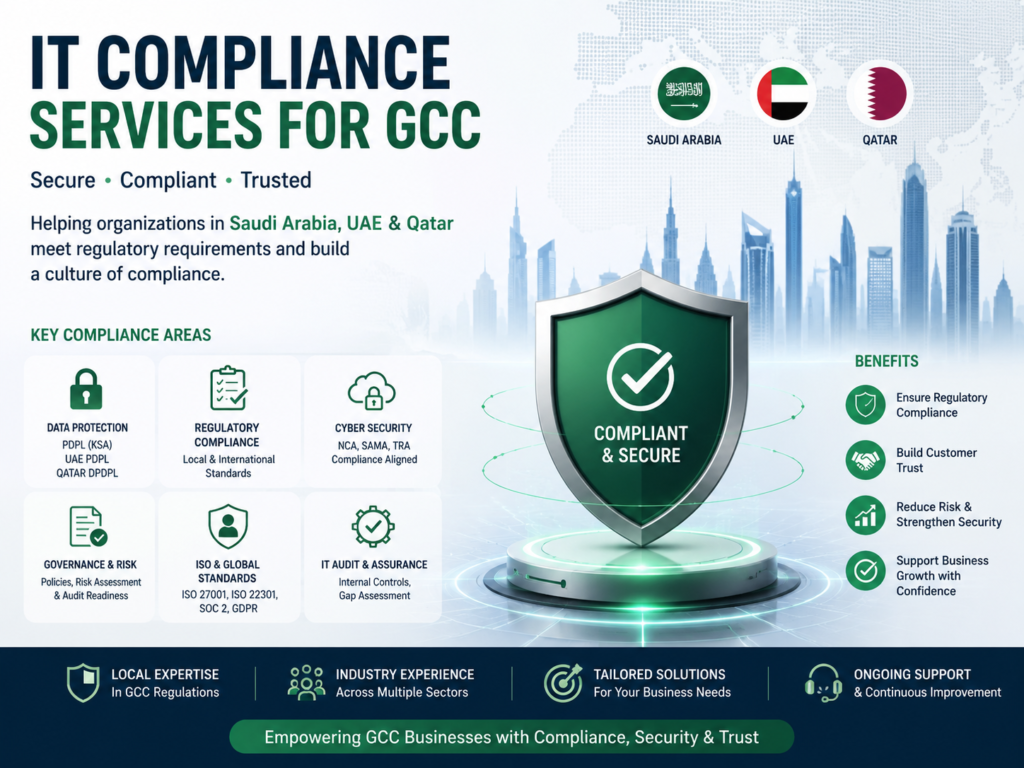
GCC IT Compliance, Cybersecurity and Data Residency
Compliance should be considered before hosting, backup and managed-security decisions are finalized—not after systems have already been deployed.
Saudi IT Compliance.
Saudi organizations should first map their regulatory obligations and workload classifications.
For cybersecurity, NCA publishes national controls and related guidance. SAMA’s Cyber Security Framework applies within its defined financial-sector scope and remains an important consideration for regulated organizations.
A provider does not need to act as your legal adviser, but it should understand how its technical decisions affect compliance, security controls, access management, backups and cloud architecture.
UAE IT Governance.
UAE companies should determine whether federal rules, sector requirements or financial-free-zone regulations apply to their operations.
For DIFC and ADGM businesses in particular, data governance and vendor due diligence should be considered before sensitive workloads are moved or outsourced.
Regional hosting can support a data-residency strategy, but simply choosing a UAE cloud region does not automatically make a workload compliant.
Qatar IT Compliance and QCB Considerations
Qatar businesses should assess the cybersecurity, data-protection and sector requirements relevant to their activities.
QCB requirements are particularly important for organizations within the financial sector. Other businesses may fall under different national or sector-specific obligations.
In practice, cloud location should be chosen according to workload classification, resilience requirements and applicable rules not simply because a local or regional data center is available.
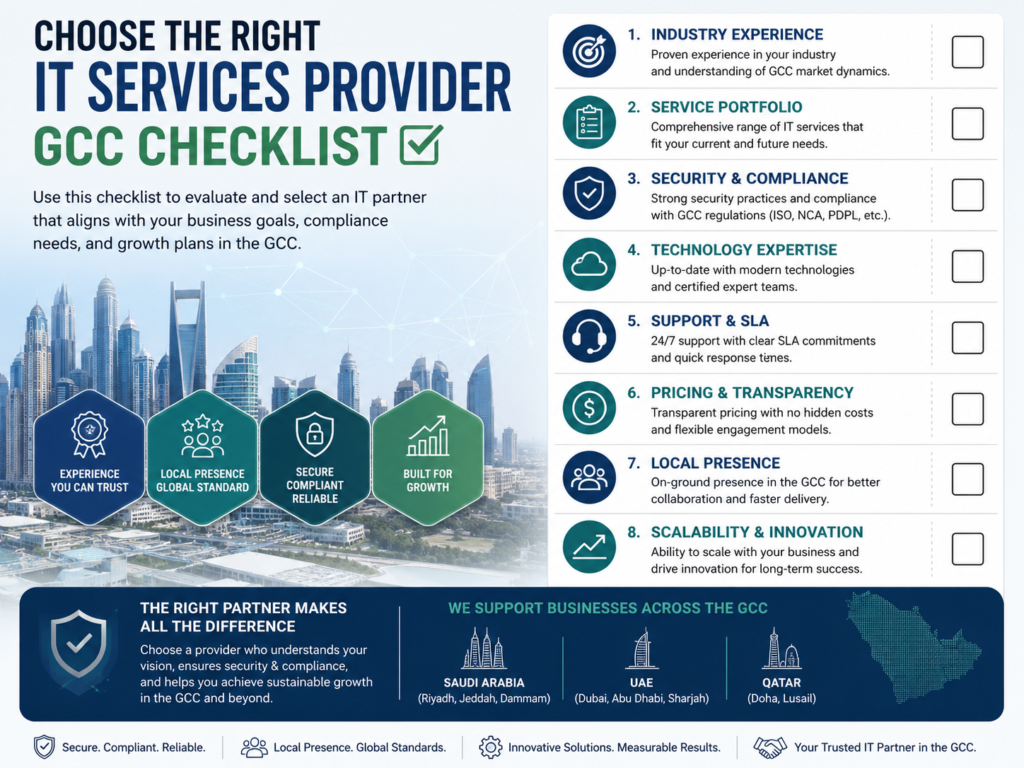
How to Choose an IT Services Provider in the GCC
A good proposal can look impressive on paper. The real test is whether the provider can deliver consistently after the contract is signed.
Check Local Presence, Engineers and Onsite Coverage
Ask exactly where engineers are based and which locations they can reach.
If a provider claims broad GCC coverage, request clear details about.
Riyadh, Jeddah, Dubai, Abu Dhabi and Doha coverage
Onsite response procedures
Emergency escalation
Subcontractor use
After-hours support
Spare hardware or replacement arrangements
Specific answers are more useful than a vague promise of regional support.
Compare SLAs, Helpdesk and Escalation Procedures
A strong SLA should make responsibilities measurable.
Review.
Acknowledgement times Response targets
Incident severity definitions
Escalation ownership
After-hours coverage
Onsite response conditions
Reporting procedures
Resolution and communication expectations
The right IT services GCC agreement should make it clear what happens when a critical system fails—not leave that discussion until an outage occurs.
Review Certifications, Partnerships and Case Studies
Vendor certifications and technology partnerships can indicate useful expertise, especially for platforms from Microsoft, Cisco, Fortinet, Sophos, Dell or HPE.
But logos alone are not enough.
Ask for evidence that the provider has delivered similar work, understands environments of comparable complexity and can explain how its team will manage your systems in practice.
Which GCC Industries Benefit Most from Managed IT Services?
Managed IT can help almost any organization that depends on reliable technology, but some sectors have particularly demanding requirements.
Fintech and Financial Services
Fintech and financial organizations depend heavily on identity controls, endpoint protection, monitoring, business continuity and secure cloud infrastructure.
A Riyadh financial-services business within SAMA’s applicable scope should align its cybersecurity approach with relevant SAMA requirements as well as applicable NCA controls rather than relying on generic international templates alone.
Government and Enterprise Organizations
Government and large enterprise environments often require stronger governance, documented access controls, backup testing, auditability and disaster-recovery planning.
Saudi Vision 2030 and wider GCC digital-transformation programme have also increased the importance of resilient digital infrastructure as more services and business processes move online.
Retail, Logistics and Multi-Branch Businesses
A retailer with locations in Jeddah and Riyadh, or a logistics company operating across Dubai and Abu Dhabi, needs reliable connectivity, endpoint management and remote troubleshooting.
Multi-branch companies should also consider centralized device management, secure access and consistent support procedures across locations.
Businesses expanding customer-facing commerce platforms can evaluate WooCommerce development services alongside their infrastructure plans.
What Do Managed IT Services Cost in the GCC?
There is no meaningful single price for managed IT support because the scope can vary significantly between companies.
Main Factors Affecting IT Support Pricing
Common pricing factors include.
Number of users
Number and type of devices
Office locations
Servers and network infrastructure
Cloud platforms
Cybersecurity requirements
Support hours
Onsite visits
Backup and disaster-recovery scope
SLA requirements
Geography affects delivery, but the complexity and risk profile of the environment often matter more.
IT AMC vs Fully Managed IT Services
An IT AMC Dubai contract may focus on scheduled maintenance, troubleshooting and defined support entitlement.
A fully managed agreement is usually broader and may include proactive monitoring, patch management, cybersecurity oversight, recurring reporting and ongoing infrastructure management.
That difference should be reflected clearly in the proposal rather than hidden behind similar-sounding service labels.
Why the Cheapest IT Provider Can Cost More Long Term
Low monthly pricing is not always low total cost.
Slow escalation, weak backups, incomplete documentation or unclear ownership can become expensive when a serious outage occurs.
Instead of comparing quotations only by price, compare.
Scope
Response commitments
Security coverage
Onsite capability
Backup responsibilities
Documentation
Escalation procedures
The objective is not simply to buy technical support. It is to reduce operational risk.
Best Practices for Outsourcing IT Across the GCC
A structured transition makes outsourcing safer and easier for both the business and the new provider.
Document Your Current IT Environment
Start by creating an inventory of.
Users
Endpoints
Networks
Servers
Microsoft 365 accounts
Cloud resources
Backups
Administrative accounts
Business-critical applications
A Dubai e-commerce business should also document integrations between hosting, payment systems, storefronts and internal infrastructure before transferring responsibility.
Define SLA, Security and Data-Residency Requirements
Specify your requirements before selecting a provider.
That should include response targets, administrator access rules, backup retention, recovery expectations and approved data locations.
For example, suitable regional cloud options may include Azure Qatar Central for Qatar-focused requirements, Azure UAE regions for UAE deployments, or AWS Middle East infrastructure where appropriate. Microsoft and AWS currently document regional infrastructure in Qatar, the UAE and Bahrain.
Regional infrastructure should still be paired with proper resilience planning. Service disruptions affecting AWS infrastructure in Bahrain and the UAE during March 2026 reinforced why critical workloads need tested backups, disaster-recovery procedures and an architecture that considers regional failure scenarios.
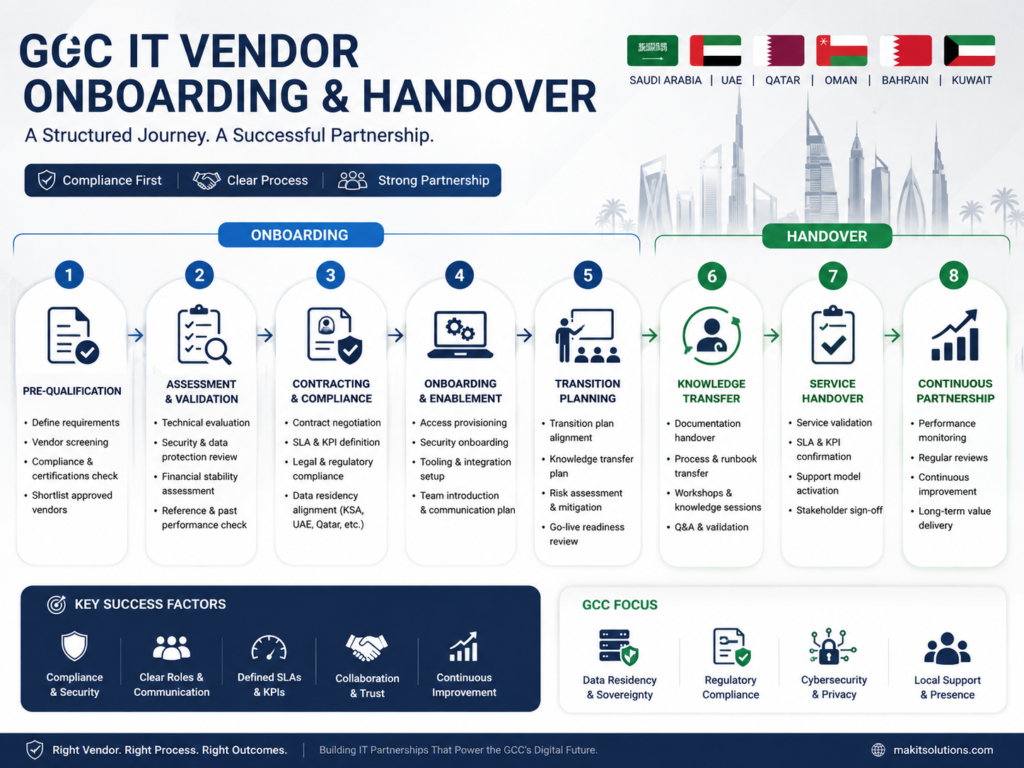
Plan Vendor Onboarding and IT Handover
A practical handover can follow these steps.
Complete asset and account discovery.
Transfer existing technical documentation.
Securely transition administrator access.
Perform a cybersecurity review.
Deploy agreed monitoring tools.
Validate backups and recovery procedures.
Activate SLAs and escalation contacts.
Communicate support procedures to users.
Review early service performance and address gaps.
A structured onboarding process reduces blind spots and gives both sides clear ownership from the beginning.
Final Thoughts
The best IT services GCC provider is not necessarily the company with the longest service list or the lowest quotation.
Look for a partner that understands your infrastructure, security risks, compliance environment and expansion plans—and can explain exactly how support will work when something goes wrong.
Before signing, confirm onsite coverage, SLA commitments, cybersecurity responsibilities, cloud architecture, backup ownership and escalation procedures.
Contact Mak It Solutions to discuss your technology requirements, explore available digital services or request a tailored IT strategy for a Saudi Arabia, UAE or Qatar operation.
FAQs
Q : Do Saudi businesses need an NCA-aware IT services provider?
A : Organizations subject to Saudi cybersecurity requirements can benefit from a provider familiar with NCA controls. The exact obligations depend on the organization’s sector, systems and regulatory status, so businesses should first establish which requirements apply to them.
Q : What is usually included in an IT AMC contract in Dubai?
A : An IT AMC in Dubai commonly includes agreed maintenance, troubleshooting, remote assistance and scheduled onsite support. Scope varies by provider, so check exclusions, response times, onsite-call limits, after-hours support and project charges before signing.
Q : Can a managed IT company provide onsite support in Doha?
A : Yes. Managed providers can combine remote monitoring and helpdesk support with onsite engineering in Doha. The contract should clearly state service areas, escalation procedures, response expectations and whether onsite engineers are employees or subcontractors.
Q : Should a GCC IT provider offer Arabic and English support?
A : For many businesses, bilingual Arabic and English support makes communication easier between technical teams, local employees and management. It is especially useful for organizations operating across Saudi Arabia, the UAE and Qatar, but it should complement not replace strong technical expertise and clear SLAs.
Mak It Solutions also publishes an Arabic prompt library for GCC IT and sales teams.
Q : What data-residency questions should UAE businesses ask an IT provider?
A : Ask where production data, backups, logs and disaster-recovery copies are stored. You should also know who can access that data, whether information is replicated across borders and which federal, sector, DIFC or ADGM requirements apply to your organization.
Regional hosting can be useful, but it does not automatically guarantee compliance.
[…] GCC Buyers Need More Than Generic B2B Case […]