


Autonomous Systems Governance: The Essential Guide
Autonomous Systems Governance: The Essential Guide
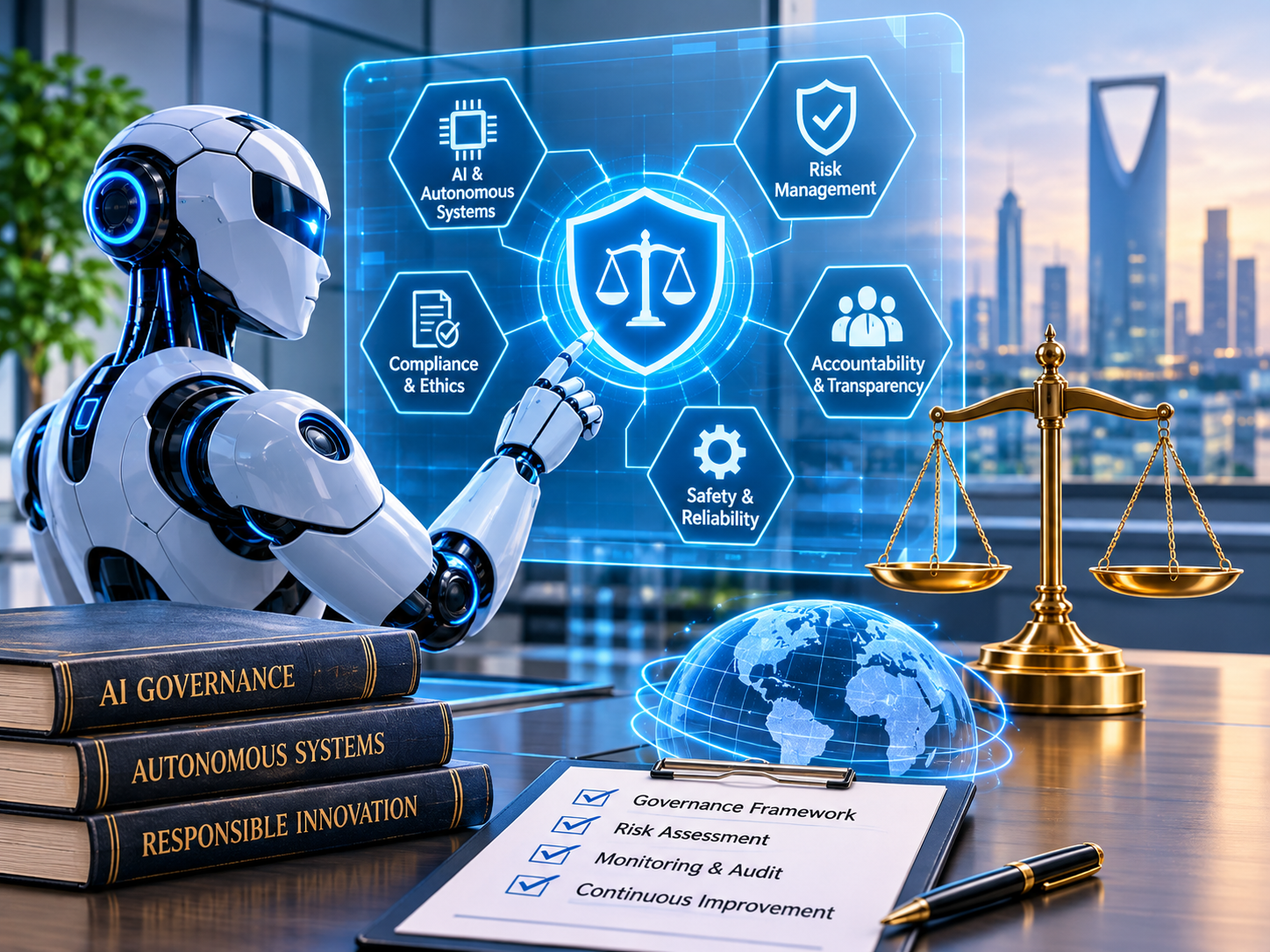
Autonomous Systems Governance: The Essential Guide
Autonomous robots are changing how factories, warehouses, and logistics operations work. But when a machine makes independent decisions, an important question arises: who is responsible if something goes wrong?
Autonomous systems governance provides the policies, accountability structures, safety controls, cybersecurity measures, and human oversight needed to manage intelligent machines responsibly. It helps enterprises reduce operational risks, meet applicable regulations, and maintain control throughout the machine’s lifecycle.
The need for effective governance is growing. According to the International Federation of Robotics (IFR), approximately 542,000 industrial robots were installed worldwide in 2024.
For CIOs, CISOs, operations executives, and compliance leaders, managing autonomous machines is no longer purely an engineering concern. It is an enterprise-wide responsibility.
Unlike software-only AI agents, physical machines can cause workplace injuries, damage equipment, disrupt production, and introduce cybersecurity vulnerabilities.
A reliable governance approach must therefore connect physical safety, technology security, regulatory compliance, and operational performance.
What Is Autonomous Systems Governance?
Autonomous systems governance is the framework of policies, responsibilities, technical safeguards, and monitoring processes that ensures autonomous machines operate within approved safety and risk boundaries.
Its purpose is straightforward: allow businesses to benefit from automation while maintaining accountability, security, and human control.
Governance for Physical Autonomous Machines
Physical autonomous systems include industrial robotic arms, collaborative robots, autonomous mobile robots (AMRs), and autonomous vehicles.
These machines operate in environments where their decisions can affect workers, equipment, and business operations.
Consider an AMR transporting inventory through a busy warehouse. It must follow approved routes, respect speed restrictions, detect obstacles, and respond safely to unexpected conditions.
Governance defines these operational boundaries, identifies who manages them, and establishes procedures for handling exceptions.
Why Enterprise Accountability Matters
Autonomous machines involve more than software and robotics engineering. Their operation affects several business functions.
Effective governance requires cooperation among.
CIOs and CISOs: Responsible for technology oversight and cybersecurity.
Operations leaders: Accountable for production and operational continuity.
Safety officers: Responsible for evaluating workplace hazards.
Compliance teams: Oversee applicable regulations and documentation.
Vendors and integrators: Fulfill contractual and technical responsibilities.
Clear ownership prevents critical decisions from falling between departments.
When an incident occurs, teams should already know who has authority to stop operations, investigate the failure, and approve a safe restart.
How to Build an Autonomous Systems Governance Framework
A practical autonomous systems governance framework starts with understanding which machines are operating, what risks they create, and who is accountable for managing them.
Enterprises should establish formal governance requirements before deploying autonomous equipment.
Establish Ownership and Decision-Making Authority
Begin with a centralized inventory of autonomous machines across all facilities.
The inventory should document machine locations, operating environments, software versions, suppliers, and assigned owners.
Each system should have a clearly identified business owner and technical owner.
A RACI matrix can establish who is responsible, accountable, consulted, and informed about deployment approvals, software changes, risk acceptance, and incident response.
Businesses can integrate these processes with their existing technology development and integration services.
Classify Risks Before Deployment
Not every autonomous machine introduces the same level of risk.
A robotic arm operating inside a secured manufacturing cell presents different hazards from an AMR moving through a warehouse shared with pedestrians.
Risk assessments should consider.
Physical harm: Potential injuries or equipment damage.
Operating environment: Complexity and unpredictability of surrounding conditions.
Autonomy level: The degree of independent decision-making.
Business criticality: Consequences of downtime or malfunction.
The NIST AI Risk Management Framework provides a useful structure through its Govern, Map, Measure, and Manage functions.
However, this voluntary framework does not replace machinery-specific safety standards or binding legal requirements.
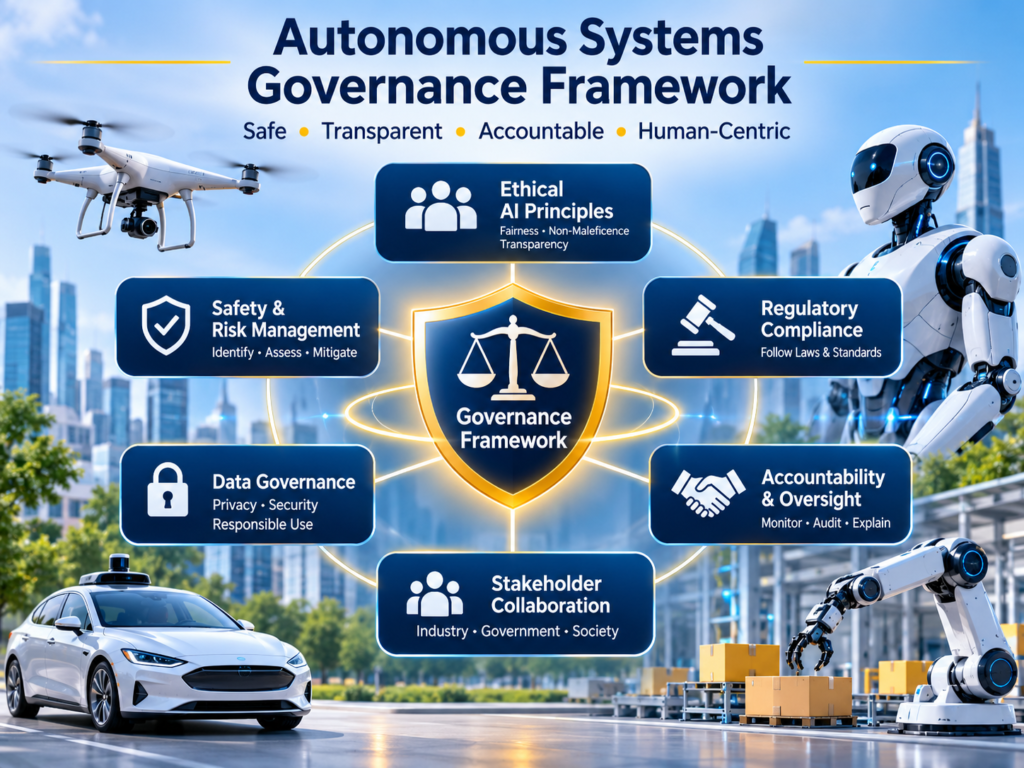
Define Human Oversight and Intervention Rules
Even highly autonomous machines need clearly defined human oversight.
Organizations should establish who can supervise, pause, stop, restart, or override each machine.
These procedures must include emergency-stop arrangements, escalation thresholds, safe-state behavior, and incident documentation.
Most importantly, human intervention must work in practice. A written policy offers limited protection if an operator cannot safely stop the equipment when needed.
Managing Autonomous Machine Safety and Cybersecurity
Physical safety and cybersecurity are closely connected in autonomous operations.
A compromised machine can become a physical hazard, while an unexpected mechanical failure can disrupt connected production systems.
Enterprises should manage these risks through coordinated technical and organizational controls.
Conduct Physical Safety Assessments
Safety assessments should examine how autonomous machines behave under normal and abnormal operating conditions.
Potential hazards include unexpected movements, collisions, sensor failures, unsafe worker interactions, and changes in the surrounding environment.
Relevant technical standards include.
ISO 10218-1/2:2025: Safety requirements for applicable industrial robots and robot applications.
ISO 3691-4:2023: Safety requirements for applicable driverless industrial trucks.
ISO/IEC 42001:2023: Requirements for organizational AI management systems.
The correct standard depends on the equipment, application, and operational environment.
Before deployment, teams should validate protective functions through appropriate physical testing. Where relevant, robotics digital twin validation can support testing before machines operate in real facilities.
Secure Robots Against Cyber-Physical Threats
Robotics cybersecurity requires more than conventional endpoint protection.
Autonomous machines often depend on connected sensors, industrial networks, software updates, cloud services, and operational technology.
Cyberattacks could interfere with commands, manipulate sensor information, or compromise connected systems.
Important security measures include network segmentation, device authentication, restricted vendor access, secure firmware updates, and vulnerability management.
The NIST Cybersecurity Framework and IEC 62443 series provide useful foundations for industrial cybersecurity programs.
Enterprises implementing edge AI for industrial robots should also evaluate local inference security, device integrity, and software update procedures.
Prepare for Incidents and Safe Recovery
Every autonomous system should have documented incident response procedures.
These procedures need to explain how teams detect unsafe behavior, stop affected equipment, preserve relevant logs, investigate failures, and restore operations.
Major hardware modifications, software updates, or environmental changes should trigger appropriate reassessment.
Following a serious safety incident, equipment should not return to service until corrective actions and necessary safety controls have been verified.
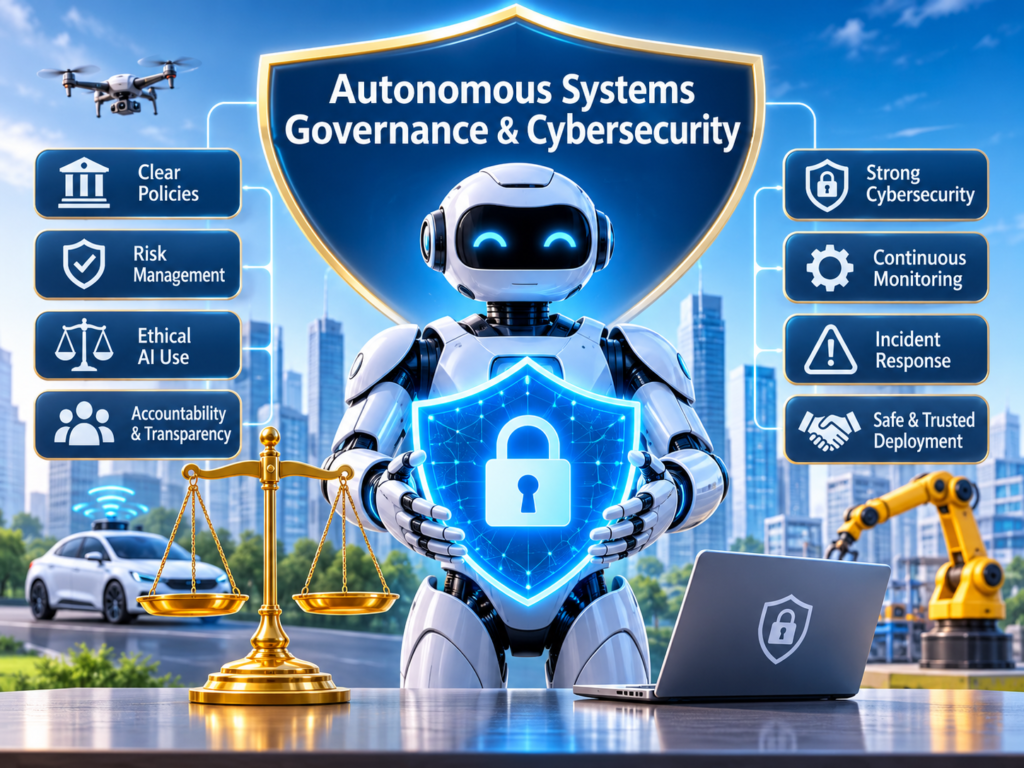
Autonomous Systems Governance Regulations: USA, UK, Germany, and EU
Companies operating across borders need consistent governance principles supported by local regulatory requirements.
The obligations applying to autonomous machines depend on their intended use, product classification, operating location, and the organization’s responsibilities.
United States.
In the United States, employers must address applicable Occupational Safety and Health Administration (OSHA) workplace safety requirements.
Relevant ANSI/RIA standards and NIST frameworks may support risk management, although voluntary standards do not automatically become legally binding.
For example, an automotive manufacturing facility in Detroit deploying robotic production cells should evaluate machine guarding, worker exposure, maintenance procedures, and employee training.
Documentation should demonstrate that identified hazards are appropriately controlled.
United Kingdom.
The UK’s Health and Safety Executive (HSE) oversees workplace health and safety.
The Provision and Use of Work Equipment Regulations 1998 (PUWER) establish requirements relating to equipment suitability, maintenance, protective measures, and training.
A Birmingham warehouse introducing AMRs should assess pedestrian interaction, route planning, emergency intervention, and worker awareness.
Organizations can consult the HSE’s PUWER guidance when reviewing their responsibilities.
Germany.
German manufacturers must consider applicable machinery conformity requirements, workplace safety obligations, and relevant DGUV rules.
GDPR and German data-protection requirements may also apply where robotic systems collect or process personal information.
A Stuttgart automotive facility, for instance, may use independent technical assessments to strengthen confidence in its safety processes.
Independent assessment organizations such as TÜV can support relevant verification activities, depending on the equipment and certification requirements.
European Union.
The EU regulatory framework combines machinery safety, AI governance, cybersecurity, and data protection.
Important implementation milestones include.
| Regulation | Applicable milestone |
|---|---|
| EU Machinery Regulation (EU) 2023/1230 | 20 January 2027 |
| EU AI Act — Annex III high-risk AI systems | 2 December 2027 |
| EU AI Act — Annex I product-related high-risk AI systems | 2 August 2028 |
The European Commission’s machinery guidance and EU AI Act implementation timeline provide further details.
Not every autonomous robot automatically qualifies as a high-risk AI system under the EU AI Act.
Classification depends on the system’s characteristics, intended purpose, and applicable regulatory provisions.
Organizations must also assess relevant GDPR obligations and national cybersecurity requirements implementing NIS2, where applicable.
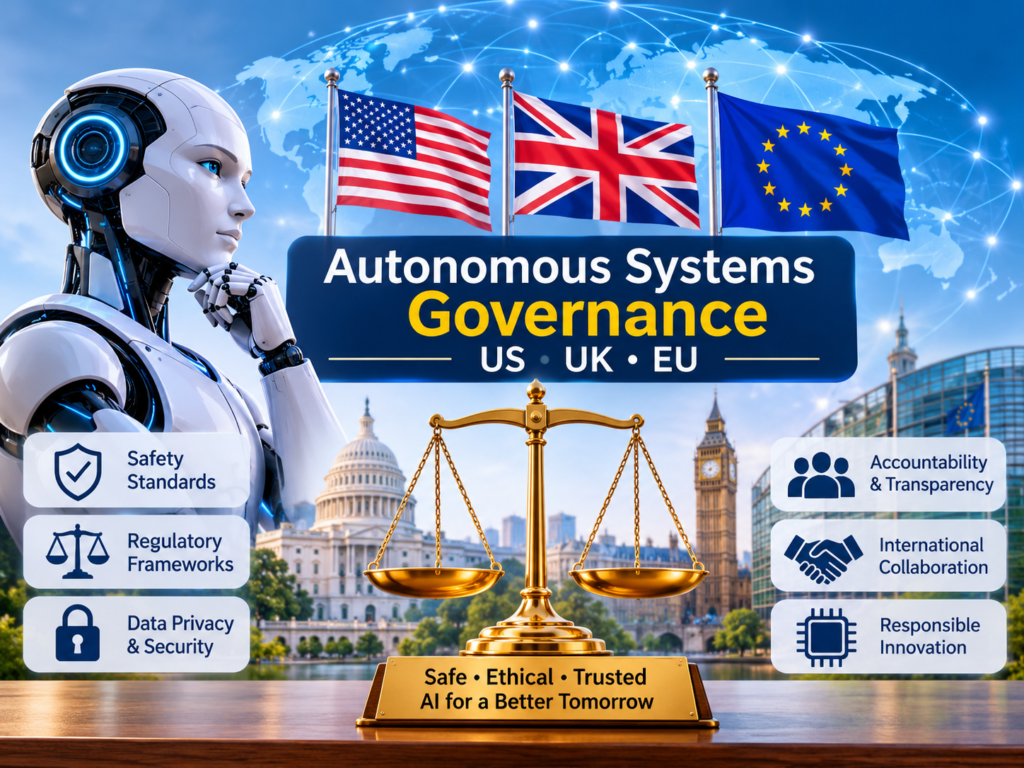
Global Standards Versus Local Legal Requirements
International standards help organizations establish consistent safety and governance practices, but they are not interchangeable with legislation.
For example, ISO/IEC 42001 addresses AI management systems, while ISO 10218 focuses on relevant industrial robot safety requirements.
Enterprises should maintain a common governance framework alongside a country-specific register of legal obligations.
This makes international operations more consistent without overlooking local requirements.
Autonomous Robotics Deployment and Lifecycle Governance
Autonomous systems governance does not end after installation.
Robots operate in changing environments, receive software updates, and interact with evolving production processes.
Continuous oversight is necessary to maintain safety, security, and operational reliability.
Evaluate Vendors Before Deployment
Vendor due diligence should examine technical capabilities alongside safety and cybersecurity assurance.
Enterprises should request relevant safety documentation, test evidence, maintenance commitments, vulnerability management procedures, and incident notification arrangements.
Formal acceptance testing and deployment approval help ensure required safeguards are in place before commissioning.
For organizations building custom integrations, Python development capabilities may help support monitoring pipelines and automated validation, provided suitable engineering assurance is applied.
Monitor Autonomous Fleets Continuously
Effective lifecycle governance depends on visibility into machine behavior.
Organizations should monitor safety events, emergency interventions, software changes, security alerts, maintenance records, and operational exceptions.
These records support investigations, audits, and future risk assessments.
Centralized reporting can also connect robotics telemetry with existing business intelligence systems, helping leadership identify trends across facilities.
Measure Governance Effectiveness With KPIs
Governance should be measured through meaningful operational and risk indicators.
Useful metrics include near-miss rates, failed safety-control tests, unresolved critical vulnerabilities, intervention frequency, and overdue maintenance activities.
Robot adoption figures illustrate the scale of the challenge.
According to IFR’s World Robotics 2025 findings, approximately 85,000 industrial robots were installed across Europe in 2024, including 26,982 installations in Germany.
As automation expands, enterprises need reliable ways to identify weaknesses before they become serious incidents.
KPIs should therefore inform corrective actions rather than simply populate management dashboards.
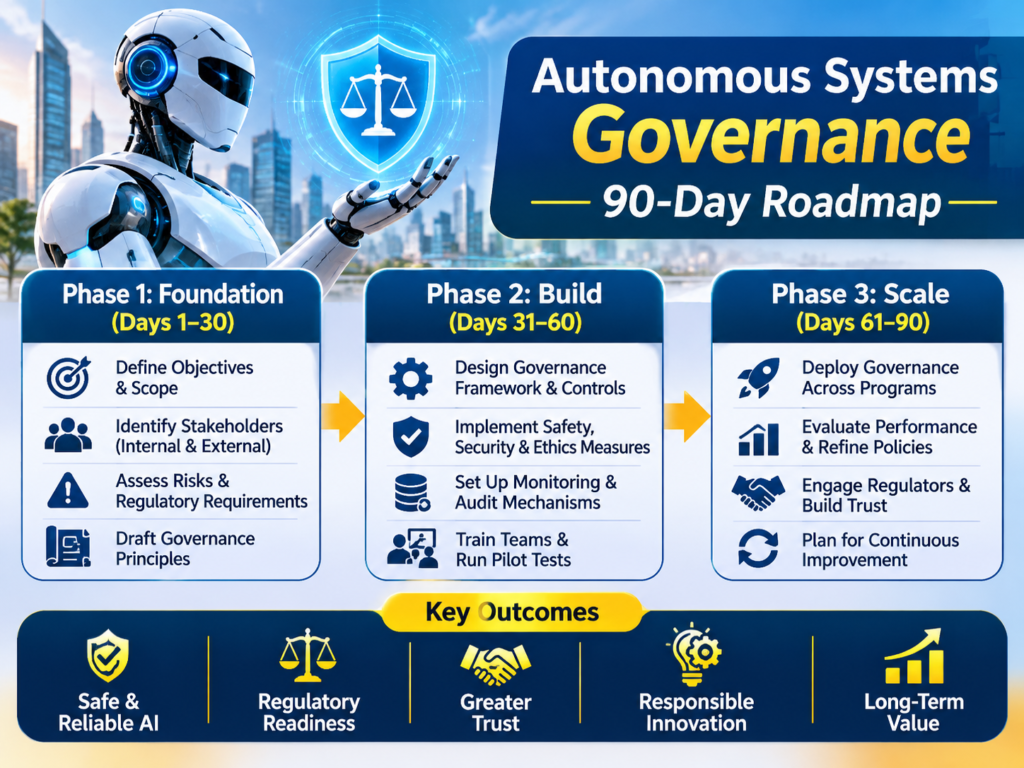
A Practical 90-Day Autonomous Systems Governance Roadmap
Organizations do not need to build every governance process simultaneously.
A phased approach helps establish accountability, identify significant risks, and introduce essential controls in a manageable sequence.
First 90 Days.
| Timeline | Priority actions |
|---|---|
| Days 1–30 | Inventory autonomous machines, assign owners, and identify critical risks. |
| Days 31–60 | Assess safety controls, cybersecurity, vendors, and applicable legal obligations. |
| Days 61–90 | Validate controls, establish monitoring procedures, and define governance KPIs. |
Each phase should produce documented evidence, clear responsibilities, and agreed actions.
The roadmap is a starting point, not a substitute for legally required safety assessments or pre-deployment approvals. High-risk machines may require additional validation before being operated.
When External Governance Expertise Makes Sense
External expertise can be valuable when enterprises manage complex robotics environments, cross-border deployments, unclear machinery classifications, or significant cybersecurity gaps.
Independent assessments may also help identify overlooked operational hazards and improve governance documentation.
Specialist robotics safety professionals should be involved wherever the equipment or applicable regulations require their expertise.
Outlook
Autonomous machines can improve productivity and operational efficiency, but those benefits depend on safe deployment and accountable management.
Autonomous systems governance gives enterprises a structured way to manage physical risks, cybersecurity threats, regulatory obligations, and long-term machine performance.
For organizations expanding robotics operations, the next step is assessing existing controls, identifying accountability gaps, and prioritizing improvements.
Mak It Solutions supports broader technology integration, development, and monitoring needs.
Contact our team to discuss a scoped assessment of your autonomous systems governance requirements and identify where specialist robotics safety support may be appropriate.
Key Takeaways
Effective autonomous systems governance requires coordination across engineering, IT, operations, safety, and compliance.
The most important priorities are:
Establish accountability: Assign clear ownership and decision-making authority.
Prioritize physical safety: Validate operating boundaries, protective functions, and emergency intervention.
Integrate cybersecurity: Protect robotics networks, software, connected devices, and vendor access.
Address local compliance: Adapt enterprise governance to applicable USA, UK, German, and EU regulations.
Monitor continuously: Use operational data, audit records, and risk indicators to support ongoing assurance.
Evaluate vendors carefully: Consider ongoing maintenance, security, safety validation, and compliance responsibilities.
A well-designed governance framework helps enterprises introduce automation without losing visibility or control.
FAQs
Q : Can small manufacturers use an autonomous systems governance framework?
A : Yes. Small and medium-sized manufacturers can apply the same governance principles as larger enterprises while scaling documentation and oversight to their operations. Essential safety measures, risk assessments, worker training, and legal obligations still apply.
Q : Who is responsible if an autonomous industrial robot causes an accident?
A : Responsibility depends on the circumstances, applicable law, and the roles of the organizations involved. Employers, equipment manufacturers, integrators, operators, and maintenance providers may have different obligations. Clear accountability records and incident evidence help support investigations.
Q : Are all autonomous mobile robots classified as high-risk under the EU AI Act?
A : No. An AMR is not automatically classified as high-risk simply because it operates autonomously. Classification depends on the legal definition of an AI system, intended purpose, and relevant high-risk provisions. Machinery safety requirements may apply independently.
Q : How often should autonomous robot safety risks be reviewed?
A : Review frequency should reflect the machine’s hazards, operational environment, manufacturer guidance, and applicable legal requirements. Significant software updates, machinery modifications, incidents, near misses, or changes in operating conditions should also trigger reassessment.
Q : What documentation is needed for an autonomous systems governance audit?
A : An audit should review asset inventories, ownership records, risk assessments, safety testing results, applicable conformity documents, cybersecurity controls, software update histories, maintenance logs, incident reports, and training records. Evidence should demonstrate that safeguards work in practice, not merely that policies exist.