
AEO vs SEO vs GEO: A Smart GCC Growth Guide
AEO vs SEO vs GEO: A Smart GCC Growth Guide
AEO vs SEO vs GEO: A Smart GCC Growth Guide
Search in MENA is no longer just about ranking on page one. For brands in Saudi Arabia, the UAE, and Qatar, visibility now happens across traditional search results, AI-generated answers, and broader discovery journeys where machines interpret your brand before a buyer even clicks.
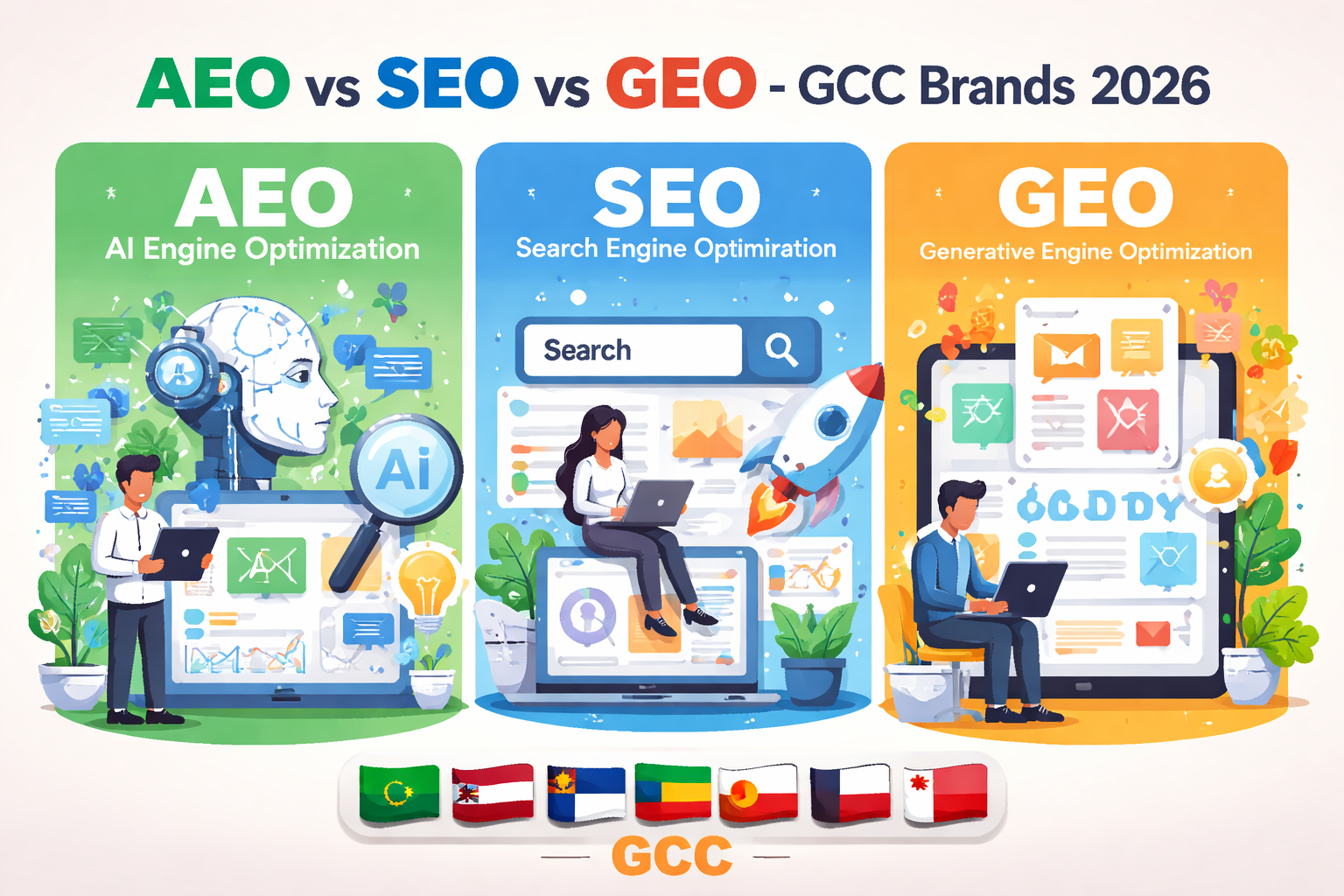
That is why AEO vs SEO vs GEO matters more than ever. SEO helps your pages rank. AEO helps your content get pulled into direct answers and AI summaries. GEO helps your brand become a trusted entity that generative systems can understand, connect, and surface. For most GCC businesses, the real win comes from combining all three instead of treating them as separate strategies.
If your team is still focused only on blue-link rankings, you are likely missing how search behavior is changing in Riyadh, Dubai, Abu Dhabi, Jeddah, and Doha. Buyers want faster answers, clearer proof, and stronger local trust signals. Search engines and AI systems now expect the same.
What AEO, SEO, and GEO Mean for GCC Brands
SEO.
SEO remains the base layer. It helps your pages rank for relevant searches through crawlability, indexation, page speed, internal linking, structure, and content relevance.
For many GCC brands, especially bilingual websites, the biggest growth blockers are still technical. Weak Arabic site structure, duplicate English and Arabic pages, inconsistent metadata, and poor internal linking often reduce visibility before content quality even enters the conversation.
That is why foundational pages like technical SEO checklists for Arabic GCC websites and search engine optimization services still matter. You cannot build answer visibility or AI discoverability on top of a weak technical base.
AEO.
AEO, or Answer Engine Optimization, is about making content easy to extract, summarize, and display directly in search and AI-led experiences.
In practice, that means.
Question-led headings
Clear definitions near the top of the page
Concise answers before long explanations
FAQ blocks where they genuinely help
- Schema markup where appropriateWell-structured content that solves intent quickly
This matters even more in the GCC, where users often search in both Arabic and English, sometimes within the same journey. A page that is technically strong but hard to summarize may still lose visibility in an answer-first environment.
That is where supporting resources like Schema Strategy for AI Search in 2026 and Schema Markup for Arabic Websites: GCC SEO Guide become practical, not optional.
GEO.
GEO, or Generative Engine Optimization, goes a step further. Instead of focusing only on ranking pages, it focuses on how your brand is understood as an entity across generative discovery systems.
That includes.
Clear service definitions
Consistent brand naming
Trust pages and proof points
Local relevance
Governance and compliance signals
Strong bilingual UX
Content that connects your brand to real sectors, cities, and use cases
A Saudi fintech, a Dubai enterprise software company, and a Doha cloud consultancy all need more than optimized landing pages. They need digital signals that tell both users and machines who they are, what they do, where they operate, and why they can be trusted.
Pages like Arabic Web Design Guide: GCC Trust, Speed & SEO and Multilingual SEO in Saudi & UAE: Avoid Duplicates support that broader entity-building work.
AEO vs SEO vs GEO.
A simple way to think about AEO vs SEO vs GEO is this.
| Strategy | Main Goal | What It Improves | Where It Shows Up |
|---|---|---|---|
| SEO | Rankings | Organic visibility, crawlability, clicks | Traditional search results |
| AEO | Answer visibility | Snippets, zero-click answers, AI summaries | Search answers and AI overviews |
| GEO | Entity trust | Brand mentions, machine understanding, discovery influence | Generative search and AI-led journeys |
SEO helps users find your page.
AEO helps search engines pull answers from your page.
GEO helps AI systems understand your brand beyond a single page.
The mistake is assuming one replaces the other. In reality, they stack.
Where GCC Brands Lose Visibility When They Rely on SEO Alone
Many MENA brands still publish like it is 2021. They focus on keyword placement, add a few backlinks, and expect consistent growth. That approach is no longer enough.
Common gaps include.
Generic global content with no GCC context
Weak Arabic user experience
Inconsistent English and Arabic service naming
Thin service pages with little proof
No entity-based trust signals
No answer-ready page formatting
Poor localization for Saudi, UAE, or Qatar audiences
A Riyadh fintech without visible trust cues feels incomplete. A Dubai B2B site without governance language feels generic. A Doha business in a residency-sensitive sector without infrastructure context may struggle to earn confidence early in the buyer journey.
In practice, rankings alone do not guarantee visibility anymore. A page can rank reasonably well and still lose clicks, mentions, or assisted conversions if the brand behind it is not easy for machines to interpret and trust.
Which Approach Should Come First?
The right order depends on your stage.
For startups
Start with technical SEO and high-intent commercial pages. Then layer in AEO by structuring those pages for direct answers, comparisons, and FAQs.
For enterprises
Build on SEO, then strengthen GEO with entity consistency, compliance content, proof pages, and governance language. Large organizations usually have enough surface area to benefit quickly from stronger machine-readable trust signals.
For in-house teams
Focus first on revenue-driving pages. Service pages, category pages, solution pages, and trust-heavy landing pages should come before broader thought leadership. Once those are stable, expand into FAQ content, comparison content, and proof-led educational assets.
Depending on your stack, pages tied to Next.js development services, WordPress development, or broader digital marketing support may shape how quickly you can implement the right structure.
Why Saudi, UAE, and Qatar Brands Need All Three Now
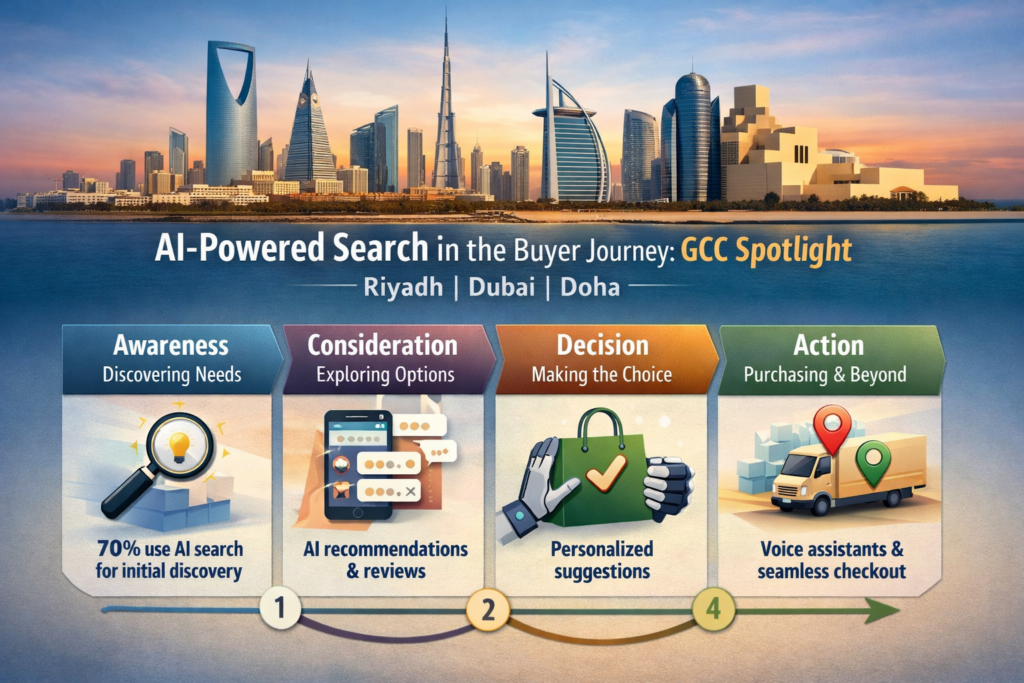
Buyer journeys across the Gulf are becoming faster, more comparative, and less linear.
A prospect might.
Ask an AI-style query
Scan a summarized answer
Compare two or three providers
Visit only one or two websites
Make a shortlist based on trust, clarity, and local fit
That changes the game.
In Saudi Arabia, digital transformation is closely tied to Vision 2030 momentum and a rising expectation for stronger digital experiences. In the UAE, enterprise competition and digital maturity make buyers less patient with vague or generic websites. In Qatar, especially in regulated or infrastructure-sensitive sectors, trust and clarity often matter early.
That is why AEO vs SEO vs GEO is not a theoretical debate for GCC brands. It is a visibility framework.
Why bilingual and Arabic UX matter.
Arabic UX is not just a translation layer. It affects comprehension, trust, and discoverability.
When Arabic and English pages overlap, conflict, or feel poorly localized, both ranking performance and answer extraction can suffer. Many Gulf buyers switch languages depending on intent. A high-level exploratory search may happen in English, while trust and service validation may happen in Arabic.
Separate pages often work better when intent, wording, and user expectations differ. The key is building them with a clean structure, consistent entity naming, and strong internal linking.
Why local trust signals matter in the Gulf.
Trust in the GCC is often shaped by context, not just brand claims.
Examples include:
A Saudi fintech aligning its messaging with SAMA expectations
A UAE enterprise brand showing governance and operational maturity relevant to TDRA-facing environments
A Qatar-based company discussing infrastructure, compliance, or data-residency considerations where relevant
From a small business point of view, even simple signals can help: clear location references, real service scope, case-based proof, bilingual clarity, and precise language around regulated industries.
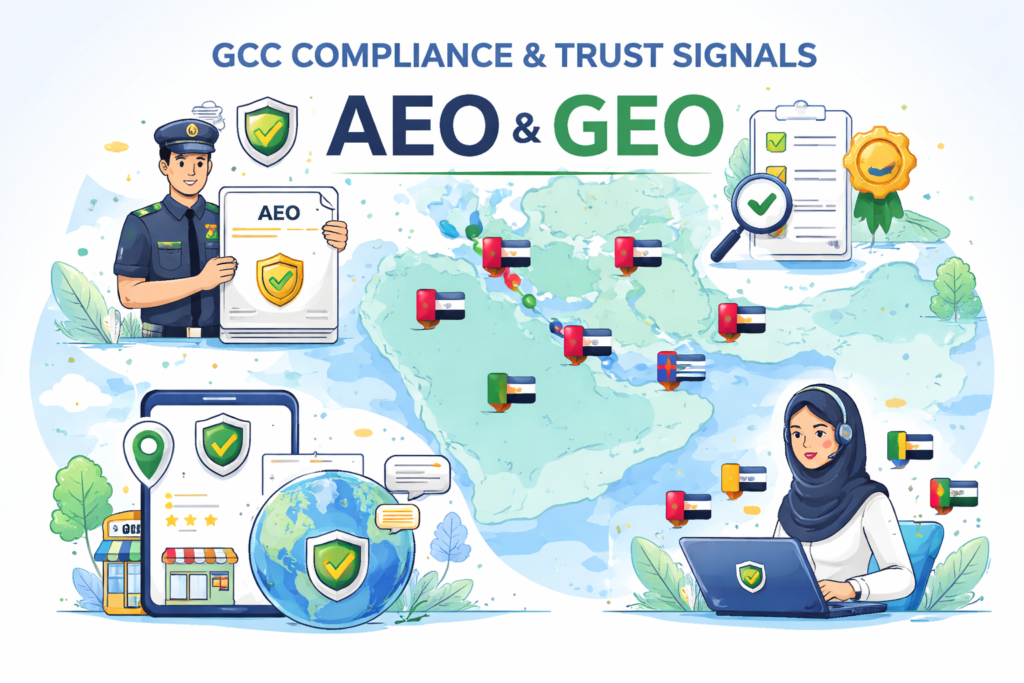
GCC Compliance and Trust Signals That Shape AEO and GEO
For MENA brands in finance, government-adjacent services, health, logistics, cloud, or enterprise technology, visibility is tied to credibility.
Saudi Arabia.
In Saudi Arabia, content often performs better when it is more precise. Pages that mention operational scope, governance, policies, or trust mechanisms tend to feel stronger than vague marketing copy.
For sectors influenced by SAMA or broader Saudi data governance expectations, clarity matters. Pages should avoid exaggerated claims and instead focus on what the service does, who it supports, and what proof exists.
UAE.
In Dubai and Abu Dhabi, buyers often compare multiple vendors quickly. Trust content should reflect operational maturity, digital governance, security awareness, and clear business positioning.
For enterprise and financial audiences, pages shaped around real use cases and regional fit tend to perform better than generic “innovation” messaging.
Qatar.
For Qatar businesses, especially in fintech and regulated sectors, content should be controlled, specific, and locally aware. Vague promises weaken trust. Precise service descriptions, careful disclaimers, and clearer references to operational boundaries create a stronger impression.
This is where GEO becomes highly practical. AI systems are more likely to surface brands that appear coherent, credible, and well-defined.
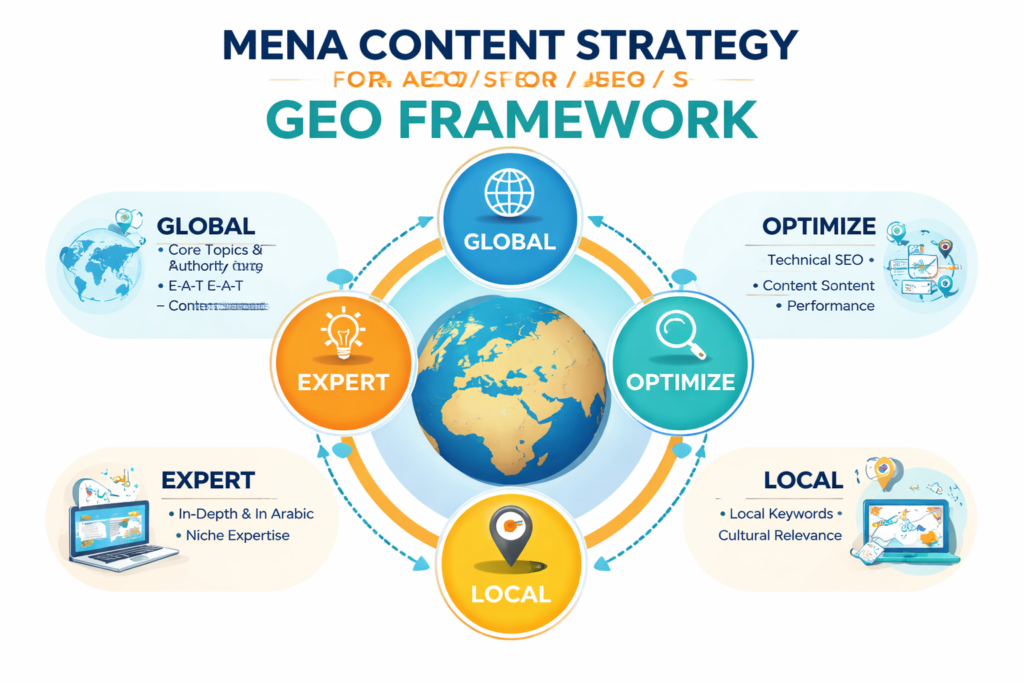
How to Build a MENA Content Strategy for AEO, SEO, and GEO
A workable framework is simpler than many teams expect.
Build entity-rich pages.
Create content around real services, sectors, locations, and proof points.
For example.
Connect fintech content to Riyadh and Saudi trust expectations
Connect enterprise governance content to Abu Dhabi and Dubai buyer needs
Connect cloud or infrastructure pages to Doha when residency-sensitive use cases matter
Lead with the answer.
Do not bury the key point under a long introduction. Put the direct answer near the top, then expand with detail, examples, and proof.
This structure supports both readers and answer engines.
Make pages easy to extract.
Use
Clear H2 and H3 headings
Short paragraphs
FAQ sections
Comparison blocks
Service definitions
Clean internal links
Improve bilingual clarity.
Make sure Arabic and English pages are intentionally structured, not loosely mirrored. Align service naming, page purpose, and internal linking.
Add real regional relevance.
A Dubai e-commerce brand can strengthen answer-first content with e-commerce development support.
A Saudi service brand can pair localized UX with stronger web development and contact-led conversion pages.
A Doha-based team can connect discoverability with measurement through business intelligence services.
Common Mistakes MENA Brands Make
Treating AEO or GEO as a replacement for SEO.
This is still the biggest mistake. If your site has weak speed, broken indexation, messy architecture, or poor internal linking, higher-level optimization will always be limited.
Publishing global content with no Gulf context.
Templates built for the US or UK often feel flat in the GCC. Saudi, UAE, and Qatar audiences usually respond better to content that reflects local realities, business expectations, and trust cues.
Ignoring Arabic UX.
Poorly localized Arabic pages are a major visibility problem. They affect usability, trust, and machine interpretation.
Making vague claims in regulated sectors.
In fintech, healthcare, legal, logistics, and government-adjacent spaces, generic AI-era copy can damage credibility. Specificity wins.
What MENA Brands Should Do Next
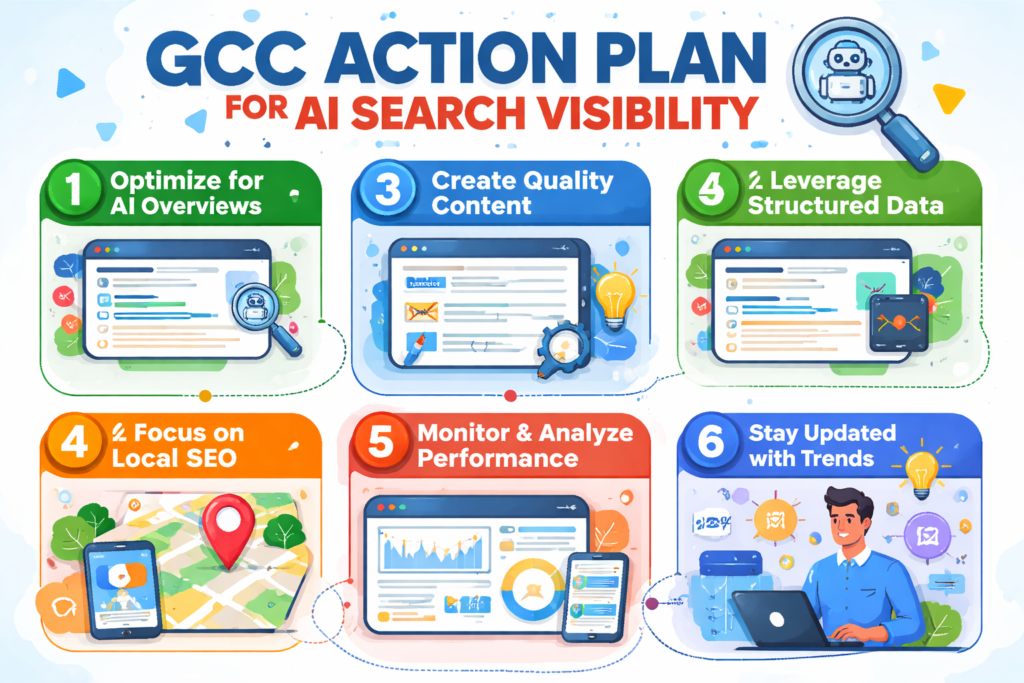
A practical GCC action plan looks like this.
Audit current pages for rankings, technical SEO, answer-readiness, and entity clarity
Prioritize high-intent pages for Riyadh, Dubai, Abu Dhabi, Jeddah, and Doha audiences
Strengthen trust signals through clearer service definitions, proof, bilingual UX, and localized positioning
Measure beyond rankings by tracking answer visibility, branded discovery, assisted conversions, and brand mentions
The brands that win now are not choosing between AEO, SEO, and GEO. They are combining all three with regional trust, stronger structure, and content that works for both humans and machines.
If your current pages rank a little but fail to earn broader AI visibility, this is the right time to rethink the framework. AEO vs SEO vs GEO should not be treated as a trend headline. For GCC brands, it is now part of modern search strategy.
Final Take
FAQs
Q : Is AEO more important than SEO for Saudi brands in 2026?
A : Not on its own. SEO is still the foundation because your site needs crawlability, speed, relevance, and structure before anything else can work. AEO becomes more valuable once that base is in place and you want stronger visibility in AI answers, snippets, and zero-click results.
Q : How can UAE companies optimize for AI Overviews without hurting organic traffic?
A : The best approach is not to strip pages down. Keep strong SEO depth, then add concise summaries, better heading structure, FAQs, and clearer service definitions near the top. That helps AI extraction without sacrificing organic depth.
Q : Do Qatar businesses need different content rules for regulated industries?
A : Yes. In regulated sectors, Qatar businesses should use clearer claims, tighter language, and stronger proof. Pages should reflect real scope, relevant disclaimers, and local trust expectations instead of broad marketing promises.
Q : Should GCC brands create separate Arabic and English pages?
A : Usually, yes, when intent and user expectations differ across languages. A direct translation is often not enough. Separate pages can improve clarity, answer extraction, and discoverability when the structure is handled properly.
Q : Which industries benefit most from GEO first?
A : Fintech, enterprise technology, legal-financial services, premium e-commerce, logistics, and residency-sensitive cloud services often benefit early because trust, authority, and entity clarity influence discovery long before conversion.