


Arabic Image and Video SEO: Saudi AI Search Guide
Arabic Image and Video SEO: Saudi AI Search Guide
Arabic Image and Video SEO: Saudi AI Search Guide
A Saudi e-commerce store can invest in high-quality product photography and professional Arabic videos, yet struggle to attract visitors through Google Images and video search.
Often, the problem isn’t the visual content. It’s that Google doesn’t have enough accessible information to discover, interpret and connect that content with relevant searches.
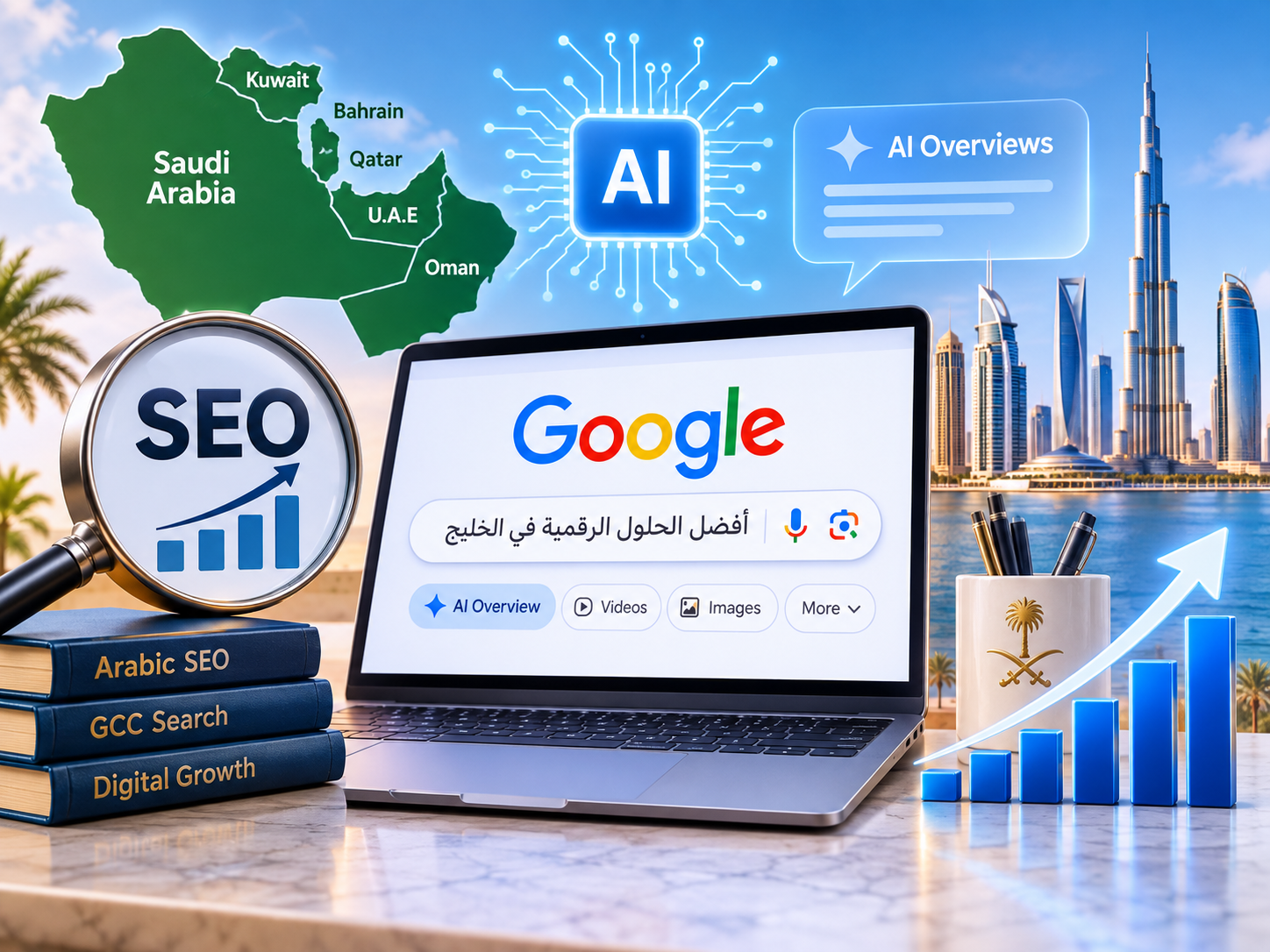
Arabic Image and Video SEO makes Arabic-language multimedia easier for search engines to discover and understand. It combines descriptive alt text, localized metadata, accurate video captions, structured data and accessible landing pages. For businesses in Saudi Arabia, the UAE and Qatar, these practices support visibility across Google Search, Images and video results, although they cannot guarantee placement in AI Overviews.
Here’s how GCC businesses can put these techniques into practice.
What Is Arabic Image and Video SEO for Google AI Search?
Arabic Image and Video SEO is the process of optimizing images, videos and their surrounding Arabic-language content so that search engines can find, interpret and present them to relevant audiences.
It brings together technical SEO, multimedia accessibility, Arabic localization and useful content.
How Google Understands Arabic Images and Videos
Google doesn’t rely on image filenames or video titles alone.
It considers several signals, including.
Image alt text: Describes relevant visual information and supports accessibility.
Surrounding page content: Provides context about the image or video.
Captions and transcripts: Make spoken video content available in text.
Filenames and metadata: Offer additional clues about the subject.
Visual content: Helps Google’s systems interpret what appears in an image or video.
For example, a Saudi retailer selling traditional coffee sets should describe the actual products shown rather than repeatedly inserting generic keywords.
The goal is to make the content useful to customers and understandable to search engines.
Google Images, Video Search and AI Overviews
Google provides different ways for people to discover multimedia content.
| Google search feature | Primary purpose |
|---|---|
| Google Images | Helps users find relevant images and visual content |
| Video Search | Helps users discover videos related to their queries |
| AI Overviews | Provides AI-generated summaries for selected searches |
| AI Mode | Supports conversational exploration of search questions |
These experiences are related, but they don’t use identical presentation or selection mechanisms.
According to Google’s guidance on AI search features, established SEO practices remain important. Google doesn’t require special AI-specific schema markup to appear in AI Overviews or AI Mode.
That makes accessible, relevant and technically sound multimedia a sensible investment regardless of how search experiences evolve.
Why Arabic Multimedia SEO Matters in Saudi Arabia, UAE and Qatar
GCC markets share Arabic as an important language, but their customer expectations and business environments are not identical.
A Riyadh retailer may benefit from Arabic-first product photography and descriptions. A Dubai software business might need tutorials in Arabic and English. A Doha education provider may focus on clear Arabic explanations and accessible lesson recordings.
Using identical metadata for every market can overlook these differences.
Effective localization considers the product, audience, terminology and purpose of each media asset.
How to Optimize Arabic Images for Google Search
Strong Arabic image SEO starts with accurate descriptions, accessible image URLs and an image-loading experience that works well on mobile devices.
Write Accurate Arabic Alt Text, Filenames and Captions
The improved filename identifies the product. The Arabic alt text describes what appears in the image without forcing unrelated search terms into the description.
A suitable HTML implementation would be.
Use Arabic descriptions on Arabic-language pages and appropriate English descriptions on English-language pages.
Keep alt text concise, accurate and useful. Decorative images generally don’t require descriptive alt text.
Google’s image SEO recommendations also emphasize relevant page context and meaningful filenames.
Improve Image Formats, Loading Speed and Accessibility
Large, poorly optimized images can make a product page frustrating to use, especially on mobile connections.
Practical improvements include.
Use supported, efficiently compressed formats such as WebP or AVIF.
Serve responsive image sizes for different screens.
Specify image dimensions to reduce unexpected layout movement.
Lazy-load appropriate off-screen images.
Avoid unnecessarily delaying important images visible when the page first loads.
Ensure meaningful images have accessible descriptions.
For a Saudi online store with an extensive catalog, these improvements can make product pages easier to browse while reducing unnecessary data transfer.
Image optimization also needs to work alongside the site’s wider technical setup.
For additional guidance, use this technical SEO checklist for Arabic GCC websites.
Make Arabic Images Discoverable Through Sitemaps
Good image descriptions accomplish little if search engines cannot access the files.
Important images should appear in crawlable HTML, use accessible URLs and sit alongside relevant page content.
Image sitemaps can help Google discover assets that might otherwise be difficult to locate.
For a bilingual Dubai retail website, Arabic and English product pages should connect their respective images with useful descriptions and appropriate localized context.
Check for blocked resources, broken URLs and image delivery issues.
Google’s official Image SEO documentation explains how HTML image elements, sitemaps and descriptive metadata support image discovery.
How to Optimize Arabic Videos for Google and YouTube
Arabic Video SEO goes beyond adding keywords to a video title.
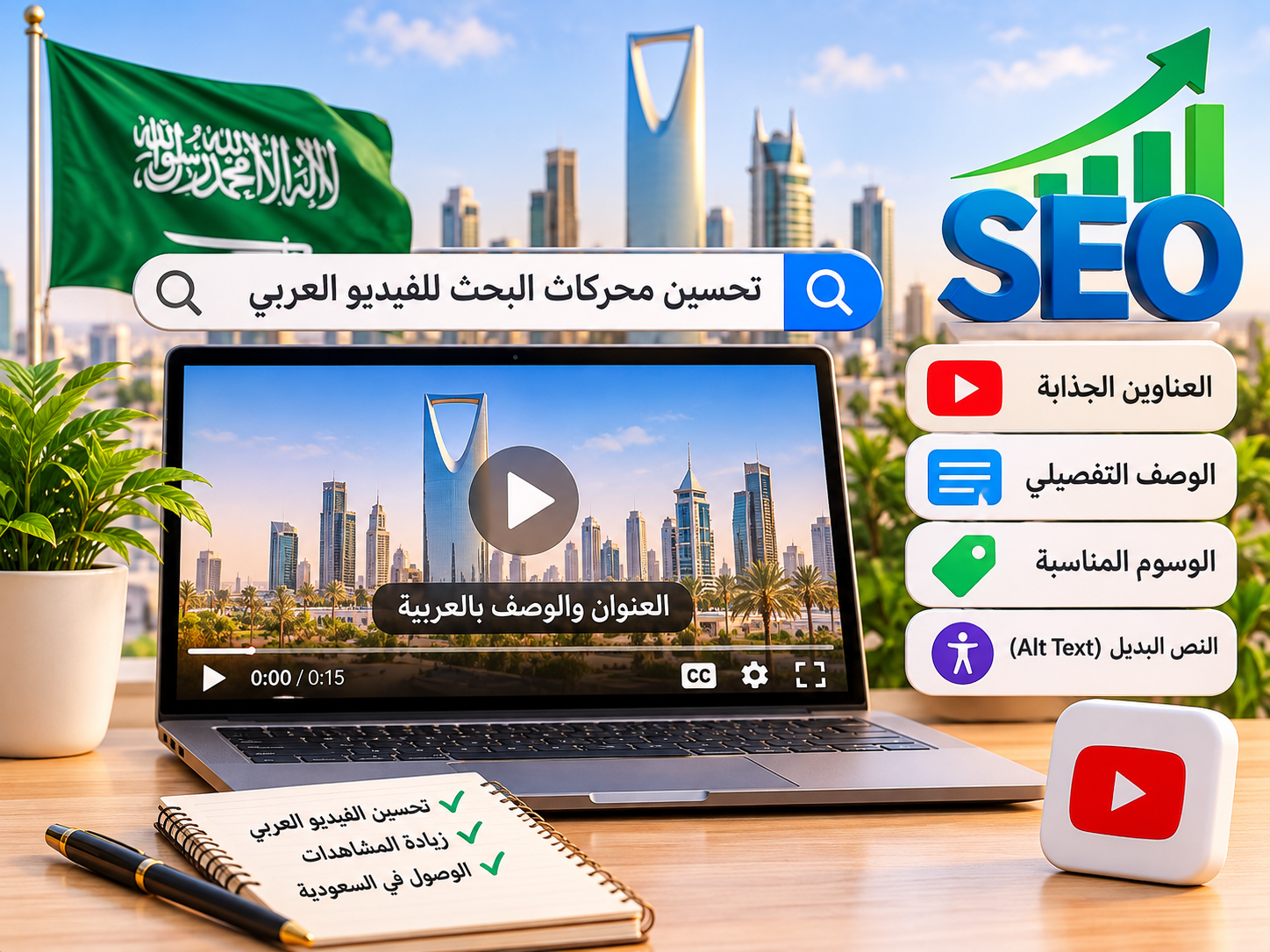
Search engines need accessible watch pages, meaningful descriptions and information that explains what the video covers. Viewers also benefit from accurate captions, readable thumbnails and clear navigation.
Optimize Arabic Video Titles, Thumbnails and Descriptions
A Saudi retailer demonstrating a traditional coffee set might use this Arabic title.
طريقة استخدام مجموعة القهوة السعودية | شرح عملي
It communicates the subject and the practical purpose of the video.
An effective video publishing process should include:
A descriptive Arabic title that matches the video’s content.
A representative thumbnail.
A useful description explaining what viewers will learn.
Relevant page text surrounding embedded videos.
Clear links to related products or resources.
Avoid misleading thumbnails or exaggerated titles that promise information the video doesn’t deliver.
For companies targeting Arabic- and English-speaking customers, multilingual video content can also complement broader digital marketing campaigns.
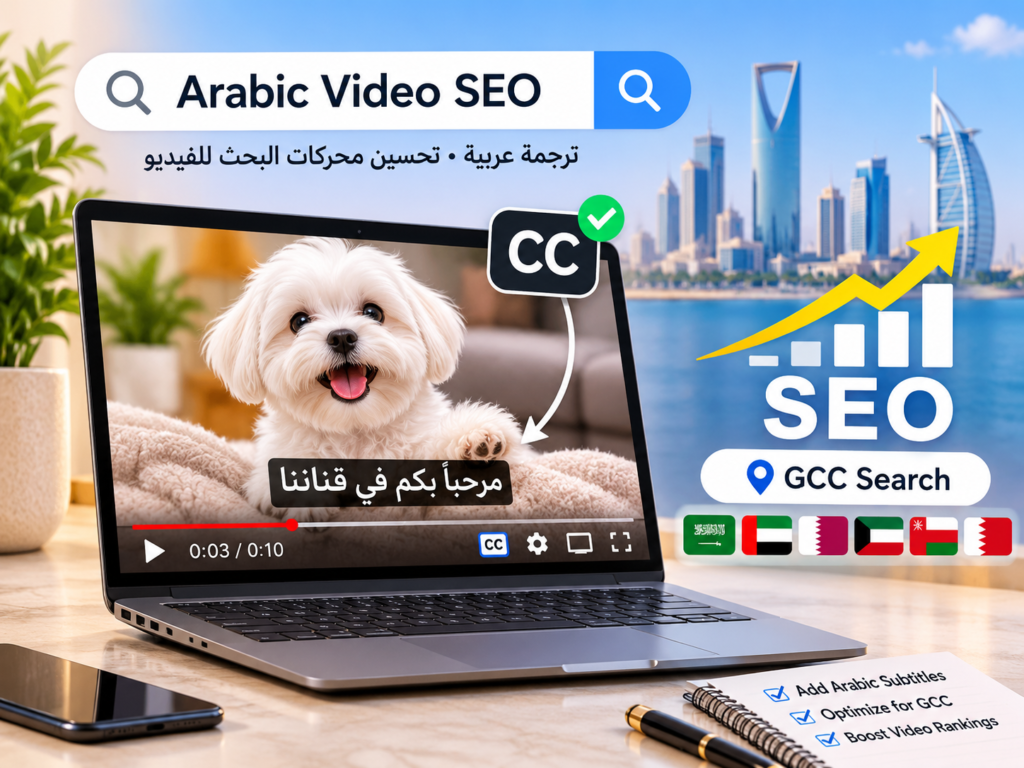
Add Accurate Arabic Subtitles, Transcripts and Gulf Dialect Context
Automatic Arabic transcription can save editing time, but it still needs review.
Gulf dialects, specialist terminology and brand names may be transcribed incorrectly, especially when the audio contains background noise or several speakers.
For example.
Arabic: في هذا الفيديو نشرح خطوات إعداد المنتج واستخدامه.
English: In this video, we explain how to set up and use the product.
The translation should preserve the original meaning rather than follow every Arabic word literally.
For Saudi, Emirati and Qatari audiences, consider the speaker’s dialect, the intended audience and the formality of the content.
Modern Standard Arabic can work well for broad professional and educational communication. However, subtitles intended as a transcript should accurately reflect what the speaker actually says.
Clear transcripts also make it easier for readers to find important information without watching an entire video.
Implement Video Object, Clip Markup and Indexable Watch Pages
A video should have a useful, accessible page where visitors can watch it.
Google recommends providing relevant information about videos and making their watch pages discoverable.
Video Object structured data can describe properties such as:
Video title and description.
Thumbnail URL.
Upload date.
Duration.
Video or embed URL.
Where appropriate, Clip structured data can identify meaningful sections within a video.
For example
| Timestamp | Arabic chapter |
|---|---|
00:00 |
مقدمة |
00:35 |
طريقة الاستخدام |
01:20 |
نصائح مهمة |
These chapter labels should correspond to genuine sections of the video.
One technical distinction matters for Arabic publishers: Google’s documentation supports Clip markup across its Search languages, but Arabic is not currently included in its documented supported-language list for SeekAction.
This doesn’t prevent Arabic videos from being indexed. It simply means businesses should avoid assuming that every video enhancement works identically across languages.
See Google’s official video structured data documentation before implementing these features.
Arabic and English Media SEO Across GCC Markets
A strong multilingual strategy doesn’t require creating completely different content for every country.
It requires adapting the content where language, customer needs or regional context make a meaningful difference.
Localize Images and Videos for Riyadh, Dubai and Doha
| Market | Recommended multimedia approach |
|---|---|
| Saudi Arabia | Arabic-first product visuals and locally relevant terminology |
| UAE | Arabic and English product demonstrations, service tutorials and accessible explanations |
| Qatar | Educational multimedia, reviewed Arabic captions and audience-focused video content |
A logistics business in Jeddah might create Arabic delivery-explainer videos for local customers.
An Abu Dhabi technology business, meanwhile, could publish bilingual onboarding tutorials to help different customer groups use the same application.
Neither approach is automatically better. The right choice depends on who the business wants to reach.
For more regional context, explore how Arabic SEO strategy supports GCC brands.
Looking to scale your store in UAE/Saudi Arabia? Contact our expert IT team today for a free consultation. ( Click Here’s )
Apply hreflang, RTL Accessibility and Bilingual Metadata
Arabic and English content should be easy for both visitors and search engines to navigate.
Where a website provides meaningful language alternatives, separate URLs can make localization easier to manage.
Use reciprocal hreflang annotations where applicable and make sure the language versions link to the correct counterparts.
Arabic pages should also support.
Right-to-left text presentation.
Appropriate page language declarations.
Language-specific titles and descriptions.
Readable Arabic typography.
Navigation and forms that work correctly in RTL layouts.
Accurate captions and alt text for localized multimedia.
Avoid creating translated landing pages that contain incomplete or inconsistent content.
Reliable web development practices help prevent the technical problems that can arise on multilingual websites.
Address GCC Privacy, Content Rights and Sector Rules
Media optimization also involves responsible publishing.
Before sharing identifiable customer testimonials, employee recordings or other personal media, businesses should establish whether they have the necessary rights and permissions.
Relevant regulatory frameworks differ by location and activity.
Saudi organizations may need to consider applicable personal data protection requirements and guidance associated with SDAIA and relevant national data governance bodies.
In the UAE, businesses should identify the appropriate privacy framework and regulator for their jurisdiction. The TDRA provides guidance relevant to its telecommunications and digital government remit, but it is not the universal privacy authority for every UAE business.
Qatari organizations should similarly review applicable privacy and sector requirements, including relevant guidance from the Ministry of Communications and Information Technology.
Financial services businesses may have additional obligations under authorities such as SAMA, QCB, ADGM or DIFC.
These regulations are not Google ranking factors. They relate to lawful and responsible operations.
The exact requirements depend on the business, the type of content and the applicable jurisdiction. Seek qualified legal advice when necessary.
How to Implement an Arabic Multimedia SEO Workflow
Arabic Image and Video SEO becomes easier to manage when content editors, SEO specialists and developers follow a repeatable process.
The aim is to identify worthwhile opportunities, make consistent improvements and measure what changes afterward.
Audit Existing Arabic Media and Search Visibility
Start with the pages and assets that matter most to the business.
Review.
Images missing useful alt text.
Generic or misleading image filenames.
Media files blocked from crawling.
Videos without accessible watch pages.
Missing or inaccurate Arabic captions.
Video indexing problems.
Important pages with poor media-loading experiences.
Use Google Search Console to examine relevant search performance and indexing diagnostics.
Prioritize valuable product pages, service pages and educational resources rather than attempting to fix every image at once.
Localize, Optimize and Publish GCC Media Assets
Once the audit identifies the priorities, assign clear responsibilities.
Arabic editors should review descriptions, terminology and subtitles. SEO specialists can improve metadata, internal linking and content relevance.
Developers should handle image compression, responsive delivery, technical accessibility and appropriate structured data.
For larger websites, specialist search engine optimization services may help coordinate these tasks.
Keep a record of significant updates so the team can review their impact later.
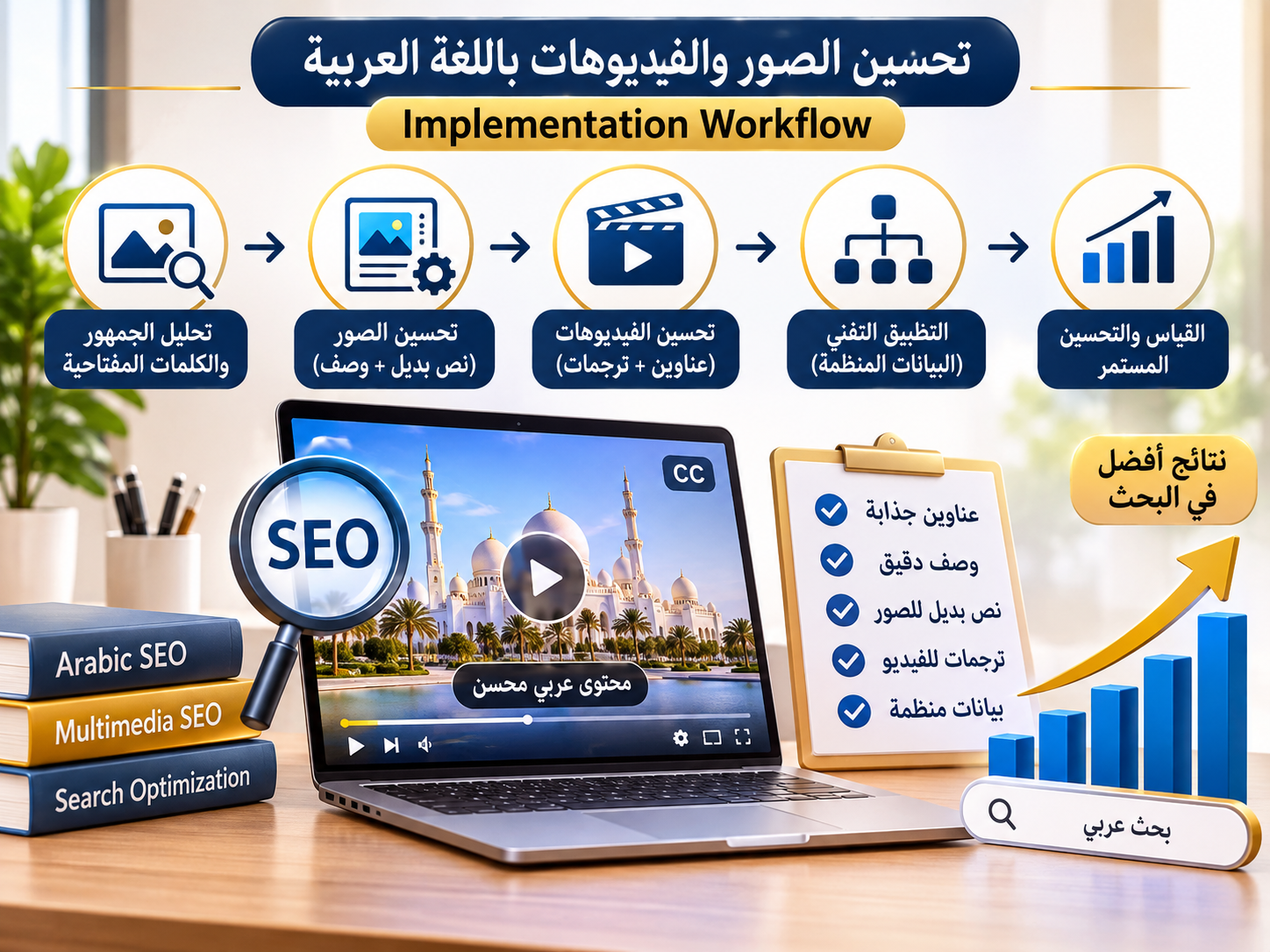
Validate Indexing and Measure Performance
Publishing improvements is only part of the process.
After implementation, check whether Google can access important pages and media resources.
Monitor relevant indicators such as.
Organic search impressions and clicks.
Google Images and video search performance.
Video indexing status.
Search queries leading to multimedia pages.
Page loading and user experience.
Conversions or other valuable actions from organic visitors.
Use Google’s Rich Results Test where structured data eligibility needs to be checked.
Google’s newer generative AI reporting, where available in Search Console, can provide additional context. Still, avoid treating conventional image indexing, video rankings and AI-generated citations as identical outcomes.
A simple team ownership model helps maintain consistency.
| Team | Responsibility | Success check |
|---|---|---|
| Content | Arabic localization | Reviewed descriptions and captions |
| SEO | Metadata and discovery | Search Console analysis |
| Development | Technical implementation | Crawlable and accessible media |
| Legal/compliance | Publishing permissions | Documented approvals |
Arabic Multimedia SEO Costs, Timelines and Best Practices
There is no universal price or delivery schedule for Arabic multimedia optimization.
A small company with a limited collection of product photos faces a different workload from a regional retailer maintaining a large multilingual catalog.
What Determines Arabic Image and Video SEO Costs?
The cost generally depends on how much content requires attention and how complicated the technical work becomes.
| Optimization activity | Relative effort |
|---|---|
| Updating image alt text | Low to medium |
| Editing Arabic transcripts | Medium |
| Producing bilingual videos | Medium to high |
| Fixing large catalog indexing issues | High |
Other considerations include the quality of existing content, the number of languages, accessibility requirements and the need for professional translation or video production.
Businesses with complex front-end systems may also benefit from front-end development support.
An audit should define the actual workload before a budget is finalized.
How Long Does Optimization Take for GCC Websites?
Implementation time depends primarily on the number of assets, the state of the website and the resources available.
A small Doha service website may require relatively straightforward metadata and caption improvements.
A Saudi retail platform with thousands of product images could need a more extensive workflow involving developers, content teams and quality checks.
Even after implementation, Google may take time to crawl and process changes.
No agency or developer can guarantee when a particular image or video will be indexed, ranked or displayed in an AI-powered search feature.
Best Practices for Sustainable Google AI Search Visibility
The most useful long-term approach is to improve the quality and discoverability of multimedia rather than chase supposed AI ranking shortcuts.
Focus on original, relevant images; descriptive Arabic metadata; trustworthy video information; accurate subtitles; and regular technical reviews.
Use structured data when it accurately describes the visible content and supports a documented search feature.
For technical context, see this guide to schema markup for Arabic websites.
Avoid keyword stuffing, misleading captions, unnecessary markup and large volumes of generic content with little value to readers.
Effective Arabic multimedia SEO is ultimately about making useful content easier for people and search engines to access.
Concluding Remarks
Arabic Image and Video SEO gives GCC businesses a practical way to improve the discoverability, accessibility and usefulness of their visual content.
For Saudi Arabia, the UAE and Qatar, the strongest approach combines accurate Arabic descriptions, localized video metadata, accessible media and sound technical SEO.
Start with your most important pages. Improve the assets that genuinely help customers. Then measure results and refine your approach.
Contact Mak It Solutions to discuss an Arabic multimedia SEO audit and a tailored optimization strategy for your business in Saudi Arabia, the UAE or Qatar.
Looking to scale your store in UAE/Saudi Arabia? Contact our expert IT team today for a free consultation. ( Click Here’s )
FAQs
Q : Does Google support Arabic filenames and alt text for Saudi e-commerce images?
A : Yes. Google can use Arabic alt text, surrounding content and other image-related signals to understand product images. Arabic filenames can also work when URLs are encoded correctly, although clear Latin-character filenames are often convenient to manage.
For Saudi retailers, accurate product descriptions matter more than repeating keywords.
Q : Should Dubai businesses publish separate Arabic and English video landing pages?
A : Separate pages are useful when each language version provides meaningful localized information.
A Dubai software company, for example, may benefit from dedicated Arabic and English tutorials with appropriate titles, descriptions and transcripts. Reciprocal hreflang annotations can help identify language alternatives.
Simply duplicating an unchanged page without meaningful localization is less useful.
Q : Which Arabic dialect should Qatar brands use in YouTube captions?
A : Modern Standard Arabic is often suitable for professional or educational content aimed at a broad Arabic-speaking audience.
However, captions should accurately represent the spoken words. If a presenter uses Qatari dialect, preserve the meaning and relevant local expressions rather than replacing them unnecessarily.
No particular Arabic dialect guarantees higher Google rankings.
Q : Do UAE businesses need permission before publishing customer testimonial videos?
A : Businesses should obtain appropriate permission before publishing identifiable customer testimonials.
The applicable legal requirements depend on the jurisdiction, the information being used and the circumstances of publication.
Documenting consent and intended uses is a sensible starting point, particularly for businesses in regulated sectors.
Q : Can Saudi and Bahraini websites reuse the same Arabic image metadata?
A : Yes, provided the description remains accurate and relevant to the image on both websites.
A logistics company serving Saudi Arabia and Bahrain might use similar descriptions for identical vehicle photographs.
However, different services, products or regional terminology can justify localized metadata. Businesses operating in regulated sectors should separately review applicable compliance requirements.
Looking to scale your store in UAE/Saudi Arabia? Contact our expert IT team today for a free consultation. ( Click Here’s )