


Best Trust Signals for Lead Generation Growth
Best Trust Signals for Lead Generation Growth

Best Trust Signals for Lead Generation Growth
Trust signals for lead generation are the credibility cues that help visitors feel safe enough to contact you, book a demo, or request a quote. The strongest ones usually combine specific proof, privacy reassurance, and visible business legitimacy near the exact moments where a buyer hesitates.
If your website gets traffic but too few qualified enquiries, the issue is not always the offer. Quite often, it is trust. Buyers want quick answers to a few silent questions: Is this company real? Can they do the job? Is it safe to share my details? Until your page answers those questions, even strong traffic can stall.
What trust signals for lead generation really mean
Trust signals for lead generation are the on-page elements that show your business is credible, capable, and safe to contact. On a B2B or service-led site, that usually includes testimonials, case studies, review snippets, security and privacy reassurance, recognizable client proof, and clear contact information.
They matter because lead generation is a risk decision, not just a click decision. A visitor is not buying a low-cost product in seconds. They are considering whether to share business details, invite a sales conversation, or begin a commercial relationship.
Trust signals vs. social proof vs. UX
These terms overlap, but they are not the same.
Social proof includes reviews, testimonials, ratings, and client logos.
Trust signals include social proof plus privacy language, compliance references, security cues, and business transparency.
Conversion UX is the usability layer that helps trust signals perform, such as clean form design, readable mobile layouts, and low-friction calls to action.
In practice, the best-performing pages use all three together.
Why trust signals increase enquiries and demo requests
People rarely fill in a form when uncertainty is still high. Trust signals reduce that uncertainty fast.
BrightLocal’s 2025 review research found that 42% of consumers trust online reviews as much as personal recommendations, which shows reviews still carry real influence, even though audiences are more careful than they were a few years ago.
That does not mean you need a wall of badges. It means you need the right proof in the right place.
A strong trust layer helps by.
Lowering perceived risk
Making your business feel established
Showing that others have already chosen you
Reassuring visitors about privacy and follow-up
Helping the right buyers move forward faster
The most effective trust signals for lead generation
The best trust signals for lead generation are usually the simplest and most believable.
Testimonials that sound real
A generic quote like “Great service” does very little. A useful testimonial is specific, recent, and tied to a role or outcome.
Good example.
Mak It Solutions helped us simplify our reporting workflow and cut manual follow-up time within the first month.”
That kind of proof works because it feels earned. It also helps when the testimonial matches the buyer’s world, whether that is SaaS, healthcare, fintech, property, or professional services.
Case studies with measurable detail
Case studies answer the question buyers rarely ask out loud: Have you solved this before?
Strong case studies usually include.
The client type or industry
The problem
The approach
The outcome
The timeline
Even one short case-study block near a service CTA can outperform a long section of vague brand claims.
Privacy and security reassurance
For lead generation pages, privacy language often matters more than decorative security icons.
AICPA describes SOC 2 as reporting on controls relevant to security, availability, processing integrity, confidentiality, or privacy. HHS says the HIPAA Security Rule requires administrative, physical, and technical safeguards for electronic protected health information. PCI DSS is defined by the PCI Security Standards Council as a baseline of technical and operational requirements designed to protect payment account data.
That matters because buyers in sensitive sectors do notice the difference between real reassurance and empty visuals.
Useful examples include:
“We never share your information.”
“Replies typically within one business day.”
“Protected by role-based access and secure workflows.”
“SOC 2-aligned processes” or “HIPAA-ready workflows,” where accurate and supportable
Recognizable client or partner logos
Logos work best when they are relevant, current, and easy to verify. A short row of recognizable brands can calm first-click doubt quickly, especially above the fold.
Clear contact details and company identity
A hidden business feels risky.
Visible email addresses, regional phone numbers, office locations, legal pages, and a complete contact page all support credibility. Google states that customers are 2.7 times more likely to consider a business reputable if they find a complete Business Profile on Google Search and Maps.
Where to place trust signals for maximum impact
Placement matters almost as much as the proof itself.
Above the fold
Your first screen should answer three things fast:
Who you help
Why you are credible
What happens next
A short proof bar, one clear testimonial, or a brief client-logo strip can help reduce bounce before the visitor scrolls.
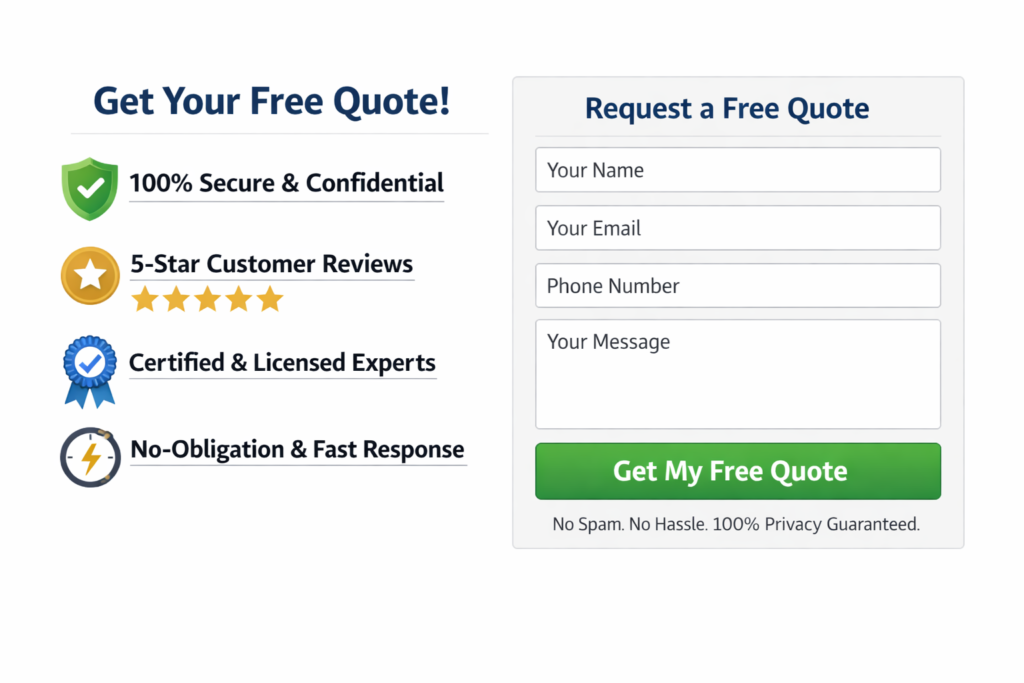
Next to forms and CTAs
Trust signals work best at the moment of hesitation.
Place them near.
Demo request forms
Contact forms
Proposal CTAs
Pricing sections
Consultation booking buttons
Baymard’s checkout research continues to show high abandonment tied to friction and uncertainty, with published average abandonment figures around the 70% range for ecommerce flows. The exact context is different, but the lesson applies neatly to lead generation too: reduce unnecessary friction where commitment happens.
In the footer, About page, and contact page
These areas should reinforce legitimacy, not feel like a storage room for leftover links.
A stronger footer usually includes.
Privacy policy
Terms or legal pages
Company address
Email and phone
Country or regional presence
Company registration details where relevant
Conversion UX habits that support trust
Trust is not built by proof alone. It is also built by how your site behaves.
Keep forms shorter
Ask only for what you truly need at this stage. Every extra field creates drag.
A better form might ask for.
Name
Work email
Company
Short project need
Then use one line of microcopy to explain why you are asking.
Use clearer CTA language
“Submit” is weak. “Book a strategy call” or “Request a scoped estimate” gives the visitor a better sense of value and next steps.
Set response expectations
People trust pages that reduce ambiguity.
Simple reassurance helps.
“We reply within one business day.”
“No spam. No hard sell.”
“A specialist will review your enquiry.”
Improve speed and mobile clarity
Google’s PageSpeed Insights documentation states that the tool reports on user experience for pages on mobile and desktop and offers suggestions for improvement. That matters because slow, unstable, cluttered pages quietly weaken trust long before a sales call begins.
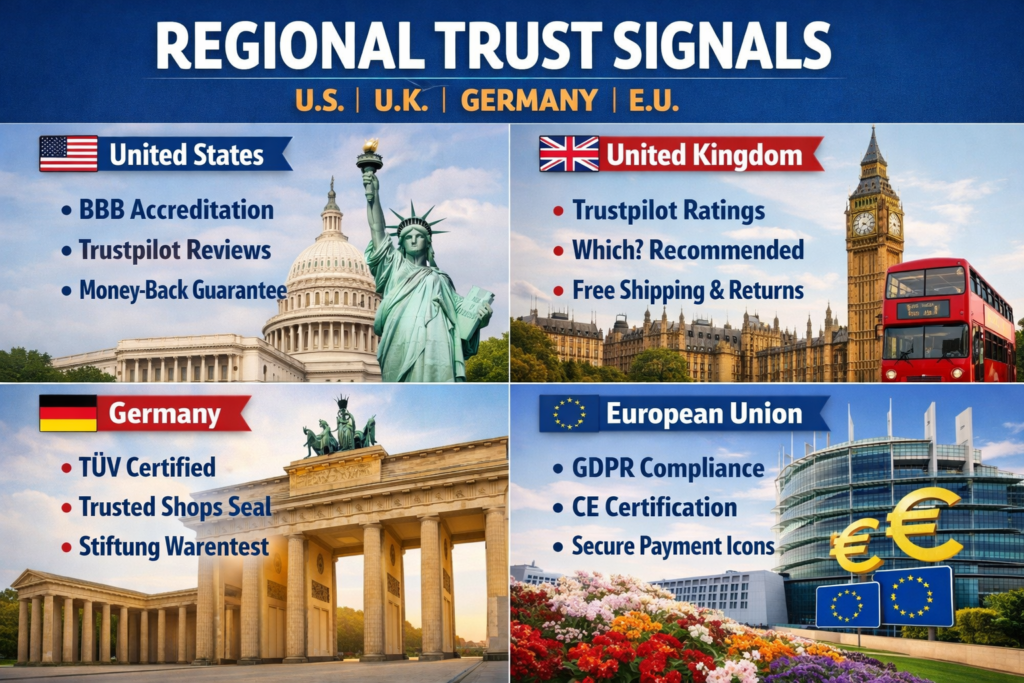
Regional trust signals for the US, UK, Germany, and the wider EU
Not every market responds to the same trust stack.
US
For US-based B2B, SaaS, healthcare, and fintech pages, buyers often respond well to.
customer proof
Implementation results
SOC 2 language
HIPAA-ready context
G2 or third-party review visibility
Fast response expectations
UK
In the UK, local presence and data-handling clarity can do a lot of work.
The ICO’s UK GDPR guidance remains a useful reference point for organisations handling personal data, while Open Banking UK describes open banking as a secure way for businesses and consumers to move, manage, and make more of their money. For firms targeting London, Manchester, or other UK service markets, a visible office footprint and plain-English privacy messaging often strengthen trust.
Germany and the EU
For Germany and the wider EU, legal clarity can be a trust signal by itself.
The Council of the European Union states that the GDPR governs how the personal data of individuals in the EU may be processed and transferred. In Germany, buyers often expect stronger transparency around company identity, contact routes, and compliance language. References like an Impressum, Handelsregister details, or regulator-aware wording can make a site feel more legitimate. Trusted Shops positions its Trustmark and Buyer Protection as digital trust tools for ecommerce, which can be helpful when genuinely applicable.
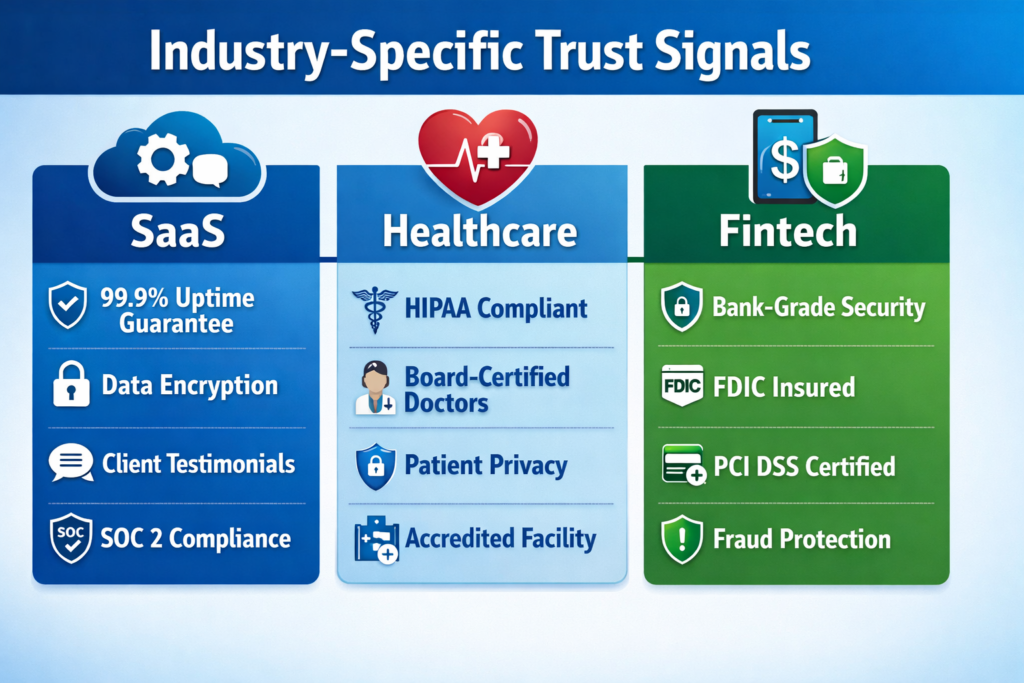
Industry-specific trust signals that improve lead quality
The best trust signals do not just increase lead volume. They also help attract better-fit prospects.
SaaS
SaaS buyers often want.
Product proof
Onboarding clarity
Uptime or reliability language
Integration logos
Role-based testimonials
Implementation case studies
Healthcare
Healthcare pages usually need.
Careful privacy language
HIPAA-aware messaging
Clinician or expert credibility
Clear process boundaries
Calm, non-hype wording
Fintech and regulated services
Fintech buyers often look for.
PCI DSS awareness
SOC 2 or similar assurance
Open Banking familiarity where relevant
regulator-aware language
security and data-handling transparency
For German financial audiences, awareness of BaFin and the broader regulatory environment can also signal seriousness, even when the page itself is lead-gen focused rather than transactional.
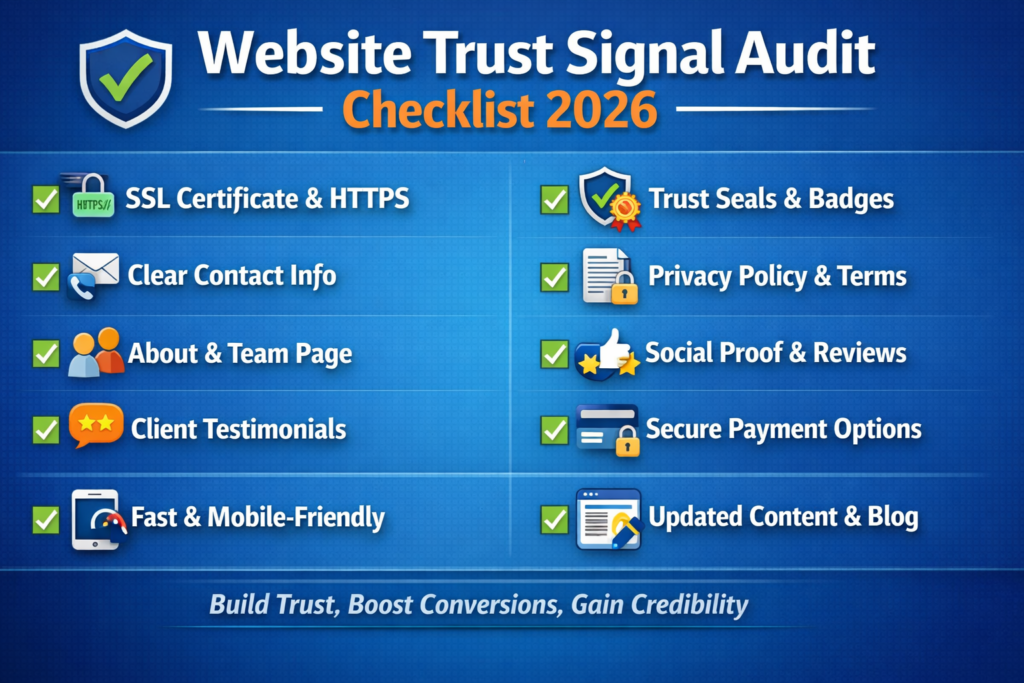
A simple trust signal audit for your website
A practical audit does not need to be complicated. Review your core pages and ask three things:
Is proof visible early?
Check the hero section, first CTA block, and first scroll depth.
Is reassurance placed near risk points?
Review forms, pricing sections, demo requests, and contact buttons.
Can a visitor verify that your business is real?
Look at your footer, About page, contact page, privacy page, and business profile details.
A simple checklist.
One clear proof element above the fold
One strong testimonial near the main CTA
One relevant case study on key service pages
Privacy reassurance near every lead form
Visible business contact details
Current legal and policy pages
Mobile-friendly layout
Fast-loading page experience
Region-appropriate compliance language
Common mistakes that weaken trust
Even good companies lose leads through poor trust design.
Fake-looking badges
If a badge cannot be explained or verified, it can do more harm than good.
Vague claims
“Best in class” means nothing without specifics.
Old testimonials
A quote tied to an outdated offer, unknown role, or old product version weakens credibility.
Buried privacy details
If visitors need to hunt for basic privacy reassurance, they may abandon before enquiring.
Copying the same page across every region
A New York buyer, a London legal prospect, and a Munich fintech stakeholder may all care about trust, but not in exactly the same way.
To Sum Up
Trust signals for lead generation work best when they reduce risk exactly where action feels hardest. That usually means specific testimonials, believable case studies, relevant privacy or compliance reassurance, and clear contact details placed close to forms and CTAs.
When those signals are aligned with strong UX, local expectations, and your actual service promise, you do more than lift form fills. You improve the quality of the leads coming in.
If your site is attracting visitors but not enough qualified enquiries, your trust layer may be the gap worth fixing first.( Click Here’s )
FAQs
Q : What are the best trust signals for lead generation?
A : The strongest trust signals for lead generation are usually testimonials, case studies, recognizable client proof, privacy reassurance, and clear contact details. They work best when placed near forms, CTAs, and other decision points.
Q : Do trust badges increase conversions on B2B websites?
A : They can, but only when they are relevant and believable. On B2B pages, badges often work better when paired with real proof like customer results, team credibility, and transparent process language.
Q : How many trust signals should a landing page include?
A : There is no perfect number. A focused mix usually works best: one proof bar near the top, one strong testimonial or case study near the CTA, and one reassurance block near the form.
Q : Can trust signals improve lead quality, not just lead volume?
A : Yes. Better trust signals help pre-qualify visitors by making your standards, experience, and service fit clearer. That often attracts more suitable prospects, not just more clicks.
Q : Should trust signals be localized by country?
A : Usually, yes. Buyers in the US, UK, Germany, and the wider EU may look for different cues around privacy, compliance, local presence, and business legitimacy.