Blogs
Essential E-Commerce Plugins for GCC Store Success
Content Editor · November 27, 2026 · 13 min read
Direct answer
Is a standard PDF invoice plugin sufficient for Saudi ZATCA Phase 2 compliance?
No. Businesses subject to ZATCA Phase 2 must use compliant electronic invoicing solutions integrated with the FATOORA platform. Generating a standard PDF invoice does not satisfy the applicable integration and structured invoicing requirements.
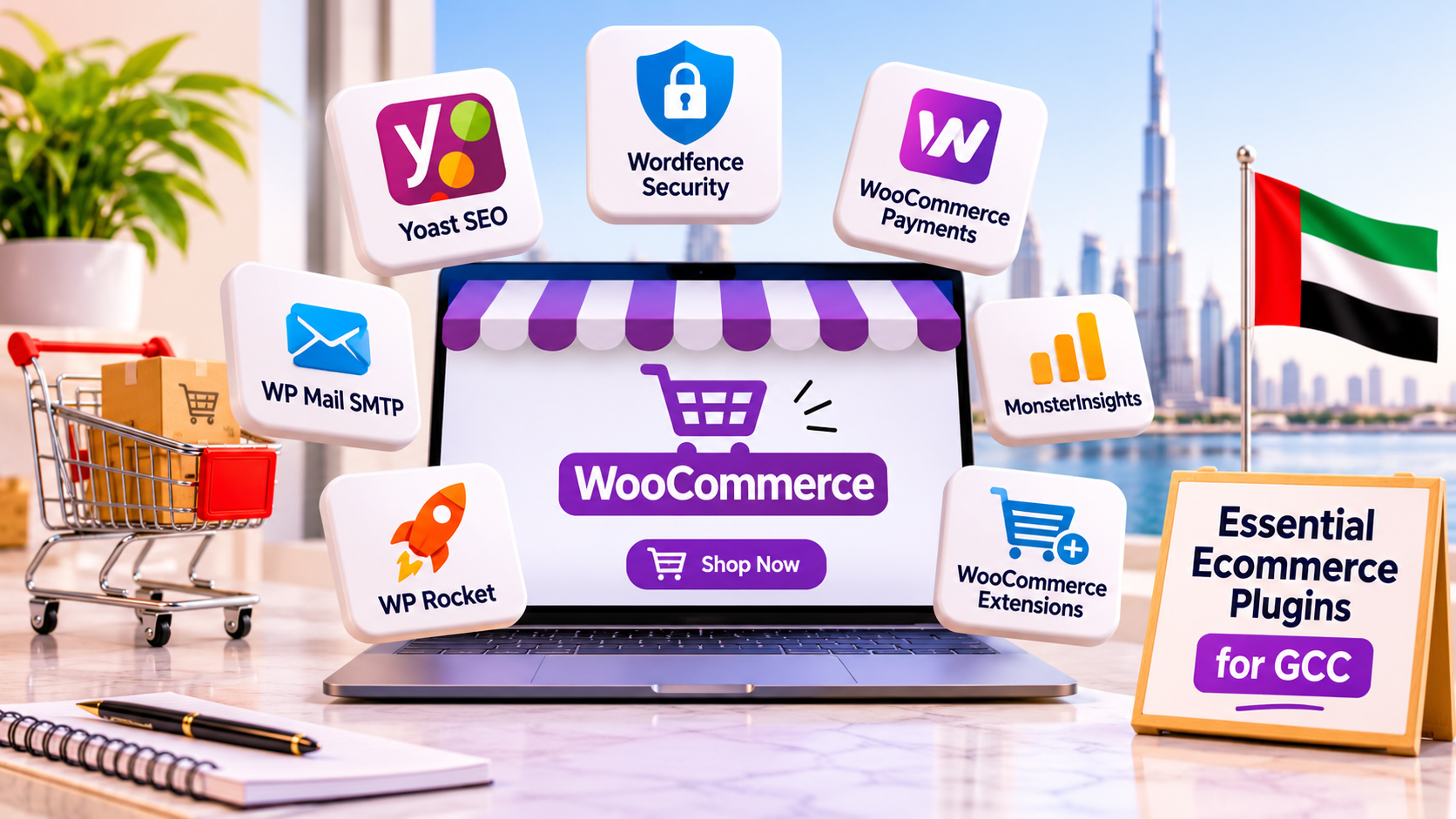
Essential e-commerce plugins help online stores across the Gulf accept local payments, support Arabic shopping experiences, manage applicable VAT and invoicing requirements, improve security, and streamline shipping. For…
Essential E-Commerce Plugins for GCC Store Success
Essential e-commerce plugins help online stores across the Gulf accept local payments, support Arabic shopping experiences, manage applicable VAT and invoicing requirements, improve security, and streamline shipping. For businesses in Saudi Arabia, the UAE, Qatar, Kuwait, Bahrain, and Oman, the right plugins can make checkout easier for customers while reducing everyday operational challenges.
A store that works perfectly for international shoppers may still frustrate GCC customers. A customer in Riyadh might prefer mada, while a shopper in Kuwait expects KNET. In Dubai or Doha, clear Arabic navigation and locally appropriate payment options can make a meaningful difference.
Choosing plugins around these regional needs is more useful than installing every popular extension.
Businesses planning a new store or upgrading an existing one can benefit from professional e-commerce development solutions that bring payments, localization, security, and performance together.
This guide focuses primarily on WordPress and WooCommerce, with practical considerations for other e-commerce platforms.
What Are the Essential E-Commerce Plugins for GCC Websites?
What E-Commerce Plugins Do and Why They Matter
E-commerce plugins add features to online stores without requiring businesses to develop everything from scratch.
For WooCommerce websites, these extensions can manage payment gateways, multilingual content, order notifications, tax calculations, delivery tracking, and marketing.
Shopify uses apps rather than WordPress plugins, while platforms such as Salla and Zid have their own integration ecosystems.
The goal is to choose tools that work reliably together, not simply increase the number of installed plugins.
Essential E-Commerce Plugins Checklist for Gulf Stores
|
Plugin category |
Recommended solutions |
Priority |
|---|---|---|
|
Payment gateways |
MyFatoorah, PayTabs, Tap Payments |
Essential |
|
Arabic localization |
WPML, TranslatePress |
High |
|
VAT and invoicing |
ZATCA-compatible integrations, VAT extensions |
Where applicable |
|
Website security |
Wordfence, Solid Security |
Essential |
|
Website performance |
WP Rocket, LiteSpeed Cache |
High |
|
Backups |
UpdraftPlus |
Essential |
|
Shipping |
Aramex, DHL, Torod integrations |
High |
|
SEO |
Rank Math, Yoast SEO |
High |
|
Customer support |
WhatsApp Business integrations |
Recommended |
|
Cart recovery |
FunnelKit, compatible recovery tools |
Growth-stage |
|
Analytics |
GA4, Google Site Kit |
High |
|
Buy now, pay later |
Tabby, Tamara |
Market-dependent |
These are options to evaluate, not plugins that every store should install together. Some capabilities are already built into WooCommerce, and certain integrations may require separate merchant accounts or paid subscriptions.
Why GCC Stores Need a Localized Plugin Strategy
Gulf customers have different payment preferences, languages, currencies, and delivery expectations.
A localized store should consider.
Arabic and English shopping experiences, including right-to-left (RTL) layouts.
Regional payment methods and local currency transactions.
Applicable VAT, invoicing, and privacy obligations.
Mobile-friendly checkout and delivery options.
Accurate addresses and customer support channels.
For example, a Saudi business may need mada acceptance and ZATCA-compatible invoicing, while a Qatar-based retailer may prioritize QAR checkout and domestic debit card support.
Working with a professional web development team can help align these requirements with the store's technical architecture.
Best Payment Gateway and Checkout Plugins for GCC E-Commerce
Saudi Arabia Payment Plugins for mada and Flexible Payments
Payment compatibility is among the most important considerations for Saudi WooCommerce stores.
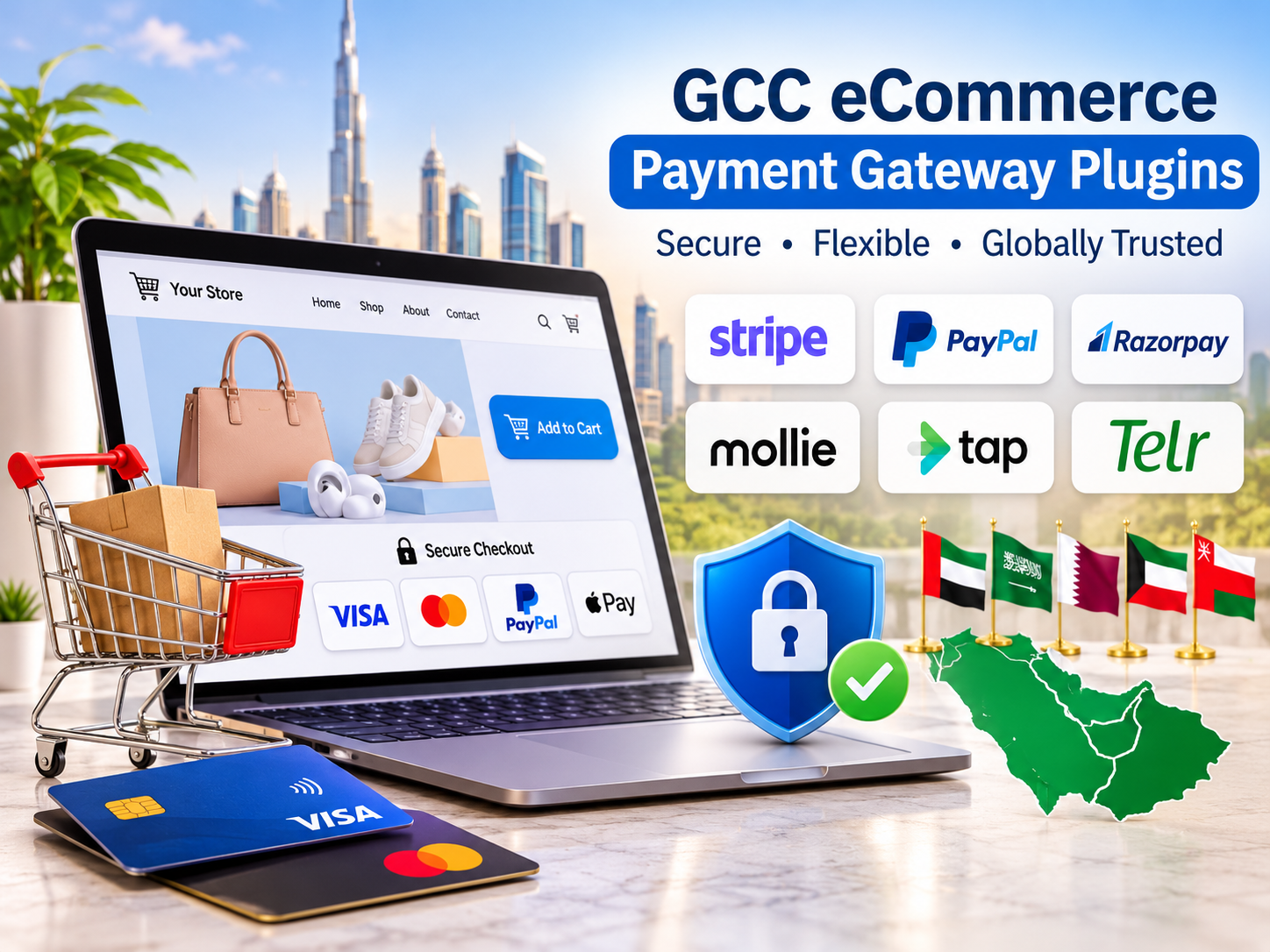
MyFatoorah, PayTabs, and Tap Payments are worth evaluating for regional payment acceptance, including mada, supported card networks, Apple Pay, and transactions in Saudi riyals (SAR).
For shoppers who prefer installment payments, Tabby and Tamara may offer additional flexibility through buy-now-pay-later (BNPL) services.
However, availability depends on the merchant's business category, approval status, contractual terms, and integration setup.
Before selecting a gateway, confirm transaction fees, settlement schedules, refund handling, and support for your WooCommerce checkout configuration.
Useful provider references include MyFatoorah integration documentation and PayTabs WooCommerce payment documentation.
UAE and Qatar Payment Gateway Plugins
In the UAE, online retailers should prioritize AED payment acceptance, reliable card processing, and convenient mobile checkout.
Apple Pay and approved BNPL options can be considered according to the business model and target audience.
Qatar-based stores should evaluate gateways that process QAR transactions and support eligible local payment methods, including Qatar debit card arrangements.
For a Doha retailer, displaying prices in QAR is only part of the setup. The gateway must also support the merchant's location, settlement requirements, and intended payment methods.
Always test successful payments, declined transactions, refunds, and checkout notifications before going live.
Local Payment Integrations Across Kuwait, Bahrain and Oman
|
Country |
Payment methods to evaluate |
Currency |
|---|---|---|
|
Saudi Arabia |
mada, Apple Pay, BNPL |
SAR |
|
UAE |
Cards, Apple Pay, BNPL |
AED |
|
Qatar |
QPay/NAPS-related options, cards |
QAR |
|
Kuwait |
KNET |
KWD |
|
Bahrain |
BenefitPay |
BHD |
|
Oman |
OmanNet |
OMR |
Some payment providers offer integrations covering several GCC markets, but payment-method availability varies by merchant account and jurisdiction.
A single plugin does not automatically provide access to every regional network. Confirm activation and settlement arrangements with the payment provider before launch.
Arabic Localization and Customer Experience Plugins
Best Arabic Translation and RTL Plugins for WooCommerce
Arabic localization goes beyond translating product descriptions.
A properly localized e-commerce store should also support navigation menus, product filters, checkout forms, account pages, promotional messages, and transactional content.
WPML and TranslatePress are popular options for managing multilingual WordPress websites. Their WooCommerce-related capabilities and compatibility should be checked against the selected plugin versions.
When implementing Arabic, pay particular attention to.
Correct RTL text direction and interface alignment.
Product names, categories, and attribute translations.
Arabic search terms and localized SEO metadata.
Checkout labels and validation messages.
Consistent language switching across shopping pages.
Translation plugins handle language content, but the site's theme and other extensions must also support accurate RTL layouts.
Optimizing Arabic and English Checkout Experiences
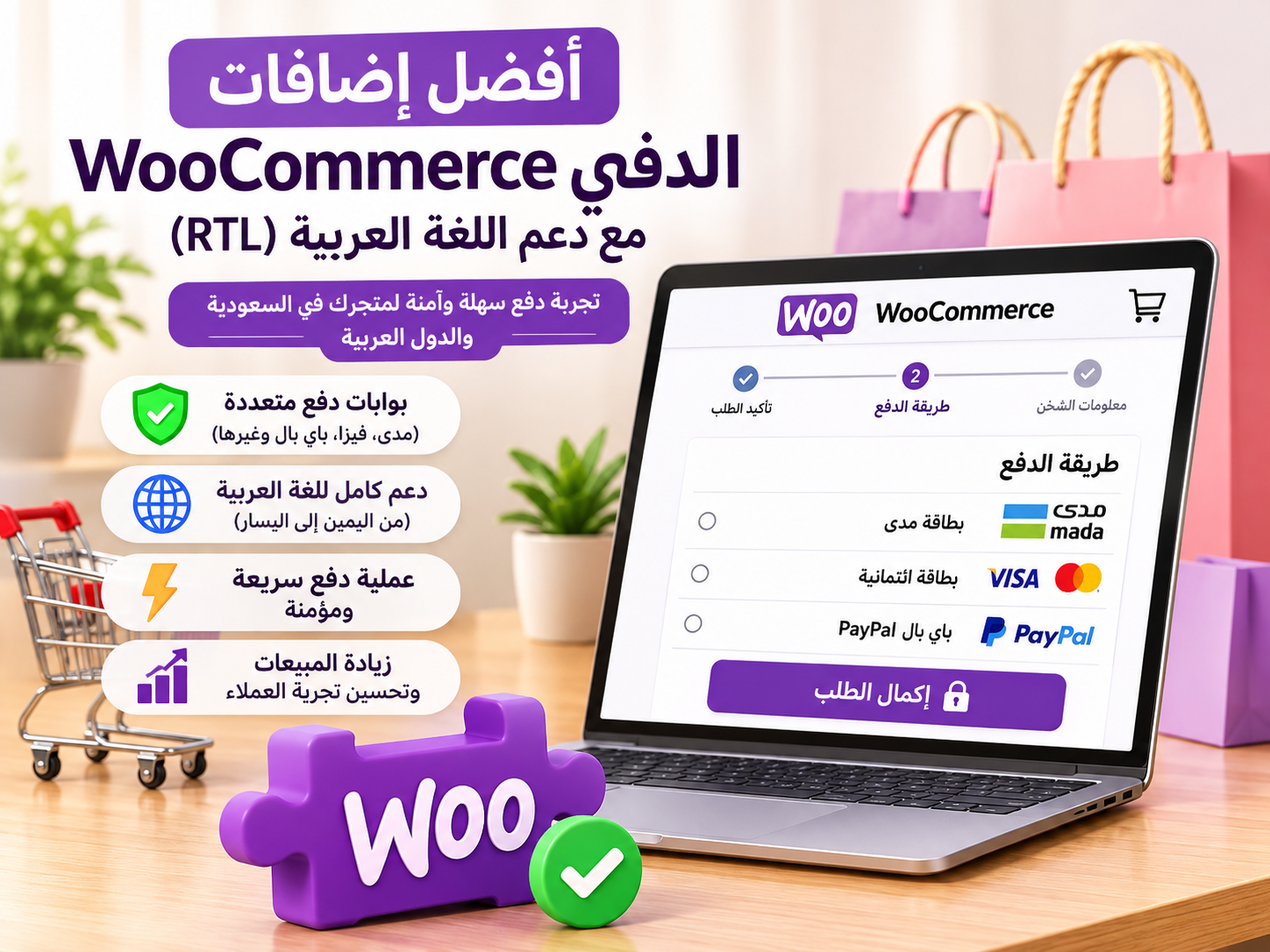
A bilingual checkout should feel natural in either language.
Customers should see understandable address fields, phone number formats, shipping instructions, and payment error messages.
For example, a Dubai fashion retailer could offer Arabic and English shopping experiences while maintaining consistent product information and delivery options.
Test both language versions on actual mobile devices. Small problems with button placement, field alignment, or unreadable error messages can disrupt checkout.
WhatsApp, Cash on Delivery and Customer Support Plugins
WhatsApp Business integrations can make it easier for customers to ask about sizes, availability, orders, and deliveries.
WooCommerce also includes cash-on-delivery functionality, which retailers can configure according to their shipping and payment policies.
Additional extensions may help control COD eligibility by delivery region, order value, or shipping method.
Choose communication tools carefully. Order notifications and promotional messages should follow applicable privacy requirements and customer consent preferences.
Essential Security, VAT and Compliance Plugins for GCC Stores
ZATCA E-Invoicing Plugins for Saudi E-Commerce Websites
Saudi online stores must distinguish between payment processing and electronic invoicing.
A gateway that accepts mada payments does not automatically fulfill the requirements of Saudi Arabia's Zakat, Tax and Customs Authority (ZATCA).
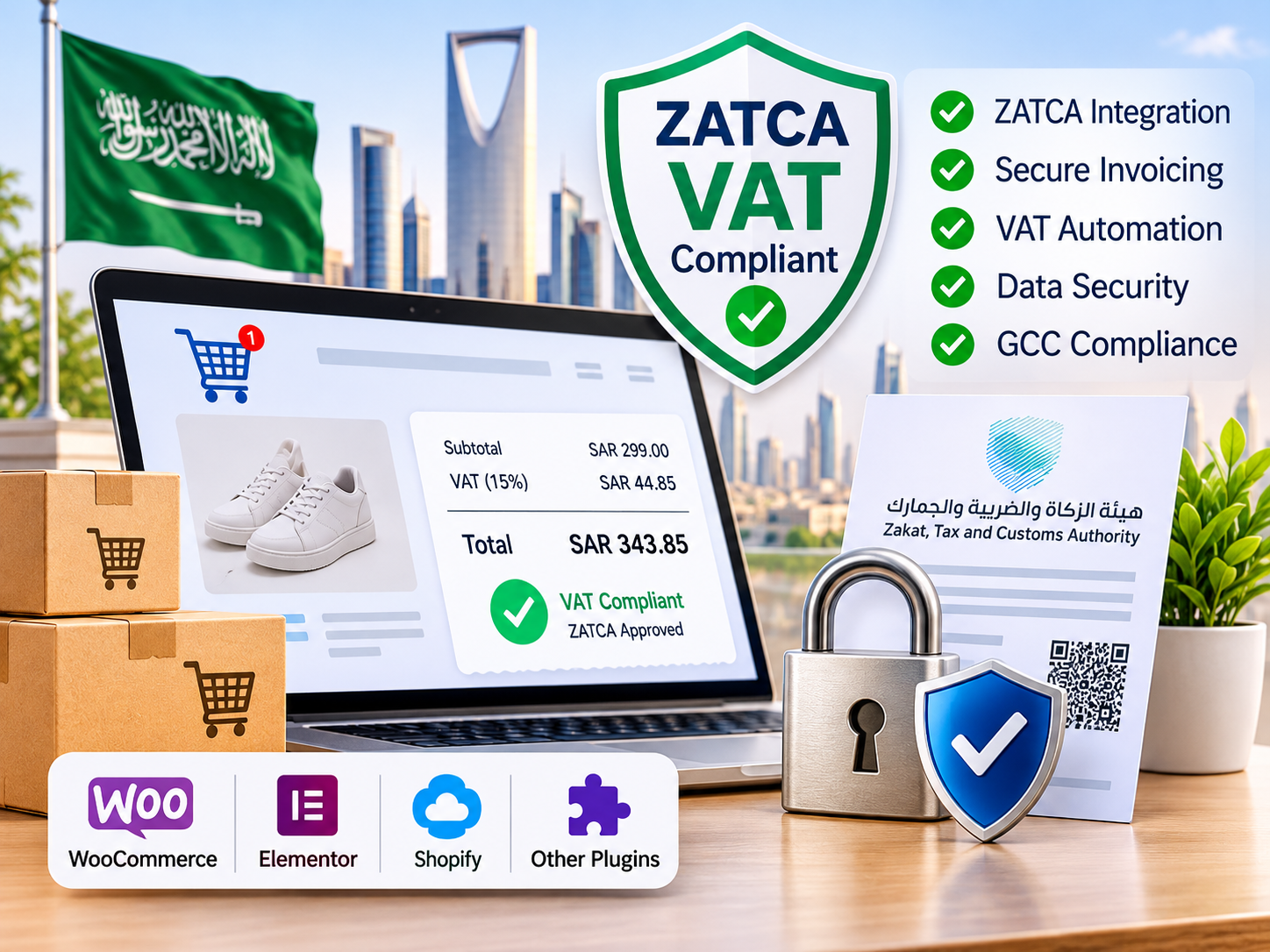
Businesses subject to ZATCA Phase 2 must use compliant electronic invoicing solutions integrated with the FATOORA platform. These systems must meet applicable structured invoice, security, and reporting or clearance requirements.
A standard PDF invoice plugin alone is not sufficient for Phase 2 compliance.
Before choosing an integration, confirm the business's applicable invoicing phase, technical requirements, and accounting system compatibility.
Refer to the official ZATCA e-invoicing guidance for current obligations.
UAE VAT, Qatar Regulations and GCC Data Protection
VAT and invoicing obligations differ across GCC countries. An extension suitable for a UAE business may not meet Saudi requirements.
|
Country |
Standard VAT rate or status |
Relevant authorities |
|---|---|---|
|
Saudi Arabia |
15% |
ZATCA, SAMA, SDAIA |
|
UAE |
5% |
FTA, CBUAE |
|
Qatar |
VAT not implemented |
QCB, NCSA |
|
Kuwait |
VAT not implemented |
CBK, CITRA |
|
Bahrain |
10% |
NBR, CBB |
|
Oman |
5% |
Oman Tax Authority, CBO |
The UAE is also implementing a phased electronic invoicing programme for applicable business-to-business (B2B) and business-to-government (B2G) transactions.
Under the published implementation schedule, mandatory adoption begins on January 1, 2027, for businesses with annual revenue of at least AED 50 million, followed by the next business phase on July 1, 2027. Scope, exceptions, and accredited service provider obligations must be assessed individually.
Businesses operating in the Abu Dhabi Global Market (ADGM) or Dubai International Financial Centre (DIFC) should also account for their applicable data protection frameworks.
Tax configurations, security plugins, and consent tools can support compliance efforts, but they do not replace legal or accounting advice.
Website Security, Backup and Privacy Plugins
Security needs to be part of the store's foundation, not an afterthought.
Wordfence and Solid Security can help strengthen WordPress login protection, monitoring, and other security controls. UpdraftPlus can support scheduled backups and recovery.
A well-maintained GCC e-commerce website should also have strong administrator authentication, trusted hosting, current software updates, restricted user permissions, and tested backup restoration procedures.
For a Riyadh retailer processing daily online orders, a backup is useful only when it can be restored reliably.
Security and privacy responsibilities extend beyond plugin installation, particularly when customer addresses, contact details, and transaction data are involved.
Shipping, SEO and Performance Plugins for Gulf Online Stores
GCC Shipping and Delivery Integration Plugins
Reliable delivery is essential for earning customer trust, particularly when stores serve multiple GCC countries.
Shipping integrations can help automate fulfillment, calculate delivery charges, generate shipping labels, and provide tracking information.
Aramex, DHL, and Torod are useful providers to evaluate, depending on the retailer's location and shipping requirements.
For Saudi businesses, delivery workflows should also accommodate applicable SPL National Address requirements.
Before integrating a shipping solution, check coverage areas, COD handling, delivery fees, return procedures, and WooCommerce compatibility.
Best SEO and Analytics Plugins for E-Commerce Websites
Even a well-designed online store needs search visibility to attract potential buyers.
Rank Math and Yoast SEO can help manage product metadata, XML sitemaps, canonical URLs, and other technical SEO settings.
For GCC businesses, effective e-commerce SEO should also address Arabic and English search queries, localized product pages, and appropriate language targeting.
Google Site Kit and Google Analytics 4 (GA4) can help measure traffic, engagement, and conversions when correctly configured.
However, analytics tracking must respect applicable privacy and consent requirements.
Businesses looking to strengthen their organic visibility can explore professional e-commerce SEO services.
Website Speed and Mobile Performance Optimization Plugins
Slow-loading product pages and checkout screens can frustrate customers, especially on mobile devices.
WP Rocket and LiteSpeed Cache are popular performance optimization options for compatible WordPress environments.
Choose caching tools based on your hosting setup rather than installing multiple solutions with overlapping functionality.
Checkout, cart, and account pages require particular attention to caching exclusions and session handling.
Image optimization, efficient themes, suitable hosting, and careful script management are equally important.
Professional front-end development can improve mobile usability, responsive layouts, and Core Web Vitals alongside plugin-based optimization.
How to Choose and Install the Right E-Commerce Plugins
Essential vs. Optional Plugins and Free vs. Premium Solutions
Not every online store needs the same extensions.
A new business may need reliable payments, security, backups, and tax functionality before investing in advanced marketing automation.
As sales activity increases, more specialized integrations can become useful.
|
Business stage |
Recommended capabilities |
|---|---|
|
Startup |
Payments, security, backups, applicable invoicing |
|
Growing SME |
Arabic localization, SEO, analytics, shipping automation |
|
Established retailer |
Cart recovery, customer communication, advanced reporting |
|
Enterprise |
Custom integrations, scalable infrastructure, workflow automation |
Free plugins can be suitable when they provide the required functionality, ongoing maintenance, and compatibility.
Premium solutions may offer additional features and support, but they are not automatically better for every business.
Review renewal costs, update history, developer support, and licensing restrictions before making a decision.
Step-by-Step Plugin Installation and Testing Checklist
A structured installation process reduces the risk of compatibility problems and unexpected checkout failures.
Identify regional requirements.
Determine the payment methods, languages, currencies, taxes, and shipping services your business needs.
Check technical compatibility.
Review the plugin's supported WooCommerce, WordPress, PHP, and hosting versions.
Create a backup and staging environment.
Test changes without disrupting the live shopping experience.
Install and configure selected plugins.
Follow official setup instructions and connect approved merchant or service accounts.
Test customer journeys.
Verify Arabic layouts, checkout payments, invoices, shipping charges, order emails, and refunds.
Review security and performance.
Check plugin conflicts, access permissions, loading behavior, and mobile usability.
Deploy and maintain.
Monitor transactions, renew licenses, apply tested updates, and review integrations periodically.
Treat checkout testing as a launch requirement, not an optional finishing task.
Common Plugin Mistakes GCC Businesses Should Avoid
Adding too many extensions can increase maintenance requirements and create unnecessary compatibility risks.
Common problems include outdated plugins, unsupported payment gateways, conflicting caching configurations, and untested updates.
Businesses should also avoid assuming that a plugin advertised as GCC-compatible supports every local payment method or regulatory requirement.
For Shopify, Salla, and Zid, confirm the availability of equivalent platform-specific integrations rather than attempting to install WooCommerce extensions.
Where a store needs complex checkout functionality, professional WooCommerce development services can help address compatibility and customization challenges.
Wrap It Up
The most useful essential e-commerce plugins are not necessarily the ones with the longest feature lists. They are the tools that solve real problems for your customers and business.
For GCC online stores, that means prioritizing regional payments, Arabic localization, secure transactions, appropriate invoicing, dependable shipping, and mobile performance.
Start with the capabilities your business genuinely needs. Test every integration before launch, and review your setup as customer expectations and regulatory requirements change. Mak It Sol
Planning to launch or improve your online store in Saudi Arabia, the UAE, Qatar, or elsewhere in the GCC?
Contact Mak It Solutions to discuss your project, request a plugin compatibility assessment, and explore an e-commerce development strategy tailored to your market.
FAQs
Frequently asked questions
Quick answers related to this article.
Comments
Join the discussion. Comments are moderated.
No comments yet. Be the first to share a thought.
Building something related?
Tell us about your product goals — we’ll respond with a clear next step.
Discuss your project