Blogs
WooCommerce Customization Saudi Arabia: 2027 Trends
Content Editor · November 18, 2026 · 12 min read
Direct answer
Can a Saudi WooCommerce store support Arabic and English checkout?
Yes. WooCommerce can support bilingual checkout using compatible themes, translation tools, and payment extensions.
A visually appealing online store won't get far if customers struggle to find products, select their preferred payment method, or complete checkout. That's why WooCommerce customization Saudi Arabia is becoming an…
WooCommerce Customization Saudi Arabia: 2027 Trends
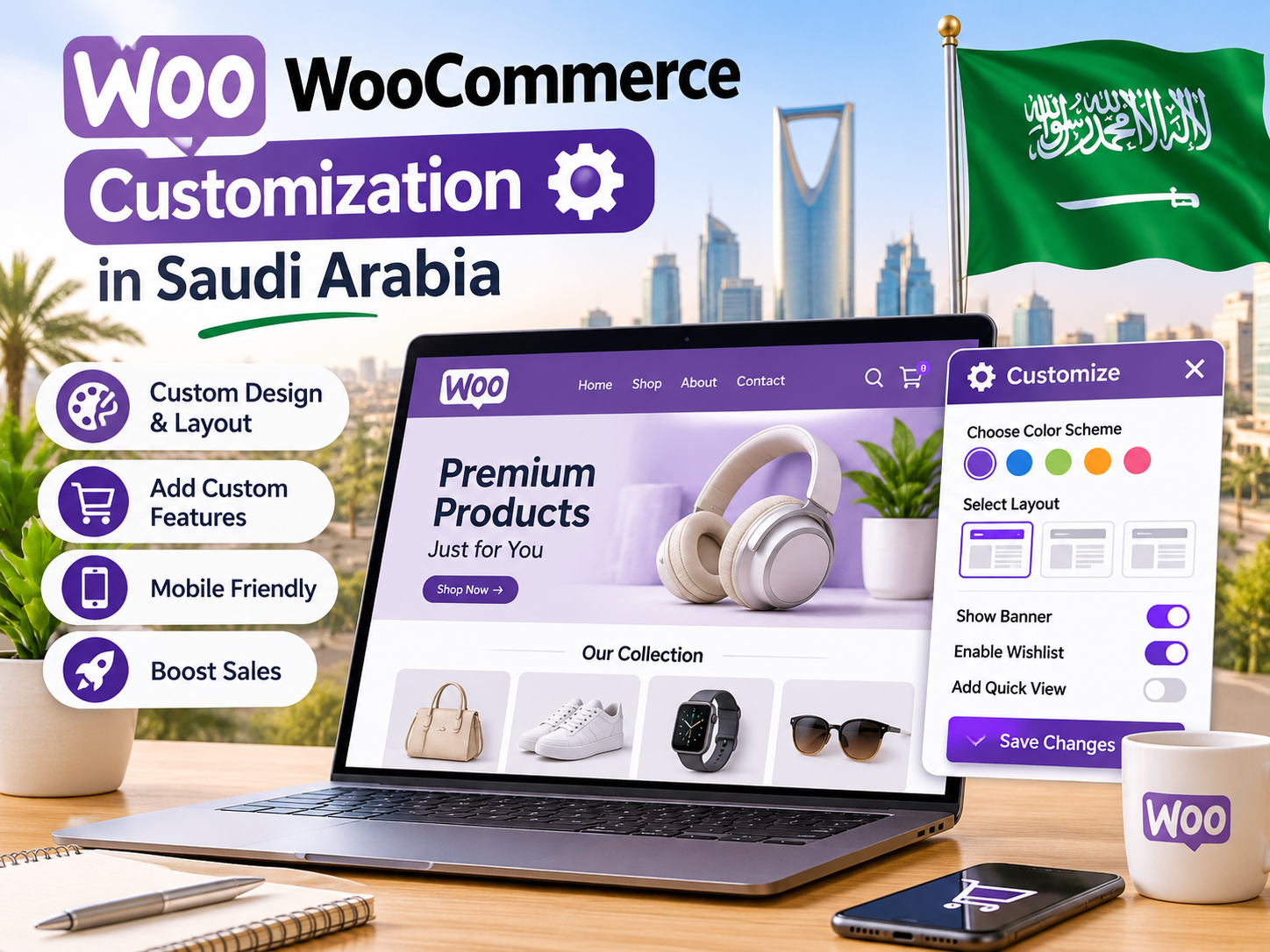
A visually appealing online store won't get far if customers struggle to find products, select their preferred payment method, or complete checkout. That's why WooCommerce customization Saudi Arabia is becoming an important priority for online retailers preparing for 2027.
From Riyadh and Jeddah to Dammam, customers expect smooth mobile shopping, intuitive Arabic navigation, familiar payment options, and clear delivery information.
For Saudi businesses, effective WooCommerce customization means adapting the store to local customer needs. This includes Arabic-first design, mada-compatible payments, mobile optimization, and appropriate ZATCA e-invoicing integrations. Businesses selling across the UAE and Qatar must also consider country-specific payment, privacy, and fulfillment requirements.
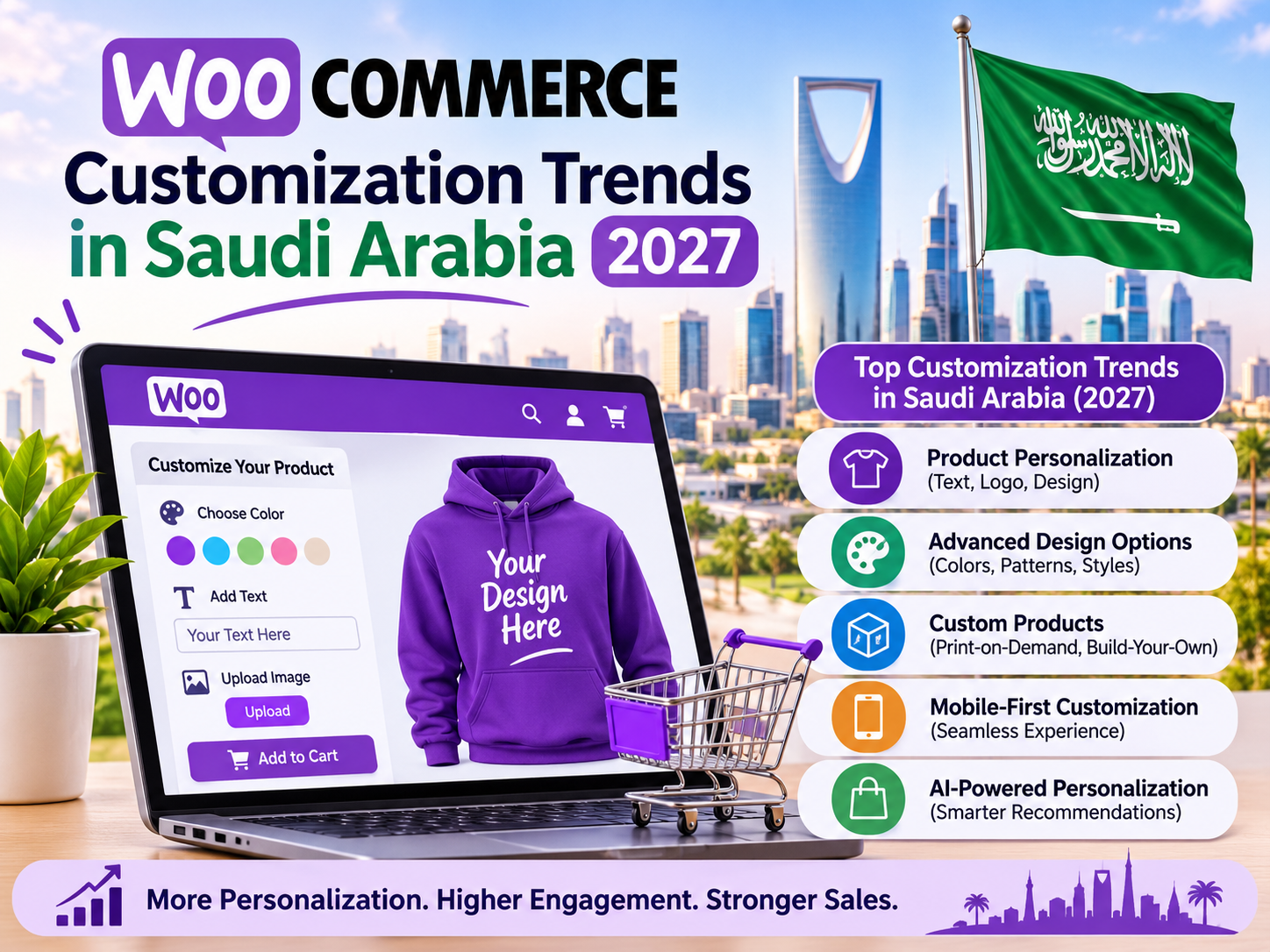
The most useful WooCommerce trends for 2027 focus on six areas: localization, payment integration, regulatory compliance, conversion optimization, operational automation, and AI-assisted personalization.
These are forward-looking development priorities rather than guaranteed predictions about market adoption.
Top WooCommerce Customization Trends in Saudi Arabia for 2027
Saudi e-commerce businesses need more than attractive website templates. They need storefronts that reflect local shopping preferences while remaining easy to manage and scale.
Arabic-First WooCommerce Design and RTL Navigation
Arabic localization should influence the entire shopping journey, not just product descriptions.
A well-customized WooCommerce store should support right-to-left (RTL) navigation, properly aligned menus, readable product information, and clear checkout instructions in Arabic.
For businesses serving multilingual customers, Arabic and English shopping journeys should work equally well.
For example, a Riyadh fashion retailer could offer Arabic product browsing while allowing English-speaking customers to switch languages without losing their cart contents or checkout progress.
Professional WooCommerce development can help businesses implement bilingual storefronts while maintaining consistent functionality.
Mobile-First Storefronts and Faster Product Discovery
Mobile usability should be a core development priority for Saudi online stores.
Customers should be able to browse categories, compare products, and complete purchases without navigating complicated menus or waiting for slow pages.
Useful improvements include.
Optimized product images that load efficiently.
Clear navigation and product filters.
Accessible add-to-cart and checkout buttons.
Simplified mobile forms.
Responsive layouts for different screen sizes.
Strong web development practices can also improve Core Web Vitals, minimize unnecessary scripts, and make storefronts more responsive.
Personalized Shopping Experiences for Saudi Customers
Personalization is another area worth evaluating for 2027.
WooCommerce businesses can organize products around seasonal demand, browsing preferences, and customer interests.
For example, a Jeddah retailer might feature Ramadan collections, Eid gift ideas, or location-specific product recommendations.
AI-assisted recommendations can also help customers discover relevant products. However, personalization should be implemented with appropriate privacy safeguards and realistic expectations.
The priority is to make shopping easier, not overwhelm visitors with unnecessary recommendations.
How to Customize WooCommerce Payments for Saudi Arabia
Payment convenience can influence whether customers finish their purchases or abandon checkout.
For Saudi merchants, reliable payment integration is a key part of WooCommerce customization Saudi Arabia projects.
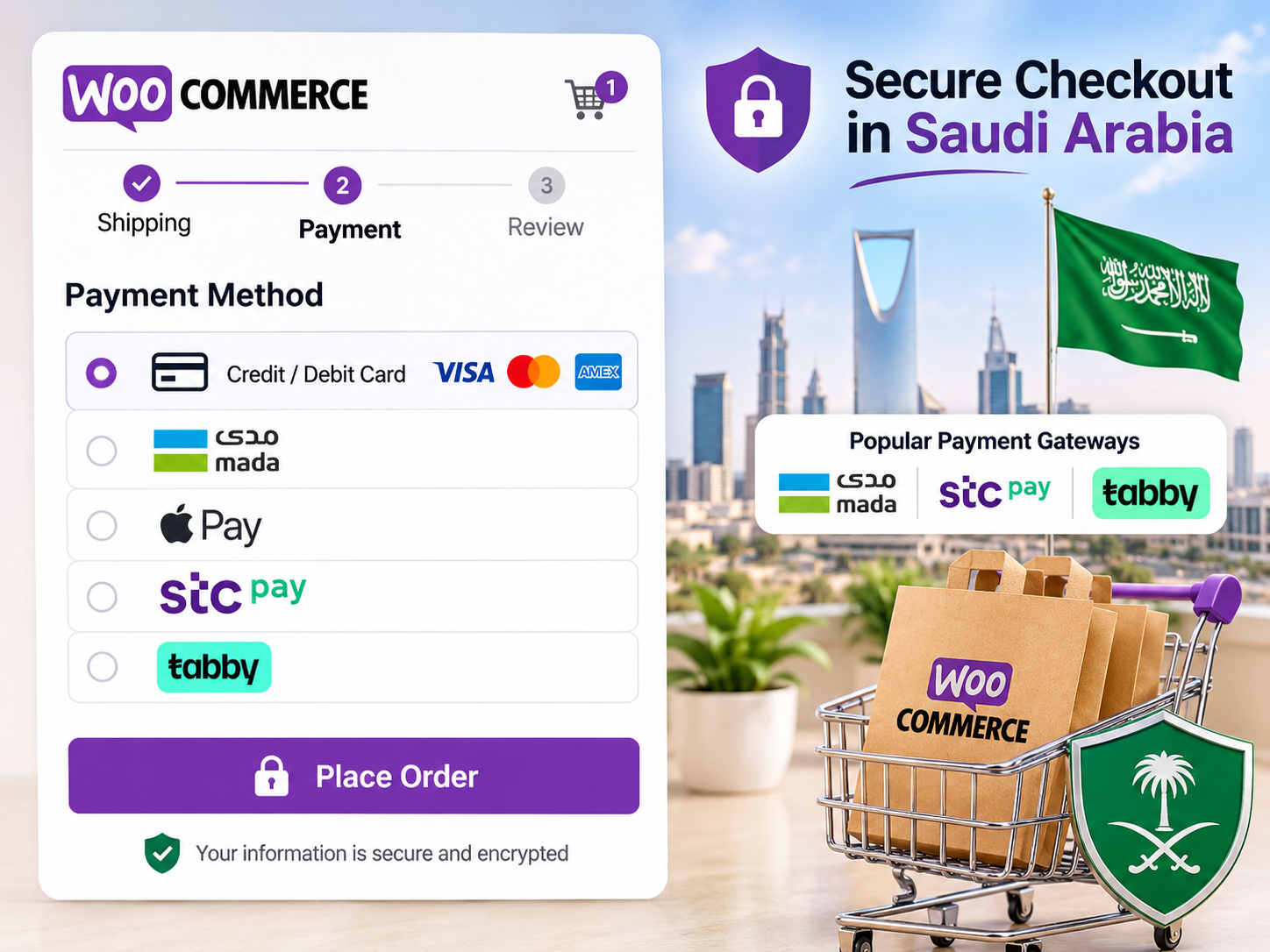
Integrating mada, STC Pay, and Apple Pay
Saudi businesses should evaluate payment providers that support the methods their customers prefer.
Depending on the provider and merchant eligibility, these may include:
mada.
A widely recognized Saudi payment network.
STC Pay.
A digital wallet option supported by participating providers.
Apple Pay.
A convenient payment method for customers using compatible devices.
Successful integration requires more than enabling a gateway extension.
Merchants should confirm provider eligibility, supported transaction methods, checkout compatibility, and security requirements.
Testing on actual mobile devices is especially important because a payment method that works in one checkout configuration may not function correctly in another.
Adding Tabby, Tamara, and Streamlined Checkout
Buy-now-pay-later services such as Tabby and Tamara may offer additional flexibility for eligible merchants and customers.
However, merchants should review eligibility, fees, settlement arrangements, and extension compatibility before implementation.
Checkout design matters just as much as payment selection.
Useful improvements include guest checkout, clearly displayed order totals, concise forms, and straightforward error messages.
Mak It Solutions' e-commerce solutions cover payment, checkout, and shipping workflows that businesses can adapt to their requirements.
WooCommerce Payment Requirements Across Saudi Arabia, UAE, and Qatar
Businesses operating across the GCC cannot assume that the same payment setup will work in every market.
| Market | Important payment considerations |
|---|---|
| Saudi Arabia | mada compatibility, supported digital wallets, and BNPL eligibility |
| UAE | Locally supported cards, digital wallets, and AED settlement |
| Qatar | QAR transactions, local acquiring options, and gateway compatibility |
For example, a Dubai retailer expanding into Saudi Arabia should verify whether its payment provider supports the required Saudi payment methods.
Similarly, a Doha business should confirm its acquiring arrangements and settlement options before selecting a WooCommerce gateway.
WooCommerce Compliance Requirements for Saudi Arabia and the GCC
Compliance is an important consideration when customizing WooCommerce stores for regulated business environments.
A plugin alone cannot guarantee compliance. Businesses need suitable invoicing, payment, tax, and customer-data processes.
ZATCA E-Invoicing and Saudi VAT Integration
Saudi businesses subject to electronic invoicing requirements must ensure their invoicing systems meet applicable ZATCA rules.
Under ZATCA's phased e-invoicing implementation, Phase 2 integration requirements apply according to the relevant taxpayer waves and notifications.
WooCommerce merchants may need specialized invoicing software or integration with an external compliant solution.
Important considerations include.
Correct VAT treatment and invoice information.
Appropriate electronic invoice generation and recordkeeping.
Integration requirements applicable to the business.
Compatibility between WooCommerce orders and invoicing systems.
Businesses should verify their current obligations through official ZATCA guidance before implementing or modifying invoicing workflows.
Saudi PDPL and Customer Data Protection
WooCommerce stores collect customer information through orders, accounts, delivery details, and payment-related workflows.
Saudi Arabia's Personal Data Protection Law (PDPL) establishes requirements for handling personal information, including relevant conditions for international data transfers.
Businesses should review plugin permissions, retention practices, access controls, and hosting arrangements under applicable Saudi data protection requirements.
Regional infrastructure options such as AWS Bahrain, Azure UAE Central, and Google Cloud Doha may be worth evaluating.
However, selecting a regional hosting location does not automatically make a store compliant.
Cross-Border Requirements in the UAE and Qatar
WooCommerce stores serving multiple GCC markets must consider the regulations applicable to their business activities.
UAE businesses may need to address VAT, personal-data protection, and relevant commercial requirements.
Qatar-based merchants should examine local privacy obligations and applicable Qatar Central Bank payment regulations.
Specialized frameworks in ADGM and DIFC may also apply to businesses operating within their jurisdictions.
Likewise, SAMA and TDRA requirements should be assessed when the relevant business activities fall under their regulatory scope.
For complex cross-border operations, legal and tax specialists should review the intended technical setup.
WooCommerce Customizations That Can Improve Conversions
A customized storefront should help customers move naturally from product discovery to payment confirmation.
Conversion rate optimization involves identifying and addressing the problems that make shopping unnecessarily difficult.
Mobile Checkout and WooCommerce Checkout Blocks
WooCommerce Checkout Blocks can support flexible checkout layouts, but merchants must verify compatibility with their payment extensions.
For Saudi stores, practical improvements may include.
Arabic and English form validation.
Guest checkout for eligible purchases.
Relevant Saudi address fields.
Clear shipping and payment information.
Helpful messages when transactions fail.
Businesses should test the entire purchasing process rather than reviewing the checkout page in isolation.
A smooth product page is of little value if payment fails at the final stage.
WooCommerce Speed Optimization for Riyadh and Dubai Retailers
Website performance influences how quickly shoppers can find information and complete orders.
Common improvements include image compression, appropriate caching, unnecessary-plugin removal, and reliable hosting.
Performance testing should cover actual storefront pages, including product listings, product details, carts, and checkout.
Saudi businesses can also combine these technical improvements with professional SEO services to support organic search visibility.
Practical WooCommerce Use Cases Across the GCC
Customization requirements vary according to business type and customer needs.
Riyadh fashion retailer.
Introduces Arabic-first checkout and mada-compatible payments.
Dubai B2B supplier.
Implements account-specific pricing and simplified repeat ordering.
Abu Dhabi government supplier.
Adds procurement-specific workflows and approval controls.
Doha SME.
Evaluates regional hosting and payment arrangements relevant to its operations.
These examples illustrate potential development approaches, not confirmed client projects.
WooCommerce Customization Costs in Saudi Arabia and the GCC
The cost of WooCommerce development depends on the complexity of the requested functionality.
A simple storefront adjustment typically requires fewer resources than a bilingual checkout system connected to inventory software, payment services, and external business applications.
What Affects WooCommerce Customization Pricing?
Several factors influence project scope.
Theme changes and custom interface design.
Arabic-English localization.
Payment gateway and shipping integrations.
ERP and inventory synchronization.
Custom plugins and API development.
Security testing, maintenance, and ongoing support.
Businesses should request itemized quotations rather than relying on a single advertised price.
A useful proposal should clearly distinguish implementation costs from recurring licensing, hosting, and maintenance expenses.
Expected WooCommerce Development Timelines
Focused customization projects may take several weeks, while complex integrations require more planning, development, and testing.
Mak It Solutions describes approximately four to eight weeks for certain clearly scoped WooCommerce first releases.
This should be treated as an indicative project-specific timeframe, not a guarantee for every business.
The final schedule depends on requirements, third-party integrations, testing, and approval processes.
Choosing Plugins, Freelancers, or Development Agencies
Different development approaches suit different requirements.
| Development option | Generally suitable for |
|---|---|
| Standard plugins | Supported features with limited custom requirements |
| Freelance developers | Focused modifications and smaller projects |
| Development agencies | Complex integrations and coordinated development work |
Businesses should evaluate more than the initial quotation.
Source-code ownership, documentation, extension compatibility, security practices, and long-term support all matter.
Reviewing an established e-commerce relaunch process may also help clarify project planning and delivery expectations.
Preparing Your WooCommerce Store for 2027
As Saudi and GCC e-commerce operations become more complex, dependable integrations will remain essential.
Businesses should focus on features that solve practical problems rather than adopting every emerging technology.
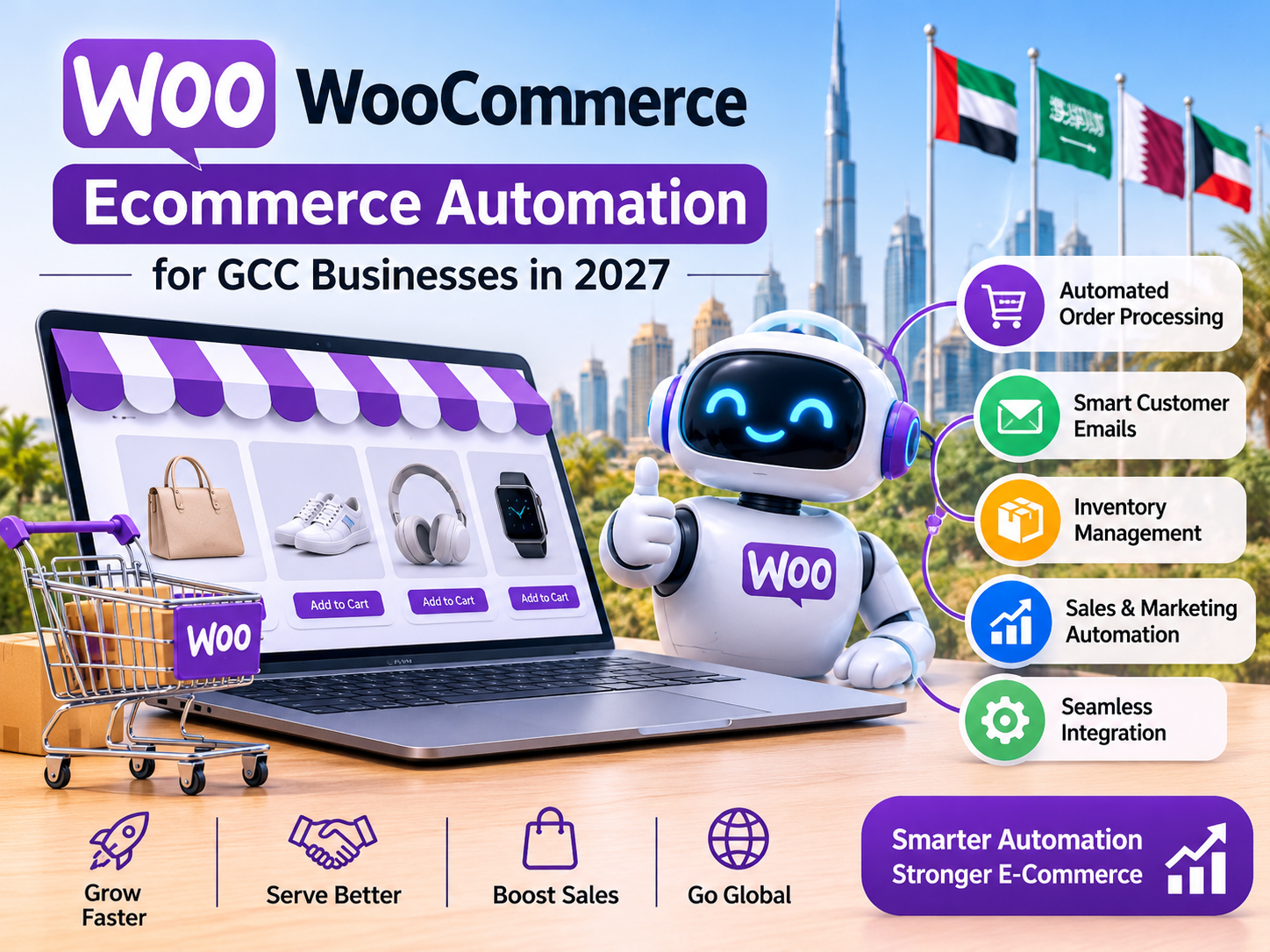
Automating Shipping, Inventory, and Customer Communication
Connecting WooCommerce with fulfillment and inventory systems can reduce repetitive administrative work.
For businesses operating in Riyadh, Jeddah, Dubai, or Doha, useful integrations may include:
Inventory synchronization between warehouses and online stores.
Shipping API connections for order tracking.
Automated order-status updates.
ERP connections for product and order information.
WhatsApp notifications where appropriate customer permissions exist.
Businesses managing repetitive processes can also explore business process automation to connect operational workflows.
Automation should improve accuracy and efficiency without introducing unnecessary technical complexity.
AI Recommendations and Headless WooCommerce
AI-powered product recommendations may help shoppers find relevant items based on available product and customer-interaction data.
However, businesses should assess data quality, privacy considerations, maintenance requirements, and measurable commercial value before adopting these tools.
Headless WooCommerce is another option for businesses needing greater control over the customer-facing interface.
Through headless commerce development, businesses can separate their frontend experience from the underlying commerce system.
This approach offers architectural flexibility, but its additional development and maintenance requirements may make traditional WooCommerce more practical for smaller retailers.
A Six-Step Saudi WooCommerce Customization Roadmap
A structured development process helps businesses prioritize features and reduce avoidable implementation problems.
Audit your existing store.
Review mobile usability, Arabic layouts, checkout behavior, and available performance metrics. Record baseline results before making changes.
Prioritize customer requirements.
Identify essential payment methods, delivery integrations, and localization features. Confirm provider eligibility and technical compatibility.
Review compliance obligations.
Assess relevant VAT, electronic invoicing, customer privacy, and cross-border requirements. Seek specialist review where necessary.
Build and integrate.
Select compatible plugins and APIs, implement approved features, and document staging configurations.
Test before launch.
Verify Arabic-English shopping journeys, payment scenarios, mobile layouts, website security, and performance.
Monitor and optimize.
Track checkout completion, transaction failures, loading performance, and customer feedback after deployment.
Following this process allows businesses to concentrate on improvements that match their operations and customer expectations.
To Sum Up
The most valuable WooCommerce customization Saudi Arabia trends for 2027 are not simply about adding new features.
They are about making online stores easier to use, more reliable, and better suited to local shopping preferences.
Arabic-first design, familiar payment methods, mobile performance, appropriate compliance controls, and dependable fulfillment integrations provide a practical foundation.
AI-assisted personalization and more flexible commerce architectures may offer additional opportunities, but businesses should adopt them when they solve clear operational or customer problems.
For retailers planning expansion across Saudi Arabia, the UAE, and Qatar, a well-structured WooCommerce development strategy can support smoother customer experiences and more manageable operations. Mak It Sol
Planning improvements to your Saudi or GCC WooCommerce store?
Mak It Solutions can help assess Arabic localization, payment compatibility, checkout performance, operational integrations, and development priorities.
Explore our WooCommerce development services or book a consultation to discuss a tailored e-commerce development approach.
Frequently asked questions
Quick answers related to this article.
Comments
Join the discussion. Comments are moderated.
No comments yet. Be the first to share a thought.
Building something related?
Tell us about your product goals — we’ll respond with a clear next step.
Discuss your project