
Content Refresh Strategy for Saudi & UAE Brands
Content Refresh Strategy for Saudi & UAE Brands
Content Refresh Strategy for Saudi & UAE Brands
Pages that once ranked well start slipping. Click-through rates fall. Leads slow down. And in GCC markets, the gap gets wider when older content no longer reflects local expectations, bilingual search behavior, or the way AI-driven search now surfaces direct answers.
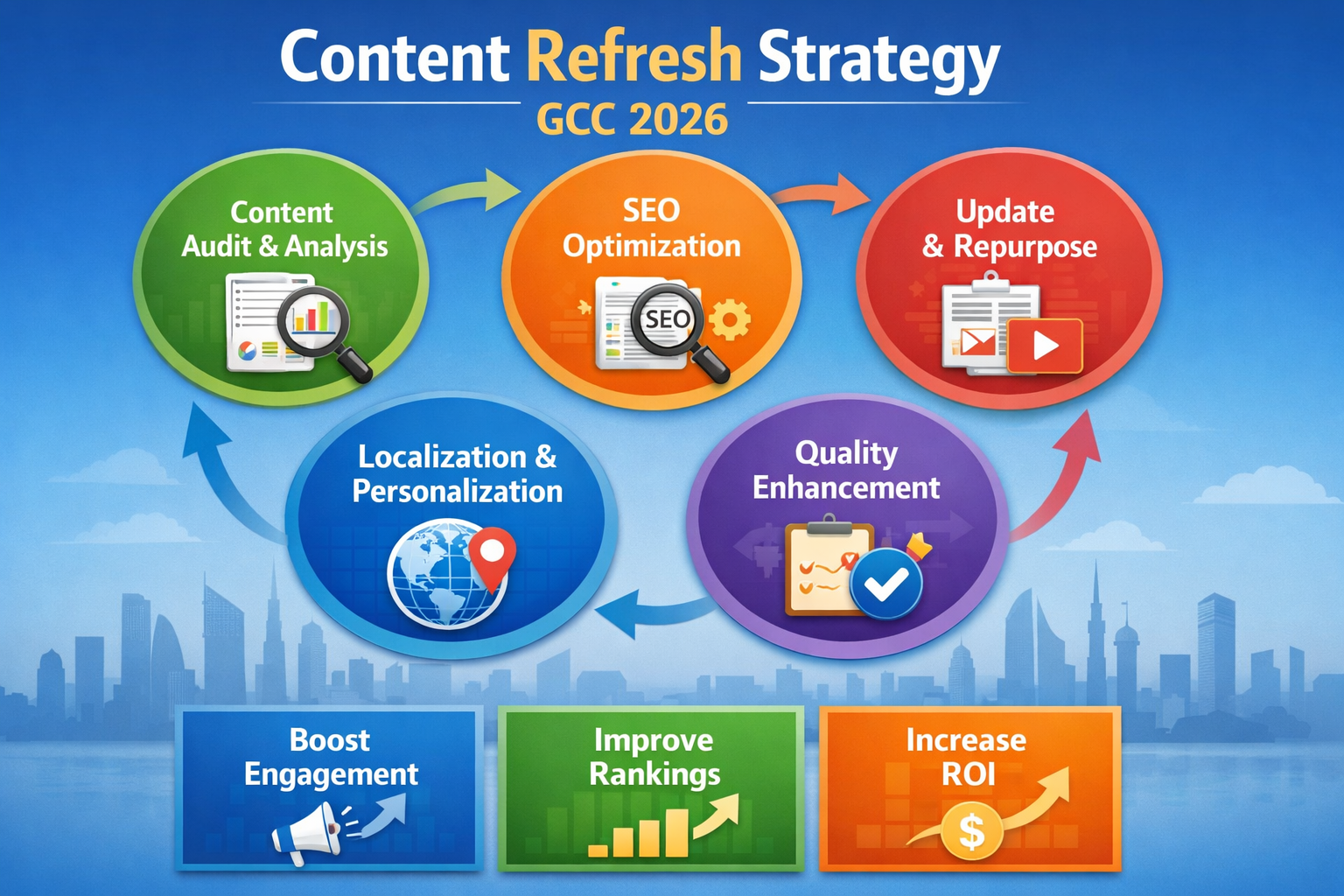
A strong content refresh strategy helps Saudi, UAE, and Qatar brands recover value from content they already own. Instead of publishing endlessly, teams can update high-potential pages to improve rankings, strengthen trust, and make content more useful for readers in Riyadh, Dubai, Abu Dhabi, and Doha.
In practice, the best refresh work is not cosmetic. It improves search intent alignment, updates trust signals, sharpens answers, and adds local context that makes the page feel current and credible.
What a Content Refresh Strategy Means for GCC SEO
A content refresh strategy is the process of improving existing pages so they perform better in search, answer engines, and conversion journeys.
That usually means updating.
Titles and meta descriptions
Intros and direct-answer sections
Headings and structure
Internal links
FAQs
Outdated examples
Compliance or trust references
Regional context for Saudi, UAE, and Qatar audiences
This is different from content pruning or a full rewrite.
Pruning removes content that no longer deserves to stay live. A full rewrite makes sense when the original page is beyond repair. But many GCC brands already have pages with some authority, some impressions, or some useful backlinks. In those cases, a careful refresh is often the smarter move.
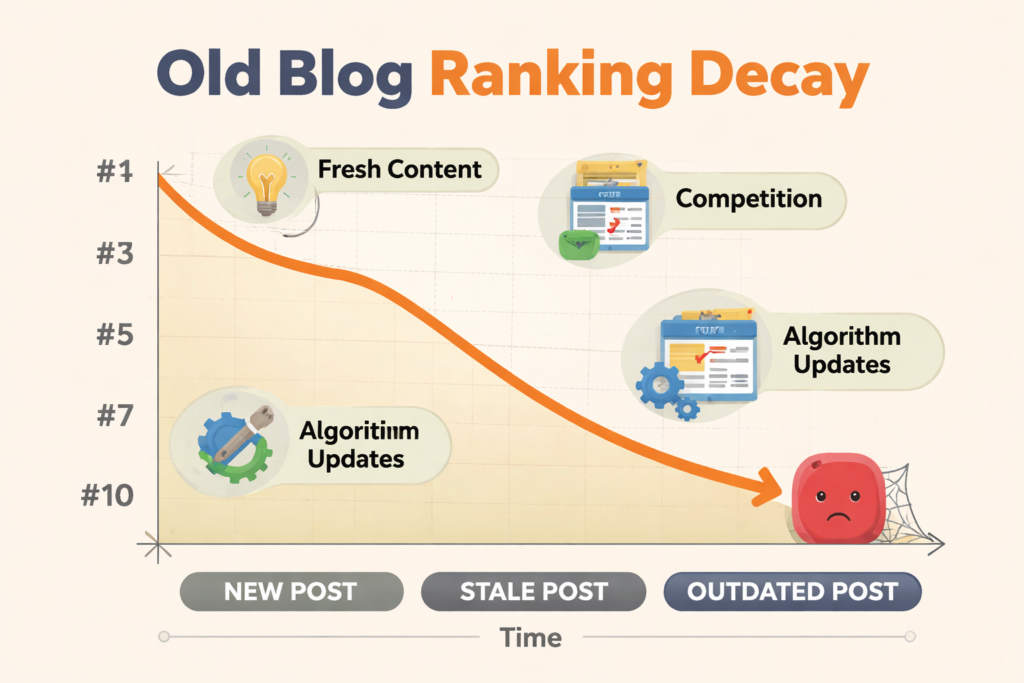
Why Old Blog Posts Lose Rankings in Saudi, UAE, and Qatar
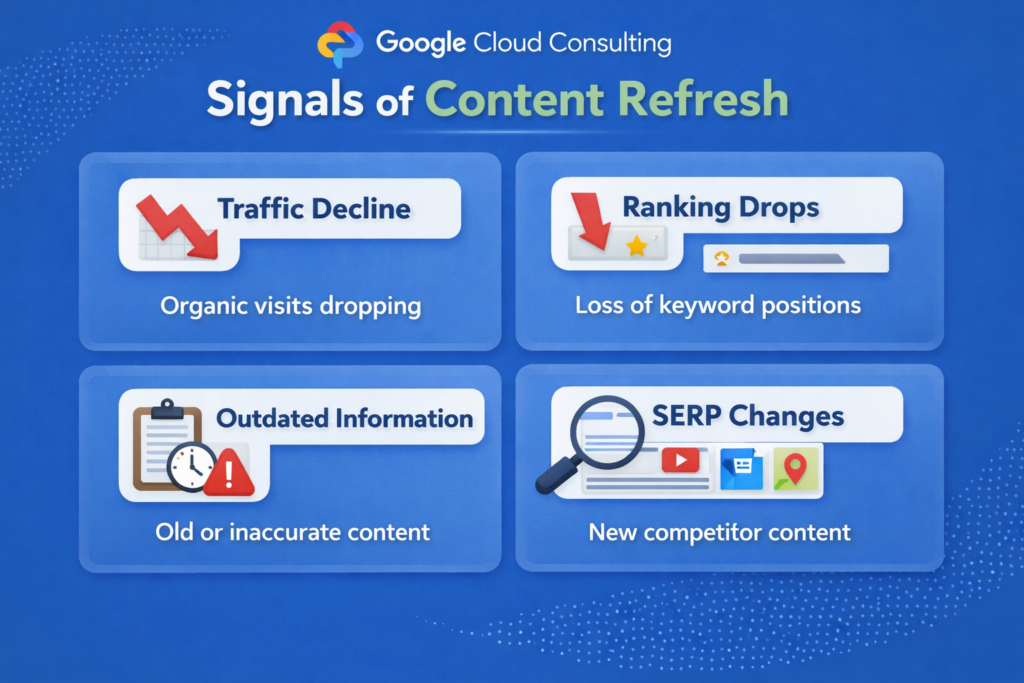
Content rarely declines all at once. It usually fades in stages.
Search intent changes
A keyword that once favored broad educational content may now reward concise, structured, answer-first pages. If your article still follows an older format, it can lose visibility even if the topic remains relevant.
AI-driven search prefers clarity
AI-generated summaries and answer engines tend to pull from pages that are direct, well-structured, and easy to extract. Long intros, vague headings, and buried answers make older pages less competitive.
Trust signals get outdated
A page published a year or two ago may still mention old screenshots, generic international examples, or weak supporting references. That weakens credibility, especially in regulated sectors.
GCC audiences expect local relevance
Readers in Saudi Arabia, the UAE, and Qatar often move between English and Arabic touchpoints before they convert. If the page ignores bilingual UX, local terminology, or regional buying context, it can feel disconnected from the real customer journey.
How to Audit and Prioritize Pages for Refresh
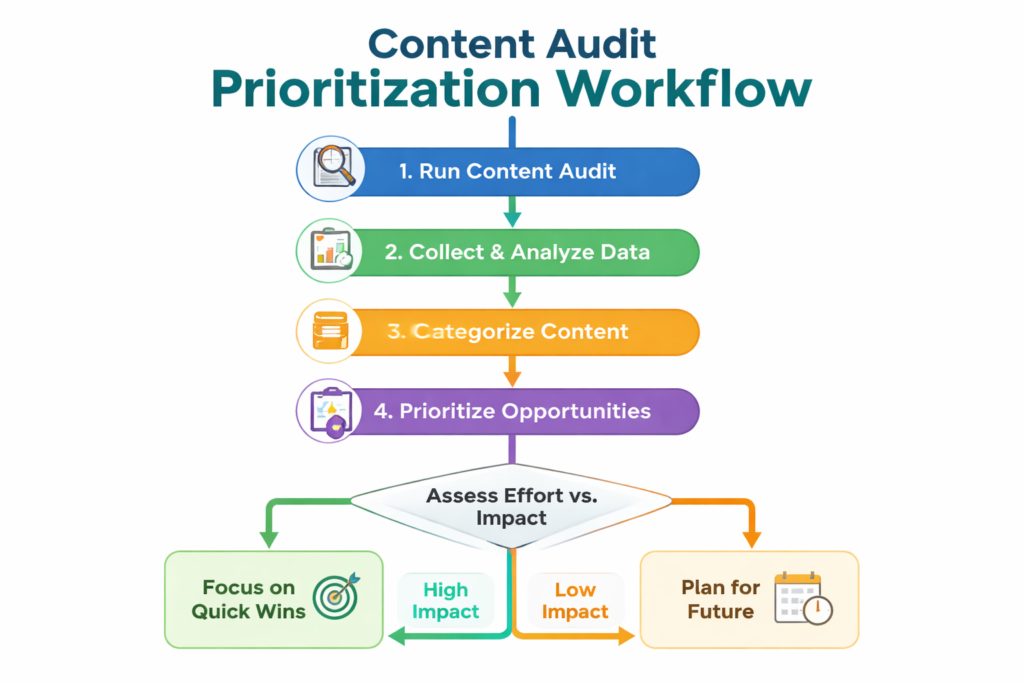
Not every old page deserves equal attention. The best refresh strategy starts with prioritization.
Update pages with existing momentum
Start with URLs that already show one or more of these signals.
They still get impressions
They used to rank or convert well
They attract backlinks
They support commercial or service intent
They sit close to page one and need a push
These pages often deliver the fastest results because they already have a performance history.
Look for localization gaps
Some pages are structurally sound but feel too generic. That is a missed opportunity in GCC SEO.
Examples include.
A Saudi fintech guide with no Saudi Central Bank context
A UAE digital-trust article with no mention of TDRA, DIFC, or ADGM where relevant
A Qatar finance or infrastructure page with no local data-residency or market examples
Decide whether to refresh, merge, redirect, or retire
A simple framework helps:
| Situation | Best Action |
|---|---|
| Topic is still relevant and page has value | Refresh |
| Multiple weak posts target the same intent | Merge |
| Page is outdated but has link equity | Redirect |
| Topic is obsolete or no longer trustworthy | Retire |
This keeps the content library cleaner and prevents internal competition.
What to Update Inside an Old Blog Post
A high-quality refresh improves the parts users and search engines notice first.
Rewrite the title and intro
Your title should reflect current search intent and stay clear enough to win clicks.
The intro should answer the core query quickly. In many cases, the first two paragraphs should tell the reader exactly what the page covers, why it matters, and what action to take next.
Add a direct-answer section
This is especially useful for AEO and featured-snippet visibility.
For example, if the page targets content refresh strategy, the article should explain early on that it is a process for updating older pages to improve rankings, relevance, and trust without rebuilding content from scratch.
Improve heading structure
Weak heading logic makes content harder to scan. Strong H2 and H3 sections make the page easier for humans and AI systems to understand.
Refresh examples and proof points
Replace broad, generic examples with region-aware use cases.
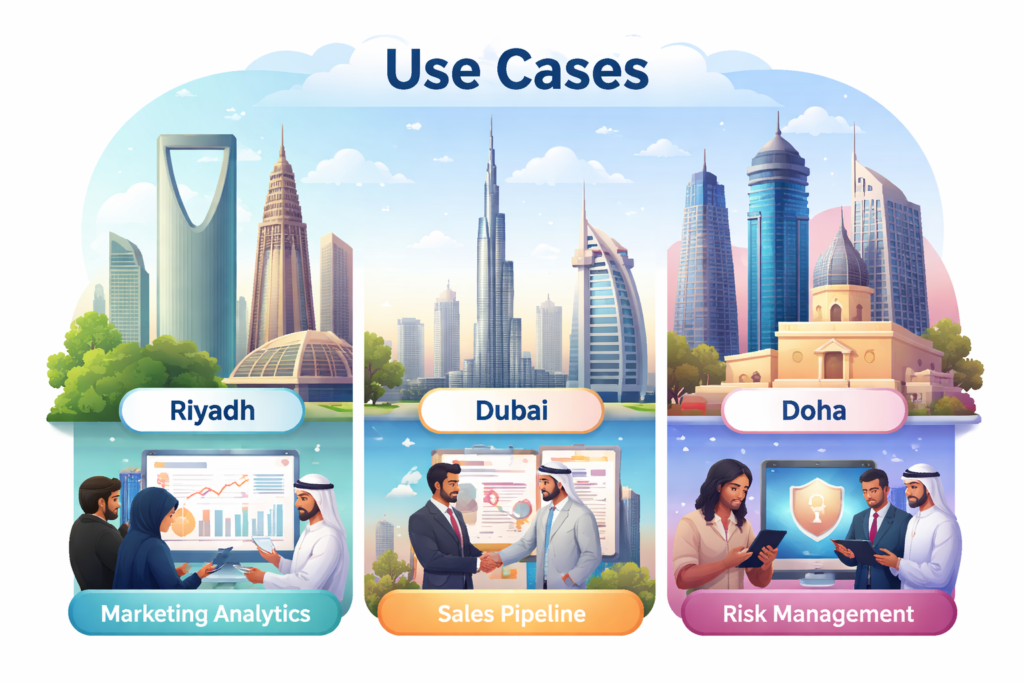
A Riyadh audience may care about compliance wording and trust. A Dubai brand may care more about digital UX, app-driven journeys, and speed. A Doha-focused buyer may notice data-location messaging or enterprise trust cues faster than a generic global example.
Strengthen internal linking
Add links to related service pages, blog clusters, and commercial pages where they genuinely help the reader.
Expand FAQs
FAQ sections help capture long-tail searches and improve answer visibility. They also let you address practical objections without disrupting the main flow of the article.
GCC Trust and Compliance Signals to Add During a Refresh
For many brands in Saudi Arabia, the UAE, and Qatar, trust is part of SEO.
That does not mean stuffing pages with regulator names. It means using official context carefully when it supports the topic and improves credibility.
Saudi Arabia
For finance, payments, or fintech-related topics, Saudi brands may need wording that reflects Saudi Central Bank expectations or broader data-governance awareness.
United Arab Emirates
For UAE-facing content, references to TDRA, DIFC, or ADGM may strengthen relevance when the audience includes regulated businesses, digital service providers, or financial brands.
Qatar
For Qatar-focused pages, local trust may come from clearer data-residency language, more relevant enterprise examples, or finance content that aligns with market realities.
This matters even more in sectors like.
Fintech
Health
Logistics
Government technology
Enterprise SaaS
Data infrastructure
In sensitive industries, legal accuracy matters more than marketing flair. A refreshed page should be useful, precise, and carefully reviewed before publication.
Content Refresh Use Cases for GCC Brands
Different industries need different kinds of refresh work.
Fintech
A Riyadh fintech brand may need to update an older article with more careful risk language, clearer onboarding context, and better trust framing.
A UAE fintech page may benefit from stronger terminology, sharper FAQs, and more relevant commercial language for regulated buyers.
Retail and e-commerce.
A Dubai e-commerce brand may improve older content by adding.
Faster, mobile-friendly summaries
Better internal links to category or service pages
Updated buying objections
Region-aware delivery or customer-experience examples
Logistics.
A Riyadh logistics page may need newer examples around fulfillment, warehousing, or last-mile expectations. If the content still sounds too broad, it may not convert.
Government-focused and enterprise content.
For public-sector or digital-transformation content, broad claims can hurt trust. These pages usually perform better when the language is measured, official references are relevant, and the content reflects real procurement expectations.
How Often Should GCC Brands Refresh Content?
There is no universal rule, but most evergreen pages should be reviewed at least once every quarter.
Pages may need more frequent checks when they are tied to.
Compliance-sensitive topics
Pricing
Fast-moving services
Competitive search terms
AI-answer visibility
High-conversion commercial intent
From a small business point of view, quarterly reviews are often enough to catch content decay before it becomes expensive.
A Practical Bilingual Refresh Checklist
For English-Arabic content journeys, a refresh process should go beyond translation.
Your review checklist should include.
Search intent in both languages
Clear direct answers near the top
Updated headings and summaries
Local examples for Saudi, UAE, or Qatar audiences
Translation consistency
Arabic mobile readability
FAQ updates
Internal-link improvements
Outdated claims or screenshots removed
Compliance-sensitive wording reviewed
Brands that win in 2026 will not necessarily be the ones publishing the most. More often, they will be the ones updating their best content with better judgment.
Concluding Remarks
A smart content refresh strategy can turn aging pages into stronger growth assets across Saudi Arabia, the UAE, and Qatar.
Done well, it helps recover traffic, improve AI visibility, support conversion goals, and make your content feel current for local buyers. Instead of letting older pages decay, use them to build more authority from the assets you already have.
If your team needs a GCC-focused audit, a refresh SOP, or help improving older pages for search and conversion, start with the pages that already have potential and refresh them with local intent, stronger trust signals, and cleaner structure.( Click Here’s )
FAQs
Q : Is a content refresh strategy better than publishing new blog posts for Saudi brands?
A : Often, yes. If an older page already has impressions, backlinks, or relevance, refreshing it is usually faster than starting from zero. For Saudi brands, this becomes even more valuable when the page needs stronger local trust signals or clearer Arabic-English user flow.
Q : How do UAE companies refresh content without hurting rankings?
A : The safest approach is to preserve the core URL and improve the page in layers. Update the title, intro, structure, internal links, and FAQs first. Then add stronger UAE context where it genuinely helps.
Q : What should a Qatar-focused content refresh include?
A : It should include examples that feel relevant to Doha-based buyers, clearer trust signals, and stronger local context where needed. The goal is not to force location mentions. The goal is to make the page feel informed and useful.
Q : Do bilingual English-Arabic blogs need a different refresh process?
A : Yes. Bilingual content needs more than translation cleanup. It needs intent alignment, consistent terminology, good Arabic UX, and a structure that works across mixed-language customer journeys.
Q : How often should Dubai and Riyadh companies update evergreen SEO content?
A : A practical baseline is every 3 months for core evergreen pages. Reviews may need to happen sooner for regulated topics, high-conversion pages, or content tied to fast-changing services.