
GCC Content Localization Guide for Saudi, UAE, Qatar
GCC Content Localization Guide for Saudi, UAE, Qatar
GCC Content Localization Guide for Saudi, UAE, Qatar
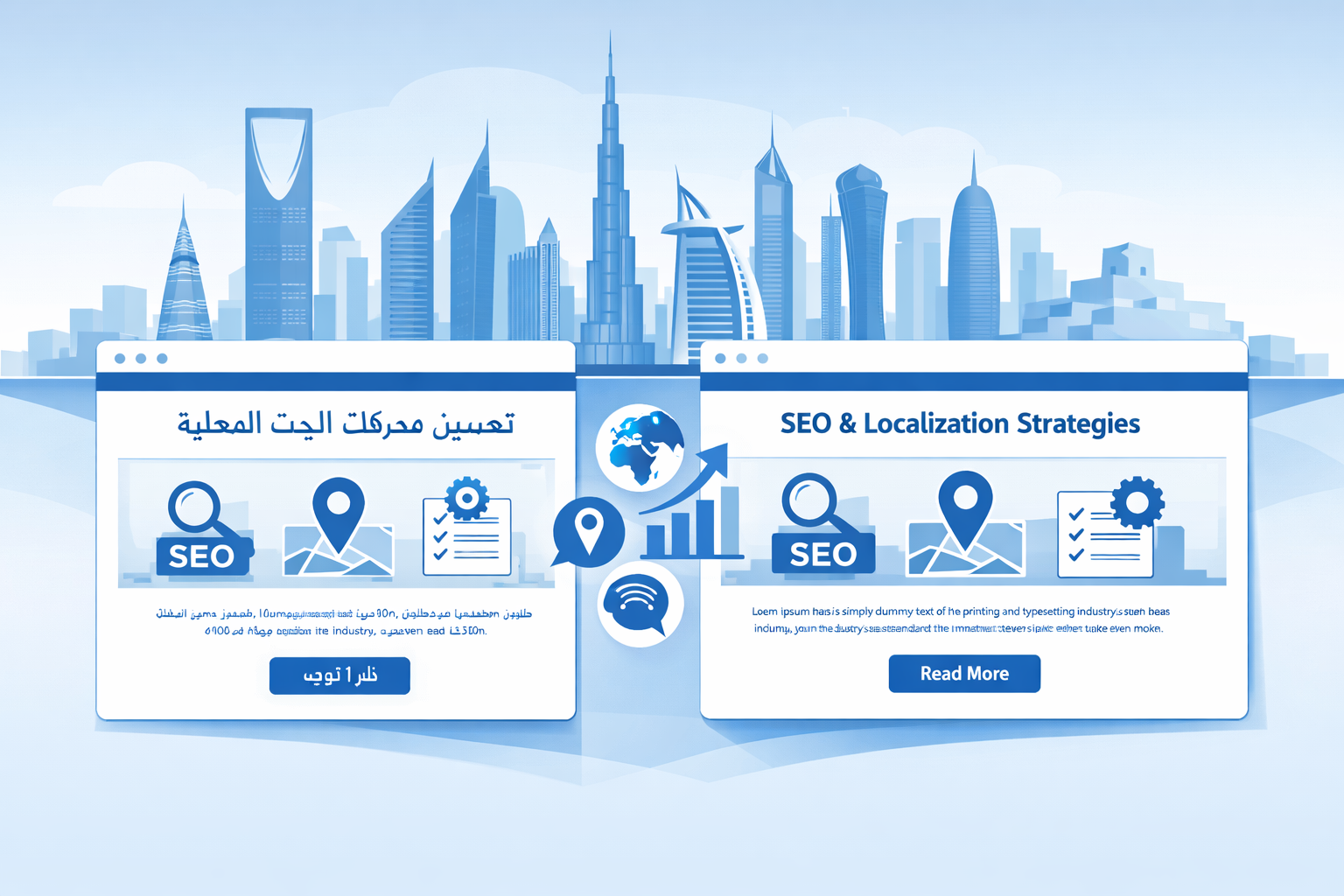
If you want better results in the GCC, content localization usually matters more than simple translation. For brands targeting Saudi Arabia, the UAE, and Qatar, content localization means adapting language, search intent, trust signals, layout, and user experience so pages feel relevant to Arabic-speaking buyers and perform better in search.
English-only pages can still attract traffic. But in Arabic-first or bilingual markets, they often lose momentum at the point where trust and conversion matter most. A page may be technically correct and still feel foreign, generic, or commercially weak.
That is where localization changes the outcome.
What content localization means in the GCC
At a practical level, content localization is the process of reshaping content for how people in a specific market search, read, compare, and make decisions.
Translation changes words. Localization changes the full experience.
That includes.
Arabic keyword targeting
Market-specific phrasing
Right-to-left (RTL) usability
Culturally appropriate calls to action
Local trust and compliance cues
Clearer expectations around pricing, delivery, onboarding, or support
For businesses in Riyadh, Jeddah, Dubai, Abu Dhabi, and Doha, those details often influence whether a page feels credible enough to act on.
Why direct translation often underperforms
A direct translation can be accurate and still miss intent.
Arabic and English searches do not always map neatly to each other. A term that sounds fine in English may not be the phrase real users type into search in Saudi Arabia or the UAE. In some cases, the translated version is understandable but weak from an SEO or conversion perspective.
There is also a tone issue. Saudi audiences often respond well to clarity, authority, and confidence. UAE audiences frequently expect polished bilingual journeys. In Qatar, especially in regulated or B2B sectors, formal wording and stronger credibility signals can carry more weight.
Then there is UX. Even strong copy can underperform if the Arabic version feels awkward on mobile, the CTA placement does not suit RTL behavior, or forms and menus look like an afterthought.
How content localization supports SEO, UX, and trust
The strongest GCC pages do three things together.
They match Arabic search intent
Instead of translating keywords word for word, they map search behavior by market. That helps pages rank for terms people actually use.
They improve the Arabic user journey
Localization is not only about copy. It also affects navigation, layout, buttons, forms, and readability in RTL environments.
They increase buyer confidence
Localized pages feel more credible because they reflect the market, the user’s expectations, and the sector’s trust requirements.
In practice, that combination is what separates a page that gets impressions from one that gets leads.
Core elements of high-performing GCC content localization
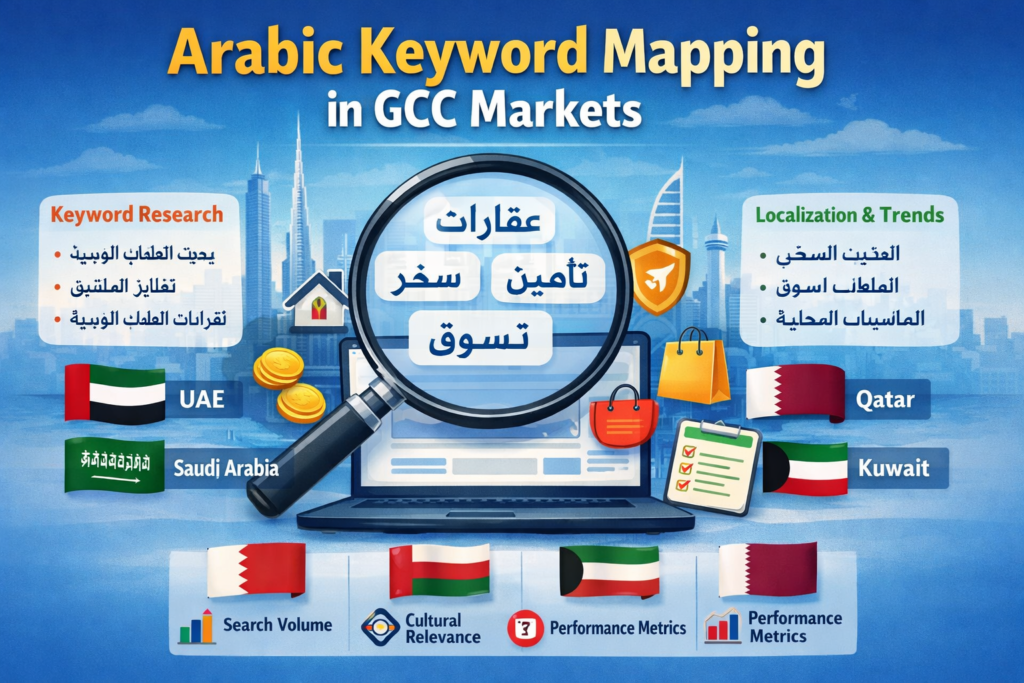
Arabic keyword mapping for each target market
Do not assume one Arabic keyword set will work across all GCC audiences.
A commercially useful phrase in Riyadh may not be the strongest term in Dubai or Doha. The right approach is to map keywords by service, audience, and location, then build pages around actual search behavior.
Messaging tailored to local buyer expectations
Good localization reflects how buyers evaluate risk, value, and credibility.
Examples.
A Saudi fintech page may need stronger language around compliance, security, and onboarding trust.
A UAE retail or SaaS page may need smoother bilingual navigation and more polished conversion flows.
A Qatar B2B service page may benefit from more formal wording, cleaner structure, and stronger institutional credibility.
This is also where internal content strategy matters. Brands often get better results when localization works alongside broader SEO planning, multilingual content strategy, and Arabic UX improvements.
Visuals, offers, and CTAs adapted for the market
Localized content is not only text on a page.
It can include.
Region-aware headlines
Local currencies or delivery expectations
More suitable trust badges
Arabic-first forms and labels
CTAs that sound natural in Arabic rather than translated
For GCC businesses, the conversion lift often comes from these page-level details.
Compliance and trust signals GCC brands should not ignore
For regulated, finance-related, public-sector, or data-sensitive industries, trust language should align with real institutional expectations.
Saudi Arabia
Saudi Central Bank, commonly known as SAMA, is the Kingdom’s central bank and publishes licensing, supervision, and rulebook information relevant to regulated financial content. The National Data Management Office is part of SDAIA and publishes data management and governance standards, while Saudi Vision 2030 continues to frame the Kingdom’s wider digital transformation direction.
UAE
In the UAE, the Telecommunications and Digital Government Regulatory Authority, or TDRA, explicitly covers both telecommunications regulation and digital government enablement. For brands operating in finance or highly regulated environments, Abu Dhabi Global Market and DIFC can also shape how credibility and regulatory awareness should appear in content.
Qatar
Qatar Central Bank maintains a dedicated fintech and innovation section and a financial technology supervision function for licensed fintech companies. That makes wording, trust cues, and product positioning especially important for payment, banking, and fintech-related content in Qatar.
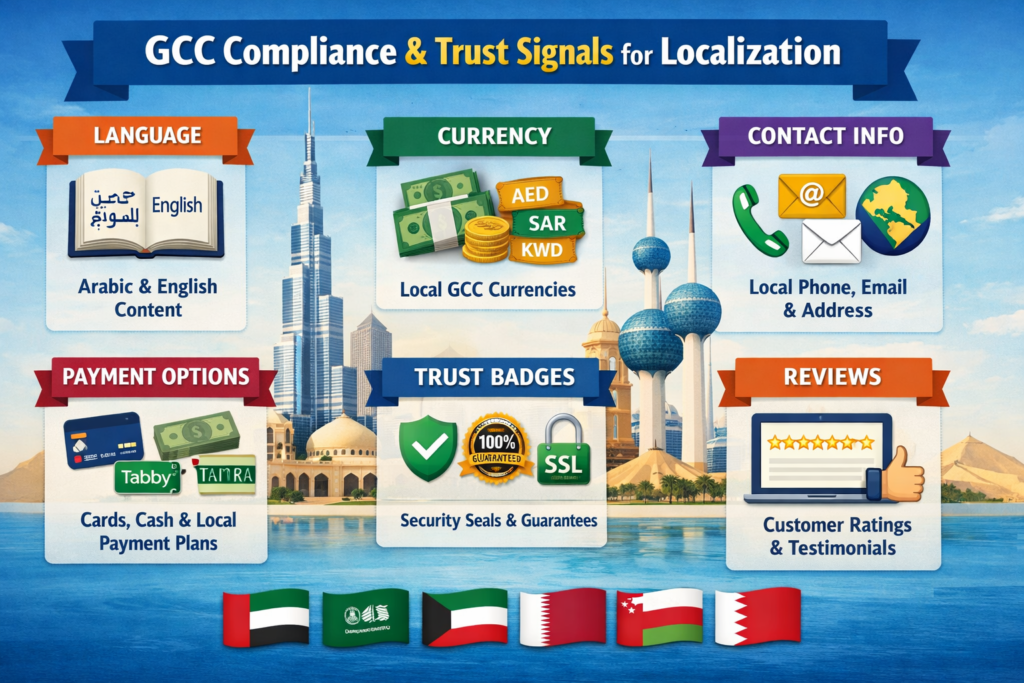
How different GCC industries use content localization
Fintech and banking
These sectors rely heavily on confidence, precision, and responsible messaging. A localized Arabic page usually performs better when it explains benefits clearly, avoids vague claims, and reflects the trust standards buyers expect in regulated markets. This is not financial advice; brands should still review sector-specific content carefully before publishing.
Government and public services
Public-facing content needs clarity more than cleverness. Users should be able to understand service pages, requirements, and next steps quickly in both Arabic and English.
Retail and e-commerce
Retail brands often benefit from localized category pages, mobile-first Arabic UX, cleaner checkout language, and seasonal or regional messaging that feels familiar to shoppers in the Gulf.
Logistics and B2B services
Here, buyers often want certainty. Clear service descriptions, bilingual usability, and stronger proof points can reduce hesitation and improve lead quality.
A practical content localization process for GCC teams
A workable process usually looks like this.
Audit priority pages first
Start with service pages, product pages, landing pages, and other high-intent content.
Map Arabic search intent by market
Build keyword and message frameworks for Saudi Arabia, the UAE, and Qatar separately where needed.
Localize the full page, not just the body text
Update metadata, headings, CTAs, forms, testimonials, navigation, and visual hierarchy.
Review compliance and trust language
This matters most for finance, data-sensitive, healthcare, government, and enterprise-facing content.
Measure by country and language path
Track rankings, engagement, leads, and page behavior by market so you can refine what is actually working.

What affects cost and timeline
Localization costs usually depend on.
Number of pages
Depth of keyword research
Industry complexity
Required UX or design changes
Development support for Arabic and RTL implementation
Review cycles for compliance-sensitive content
A smaller batch of priority pages may be completed in a few weeks. A full bilingual website usually takes longer because strategy, UX, QA, and approvals all add time.
From a business point of view, the most expensive mistake is often not the localization project itself. It is publishing direct translations that look finished but fail to rank, reassure, or convert.
Best practices before you scale
Before rolling localization across the whole site, keep these points in mind.
Do not use one Arabic version for every GCC market by default.
Do not separate SEO from UX and conversion work.
Do not ignore RTL quality assurance.
Do not treat compliance language as an afterthought in regulated sectors.
Do build market-aware workflows that connect content, design, and technical implementation.

Concluding Remarks
For Saudi Arabia, the UAE, and Qatar, content localization is not a nice extra. It is often the layer that makes bilingual or Arabic-first digital marketing actually work.
When a page reflects real search intent, local trust expectations, and a smoother Arabic user journey, it usually becomes easier to rank, easier to trust, and easier to convert from.
If your English pages are underperforming in the GCC, content localization is one of the first areas worth fixing.( Click Here’s )
FAQs
Q : Is content localization necessary for Saudi businesses targeting Arabic searchers?
A : In most cases, yes. Saudi audiences often evaluate trust, clarity, and credibility differently from English-speaking users, especially in finance, government, and other sensitive sectors. A direct translation may be understandable but still miss commercial intent or confidence signals.
Q : How is website localization different in Dubai compared with Riyadh?
A : Dubai often rewards polished bilingual experiences and smoother international UX. Riyadh often benefits from stronger Arabic-first clarity, clearer authority signals, and messaging that feels more locally grounded. Those are not hard rules, but they are common market patterns reflected in how brands position themselves.
Q : Do Qatar companies need separate Arabic keyword research?
A : Often, yes. Reusing Saudi or UAE keyword assumptions can weaken relevance because search phrasing and buyer expectations may differ. This matters even more in regulated sectors such as payments and fintech.
Q : Which industries benefit the most from GCC content localization?
A : Fintech, government services, e-commerce, logistics, healthcare, and enterprise B2B usually see the clearest gains because they depend heavily on trust, clarity, and friction-free digital journeys.
Q : How long does content localization take?
A : That depends on scope. A small group of high-intent pages may take a few weeks, while a full bilingual site can take significantly longer once keyword mapping, UX updates, compliance review, and QA are included.