

How to Get Cited by AI in US, UK & EU
If you want to get cited by AI, your content needs to do two things well: answer the question fast and look trustworthy enough to support an AI-generated response. The pages most likely to earn citations are usually easy to scan, clearly written, and tied to real entities, real authorship, and real context.
That is the practical version of AEO and GEO. You are not trying to impress an algorithm with fluff. You are making it easier for systems like Chat GPT search, Google AI features, Copilot, and Perplexity to retrieve a clean passage and feel confident showing it to users.
What getting cited by AI actually means
Getting cited by AI means your page is selected as a supporting source inside an AI-generated answer. That is different from ranking in the classic sense.
A page can rank well and still fail to earn citations if the answer is buried, vague, or poorly attributed. On the other hand, a page that is not in the top organic position can still be cited if it contains the clearest, most extractable answer for that exact query.
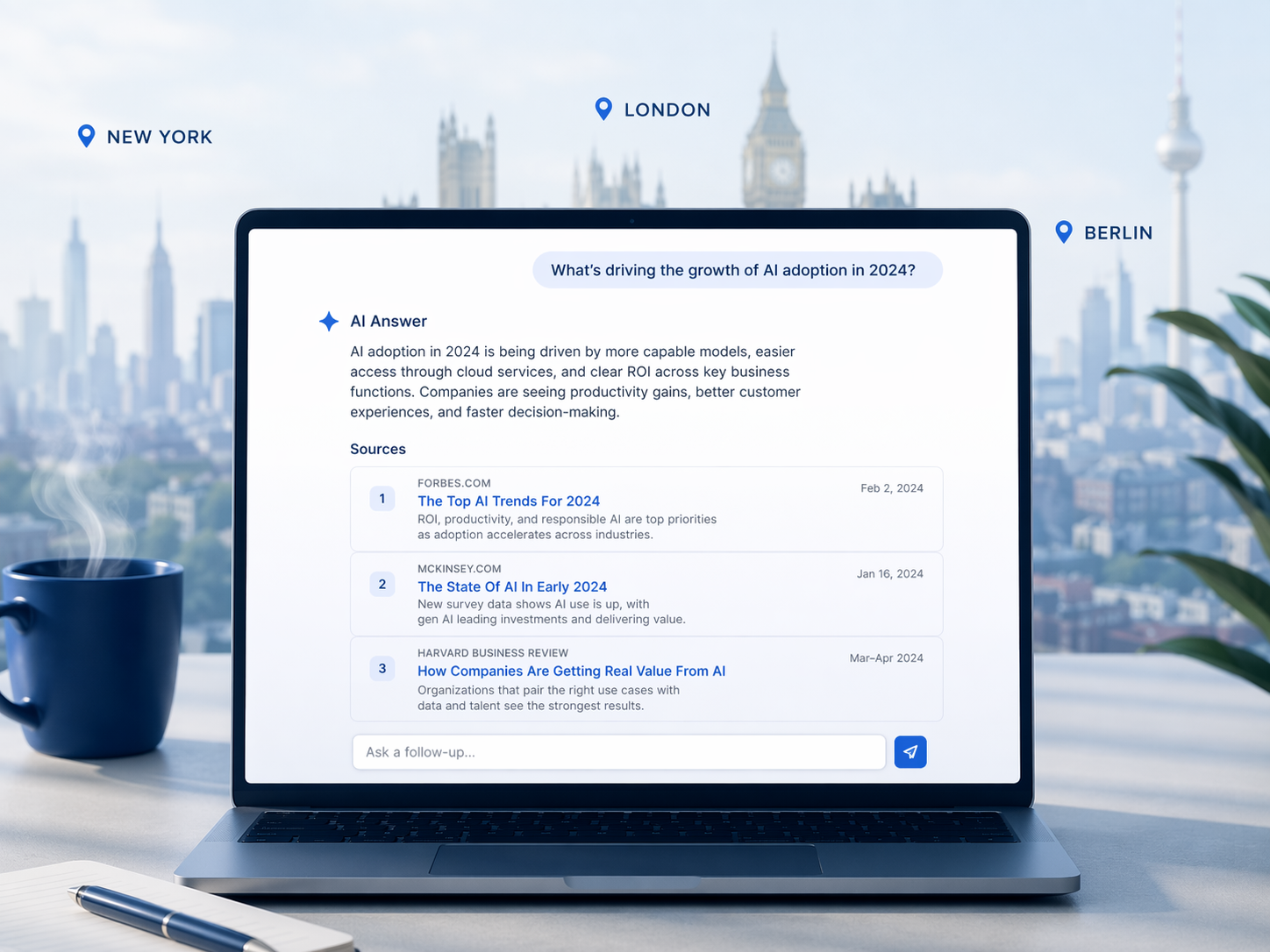
In Chat GPT search, responses that use the web can include inline citations and a sources panel. Google’s guidance for AI features also makes the same basic point from a site-owner perspective: strong technical SEO and clear, useful content are still the foundation.
Why some pages get cited and others get ignored
AI systems do not read pages the way humans do. They look for passages they can retrieve, understand, and trust quickly.
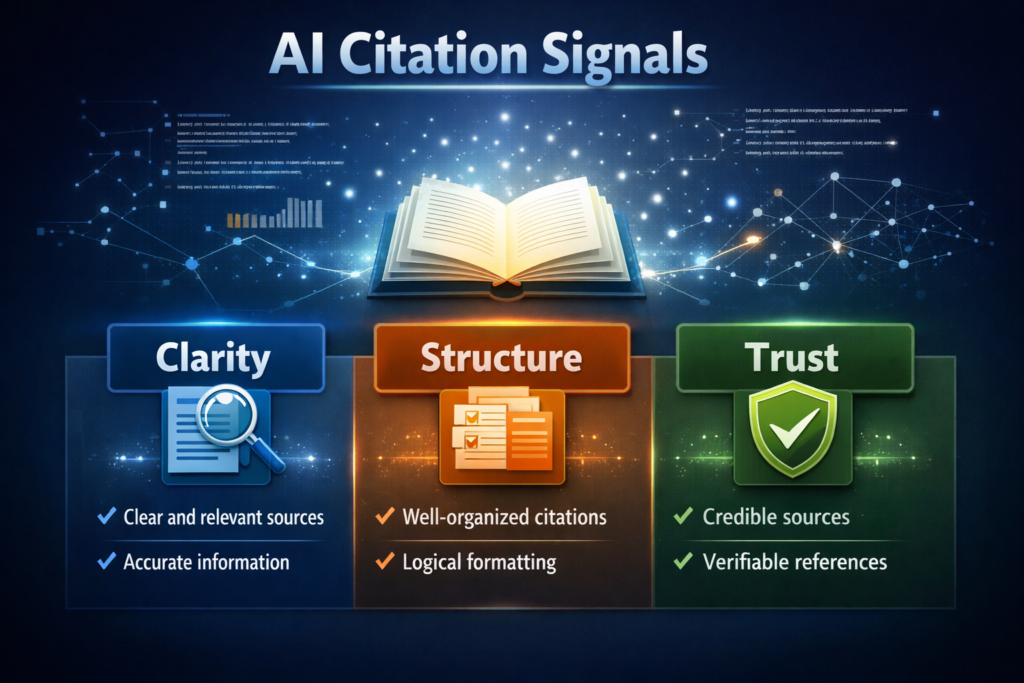
That is why three signals matter most.
Clarity: the answer is obvious within the first lines
Structure: headings, paragraphs, bullets, and summaries are easy to parse
Trust: authorship, sourcing, and entity context reduce ambiguity
If your page makes the system work too hard, it will often pick another source. In practice, the best citation-ready pages say the main thing early, then expand with detail, examples, and proof.
Start with answer-first content
The easiest way to improve your chances of getting cited by AI is to move the answer up.
Do not spend the first paragraph warming up. Do not hide the useful part behind generic intros. Put the direct answer in the first two or three lines, then unpack it.
For example, if the query is “how to get cited by AI,” your opening should answer that exact question before moving into tactics, nuance, or examples.
What answer-first content looks like
A strong answer-first section usually includes.
One direct statement that answers the query
A short expansion that explains why it matters
A heading that matches real search language
A clean structure that can stand on its own
This style helps both humans and machines. It improves readability, and it gives AI systems a cleaner extractable passage.
Structure content so it is easy to extract
Good content can still be ignored if the structure is messy.
Make each section feel self-contained. Use descriptive H2s and H3s. Break long paragraphs. Add bullets where they genuinely help. Keep the most important claim visible in plain text.
Here is a simple rule: if a subsection were copied on its own into an answer engine, would it still make sense?
That is the standard you want.
Formatting choices that help
Short paragraphs for mobile readability
Headings that mirror actual questions
Concise definitions before deeper explanation
Bullets for steps, checklists, and comparisons
Examples tied to real markets or use cases
Google’s guidance around AI features still points site owners back to fundamentals like crawlability, indexable text, internal links, and structured data that matches visible content. In other words, there is no magic shortcut. Clean publishing still wins.

Use AEO and GEO together
AEO helps your page answer the question cleanly. GEO helps your brand show up consistently inside generative discovery systems.
In practice, the overlap is simple.
Publish pages with clear answers
Make entity references explicit
Support claims with visible trust signals
Connect pages through sensible internal linking
Keep your brand, authors, and topics consistent across the site
Many older SEO articles are too padded for this. They may rank, but they are not citation-ready. Often the fastest win is not writing from scratch. It is rewriting existing pages so the best passage appears earlier and more clearly.
How to improve your chances in Google AI features
Google has been fairly direct here: there are no extra technical requirements just for appearing as a supporting link in AI features beyond normal Search eligibility. If your pages are crawlable, indexable, useful, and technically sound, they can be considered for those experiences.
That means your content strategy should focus on.
Helpful, reliable, people-first writing
Text that clearly answers the topic
Strong page discoverability through internal links
Structured data that accurately reflects what users can see
Trustworthy formatting around sensitive or regulated topics
This matters even more now because Google said AI Overviews expanded to more than 200 countries and territories and more than 40 languages in May 2025. Google also said AI Overviews drove more than a 10% increase in usage for the kinds of queries where they appear in major markets such as the US and India.
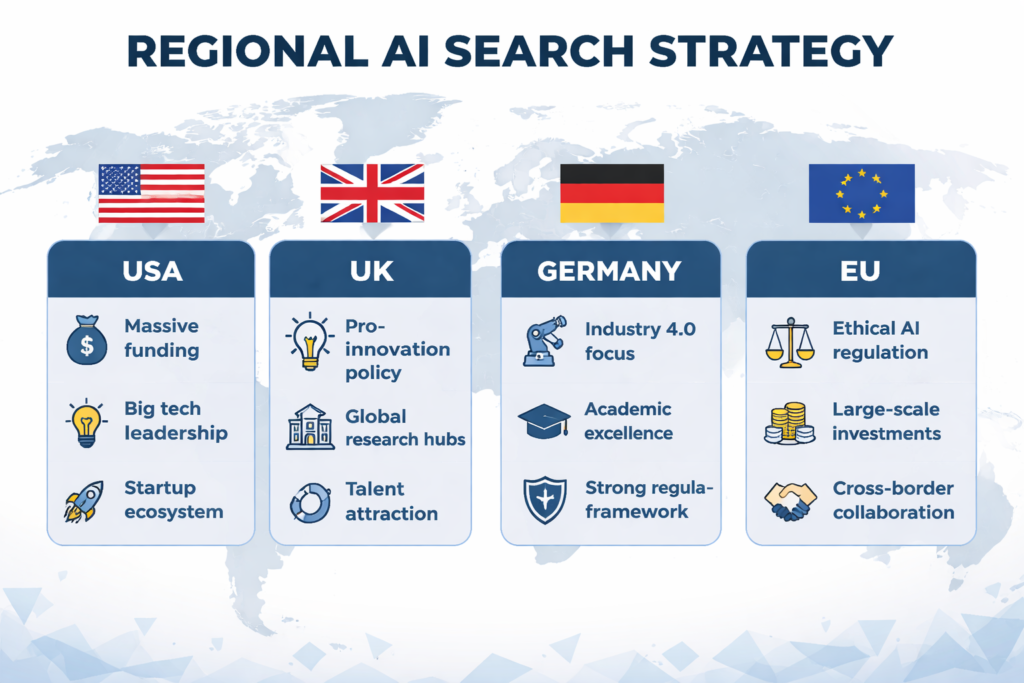
Regional strategy for the US, UK, Germany, and the wider EU
The same page will not always perform the same way across markets. Trust signals are interpreted through local expectations.
United States
In the US, competition is intense and commercial content moves fast. According to Stat Counter, Google held about 85% of search engine market share in the United States in March 2026, while Bing was near 9.85%. That makes Google the main battleground, but it also means Bing and Copilot visibility are too large to ignore for B2B brands.
For US-focused pages, clear value propositions, category authority, and strong comparison content tend to matter a lot.
United Kingdom
UK audiences often respond better to precise claims, visible attribution, and a more careful lead-generation style. For regulated niches, trust improves when pages reflect the local context instead of sounding like a generic US export.
Stat Counter shows Google at about 91.18% of UK search engine market share in March 2026, with Bing at 6.1%.
For UK-facing content, clean bylines, evidence-backed claims, and references to UK-specific standards can make the page feel more grounded.
Germany and the wider EU
Germany usually rewards precision, localization, and privacy-aware framing. If you are targeting German or broader EU audiences, broad English-language messaging often feels thin unless you support it with local terminology, compliance context, and careful wording around data handling.
Stat Counter puts Google at about 80.05% in Germany in March 2026, with Bing near 9.99%. Across Europe overall, Google stood at about 87.12%, while Bing was near 5.79%.
For Germany and the EU, pages tend to feel stronger when they naturally reference ideas like GDPR, DSGVO, data processing, localization, and factual transparency.
Trust signals that support AI citations
Trust is not decorative. It is part of extractability.
AI systems are more comfortable citing pages that look attributable, verifiable, and context-rich. That is especially true in B2B, health, finance, legal, and compliance-heavy sectors.
Add visible authorship
Use a real author name or a clearly named editorial team. Add organization context. Make sure the page does not feel anonymous.
Support claims with checkable evidence
Use original screenshots, implementation details, product examples, policy references, or concise source-backed statements. If you make strong claims, make them easy to verify.
Use entity clarity
Mention organizations, standards, and frameworks only when relevant. For example.
GDPR or UK GDPR for privacy content
HIPAA for US health data topics
PCI DSS for payments
SOC 2 for SaaS trust discussions
This helps readers, and it also reduces ambiguity for retrieval systems. HHS, for example, provides official HIPAA privacy information that can anchor health-related claims.
How to measure whether your content is getting cited by AI
Do not rely on rankings alone. Citation visibility is a different layer.
A practical measurement approach includes.
Testing core prompts monthly
Tracking whether your pages appear as cited sources
Reviewing referral patterns from AI-assisted discovery
Checking whether key pages contain clean answer blocks
Updating underperforming pages instead of only publishing new ones
A page may already be close. Sometimes the issue is not authority. It is formatting.
If a page ranks but never gets cited, try this.
Shorten the intro
Rename vague headings
Move the direct answer higher
Tighten paragraphs
Add relevant entities and trust signals
Improve internal linking from related pages
Common mistakes that reduce citation potential
Burying the answer
If the useful part starts after a long, generic intro, your content is harder to extract.
Writing vague headings
A heading like “What you should know” says almost nothing. A heading like “How to Get Cited by AI with Answer-First Content” is much easier for both readers and systems to understand.
Publishing thin pages
Thin pages with weak authorship and shallow context rarely earn trust, especially in expensive or regulated categories.
Ignoring regional expectations
A single generic English page may underperform in London, Berlin, or the wider EU if it never reflects local privacy language, market norms, or buying context.
A practical checklist for citation-ready pages
Before publishing or updating a page, ask.
Does the main keyword appear naturally in the title and early intro?
Is there a direct answer within the opening lines?
Do the headings match real search intent?
Can each section stand alone as an extractable passage?
Is the page clearly attributed to a person or organization?
Are important claims visible in plain text?
Are examples grounded in a real market or use case?
Does the page feel trustworthy enough to cite?
If the answer is “not yet” on several of these, the page probably needs editing before it needs more promotion.
Final thoughts
Learning how to get cited by AI is less about chasing a hidden trick and more about making your content easier to retrieve, easier to quote, and easier to trust. The strongest pages answer first, structure information cleanly, and show enough expertise and context to support an AI-generated response.
For brands targeting the US, UK, Germany, or the wider EU, that also means respecting local expectations around compliance, attribution, and clarity. In many cases, your best opportunity is already sitting in your blog archive. Rework the pages that rank, tighten the answer blocks, and turn them into citation-ready assets.( Click Here’s )
FAQs
Q : How long does it take to get cited by AI?
A : There is no fixed timeline. Google notes that recrawling and reprocessing can vary, and in practice some pages improve after straightforward structural updates while others take longer to be reconsidered.
Q : Do you need special schema to get cited by AI?
A : No special AI-only schema is required. Structured data can still help when it accurately reflects the visible page, but it should reinforce strong content rather than compensate for weak content.
Q : Can service pages get cited by AI?
A : Yes. A service page can be cited if it answers a real question clearly, includes trustworthy detail, and contains a strong passage that directly matches the user’s intent.
Q : Does localized content help in Europe?
A : Usually, yes. Content aimed at Germany or the wider EU often performs better when it reflects regional terminology, privacy expectations, and local examples instead of staying overly generic.
Q : What is the difference between ranking and getting cited by AI?
A : Ranking is mostly about URL-level visibility in search. Getting cited by AI is closer to passage-level usefulness plus trust. A page can rank well and still miss citations if its best answer is buried or unclear.