
AEO vs SEO vs GEO: 2026 Search Strategy Guide
AEO vs SEO vs GEO: 2026 Search Strategy Guide
AEO vs SEO vs GEO: 2026 Search Strategy Guide
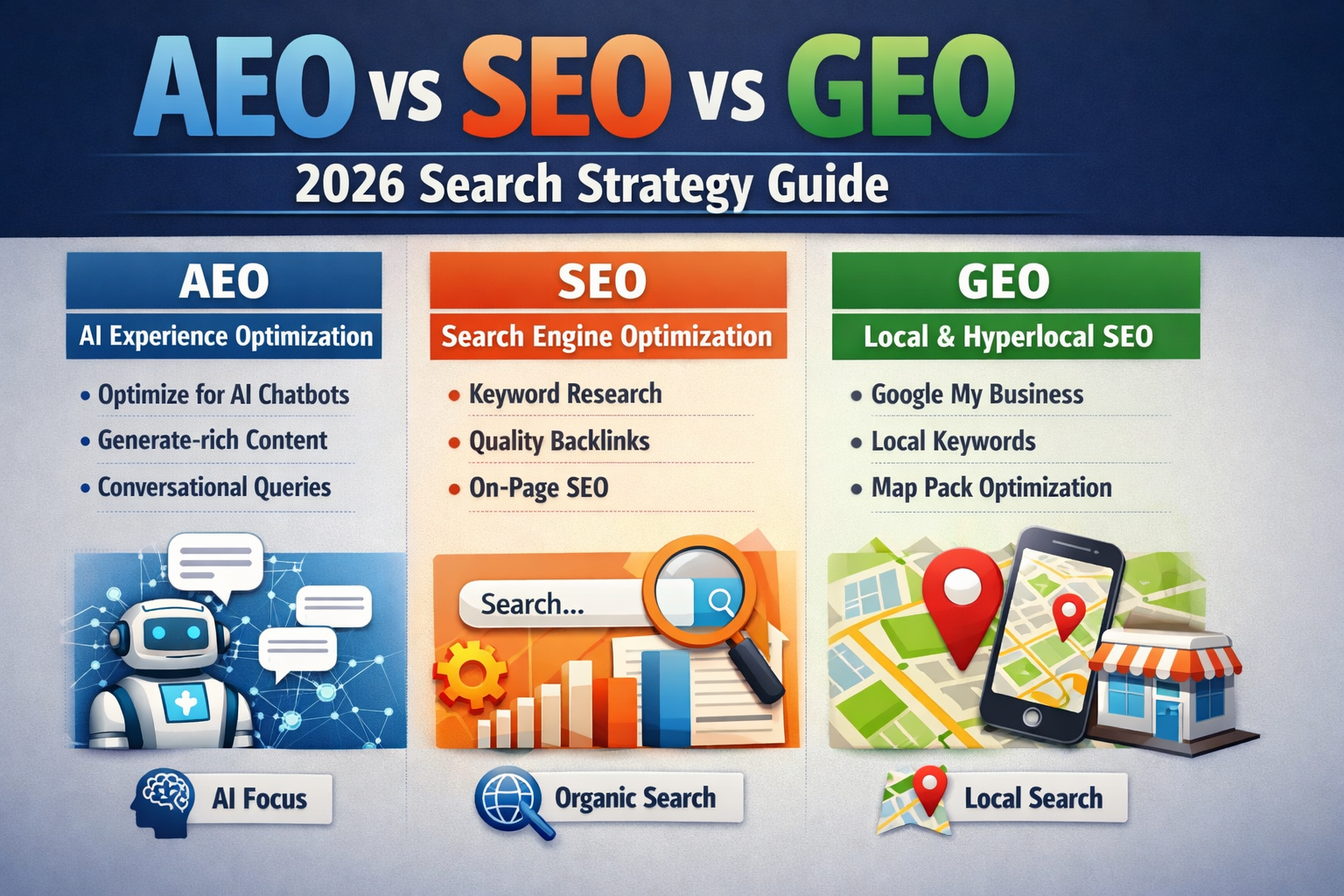
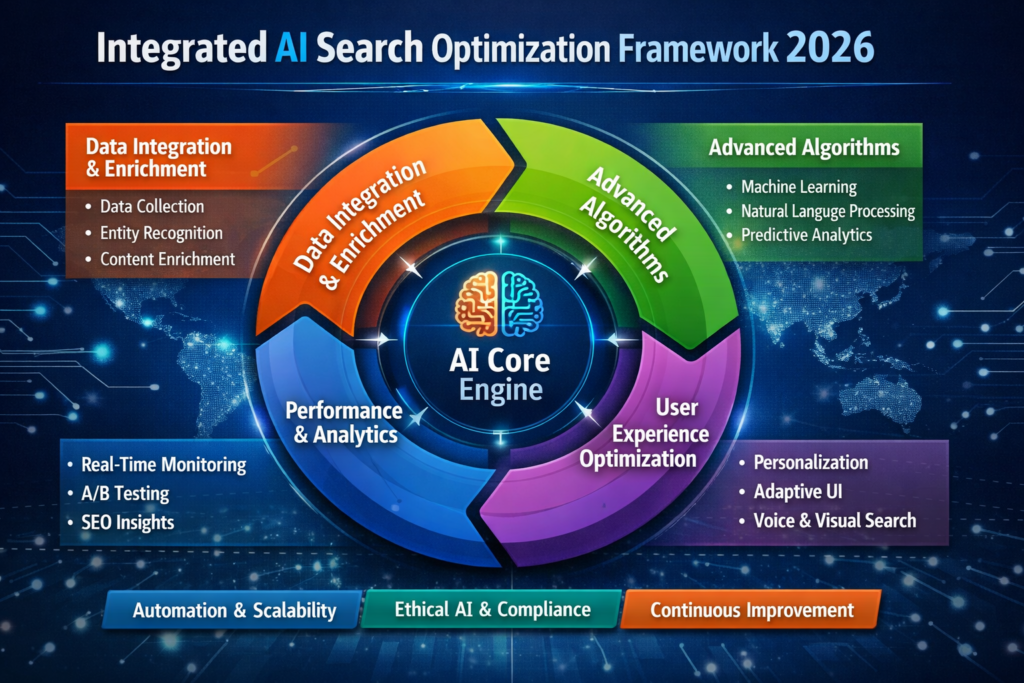
AEO vs SEO vs GEO is not an either-or decision in 2026. The strongest search strategy combines all three: SEO helps your pages get discovered, AEO helps your content surface as direct answers, and GEO helps your brand earn mentions and citations inside AI-generated responses.
For brands operating in the US, UK, and EU, that mix matters more than ever. Search is no longer just about ranking on a results page. It is about being visible wherever buyers research, compare, and make decisions, whether that happens in Google Search, AI Overviews, ChatGPT, Gemini, or other answer-driven platforms.
Traditional search optimization still matters. A lot. But it is no longer enough on its own. As search experiences become more conversational and AI-assisted, brands need content that can do three jobs at once: rank, answer, and earn trust.
Why AEO vs SEO vs GEO matters in 2026
Search behavior has changed. Users now expect fast summaries, follow-up answers, and clear sources. They may start with Google, continue with an AI assistant, and only click through when they are close to a decision.
That shift changes the goal. It is no longer just “get the page to rank.” It is “be the source search engines and AI systems trust enough to surface, summarize, and cite.”
For B2B SaaS, enterprise, fintech, healthcare, and other regulated sectors, this is already affecting pipeline. Buyers often research vendors across multiple surfaces before they ever book a demo or speak to sales. In markets shaped by GDPR, UK GDPR, HIPAA, or PCI DSS, trust and clarity are part of visibility.
What is AEO vs SEO vs GEO?
AEO vs SEO vs GEO comes down to three different outcomes in search visibility.
SEO
SEO focuses on helping your site rank in search engines and attract qualified clicks. It depends on crawlable pages, solid site structure, internal linking, technical health, and useful content that matches search intent.
This is still the foundation. If your site is hard to crawl, thin on substance, or poorly structured, the rest gets weaker.
AEO
AEO, or Answer Engine Optimization, is about helping your content appear in direct-answer environments. That includes snippets, AI summaries, zero-click results, FAQs, and question-based answer boxes.
In practice, AEO means making your content easier to extract and understand. Clear headings, concise definitions, strong formatting, and direct answers matter here.
GEO
GEO, or Generative Engine Optimization, focuses on making your brand and content more citation-worthy in AI-generated outputs. It leans on entity consistency, author trust, editorial transparency, sourcing, and content that is easy for AI systems to verify and reference.
Think of it this way.
SEO helps you get found
AEO helps you get selected as the answer
GEO helps you get cited as the source
The core differences between AEO, SEO, and GEO
These three approaches overlap, but they are not identical.
Platform differences
SEO is rooted in traditional search engines and ranking systems.
AEO becomes more important in featured snippets, AI summaries, and other answer-first experiences.
GEO matters most in generative environments where AI tools synthesize information from multiple sources and decide which brands or pages are worth mentioning.
A page that ranks well on Google may not automatically become the best answer in an AI workflow. Sometimes the page with the clearest structure, strongest evidence, and best sourcing wins instead.
Content differences
Ranking content often targets keyword clusters and broader topical relevance.
Answer-ready content leads with direct, concise responses. It uses question-led subheadings, short summary paragraphs, FAQs, and scannable formatting.
Citation-ready content goes a step further. It includes named authors, references, trust signals, editorial ownership, proof points, and clean content architecture that makes claims easier to validate.
Outcome differences
Each layer supports a different business outcome.
SEO supports rankings, traffic, and conversions
AEO supports answer visibility and zero-click influence
GEO supports AI mentions, citation share, and assisted brand discovery
The smartest teams do not treat these as separate programs. They build one system that supports all three.
Which should businesses prioritize first in 2026?
For most businesses, the right order is simple: start with SEO, layer in AEO, then strengthen GEO.
That said, priorities can shift depending on where your growth is getting blocked.
Start with SEO if your foundation is weak
If your site has poor architecture, weak internal linking, thin service pages, or technical crawl issues, SEO comes first.
A SaaS brand in London or a startup in San Francisco will struggle to win AI visibility consistently if its main pages are still hard for search engines to understand.
Prioritize AEO if buyers need fast answers
If prospects keep asking the same questions about pricing, integrations, compliance, onboarding, or product fit, AEO deserves attention early.
Clear answer blocks and FAQ sections can improve lead quality even if raw clicks drop, because visitors arrive better informed.
Move GEO higher if trust drives the deal
For enterprise SaaS, fintech, healthcare, analytics, and compliance-led industries, GEO may need to move up the list.
In Berlin, London, or across the wider EU, buyers often need stronger proof before they act. From a small business point of view, traffic alone is not enough if the content does not build confidence. Citation-worthy pages can influence buying decisions long before the final click.
How to build a search strategy across SEO, AEO, and GEO
The best way to approach AEO vs SEO vs GEO is in layers.
Build the SEO foundation first
Start with the basics.
Clear site architecture
Crawlable service and category pages
Strong internal linking
Useful, intent-matched content
Technical hygiene across key templates
A practical example is linking related expertise across your site, such as web development services, mobile app development services, search engine optimization services, and business intelligence services.
Without this layer, answer optimization and citation visibility become much harder to sustain.
Layer in AEO next
Once the foundation is in place, make important pages easier to answer from.
That usually includes:
Short answer paragraphs under major headings
Clear definitions near the top of the page
FAQ sections for high-intent questions
Snippet-friendly formatting
Schema markup where it makes sense
Supporting content can also strengthen topic depth. Articles like SEO for AI Search: AEO, GEO & AI Overview Strategy and Answer Engine Optimization for Saudi Blogs can reinforce topical authority across the site.
Strengthen GEO with trust and entity signals
GEO is where structure meets credibility.
To improve generative visibility, add:
Named authors or editorial ownership
Transparent sourcing
Policy and compliance pages
Consistent brand and entity signals
Evidence, examples, and proof-led claims
Pages like your privacy policy and supporting trust-focused content such as Best Trust Signals for Lead Generation Growth help both people and machines assess whether your content is worth trusting.
How to measure AEO, SEO, and GEO separately
Measurement needs to expand with the search landscape. One report is no longer enough.
SEO KPIs
Track the metrics tied to discoverability and demand capture.
Rankings
Non-brand impressions
Organic traffic
Conversion rate
Pipeline contribution by landing page
AEO KPIs
Track how often your content appears in answer-driven surfaces.
Featured answers
Snippet visibility
FAQ visibility
Answer inclusion for key buyer questions
Zero-click influence trends
GEO KPIs
Track whether your brand is showing up in AI-assisted research journeys.
AI mentions
AI citations
Share of voice in generative responses
Branded search lift
Direct traffic after key content launches
Assisted conversions
In practice, GEO often influences the journey earlier than the click, so branded demand and assisted impact matter more than last-click reporting alone.
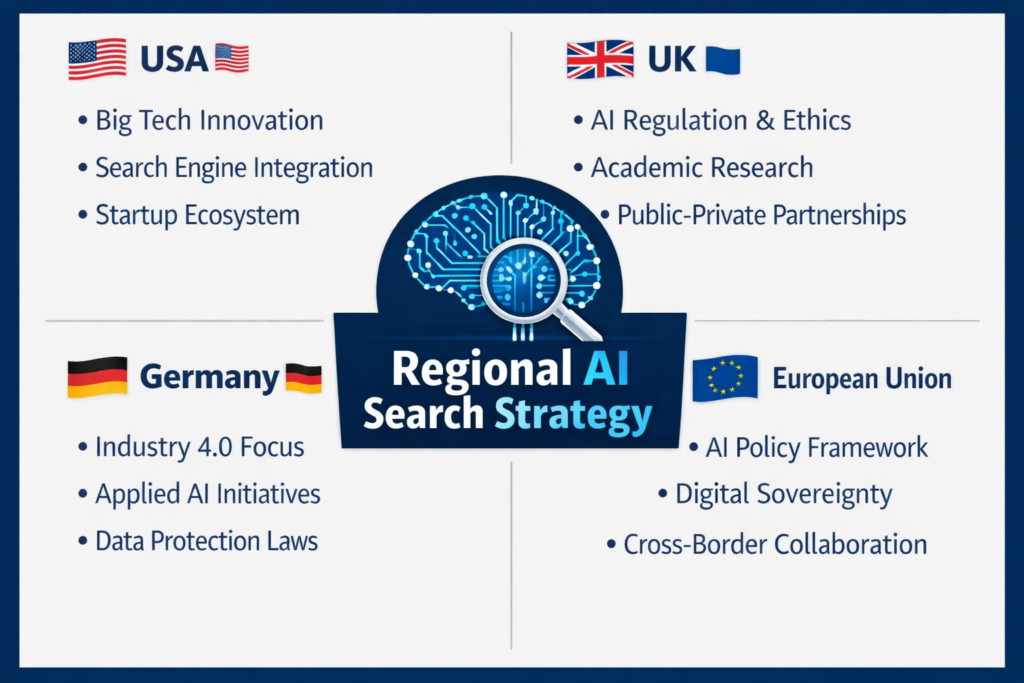
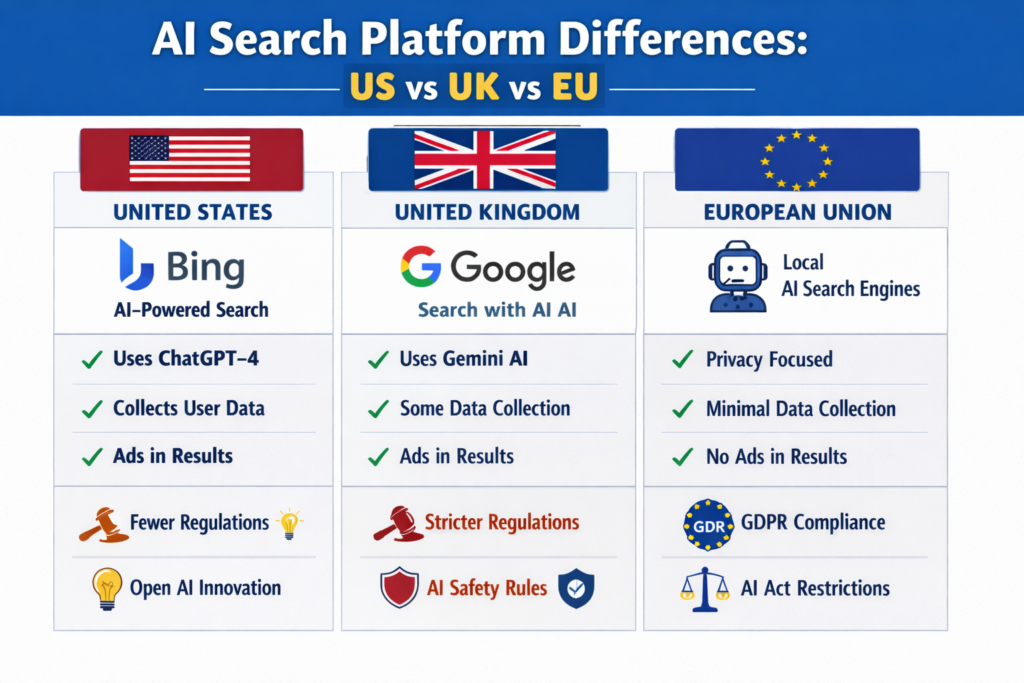
Regional strategy for the US, UK, Germany, and the EU
AEO vs SEO vs GEO does not look exactly the same in every market.
United States: speed, competition, and reporting pressure
In cities like New York, Austin, and San Francisco, brands often face faster AI-search adoption and heavier competition. Teams are usually pushed to connect visibility with pipeline, not just rankings.
That means the US market often rewards speed, content scale, and stronger executive reporting.
United Kingdom.
In London, Manchester, and other UK markets, lead quality often matters as much as traffic growth.
For B2B brands operating around FCA-sensitive workflows, NHS-adjacent services, or high-trust categories, vague claims can hurt both conversion and credibility. Clearer policy language and better answer formatting usually pay off.
Germany and the wider EU.
German and EU buyers often respond better to precision, careful terminology, and stronger data-handling clarity.
A Berlin or Munich fintech brand may need more proof-led messaging, better compliance framing, and clearer trust signals than a similar company targeting only the US. Many buyers in these markets want confidence before they engage, especially where DSGVO, GDPR, BaFin expectations, or data residency concerns shape vendor selection.
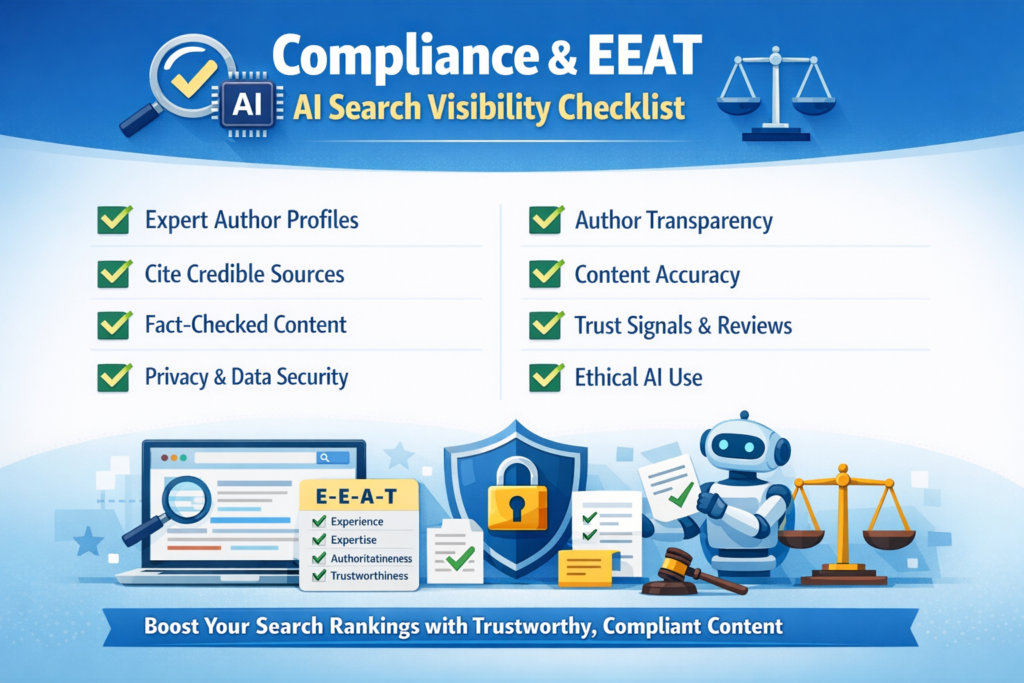
Why trust and E-E-A-T matter more in AI search
AI systems compress information quickly. They compare sources, summarize claims, and surface what appears most useful and credible.
That makes trust signals more important, not less.
If your content lacks author clarity, editorial ownership, policy context, or proof, it becomes harder to summarize confidently and harder to cite.
Strengthen trust with visible proof
A stronger content setup usually includes.
Author bios or editorial ownership
Source references
Customer proof or case-based support
Compliance pages
Transparent privacy and governance information
For YMYL-sensitive topics such as finance, healthcare, and regulated technology, balanced language matters too. This is not financial, legal, or medical advice; businesses should always review content against their own compliance requirements.
Common mistakes brands make
When teams compare AEO vs SEO vs GEO, they often create more confusion than clarity.
Treating them like separate silos
This is the biggest mistake.
SEO, AEO, and GEO are not three disconnected channels. They are three layers of modern search visibility. Splitting them across different teams without shared strategy often leads to fragmented content and messy reporting.
Chasing AI visibility without fixing the basics
No amount of AI-focused copy will overcome weak indexing, poor structure, or thin evidence.
If the page is not useful, clear, and technically sound, it will struggle across every surface.
Ignoring regional context
A page can earn impressions and still fail commercially if it lacks local trust signals, relevant compliance language, or a clear next step.
For US, UK, and EU brands, regional nuance is not a nice extra. It is part of conversion.
The best 2026 strategy is integrated
The best answer to AEO vs SEO vs GEO is not to pick one. It is to build a search system that supports all three.
SEO still gives you the foundation for sustainable discoverability.
AEO improves your chances of appearing in direct answers and zero-click experiences.
GEO expands your visibility inside AI-generated research and decision journeys.
Put together, they help your brand show up not just as another result, but as a useful source buyers can find, trust, and remember.
Final word
AEO vs SEO vs GEO is really a question about how modern buyers discover information. In 2026, brands need content that can rank in search, answer clearly, and earn trust inside AI-generated results.
If your team wants better visibility across rankings, answer surfaces, and AI citations, the right move is not to split these strategies apart. It is to integrate them into one practical, measurable content system.( Click Here’s )
Key takeaways
SEO is still the foundation for crawlability, rankings, and demand capture
AEO helps content win direct answers and zero-click visibility
GEO improves citation-worthiness in AI-generated results
US, UK, and EU markets often need different trust and compliance emphasis
The most effective 2026 strategy is integrated, not siloed
FAQs
Q : Is GEO replacing SEO in 2026?
A : No. GEO is not replacing SEO. It extends SEO into AI-driven research environments where citation-worthiness and trust signals influence visibility.
Q : Can AEO help even if clicks decline?
A : Yes. AEO can improve lead quality because users often arrive with more context after seeing direct answers or summaries. Fewer clicks can still mean better-qualified traffic.
Q : What kind of content works best for GEO?
A : Content that is structured, well-sourced, clearly authored, and easy to verify tends to perform better. Proof-led pages usually have a stronger chance of being reused or cited in generative experiences.
Q : Do UK and EU brands need a different strategy from US brands?
A : Often, yes. UK and EU markets usually need stronger policy clarity, more conservative trust language, and better privacy framing, while US brands often focus more aggressively on speed and market share.
Q : Should businesses invest in all three at once?
A : Usually, yes, but not equally. Build the SEO foundation first, add AEO where users need direct answers, and strengthen GEO where trust and AI-assisted research shape the buying journey.