


Human in the Loop Arabic AI for GCC Trust
Arabic AI can move fast, but trust moves slower. For companies in Saudi Arabia, the UAE, and Qatar, human in the loop Arabic AI helps keep automated outputs accurate, compliant, and culturally appropriate before they reach customers.
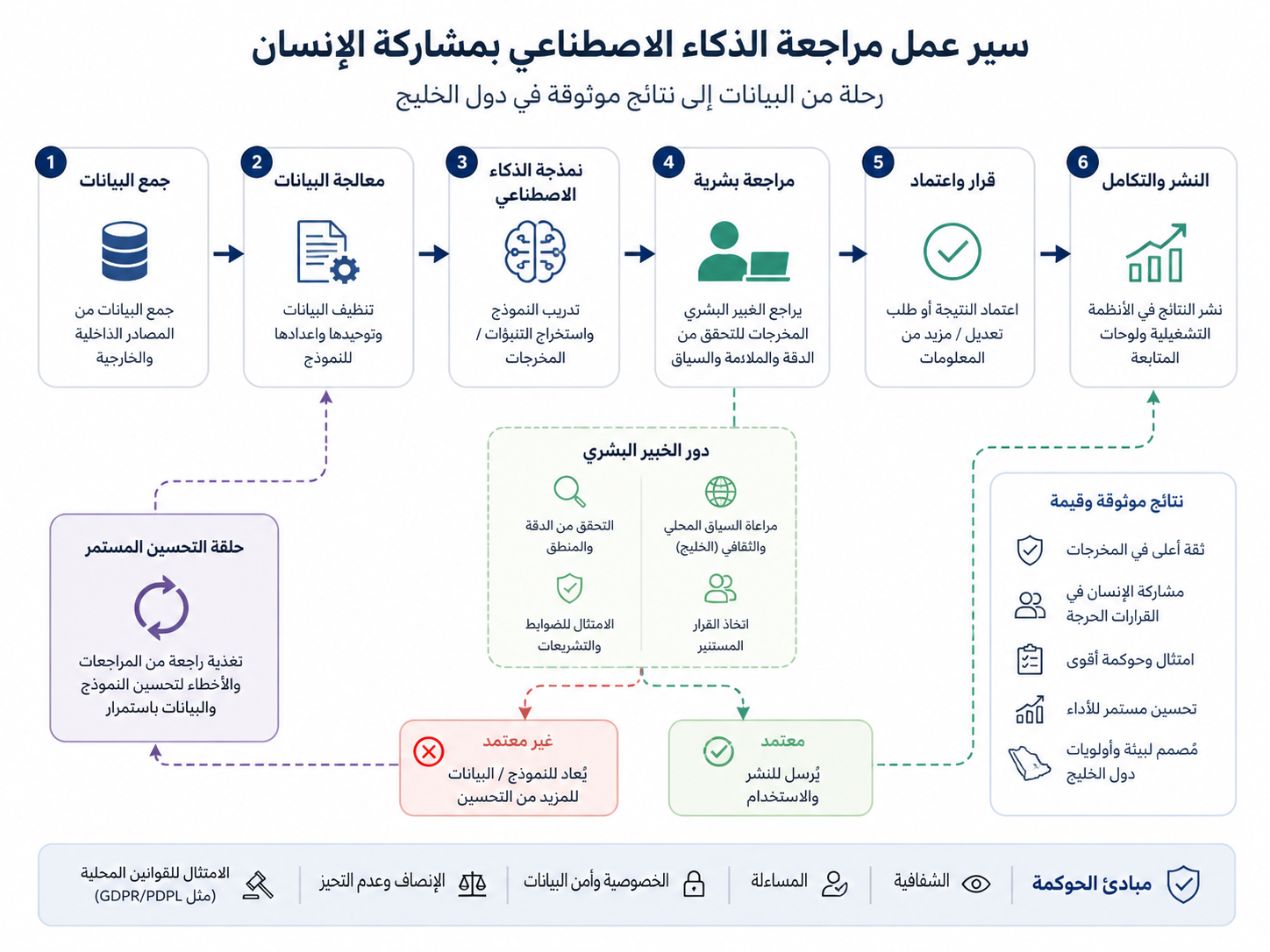
Human in the loop Arabic AI means trained reviewers check, approve, or correct Arabic AI outputs before those outputs affect customers, regulated workflows, or business decisions. In the GCC, this matters because Arabic AI must handle Gulf dialects, Modern Standard Arabic, finance language, healthcare sensitivity, government wording, and customer trust at the same time.
Why Arabic AI Needs Human Review in the GCC
Arabic AI is already being used across Riyadh, Jeddah, Dubai, Abu Dhabi, and Doha. But one wrong chatbot answer, mistranslated policy, or overconfident finance response can create a real business problem.
For GCC companies, Arabic AI should understand.
Gulf dialects and mixed Arabic-English messages
Modern Standard Arabic for formal communication
Islamic finance and banking terminology
Government and compliance-sensitive wording
Healthcare, legal, and customer-support boundaries
That is why human review is not just proofreading. It is a safety layer for AI systems that speak to real customers.
What Is Human in the Loop Arabic AI?
Human in the loop Arabic AI is a workflow where AI drafts, classifies, summarizes, or recommends something, then a trained reviewer checks it before it is published, sent, or used for action.
In practice, the AI does the first pass. The reviewer protects the final output.
How Human Review Improves Arabic AI Outputs
Human reviewers catch issues that automated systems often miss, including.
Hallucinated claims
Wrong names, numbers, or entities
Weak Arabic tone
Poor Gulf dialect interpretation
Compliance-sensitive wording
Mistranslated business terms
For example, a Riyadh fintech chatbot may draft a response to a customer complaint. A reviewer can confirm that the Arabic wording does not imply approval, eligibility, or Sharia-compliant advice without proper checks.
Why Gulf Dialects and MSA Need Extra Validation
Arabic is not one flat language.
A customer in Doha may mix English banking terms with Qatari Arabic. A Dubai shopper may write in casual Gulf dialect. A Saudi government user may expect clear, formal MSA.
Human review improves Arabic NLP quality assurance by checking tone, intent, names, numbers, and sensitive terms against local expectations.
Where GCC Companies Use Human-in-the-Loop Workflows
GCC teams use human oversight in AI for.
Arabic chatbots
Loan and onboarding support
Claims triage
Medical summaries
Legal content review
Product descriptions
Arabic voice AI
Government and public-service communication
Document review
Mak It Solutions can connect these workflows with secure web development services, mobile app development services, and business intelligence dashboards.
When Is Human Review Mandatory for Arabic AI?
Human review becomes necessary when Arabic AI can affect money, health, identity, legal obligations, public trust, or customer rights.
High-Risk Outputs in Fintech, Healthcare, Legal, and Government
A Saudi fintech startup should review AI outputs linked to onboarding, complaints, credit decisions, fraud alerts, and payment disputes.
For Saudi financial-sector teams, SAMA’s cyber threat intelligence principles are part of a wider regulated risk environment, with the official rulebook listing the principles as in force since 27 February 2022.
Customer-Facing Arabic Chatbots and Escalation Triggers
Arabic chatbots should escalate to a human when users mention.
Complaints
Refund disputes
Medical symptoms
Legal documents
Banking access
Identity verification
Emotional distress
Payment or account issues
For app-first journeys, escalation design can be built into React Native development or Flutter development so the user experience stays smooth.
When Automation Is Safe vs. When Approval Is Required
Automation is safer for low-risk FAQs, order tracking, appointment reminders, and general product information.
Human approval is required when AI gives advice, changes account status, handles regulated data, or publishes official Arabic content.
Human in the Loop Arabic AI Compliance Across Saudi, UAE, and Qatar
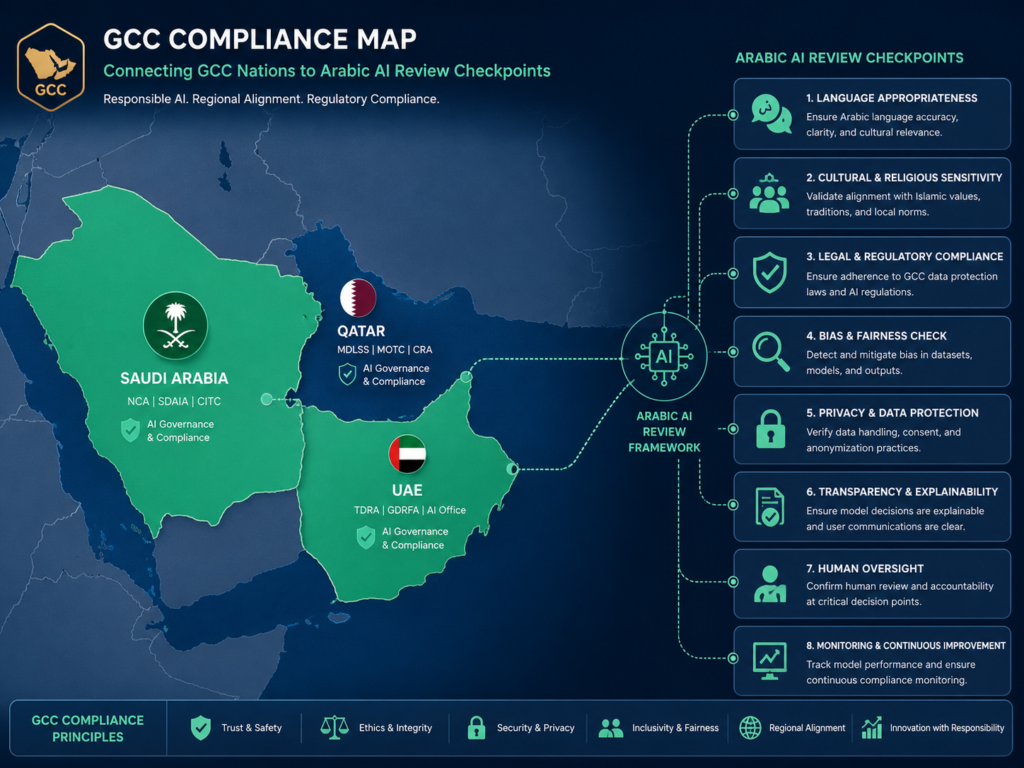
Human review supports responsible AI governance because it creates accountability, evidence, and correction loops.
Saudi Arabia.
In KSA, teams should keep reviewer notes, approval logs, data access records, and Arabic prompt histories.
A Jeddah healthcare provider or Riyadh fintech should not treat AI review as informal proofreading. It should be part of risk control, compliance documentation, and audit history.
UAE.
The UAE Charter for the Development and Use of Artificial Intelligence was issued in 2024 and supports the UAE’s wider AI strategy. It highlights responsible AI development and adoption across sectors, which makes human oversight especially important for public-facing and enterprise AI systems.
For Dubai and Abu Dhabi teams, this means Arabic AI review should be practical, documented, and easy for support, compliance, and product teams to follow.
Qatar.
Qatar Central Bank issued an Artificial Intelligence Guideline in 2024 to regulate AI use in the financial sector. QCB also lists Artificial Intelligence Guidelines under its official financial technology resources.
For Doha banks and fintech companies, Arabic LLM evaluation should include governance, risk review, and human approval for finance-sensitive outputs.
How Human Review Reduces Arabic AI Hallucinations
Human reviewers reduce hallucinations by comparing AI outputs against approved knowledge, policy, and real customer context.
Common Arabic AI Errors in GCC Business Content
Common issues include.
Invented policy details
Wrong transliteration of names
Weak Gulf dialect understanding
Overconfident legal wording
Inaccurate financial terminology
Confusing formal Arabic with casual support language
These mistakes may look small on the screen. In regulated or customer-facing workflows, they can become serious.
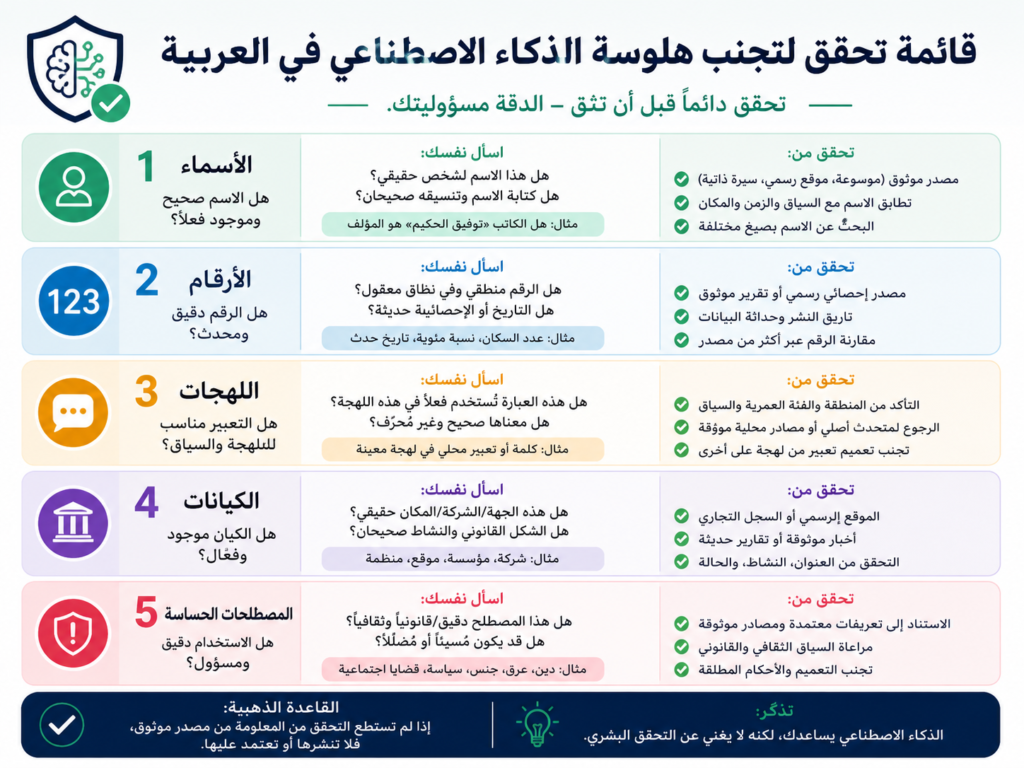
Reviewing Names, Entities, Dialects, and Sensitive Terms
Reviewers should check.
City and branch names
Regulator names
Product names
Customer identity details
Quranic or Islamic finance references
Mixed Arabic-English phrases
Numbers, dates, and account-related details
This is especially important for Arabic AI systems used in banking, healthcare, logistics, and government services.
Using Feedback to Improve Arabic LLM Evaluation
Every correction should feed a scorecard.
Over time, teams can improve AI model validation by tracking hallucination rate, escalation rate, tone accuracy, dialect accuracy, and compliance flags.
A simple review dashboard can show where the model performs well and where it still needs human support.
GCC Use Cases for Human in the Loop Arabic AI
Saudi Fintech and SAMA-Regulated Customer Journeys
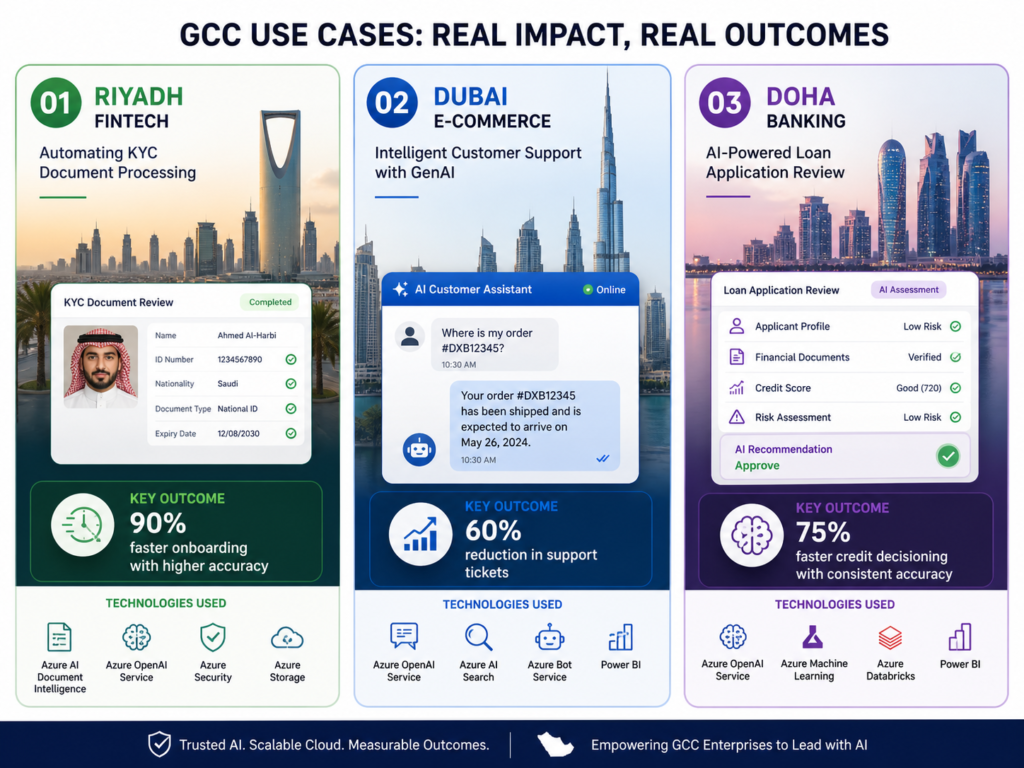
A Riyadh fintech startup can use AI to draft Arabic complaint replies while trained staff approve final responses and retain audit logs.
This gives the team speed without losing control over regulated communication.
UAE Retail, Logistics, and Multilingual Customer Support
A Dubai e-commerce brand can automate Arabic product questions but escalate refund disputes, payment problems, and delivery complaints.
This can connect naturally with e-commerce solutions and Shopify development.
Qatar Financial Institutions and Arabic AI Governance
A Doha SME or financial institution may use Arabic AI for support, document summaries, and internal knowledge search.
For cloud planning, Google Cloud lists Doha among its cloud regions, while its official locations page notes that Google Cloud supports deployment across global regions and zones for performance, availability, and data-residency planning.
Building a Human Review Workflow for Arabic AI
A good workflow is simple enough for teams to use every day and strong enough to support compliance.
Define Review Rules by Risk Level and Content Type
Start with clear categories.
| Risk Level | Example Output | Review Need |
|---|---|---|
| Low | FAQs, order tracking, store hours | Automated with monitoring |
| Medium | Refund requests, product complaints, service changes | Human review for edge cases |
| High | Finance, healthcare, legal, identity, official notices | Human approval required |
This helps teams avoid reviewing everything manually while still protecting sensitive journeys.
Create Arabic QA Scorecards for Accuracy, Tone, and Compliance
Score every output for.
Factual accuracy
Arabic clarity
Gulf dialect handling
Brand tone
Compliance sensitivity
Escalation need
Source alignment
The goal is not only to fix one response. The goal is to improve the system.
Document Approvals, Reviewer Notes, and Audit History
Store the reviewer decision, timestamp, source documents, model version, and final approved Arabic text.
For analytics, Mak It Solutions’ business intelligence services can help visualize review quality, approval rates, and escalation trends.
Choosing an Arabic AI Human Review Partner in the GCC
The right review partner should understand Arabic, AI, and the local business context.
What to Look for in Arabic AI Reviewers
Look for reviewers with.
Arabic fluency
Gulf dialect awareness
Sector knowledge
Compliance discipline
Confidentiality practices
Experience reviewing AI outputs, not only translating text
A strong reviewer can explain why an output is risky, not just correct grammar.
Why Local GCC Knowledge Matters
A reviewer who understands Riyadh banking users, Dubai retail expectations, Abu Dhabi governance language, and Doha financial terminology will catch issues generic reviewers may miss.
Local context matters because trust is not only about correct words. It is also about tone, timing, and the expectations behind the message.
Questions to Ask Before Outsourcing Arabic AI Review
Before choosing a partner, ask.
How are reviewers trained?
How is sensitive data handled?
How are approvals logged?
How are errors escalated?
Can the workflow connect with existing tools?
Can the partner support custom Python development or Node.js development integrations?
Concluding Remarks
Human in the loop Arabic AI helps GCC companies reduce hallucinations, improve Arabic UX, support compliance, and scale AI with more confidence.
For Saudi Arabia, the UAE, Qatar, and the wider MENA region, the strongest AI systems are not blindly automatic. They are reviewed, monitored, and improved by people who understand the language, the sector, and the local market.
Planning Arabic AI for customers, employees, or regulated workflows? Contact Mak It Solutions to book a consultation, explore services, and request a custom GCC strategy for safer Arabic-first AI adoption.( Click Here’s )
FAQs
Q : Is human review required for Arabic AI chatbots in Saudi Arabia?
Human review is strongly recommended when Saudi chatbots handle finance, complaints, identity, healthcare, or legal-sensitive journeys. Low-risk FAQs may be automated, but anything affecting customer rights, payments, eligibility, or official communication should include human oversight.
Q : How should UAE companies document Arabic AI human oversight?
A : UAE companies should document the AI output, reviewer decision, timestamp, risk level, source documents, and final approved Arabic response. This supports accountability and makes future audits easier for Dubai, Abu Dhabi, and wider UAE teams.
Q : What Arabic AI outputs should Qatar financial institutions review?
A : Qatar financial institutions should review outputs related to onboarding, credit, fraud, complaints, investment wording, payment disputes, customer eligibility, and regulatory communication. Arabic summaries of policies, contracts, and customer cases should also be reviewed before operational use.
Q : Can human-in-the-loop workflows improve Gulf dialect accuracy?
A : Yes. Human reviewers can label dialect mistakes, correct tone, and teach AI how customers in Saudi Arabia, the UAE, Qatar, Kuwait, Bahrain, and Oman actually speak. This is especially useful when customers mix Arabic and English in the same message.
Q : How do GCC companies choose Arabic AI reviewers for compliance-sensitive content?
A : Choose reviewers with Arabic fluency, GCC market awareness, sector knowledge, and clear confidentiality practices. For compliance-sensitive content, they should also understand the business impact of regulators such as SAMA, TDRA, QCB, DIFC, or ADGM.