

Service Page SEO: Rank Higher and Convert More
Service Page SEO: Rank Higher and Convert More
Service Page SEO: Rank Higher and Convert More
Service Page SEO is how you optimize revenue-focused pages to rank for high-intent searches and turn that traffic into real enquiries, calls, and sales. The best service pages do two things at once: they match search intent and make the next step feel easy.
That matters more than ever for brands in the US, UK, Germany, and the wider EU. A service page is not just there to attract clicks. It needs to build trust, answer objections, and help the right buyer choose you.
Service pages are often the closest thing you have to a digital salesperson. When they are clear, credible, and conversion-focused, they can become some of the highest-value assets on your site.
What Is Service Page SEO?
Service Page SEO is the process of optimizing pages built around a specific commercial offer, such as SEO consulting, web development, React Native development, or digital marketing services.
Unlike blog posts, these pages target people who are already evaluating providers. They are not just looking for information. They are looking for a solution, a team, and a reason to trust that team.
For lead-generation websites, success is not just about rankings. It is about qualified action.
Contact form submissions
Discovery calls
Demo requests
Scoped estimates
Sales enquiries
That is what makes service page SEO different from general content SEO. The goal is visibility with intent, then trust with momentum.
Why Service Pages Matter More Than Blog Posts or Homepages
A homepage introduces your brand. A blog post educates. A service page needs to do more.
It has to explain the offer clearly, connect with the buyer’s problem, show proof, and create a clean path to conversion. A page targeting “mobile app development in London” should not read like a thought-leadership article. It should show what you offer, how you work, what outcomes you deliver, and why a prospect should contact you.
That is why strong service pages tend to outperform generic sales copy. They line up with what the buyer wants to know right now.
From a practical lead-gen point of view, better service pages usually improve results in three ways:
They align more closely with search intent
They reduce hesitation with proof and clarity
They make conversion easier with stronger calls to action
The Ideal Service Page Structure to Rank and Convert
A high-performing service page should answer four questions fast.
What do you offer?
Who is it for?
Why should the buyer trust you?
What should they do next?
A simple structure works best.
Clear headline tied to search intent
Short value proposition
Trust proof
Service details and scope
Process or delivery model
FAQs
Clear CTA
That structure keeps the page easy to scan on mobile while still giving serious buyers enough depth.
Must-Have Elements on Every Service Page
Every strong service page should include the essentials below.
A headline that matches intent
Your H1 should make it instantly obvious what the page is about.
A value proposition that is specific
Tell the reader what you help with and why your offer matters.
Proof that lowers risk
This can include reviews, testimonials, case studies, certifications, platform expertise, or industries served.
A clear explanation of the service
Outline deliverables, process, timelines, support, or outcomes in plain language.
FAQs that remove friction
Good FAQ sections help with user hesitation and can also support search visibility.
A CTA that fits buyer readiness
Not every prospect wants the same next step. Some want a consultation. Others want a quote. Some just want a quick audit.
On-Page SEO Essentials for Service Page SEO
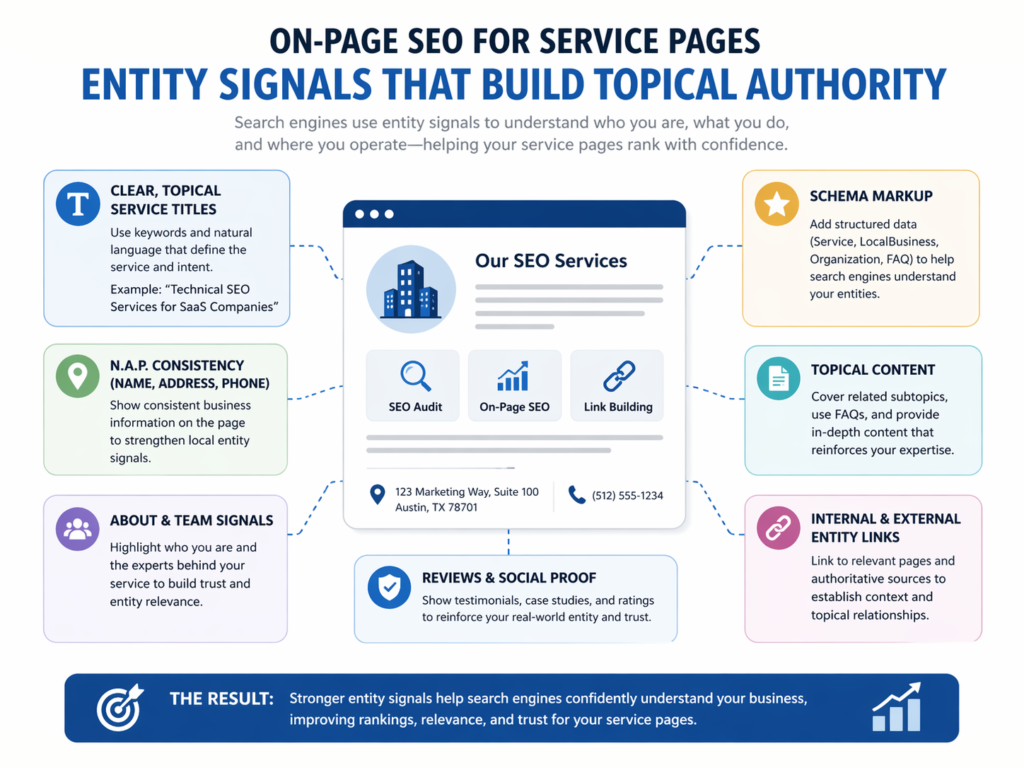
On-page optimization still matters, but service page SEO works best when keywords support clarity instead of overpowering it.
Use the main keyword naturally in the places that matter most.
SEO title
H1
First paragraph
At least one H2 or H3
Conclusion or CTA
Then support it with natural variations such as
Service landing page SEO
On-page SEO for services
Service page copy
SEO for lead generation pages
Local service page SEO
The goal is not repetition. The goal is relevance.
What to Optimize on the Page
Focus on the fundamentals first.
Title tag and meta description
Heading structure
Internal links
Image alt text
Mobile readability
CTA placement
FAQ formatting
A service page should feel easy to read, not stuffed with keywords. In practice, many pages underperform because they are technically optimized but still sound vague or generic.
Trust Signals That Help Service Pages Convert
Traffic alone is not enough. Many service pages rank reasonably well but fail to generate leads because they do not reduce buyer risk.
That usually comes down to missing trust signals.
The strongest trust elements often include.
Client testimonials
Case studies
Certifications
Industry experience
Platform expertise
Screenshots or process visuals
Recognizable partner or compliance references
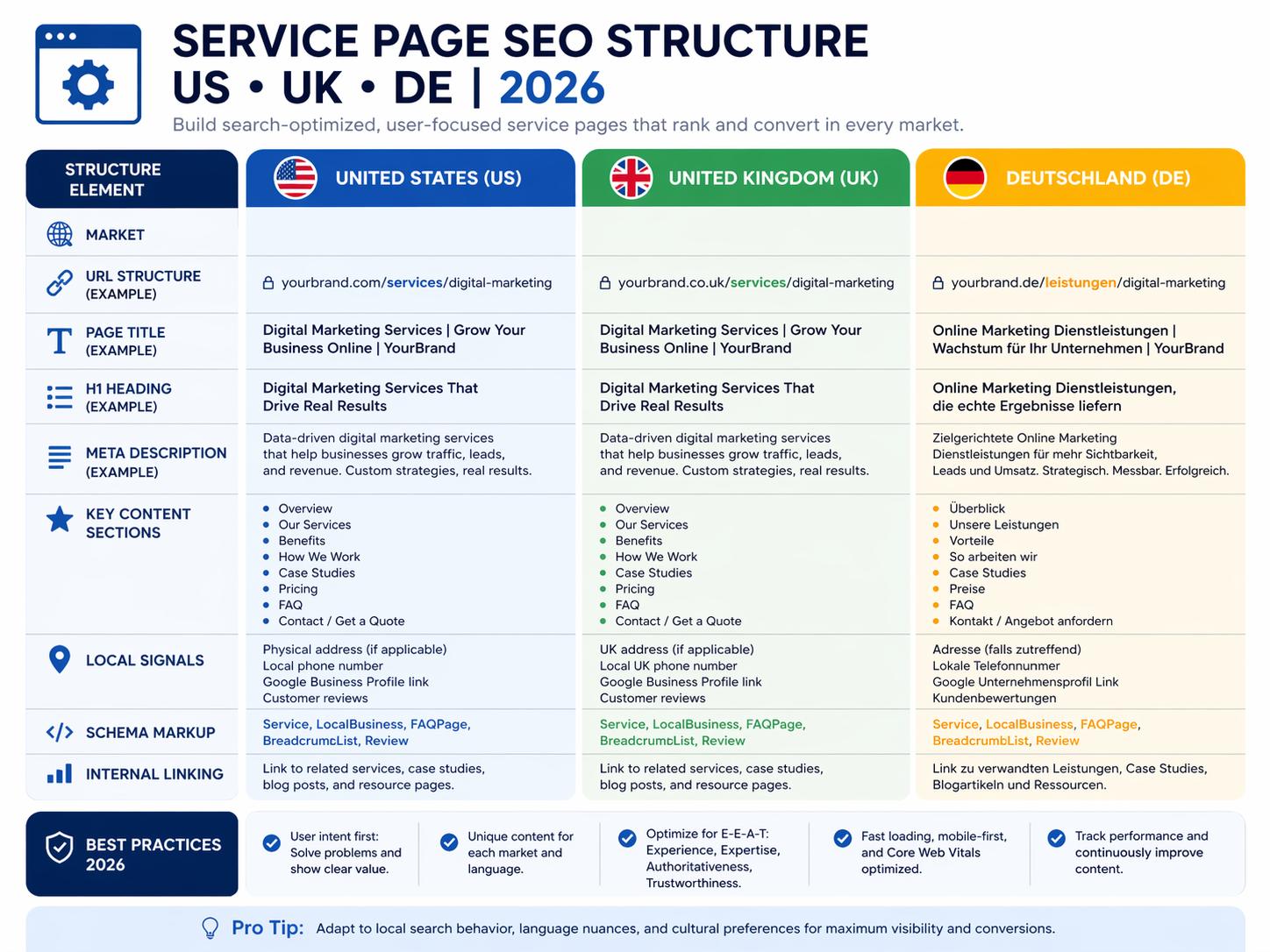
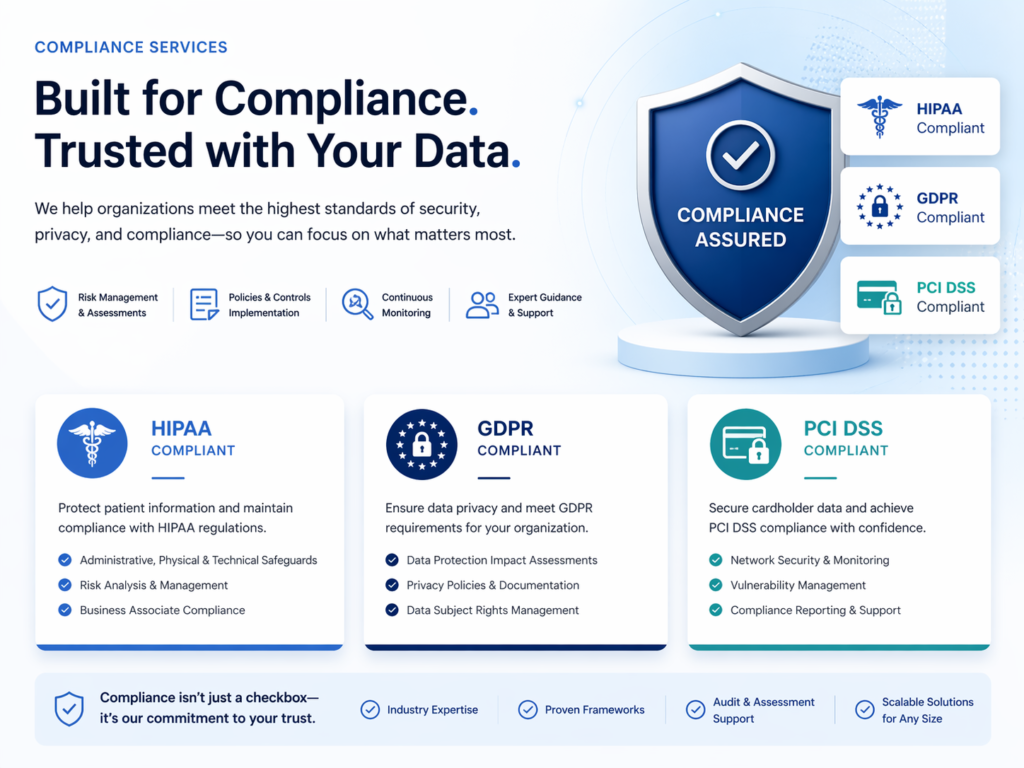
For example, a healthcare-focused service page in the US may need accurate HIPAA-aware language. A UK service page may need more emphasis on privacy expectations and enquiry-led UX. A Germany-focused page may need clearer references to GDPR or DSGVO-sensitive workflows, especially in regulated industries.
These details make the page feel grounded in the buyer’s reality instead of sounding like a generic template.
CTA Strategy for Agencies and Service Businesses
Your CTA should match the level of commitment the buyer is ready to make.
Here are a few common examples:
| Buyer Stage | Better CTA Type |
|---|---|
| Comparing options | Get a free audit |
| Mid-funnel | Book a consultation |
| Ready to buy | Request a scoped estimate |
| Enterprise buyer | Talk to our team |
A mismatch here can hurt conversions. A cold visitor may ignore a hard-sales CTA. A ready buyer may get frustrated if the page only offers vague “learn more” language.
Local Service Page SEO for Cities and Regions
Local relevance matters when the location changes the search intent, trust signals, or sales context.
You do not need a separate page for every city just to chase rankings. But you should create location-focused pages when the market genuinely changes the content.
That often makes sense when.
You serve different industries in different cities
You have location-specific proof
Compliance or regulation varies by region
Buyer expectations differ by market
Avoid Thin or Duplicate Local Pages
One of the most common mistakes in service page SEO is cloning the same page and swapping out city names.
That rarely creates useful content.
Instead, build genuinely different pages by adding.
Local case studies
Market-specific pain points
Relevant industries
Location-aware FAQs
Regional trust language
Delivery or service-area details
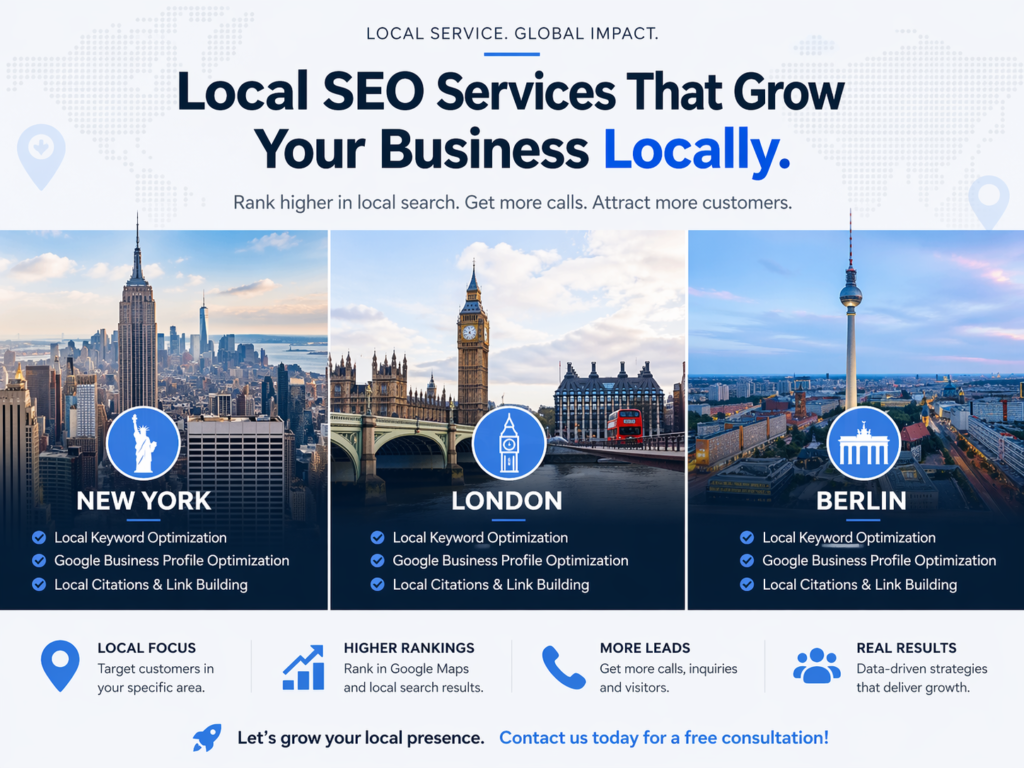
A New York page may lean into speed, ROI, and integration. A London page may need stronger trust cues and a more consultation-led tone. A Berlin or Munich page may need clearer language around data governance, legal transparency, and compliance sensitivity.
GEO and Compliance Considerations for the US, UK, Germany, and EU
For some businesses, localization is not just about tone. It is about trust and accuracy.
US
Service pages targeting US healthcare, insurance, or other sensitive sectors should be careful with compliance language. Do not overpromise. Be precise about what your team supports and what standards shape your process.
UK
UK buyers often respond well to pages that feel clear, professional, and low-friction. Privacy wording, trust cues, and straightforward enquiry paths can make a noticeable difference.
Germany and the wider EU
For Germany and EU markets, service pages often need stronger legal clarity, cleaner privacy language, and more care around data handling. That is especially true in sectors like fintech, SaaS, healthcare tech, and enterprise services.
Balanced language matters here. If your service touches sensitive data, regulation, or financial processes, your page should reflect that reality without sounding inflated.
Technical SEO and AEO Enhancements for Modern Service Pages
Service Page SEO now needs to work for more than traditional blue-link rankings. Pages should also be structured so search engines and AI-driven search features can quickly understand the offer.
That means your page should be.
Easy to scan
Easy to crawl
Easy to summarize
Easy to trust
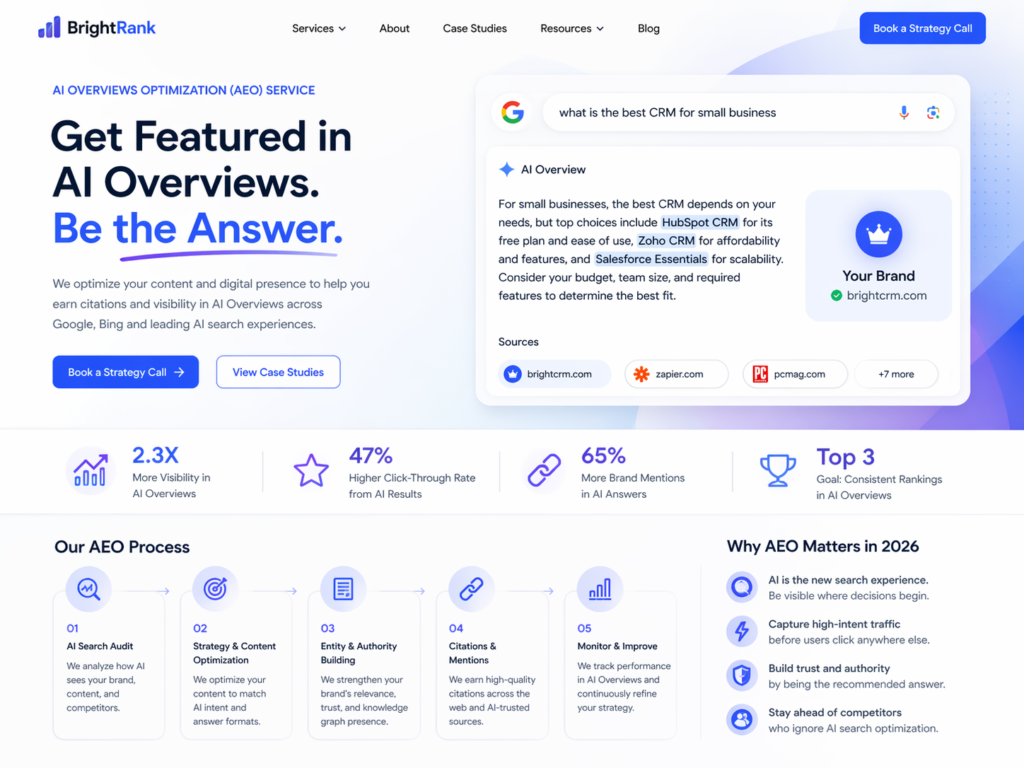
AEO Tips That Actually Help
If you want stronger visibility in AI-driven search experiences, featured snippets, or quick-answer surfaces, keep these principles in mind.
Answer core questions early
Use concise subheadings
Keep definitions tight and clear
Add FAQs where they genuinely help
Make service details easy to extract
Avoid bloated intros
A strong opening should quickly explain what the service is, who it is for, and what makes the page useful. That helps both readers and machines understand the page faster.
Technical Elements Worth Reviewing
You do not need an overcomplicated setup, but these basics matter.
Fast-loading mobile experience
Clean internal linking
Crawlable page structure
Compressed images
Logical schema use
Clear form UX
For schema, relevant types may include Service, FAQ Page, Organization, and Breadcrumb List depending on how the site is built.
Common Service Page SEO Mistakes
Many service pages fail for simple reasons.
Here are the most common ones.
The messaging is vague
The page targets the wrong intent
Proof is weak or missing
The CTA is unclear
The page feels duplicated across locations
The copy is keyword-heavy but buyer-light
The mobile experience adds friction
A page can rank and still underperform commercially. That is why service page SEO should always be tied to conversion thinking, not just keyword placement.
Service Page SEO Checklist
Before publishing or redesigning a service page, review this checklist.
Is the main service clear in the headline?
Does the intro answer the search intent quickly?
Is the value proposition specific?
Are proof elements visible above the fold or early on the page?
Does the copy reflect the right buyer stage?
Are internal links relevant and useful?
Is the CTA easy to find?
Are FAQs handling real objections?
Is the page localized where needed?
Does the page read naturally on mobile?
Even a few improvements here can make a measurable difference in lead quality.
Final Thoughts
Service Page SEO is not about making a page look optimized. It is about making the page useful, credible, and commercially sharp.
If your service pages are bringing in traffic but not enough qualified leads, the issue is often not visibility alone. It is structure, proof, intent alignment, or friction in the next step.( Click Here’s )
Key Takeaways
Service Page SEO works best when rankings and conversions are planned together.
The strongest pages combine search intent, proof, structure, and trust.
Local service pages should be unique, not duplicated with city-name swaps.
Compliance-sensitive industries need more careful wording and stronger trust signals.
AEO-friendly pages answer core questions early and clearly.
Good service pages do not just attract traffic. They turn interest into action.
FAQs
Q : What is Service Page SEO?
A : Service Page SEO is the practice of optimizing pages built to sell a specific service. It focuses on ranking for high-intent searches while also improving conversions through better messaging, proof, structure, and CTA placement.
Q : Should each service have its own page?
A : In most cases, yes. A dedicated page gives you room to target a specific query, explain the offer clearly, add proof, and tailor the CTA to that service.
Q : What is the difference between a service page and a location page?
A : A service page explains what you offer. A location page adds local context around where you offer it and why that market matters. The strongest local strategies often use both.
Q : Can service pages rank without blog support?
A : Yes, they can. But supporting blog content often helps build topical authority, strengthen internal linking, and capture earlier-stage searches that later convert through service pages.
Q : How often should you update service pages?
A : Review them regularly, especially when your offer, proof, pricing context, process, or buyer objections change. In fast-moving industries, outdated service pages lose trust quickly.