


Topic Cluster Strategy for Saudi Brands That Builds Authority
Topic Cluster Strategy for Saudi Brands That Builds Authority
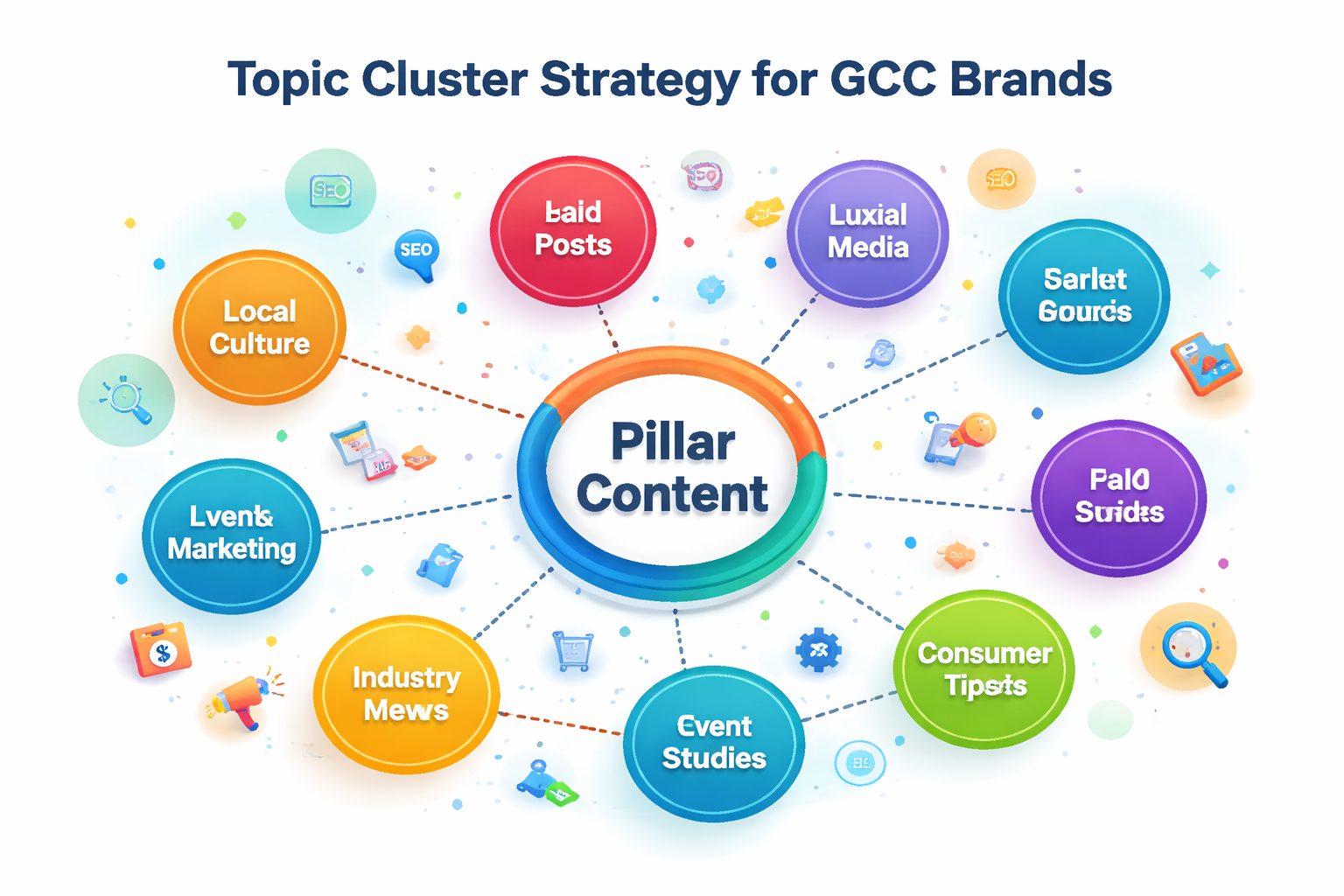
Topic Cluster Strategy for Saudi Brands That Builds Authority
If your content still feels like a collection of disconnected blog posts, a topic cluster strategy can fix that. For brands in Saudi Arabia, the UAE, and Qatar, it helps turn scattered content into a clear authority system that improves search visibility, strengthens trust, and supports bilingual user journeys.
In simple terms, a topic cluster strategy organizes one strong pillar page around a core topic, then connects it to supporting articles that answer related questions, use cases, and buyer concerns. For GCC brands, this structure works especially well because it aligns content with regional intent, local trust expectations, and Arabic-English search behavior.
GCC businesses are publishing more than ever, but volume alone does not build authority. In competitive markets like Riyadh, Dubai, Abu Dhabi, and Doha, buyers want clarity. They want expertise. And they want content that feels relevant to how business actually works in the region.
What Is a Topic Cluster Strategy?
A topic cluster strategy groups related content around one central page. That main page, often called a pillar page, covers the broader subject. Supporting articles then explore narrower questions, practical use cases, and specific buyer concerns.
This creates a stronger semantic structure for search engines and a smoother journey for readers. Instead of landing on one isolated article and leaving, visitors can move naturally through a connected content hub.
For GCC brands, that matters. A Saudi fintech buyer, a Dubai retail decision-maker, and a Doha operations lead may all be researching the same broad theme from different angles. A well-built cluster gives each of them a clearer path.
Why GCC Brands Need Structure, Not Random Content
Publishing blog posts without a system rarely builds real authority. It may bring occasional traffic, but it often fails to create trust or topical depth.
A structured topic cluster strategy helps GCC brands.
Show expertise around one core subject
Improve internal linking across related pages
Support Arabic and English content journeys
Strengthen commercial relevance for regional audiences
Make content easier for Google and AI systems to interpret
For businesses in Saudi Arabia, the UAE, and Qatar, this is especially useful in sectors like fintech, logistics, government services, SaaS, healthcare technology, and e-commerce, where trust and clarity directly affect conversion quality.
Why Topic Cluster Strategy Builds Authority Faster in Saudi, UAE, and Qatar
Faster trust-building in crowded search results
Search results across Riyadh and Dubai are increasingly competitive. Agencies, SaaS brands, publishers, and regional platforms are all trying to win the same attention.
A cluster model helps a business appear more established because it shows depth, not just activity. One thoughtful pillar page backed by relevant supporting articles sends a stronger signal than a stream of disconnected posts.
Stronger internal linking and topical relevance
Internal linking is what gives a cluster its real power. When the pillar page links to support content, and those pages link back to the pillar, the whole structure becomes easier to crawl and understand.
That is one reason many brands investing in enterprise SEO services also improve their broader digital service planning. The content strategy and the site structure need to work together.
Better support for bilingual search journeys
In the GCC, users often move between Arabic and English before they convert. They may discover a brand in English, compare solutions in Arabic, and return to an English service page before contacting sales.
A topic cluster strategy helps unify that experience. Instead of treating Arabic UX and English SEO as two separate systems, it connects them under one authority model.
How to Structure a GCC Topic Cluster the Right Way
A good cluster is simple at the start. It does not begin with dozens of articles. It begins with one clear theme and a strong content path.
Start with one pillar page
Choose one high-intent topic with clear business value. For example.
Topic cluster strategy for Saudi startups
UAE bilingual content strategy
Content hubs for GCC fintech brands
Build one strong pillar page first. Go broad enough to cover the topic properly, but keep the focus commercial and region-aware.
Create supporting articles around real buyer questions
Support content should not exist just to fill a blog calendar. It should answer real concerns your audience already has.
That may include.
Compliance-related questions in Saudi fintech
Bilingual navigation and trust in UAE e-commerce
Data residency or digital governance concerns for Qatar-based SMEs
Implementation, onboarding, cost, or platform selection questions
This is where clusters become useful. They connect information with intent.
Build clear internal linking paths
Every supporting article should connect naturally to the pillar page. Where useful, support pages should also link to each other.
For example, a pillar about digital authority building could lead readers into related service areas such as web design, front-end development, mobile app development, or Shopify development.
That creates a content path that feels intentional, not forced.
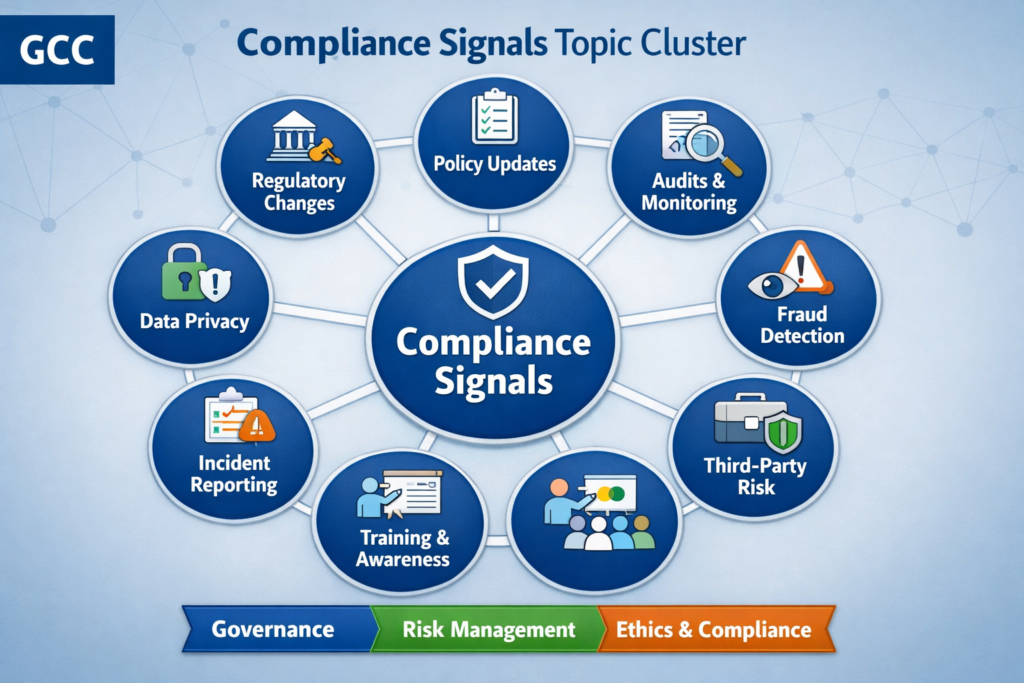
GCC Compliance and Trust Signals to Include
Content authority in the GCC is not only about keywords. It is also about credibility. In practice, many buyers in the region respond better to content that reflects local realities, especially in regulated or high-trust sectors.
Saudi Arabia
For Saudi brands, trust often grows when content reflects awareness of governance, digital policy, and sector-specific expectations. In fintech and enterprise environments, references to institutions such as SAMA or broader data governance frameworks can help content feel more aligned with the market.
This does not mean turning blog posts into regulatory summaries. It means showing that your brand understands the context in which Saudi businesses operate.
UAE
In the UAE, digital trust is often linked to clarity, professionalism, and institutional awareness. For enterprise, fintech, and technology brands, relevant references to the digital business environment in Dubai and Abu Dhabi can strengthen credibility.
This is particularly useful when your audience includes decision-makers comparing vendors, platforms, or long-term service partners.
Qatar
Qatar-based businesses can also benefit from content that reflects local business conditions, especially in regulated sectors such as payments, financial technology, and digital services.
For a Doha-based brand, even small localization touches can make a difference. Content feels stronger when it acknowledges how local buyers evaluate reliability, compliance, and long-term fit.

Best GCC Use Cases for Topic Cluster Strategy
Not every cluster looks the same. The best structure depends on the business model, audience, and buying journey.
Fintech
A Riyadh fintech company can build a pillar around digital payments or onboarding trust, then support it with articles on fraud prevention, customer education, compliance-aware UX, and transaction security.
Because fintech is a YMYL category, content should stay balanced and educational. It should inform readers without sounding like legal or financial advice.
Retail and e-commerce
A Dubai e-commerce brand can use one pillar page to anchor category authority, then build supporting content around mobile shopping UX, product discovery, bilingual browsing, and conversion-focused store optimization.
That model can also connect naturally to React Native development or Shopify services when the user journey supports it.
Logistics and operations
A Doha SME in logistics or supply chain can build a cluster around visibility, delivery workflows, or digital operations, then support it with practical content about dashboards, infrastructure choices, onboarding, and regional business needs.
This works well for complex buyer journeys where trust is built over multiple visits, not one landing page.
Common Mistakes GCC Brands Make
Even strong brands can weaken their authority by taking the wrong approach.
Publishing isolated articles
Without a pillar page and linking structure, blog posts stay disconnected. They may rank occasionally, but they do not build lasting topical authority.
Ignoring local context
Content that never mentions cities, market realities, or trust language often feels too generic for GCC audiences. A page aimed at Riyadh or Dubai should not sound like it could belong anywhere.
Separating Arabic UX from English SEO
This is one of the most common mistakes. In reality, many users experience both. Your structure should support that behavior rather than fight it.
Chasing volume over coverage
More articles do not automatically mean more authority. A tighter cluster with stronger intent coverage often performs better than a large blog with overlapping or thin content.

How to Measure Topic Cluster Success Across GCC Markets
Success should not be measured by article count alone. What matters is whether the cluster improves visibility, trust, and qualified traffic.
Track performance using signals like.
Rankings for pillar and support keywords
Internal link flow and crawl depth
Engagement across related pages
Qualified traffic by market
Lead quality and conversion relevance
AI-search visibility for answer-style queries
It also helps to review performance by audience segment. Compare how content performs for users in Riyadh, Dubai, Abu Dhabi, and Doha rather than looking only at site-wide traffic totals.
From a small business point of view, this makes the strategy easier to manage. You can see which clusters actually support revenue conversations and which ones need stronger intent alignment.
How Many Supporting Articles Should You Start With?
There is no fixed number, but for most GCC brands, 5 to 8 supporting articles is a solid starting point.
That is usually enough to.
Cover major intent variations
Support the pillar page properly
Avoid thin or repetitive content
Build a cleaner internal linking structure
Start small, then expand based on performance. A focused cluster almost always works better than a rushed one.

Final Thoughts
A topic cluster strategy is more than an SEO framework. For GCC brands, it is a practical way to build trust, organize expertise, and create clearer journeys for both users and search systems.
Whether you are targeting Saudi Arabia, the UAE, or Qatar, the goal is the same: stop publishing disconnected content and start building authority with purpose. One strong pillar page, the right supporting articles, and a thoughtful internal linking structure can take you much further than a busy blog ever will.
If your content still feels scattered, review one core topic first. Identify the missing support pages, tighten your linking, and align the structure with how GCC buyers actually search and decide. From there, you can build a smarter roadmap through your contact page or by exploring the full services section.
FAQs
Q : Is topic cluster strategy effective for Saudi B2B websites?
A : Yes. It works especially well for Saudi B2B brands with longer, trust-heavy buying journeys. Instead of relying on one sales page, the brand can build credibility through connected content that answers strategic, practical, and compliance-aware questions.
Q : How many supporting articles should a UAE pillar page include?
A : For most UAE-focused pillar pages, 5 to 8 strong supporting articles are a good place to begin. That gives you enough coverage without creating unnecessary overlap.
Q : Should Qatar companies create separate clusters for Arabic and English?
A : Usually, no. It is better to build one unified strategy with language-specific experiences. The core topic, structure, and internal links should stay aligned, while messaging and phrasing adapt to each audience.
Q : Can regulated fintech brands in Dubai use topic clusters safely?
A : Yes, as long as the content stays educational, accurate, and compliance-aware. It should avoid exaggerated claims and should not present itself as legal or financial advice.
Q : What is the best internal linking structure for GCC content hubs?
A : The strongest setup is usually simple: pillar page to support pages, support pages back to the pillar, and selective links between closely related articles. That structure improves both usability and topical clarity.