
Trusted AI Tooling Policy for Developers Template
Trusted AI Tooling Policy for Developers Template
Trusted AI Tooling Policy for Developers Template
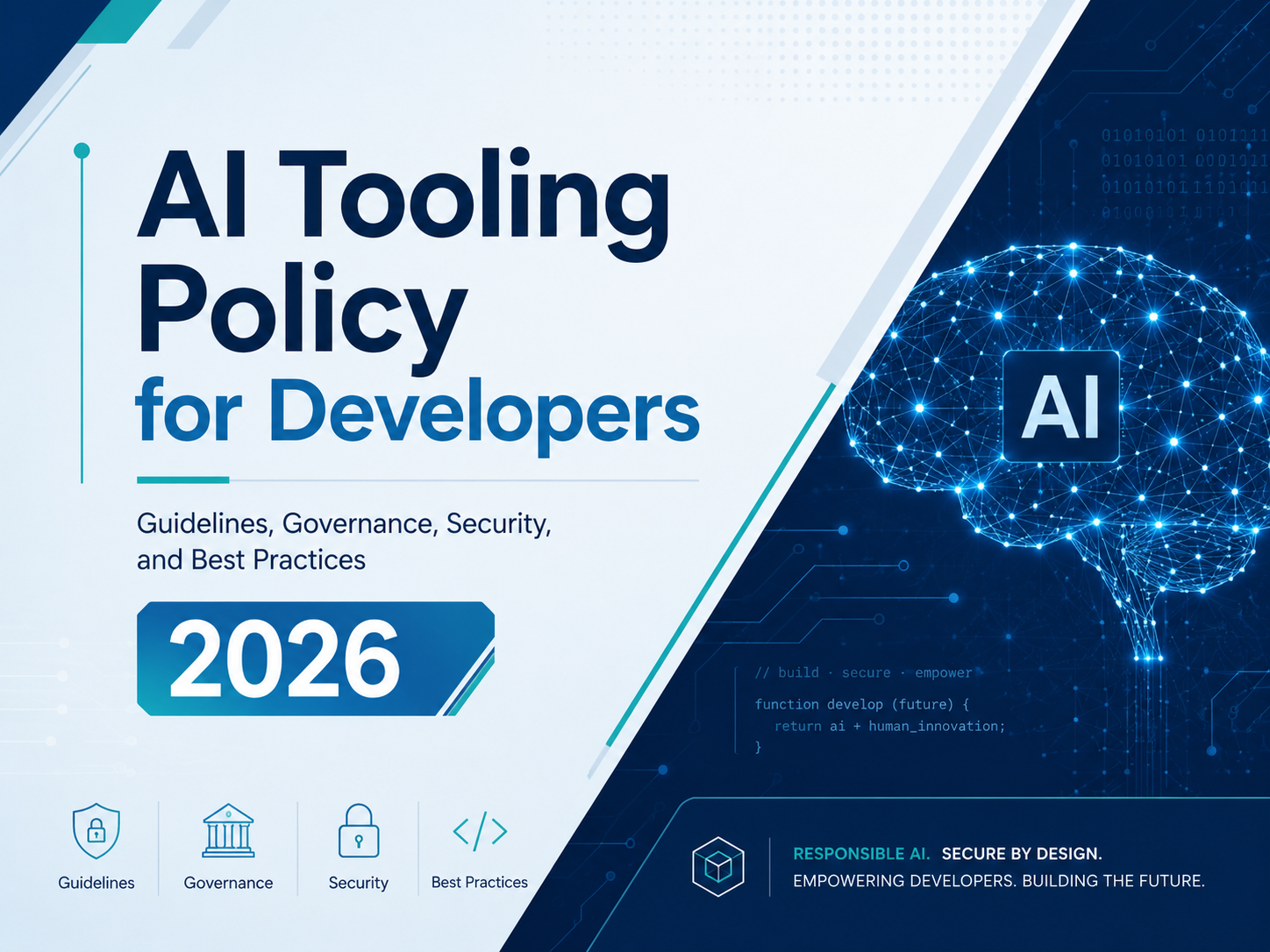
An AI tooling policy for developers template gives engineering teams clear rules for using AI coding assistants without exposing source code, customer data, secrets, or compliance evidence. It defines which tools are approved, what developers can enter, how AI-generated code must be reviewed, and who owns the final decision before code reaches production.
In plain terms: this policy helps teams use tools like GitHub Copilot, Cursor, ChatGPT, Claude Code, and Codex more safely. It keeps AI helpful without letting it become a security, privacy, IP, or audit risk.
Developer AI use is already mainstream. Stack Overflow’s 2025 Developer Survey reported that 84% of respondents were using or planning to use AI tools in development, and 51% of professional developers used them daily.
AI Tooling Policy for Developers Template Overview
An AI tooling policy for developers is a practical rulebook for AI-assisted software development. The best version is short enough for engineers to follow, but detailed enough for security, legal, vendor-risk, and compliance review.
What an AI Tooling Policy for Developers Is
A developer AI policy should explain.
Which AI tools are approved
Which tools are restricted or prohibited
What data developers can and cannot enter
How AI-generated code must be reviewed
When pull-request disclosure is required
Which security, testing, and license checks apply
Who approves exceptions
For example, a SaaS team in Austin might allow GitHub Copilot in enterprise mode, restrict public AI chat tools for proprietary code, and require SAST, dependency scanning, secret scanning, and reviewer approval before merge.
Who Needs This Policy?
CTOs need it to scale AI safely. DevSecOps teams need it to control secrets, vulnerabilities, logs, and audit trails. Legal teams need it for IP, privacy, licensing, and vendor contracts. Developers need it because “use good judgment” is not specific enough during real coding work.
For implementation support, teams can connect policy work with Mak It Solutions’ broader software development services.
Why Generic AI Usage Policies Fail Developers
Generic AI policies often say, “Do not share confidential data.” That sounds fine, but developers need code-level examples.
Can they paste a stack trace? A database schema? A failing test? A private repo path? A production log?
An engineering-ready policy answers those questions in the language of pull requests, CI/CD, APIs, .env files, cloud logs, tickets, secrets, and release workflows.
What to Include in an AI Coding Tools Policy
An AI coding tools policy should cover tool approval, data classification, developer responsibilities, human review, security testing, license checks, and exceptions. Every rule should map to a workflow developers already use.
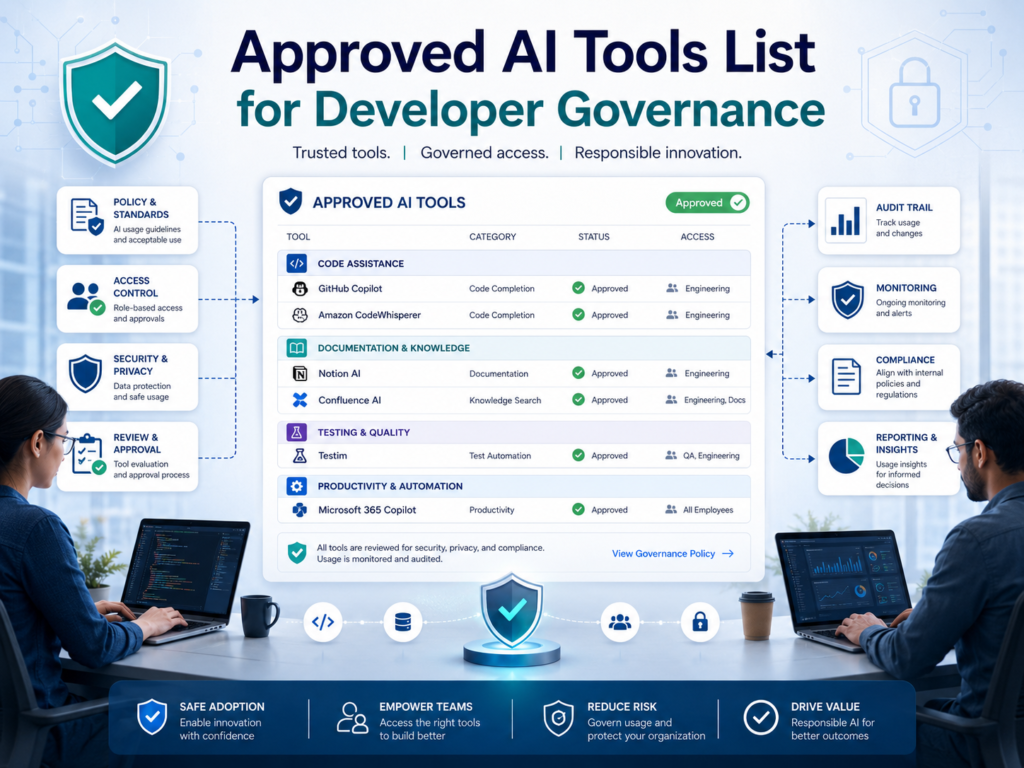
Approved AI Tools List
Create an approved AI tools list with risk tiers. A simple model works well.
| Tool Status | Meaning | Example Use |
|---|---|---|
| Approved | Allowed for defined teams and use cases | Enterprise coding assistant with admin controls |
| Approved with restrictions | Allowed only for low-risk data or limited workflows | Documentation help, test scaffolding |
| Pilot only | Allowed for evaluation with security oversight | New coding agent trial |
| Prohibited | Not allowed for company code or data | Personal AI tools with unclear data controls |
GitHub says Copilot prompts may include user inputs for chat or code plus context sent to generate suggestions, so teams should define what context is safe to expose. OpenAI states that business products such as Chat GPT Enterprise, Chat GPT Business, and API Platform are not used to train models by default, which is the kind of vendor control teams should verify before approval.
Developer Responsibilities
Developers remain accountable for AI-assisted software development. The policy should make one thing clear: AI output is a draft, not an authority.
Developers should check.
Business logic
Security impact
Performance
Accessibility
Privacy exposure
Dependencies
Open-source license risk
Test coverage
Maintainability
Mak It Solutions’ front-end development services and back-end development services can align AI-assisted coding with performance, responsiveness, integrations, and secure engineering practices.
Human Review of AI-Generated Code
No AI-generated code should go straight to production without review. Treat AI output as untrusted until it passes human review, automated checks, and normal pull-request approval.
Require a short PR note when AI materially influenced code, tests, architecture, documentation, dependencies, or security-sensitive logic. It does not need to be dramatic. A simple note is enough.
AI assisted with test scaffolding. Logic reviewed manually.
That gives reviewers context and gives auditors a useful trail.
AI Coding Assistant Security and Risk Controls
AI coding assistants can expose sensitive data, introduce vulnerable code, hallucinate APIs, and create unclear IP provenance. A strong policy reduces those risks without blocking useful work.
What Developers Should Never Enter Into AI Tools
Developers should never enter the following into unapproved AI tools.
API keys
Passwords
Private keys
Access tokens
Proprietary source code
Customer data
Health data
Payment data
Production logs
Database dumps
Private tickets
Customer screenshots
Confidential business plans
OWASP’s LLM guidance highlights risks including prompt injection, insecure output handling, sensitive information disclosure, and supply-chain vulnerabilities. These risks matter directly in developer workflows.
Secure AI Coding Policy for Code, Tests, and Documentation
AI can help write tests, documentation, and boilerplate, but developers must verify the result. Generated examples can contain fake APIs, outdated packages, insecure defaults, or assumptions that do not match your system.
A secure AI coding policy should require.
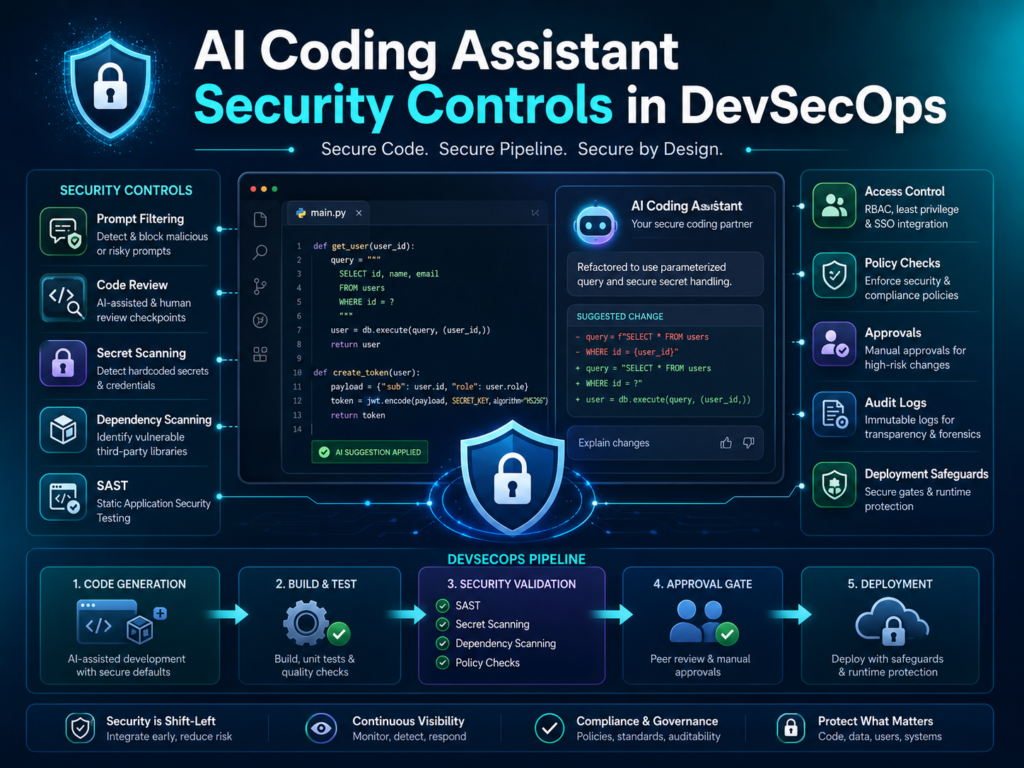
Static application security testing
Dependency scanning
Secret scanning
Unit tests
Integration tests
License checks
Manual reviewer approval
IBM reported the global average cost of a data breach at USD 4.88 million in 2024, which is a useful reminder that weak data-handling rules can become expensive quickly.
Managing IP, Licensing, and Hallucinated Code
AI-generated code can look clean and still be wrong. The policy should require developers to check for.
Hallucinated libraries
Fake methods
Deprecated packages
Copied-looking code patterns
Incompatible open-source licenses
Missing attribution
Security-sensitive logic written without review
For stronger release governance, teams building SaaS platforms, APIs, or custom apps can connect the policy to Laravel development, backend architecture, and CI/CD controls.
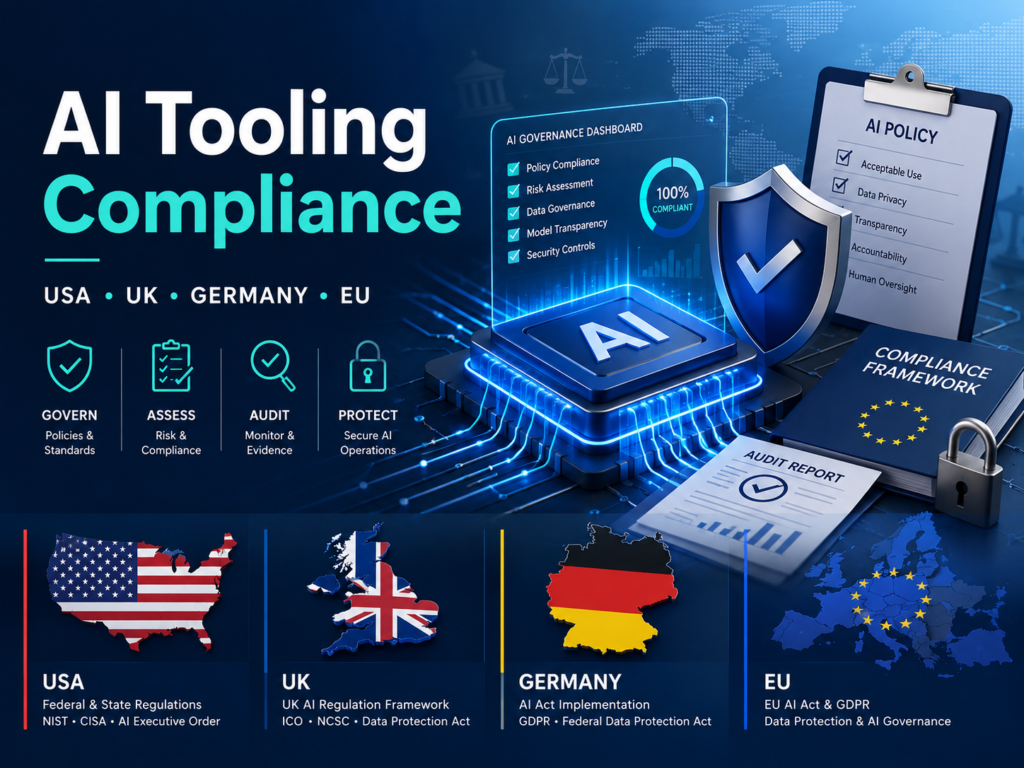
Compliance Rules for USA, UK, Germany, and EU Teams
AI developer tooling rules should align with privacy, security, financial, healthcare, and AI governance obligations in each market. This guide is not legal advice, so compliance teams should verify final requirements before rollout.
USA.
US SaaS, healthcare, and fintech teams should map developer AI tooling to SOC 2 controls, HIPAA safeguards, PCI DSS requirements, NIST AI RMF, and vendor-risk management.
NIST’s AI RMF is built around Govern, Map, Measure, and Manage functions. HHS says the HIPAA Security Rule requires administrative, physical, and technical safeguards for electronic protected health information. PCI SSC lists PCI DSS v4.0.1 as the current PCI DSS release.
UK.
UK teams should align AI coding tools with UK GDPR, ICO AI guidance, NHS data restrictions, and FCA expectations for financial services.
The ICO provides guidance on AI and data protection, including how organisations should apply UK GDPR principles to AI systems. A developer policy should restrict NHS patient data, FCA-regulated financial data, and public-sector information from unapproved AI tools.
Germany and EU.
EU and Germany-focused teams should align developer AI tooling rules with GDPR/DSGVO, EU AI Act obligations, vendor-risk reviews, employee AI literacy, and sector-specific requirements.
The European Commission says the EU AI Act entered into force on 1 August 2024. Prohibited AI practices and AI literacy obligations started applying from 2 February 2025, with broader application from 2 August 2026 and some high-risk AI system rules extending to 2 August 2027.
Germany-focused financial teams should also consider BaFin’s AI-related ICT risk guidance, especially where AI tools touch regulated systems, outsourcing, or operational resilience. Where works councils are involved, employee monitoring, tool rollout, and training records should be handled carefully.
AI Tool Approval Process for Engineering Teams
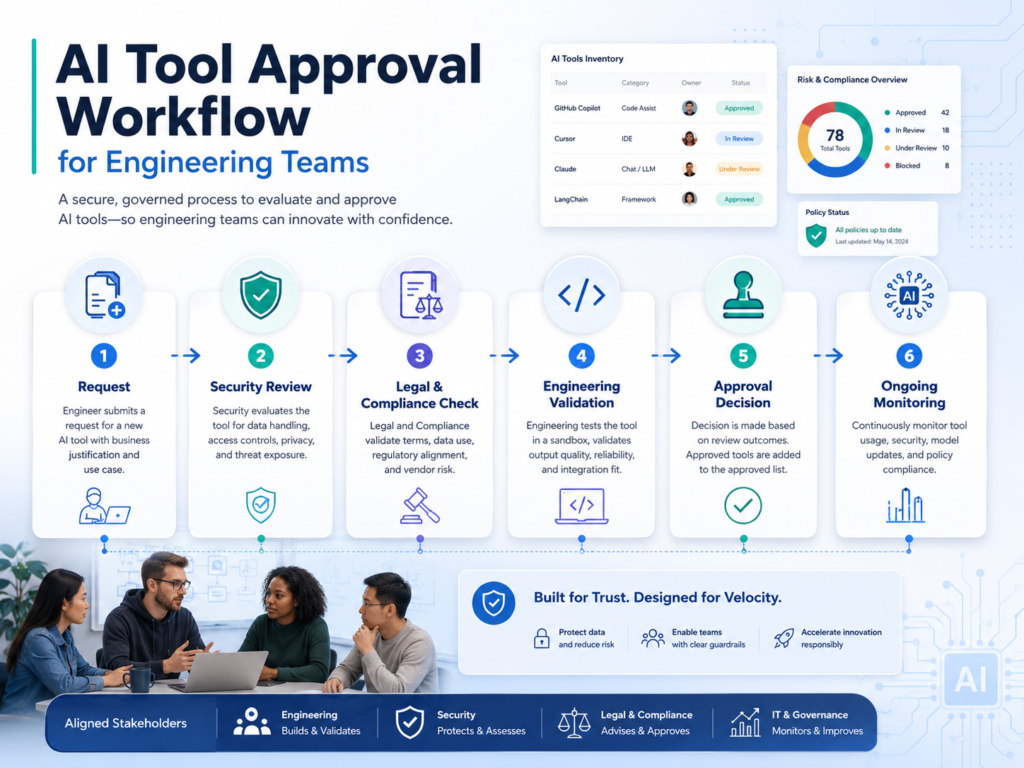
Approving AI tools should be a repeatable security and procurement workflow, not a one-off Slack discussion.
How to Approve Tools Like Copilot, Cursor, Claude Code, ChatGPT, and Codex
Use this approval workflow.
Define the use case.
Classify possible data exposure.
Review vendor terms.
Check privacy, retention, and training settings.
Run security and legal review.
Assign an engineering owner.
Document approved use cases and restrictions.
This turns AI governance into a normal DevSecOps process instead of a blocker.
Risk Tiering Model for AI Tools
Each approved tool entry should include.
Tool name
Vendor
Approved teams
Allowed use cases
Disallowed data
Required settings
Risk tier
Evidence owner
Renewal date
For teams building mobile and cross-platform products, React Native development and mobile app development workflows should follow the same AI review rules as web and backend projects.
Access Controls, Logging, and Audit Evidence
Enterprise AI tools should use SSO, MFA, role-based access, admin controls, logging, retention settings, and periodic access review.
Useful audit evidence includes.
Vendor assessments
DPIAs
Security questionnaires
Access logs
PR review records
Security scan results
Developer training completion
Exception approvals
Downloadable AI Usage Policy Template Structure
A downloadable AI usage policy template should be modular, editable, and easy to publish in Word, PDF, and internal wiki formats.
Sections to Include in the Developer AI Policy Template
Include these sections.
Purpose
Scope
Approved AI tools
Prohibited tools
Allowed and prohibited data
Developer responsibilities
Human review
Pull-request disclosure
Security testing
License checks
Compliance mapping
Exceptions
Enforcement
Review cadence
Change log
Word, PDF, and Internal Wiki Versions
Use Word for legal review, PDF for controlled release, and an internal wiki for developer-friendly updates. Keep a change log so teams can show when the policy changed, who approved it, and why.
Download the AI Tooling Policy for Developers Template
Package the template with a quick-start guide, an approved tools table, and a developer checklist. For implementation help, route readers to the Mak It Solutions contact page.
Rollout, Training, and Enforcement Best Practices
A policy only works when developers understand what is allowed during real coding work. Rollout should combine clear rules, tool configuration, training, and practical enforcement.
Train Developers With Real Examples
Developer training should include.
Safe prompts
Unsafe prompts
PR disclosure examples
Secret-handling rules
AI-generated code review checklists
Approved tool settings
Escalation paths
Tie training to onboarding and annual security refreshers.
Handle Exceptions and Shadow AI
Do not ignore shadow AI. Blanket bans often push developers toward personal accounts and unsanctioned tools.
Instead, create a fast exception path for new tools, pilots, urgent use cases, and team-specific needs. Log approvals, expiration dates, owners, and compensating controls.
Review the Policy Regularly
Review the policy at least quarterly in 2026, or sooner when vendor terms, regulations, security threats, or engineering tools change.
GitHub’s 2025 Octoverse report said developers created more than 230 new repositories per minute and merged 43.2 million pull requests on average each month. That pace shows why AI governance cannot be a static document.
Final Thoughts
A good AI tooling policy for developers template does not slow engineering down. It gives developers safer boundaries, helps security teams reduce risk, and gives legal and compliance teams the evidence they need.
Need a developer-ready policy your engineering team will actually follow? Mak It Solutions can help you scope an AI tooling policy, approved tools list, secure SDLC workflow, and rollout checklist for your US, UK, Germany, or EU team. Start with a scoped estimate through the Mak It Solutions contact page.
Key Takeaways
An AI tooling policy for developers should be practical, not generic.
Approved AI tools need risk tiers, owners, allowed data, and renewal dates.
AI-generated code should pass human review, security checks, and normal PR approval.
US, UK, Germany, and EU teams should map AI tooling rules to relevant privacy, security, and AI governance obligations.
Training and exception handling reduce shadow AI better than unclear bans.
FAQs
Q : Can developers use Chat GPT to write production code?
A : Yes, developers can use Chat GPT to assist with production code if company policy allows it and the input data is safe. They should not paste secrets, proprietary source code, customer data, health data, payment data, or confidential business context into unapproved tools.
Q : Should AI-generated code be disclosed in pull requests?
A : Yes, material AI assistance should be disclosed when it affects code, tests, architecture, documentation, dependencies, or security-sensitive logic. A short PR note is usually enough.
Q : Who owns code created with AI coding assistants?
A : Ownership depends on employment terms, vendor terms, contracts, open-source exposure, and local law. Legal teams should review vendor terms and require developers to check generated code for license and attribution risks.
Q : How often should a developer AI tools policy be reviewed?
A : Review the policy at least quarterly in 2026. Review it sooner if a vendor changes data-use terms, a new AI tool enters the workflow, a security incident occurs, or a regulation changes.
Q : What is the difference between an AI usage policy and an AI acceptable use policy?
A : An AI usage policy usually covers broad organizational AI rules. An AI acceptable use policy focuses on what employees may and may not do. For developers, the best document combines both into one practical engineering policy.