


Unstructured Data Analytics for US, UK and EU Enterprises
Unstructured Data Analytics for US, UK and EU Enterprises
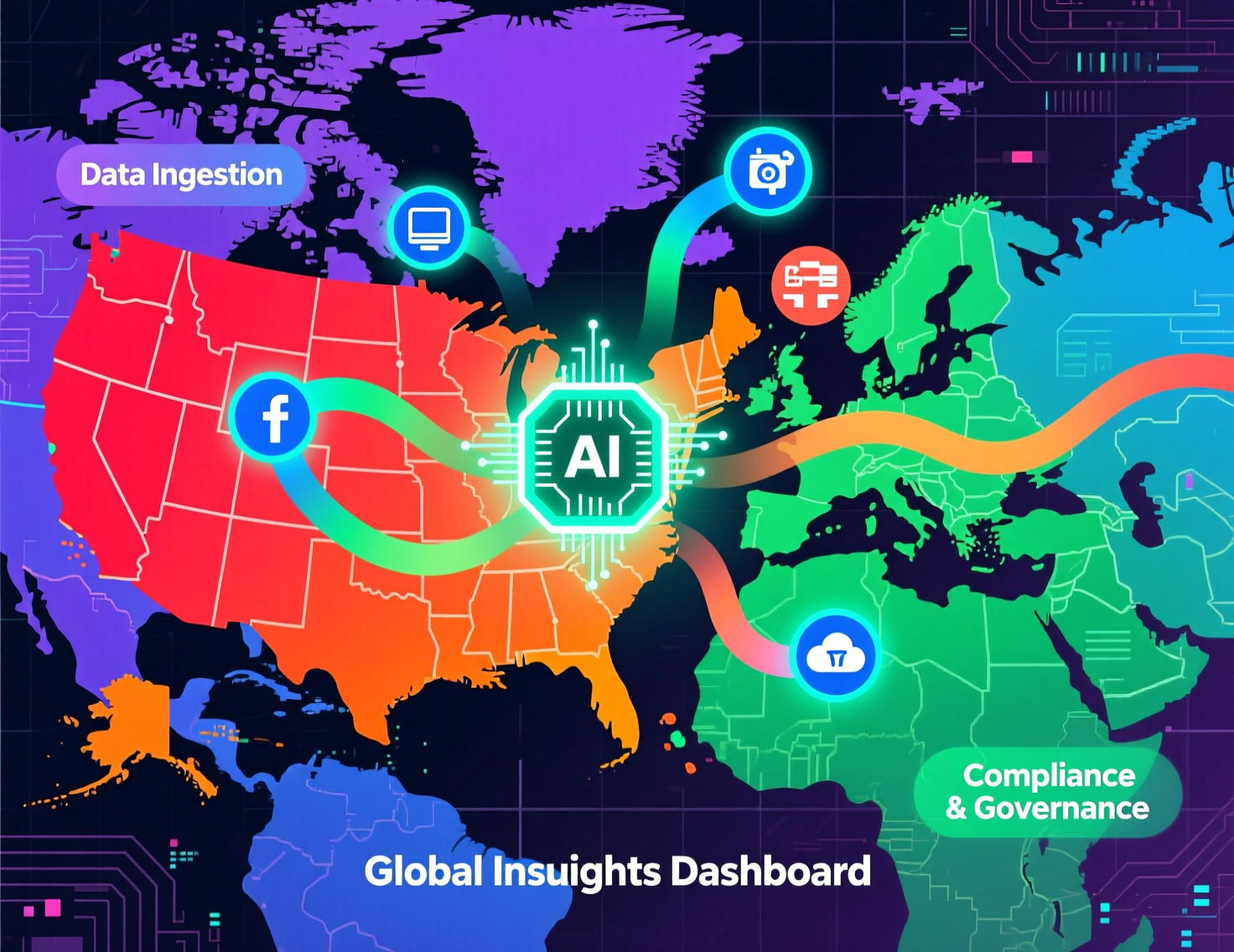
Unstructured Data Analytics for US, UK and EU Enterprises
Unstructured data analytics with AI uses techniques like NLP, computer vision and vector search to turn messy content—emails, PDFs, chats, images and video into searchable, decision-ready insights. For enterprises in the US, UK and EU, it unlocks patterns, automates workflows and reduces risk by finally putting the unstructured data they already own to work.
Introduction
Unstructured data analytics with AI is about converting chaotic content emails, PDFs, chat logs, support tickets, scans, images and video into insights your teams can search, trust and act on. For data, AI and digital leaders in the US, UK, Germany and across Europe, this is shifting from “nice to have” to a prerequisite for successful AI programs.
Analysts estimate that roughly 80–90% of new enterprise data is unstructured: documents, conversations, media and logs rather than neat tables. (Athento) At the same time, global data volume reached around 149 zettabytes in 2024 and is still accelerating. (Rivery) Without a strategy, most of that becomes “dark data” that never informs decisions or worse, quietly increases risk.
This guide walks through what unstructured data analytics is, where the real business value comes from, the architectures and tools involved, and how to implement it safely under frameworks like GDPR, UK-GDPR, HIPAA, PCI DSS, BaFin and the EU AI Act. Along the way, we’ll show how Mak It Solutions can help you design compliant, AI-ready data platforms that work from New York and London to Berlin and Munich.
What Is Unstructured Data Analytics?
For enterprise leaders, unstructured data analytics is the discipline of using AI to extract meaning from free-form content—text, images, audio and video and turning it into searchable, decision-ready information. AI makes this possible by automatically classifying documents, summarising content, detecting entities (like people, products or accounts) and representing meaning as numerical vectors for modern search and RAG (Retrieval-Augmented Generation).
Unstructured vs Structured Data for AI
Structured data lives in rows and columns: transactions in a core banking system, patient IDs in an EHR, or SKUs in a retail catalog. Semi-structured data adds some flexibility think JSON logs from a web app or events from IoT sensors.
Unstructured data is everything else:
Email threads between relationship managers and clients
Call transcripts and voice recordings from contact centres
Scanned contracts, KYC documents, passports and invoices
Images from manufacturing lines or store shelves
PDFs in SharePoint, Google Drive, OneDrive and network drives
Gartner and others estimate that about 80–90% of enterprise data now falls into this “unstructured” bucket. Without AI, it’s hard to search, even harder to analyse at scale, and nearly impossible to feed into downstream analytics or copilots.
How AI Analyzes Unstructured Data (Text, Images, Video)
Modern unstructured data analytics with AI uses several building blocks:
Natural language processing (NLP) turns text into tokens, identifies entities, topics and sentiment, and powers natural language understanding for business documents like contracts, clinical notes and policies.
Computer vision recognises objects, anomalies and text in images and video—essential for retail shelves, factory quality control or radiology scans.
Speech-to-text converts call recordings and voice notes into searchable transcripts so you can analyse what customers and agents actually say.
Multimodal AI combines text, image and sometimes tabular signals into a single model—true multimodal AI for text, image and video.
Vector embeddings map content into high-dimensional vectors that capture semantic meaning.
Vector databases for AI search and RAG store those embeddings so you can run semantic search and feed the most relevant chunks into LLMs via RAG, improving answer quality and reducing hallucinations.
Together, these techniques transform “dumb storage” into AI-ready knowledge that your BI tools, applications and copilots can consume.
Why Unstructured Data Analytics Is a Priority in 2025
Several trends make unstructured data analytics with AI urgent in 2025:
Volume
Enterprises now report that ~85% of their data is unstructured and growing faster than structured data.
AI investment
Surveys show that a majority of AI and GenAI initiatives struggle primarily due to data quality and pipeline issues, not the models themselves.
Regulation
US, UK and EU regulators are tightening expectations around data governance, AI risk and documentation, from HIPAA and PCI DSS to GDPR, UK-GDPR and the EU AI Act.
If you’re leading AI or analytics in New York, London, Berlin or Zurich, unstructured data analytics is no longer experimental it underpins everything from customer service copilots to agentic AI in banking and manufacturing.
Business Value and Use Cases of Unstructured Data Analytics
The highest-value unstructured data types—emails, chat, documents, images, audio and video—let you see why things happen, not just what happened. AI can mine this content for trends, risks and opportunities across customer experience, operations and compliance.
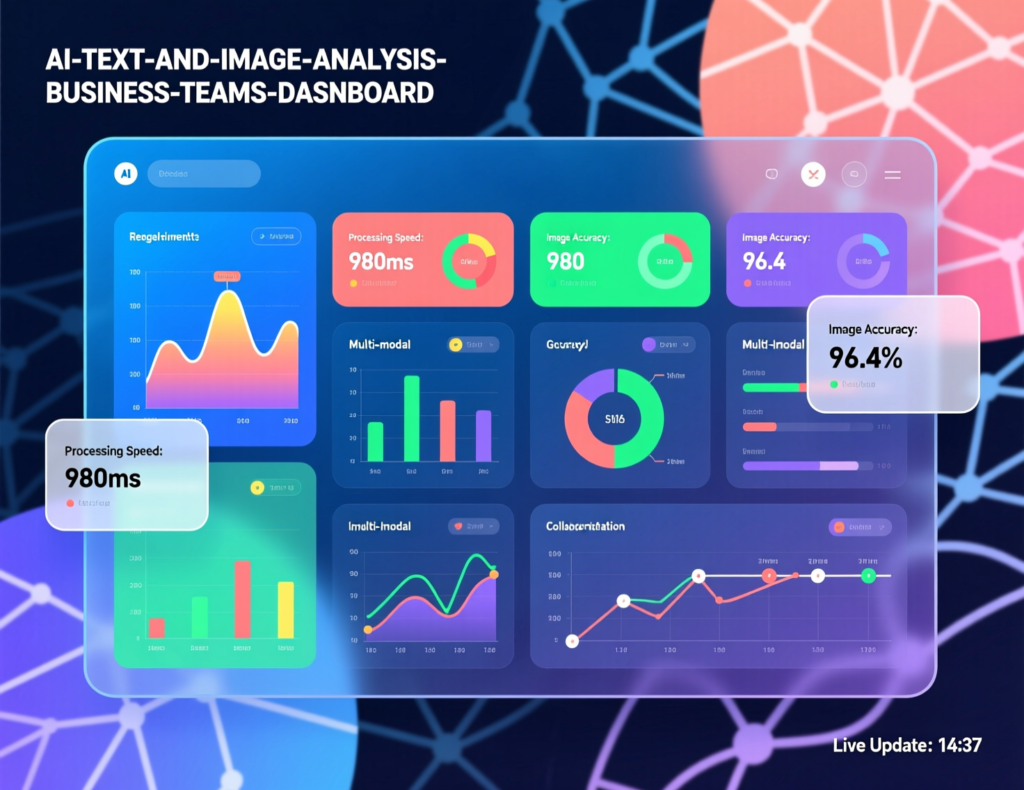
AI Text and Image Analysis for Business Teams
AI for unstructured data turns support tickets, reviews, contracts and images into trends, alerts and predictions that business teams can actually use. Instead of reading thousands of tickets manually, product managers see themes like “checkout failures in Safari” or “confusing pricing for SMEs”.
Common scenarios include:
Auto-labelling and routing customer tickets by topic, intent and urgency
Extracting clauses, counterparties and obligations from legal contracts
Detecting brand compliance issues in marketing assets
Analysing store shelf photos to spot out-of-stock items or planogram issues
These insights plug into BI and dashboards—often built on platforms like Power BI, Looker and Tableau—so your BI and analytics investments keep paying off. Mak It Solutions already helps clients choose and implement these tools in guides such as Power BI vs Looker vs Tableau. Makitsol You can also connect this work with broader Business Intelligence Services and the distinctions between BI vs Analytics vs Reporting in your organisation.
Customer Experience & Sentiment from Unstructured Feedback
Customer sentiment analysis from unstructured feedback lets you quantify the voice of the customer at scale. Instead of relying on a single NPS score, you can:
Mine contact centre transcripts for drivers of repeat calls or churn
Analyse NPS verbatims to understand why promoters and detractors feel that way
Track social media and app reviews for early signals of product issues
Offer enterprise search for unstructured data so agents can instantly find the right answer across knowledge bases, runbooks and policy PDFs
In the US, for example, a San Francisco fintech might feed Open Banking complaint logs, emails and chat transcripts into an NLP pipeline to detect emerging issues before the FCA or CFPB does. In the UK, a London-based retailer can use sentiment analysis across Trustpilot, Google and in-app feedback to improve their omnichannel experience then surface those insights in self-service BI experiences for non-technical teams. Makitsol
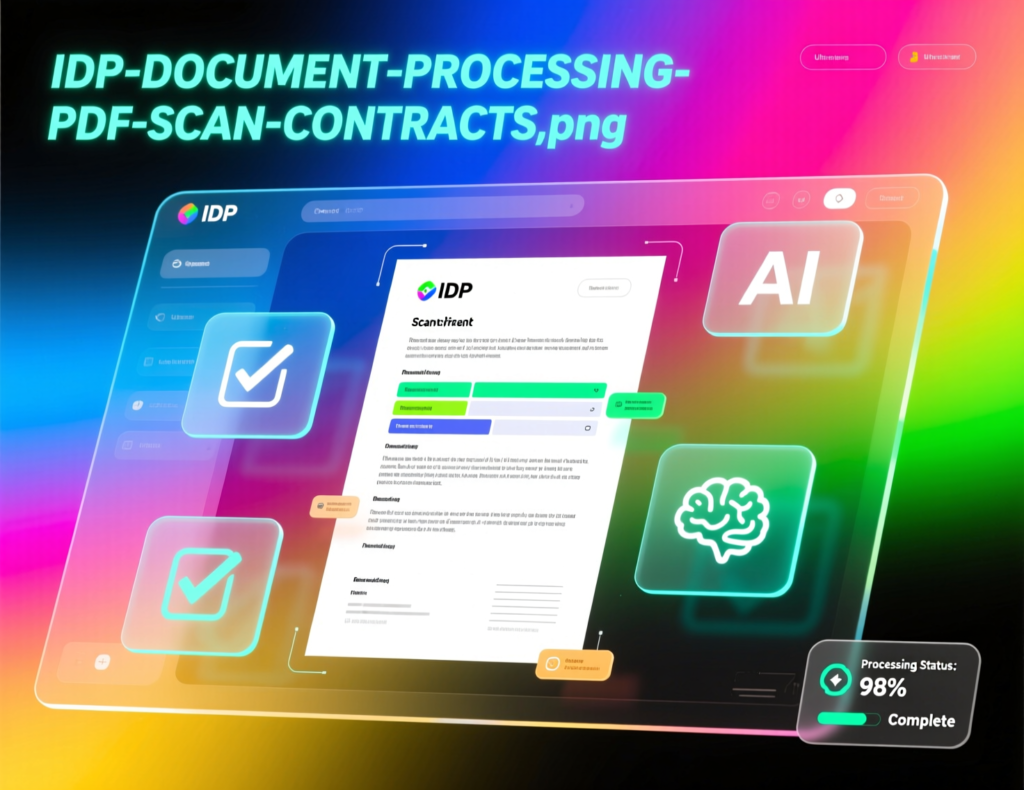
Document Processing and IDP.
Intelligent Document Processing (IDP) combines OCR and NLP to automate workflows involving PDFs, scans and semi-structured forms:
Claims processing for US insurers, with PHI redaction aligned to HIPAA privacy and security rules
KYC and onboarding for banks, extracting customer details from IDs and forms under PSD2/Open Banking obligations
Accounts payable: invoice extraction, validation and matching
Public sector casework, where scanned letters and forms still dominate
Banking, insurance and public sector teams often pair IDP with workflow engines such as ProcessMaker and integration platforms like Rivery or Astera to embed automation into existing systems rather than building everything from scratch.
Industry Examples in Healthcare, Finance, Retail & Manufacturing
US healthcare
Providers can run HIPAA-aware analytics on clinical notes, discharge summaries and imaging reports, while applying de-identification before data leaves the EHR
UK healthcare
NHS trusts can process referral letters, radiology reports and community care notes using AI, while reporting compliance through the NHS Data Security and Protection Toolkit.
Germany/EU finance
BaFin-regulated banks in Frankfurt or Munich must log, explain and control AI that uses customer communications or documents, aligning with BaFin’s cloud outsourcing guidance.
DACH manufacturing
Plants in Hamburg or Nuremberg can use image and video analytics on production lines to spot defects, predict maintenance and analyse worker safety events.
If you’re exploring sector-specific architectures, Mak It Solutions’ piece on Data Lakehouse Architecture for US & EU Enterprises is a useful companion read. Makitsol
How to Analyze Unstructured Data with AI Step-by-Step
To turn unstructured data into AI-ready vectors and insights, you need an end-to-end pipeline: from ingesting raw files and conversations through classification and enrichment to embeddings, vector search and action.
Designing an Unstructured Data Pipeline
A practical unstructured data pipeline usually follows this flow: ingest → classify → clean → enrich → embed → index → analyse → act.
Ingest
Pull data from email, chat, ticketing, SharePoint, cloud storage, ERP/CRM attachments and call recording systems.
Classify
Detect document types (contract vs invoice), languages and sensitivity levels (PII, PHI, payment data).
Clean
Remove duplicates, strip boilerplate, normalise encodings and metadata.
Enrich
Apply NLP to extract entities, topics, sentiment and key phrases.
Embed
Generate text and image embeddings using domain-appropriate models.
Index
Store vectors and metadata in a vector database optimised for AI search and RAG.
Analyse & act
Build dashboards, copilots and automations that use this “smart content” to drive decisions and workflows.
Mak It Solutions often helps clients align this pipeline with existing BI, as covered in their Business Intelligence Services and BI vs Analytics vs Reporting articles. Makitsol Makitsol
From Raw Content to AI-Ready Vectors and RAG
The technical heart of unstructured data analytics with AI is converting raw content into embeddings that LLMs can use safely and efficiently:
Chunking
Split long documents (like 80-page contracts or policy PDFs) into semantically meaningful chunks with overlaps, so context isn’t lost.
Embeddings
Use text and multimodal models to map chunks, images and even audio transcripts into vectors.
Vector databases
Choose a store optimised for high-dimensional vectors, ANN search and filters on metadata (tenant, region, access level).
RAG orchestration
At query time, retrieve the most relevant chunks, enforce access controls, then feed only allowed content into the LLM.
You must balance latency, cost and accuracy especially if you want near real-time RAG for contact centres or agentic AI. Mak It Solutions’ guides on Real-Time Analytics vs Batch Processing in US & EU and WebGPU for On-Device AI Inference show how to think about these trade-offs. Makitsol
Integrating Unstructured Data into Dashboards, Search and Apps
Once content is indexed, you can wire it into.
BI dashboards
For example, combine call-reason topics with churn metrics in Power BI.
Enterprise search for unstructured data
Natural-language search across policies, procedures, code repos and knowledge bases.
Copilots and agent-assist tools
Surface “next best answer” suggestions to agents based on prior similar tickets.
Vertical apps
Contract risk scoring for legal teams; AI document review for underwriters; multilingual search for German-language content (“unstrukturierte Datenanalyse mit KI für deutsche Unternehmen”).
In practice, adoption often depends less on the model and more on UX, training and governed self-service analytics patterns. Makitsol
Architectures, Tools and Platforms for Unstructured Data Analytics
Behind every successful unstructured data analytics program is a well-designed data and AI architecture. The goal is to reuse as much of your existing data lake, warehouse and cloud platform investment as possible while adding vector and AI capabilities.
Data Lake, Data Warehouse, Data Lakehouse and Vector Database
A quick comparison:
Data warehouse
Best for structured, highly modelled data (finance, regulatory reports). Less ideal as a primary store for large blobs and embeddings.
Data lake
Great for cheap storage of raw files and logs in object storage. Needs governance and curation layers.
Data lakehouse
Blends lake flexibility with warehouse-style governance and performance; increasingly the default for mixed structured/unstructured analytics. Makitsol
Vector database
Specialised engine for similarity search across embeddings. It complements, rather than replaces, your warehouse or lakehouse.
In practice, US and EU enterprises often land raw content in a lake (S3, ADLS, GCS), curate it into a lakehouse (Databricks, Snowflake, SAP Data Cloud, Exasol), and then attach one or more vector databases for AI workloads.
Cloud Platforms and Analytics Engines in US, UK and EU
Major platforms now compete hard on unstructured data and AI:
AWS AI (Bedrock, Comprehend, Textract, Kendra) with US and EU regions for data residency.
Azure AI (OpenAI Service, Cognitive Search, Document Intelligence) with UK- and EU-based regions, popular with NHS and public sector.
Google Cloud (Vertex AI, Document AI, enterprise search) with strong data governance capabilities.
Snowflake, Databricks, SAP Data Cloud, Exasol as core analytics engines for lakehouse and SQL workloads across US, UK and DACH.
Mak It Solutions’ AWS vs Azure vs Google Cloud Comparison 2025 dives into how these hyperscalers compare for AI and analytics. Makitsol
Unstructured Data Analytics Tools, IDP and AI Services
Above the platforms, you’ll find specialised tools across several categories:
IDP & content services
IBM, OpenText and similar platforms offering OCR, classification and workflow.
Enterprise search and knowledge platforms
Tools like Glean, Coveo or vertical solutions for banking and healthcare.
Vector DBs and AI infra
Open-source options and managed services integrated into hyperscalers and data platforms.
MLOps / LLMOps and orchestration
To manage model lifecycles, evaluation, safety and RAG pipelines at scale.
You don’t have to standardise on one vendor. Many Mak It Solutions clients use a mix—e.g., Databricks for lakehouse, Snowflake for BI workloads, and a managed vector service for RAG.
Build vs Buy.
For each use case, you can:
Buy
Faster time-to-value with off-the-shelf IDP, search or vertical AI; less control over models and data flows.
Build
More flexibility, but higher responsibility for security, tuning and reliability.
Key evaluation criteria include
Security & compliance
SOC 2 reports, HIPAA-ready controls, PCI DSS alignment for payment data.
Data locality & residency
Ability to pin data to US, UK or EU regions for GDPR/DSGVO or sector rules.
Model flexibility
Ability to use open-source and proprietary LLMs, and to swap models as regulations or costs change.
Total cost of ownership
Licenses, cloud spend, implementation, support and change management.
Support footprint
Local support in places like New York, London, Berlin, Amsterdam or Zurich.
Mak It Solutions frequently helps clients navigate this decision, as seen in their Generative AI Security Risks in the Workplace 2025 and AI Content with Guardrails guides. Makitsol Makitsol
Governance, Risk and Compliance for Unstructured Data Analytics
For regulated industries, the main objection to unstructured data analytics is risk. The answer is not to avoid AI, but to embed governance from day zero.
Managing PII, PHI and Sensitive Data in Text, Audio and Images
Before you run AI on emails, PDFs, call recordings or chat logs, you must detect, classify and protect identifiers. That includes:
Personal data (GDPR/UK-GDPR definitions)
Payment card data covered by PCI DSS.
PHI under HIPAA in US healthcare and insurance systems.
Typical controls include automated PII/PHI detection, redaction before training, tokenization and strong encryption in transit and at rest. SOC 2-aligned practices help ensure controls are documented and audited.
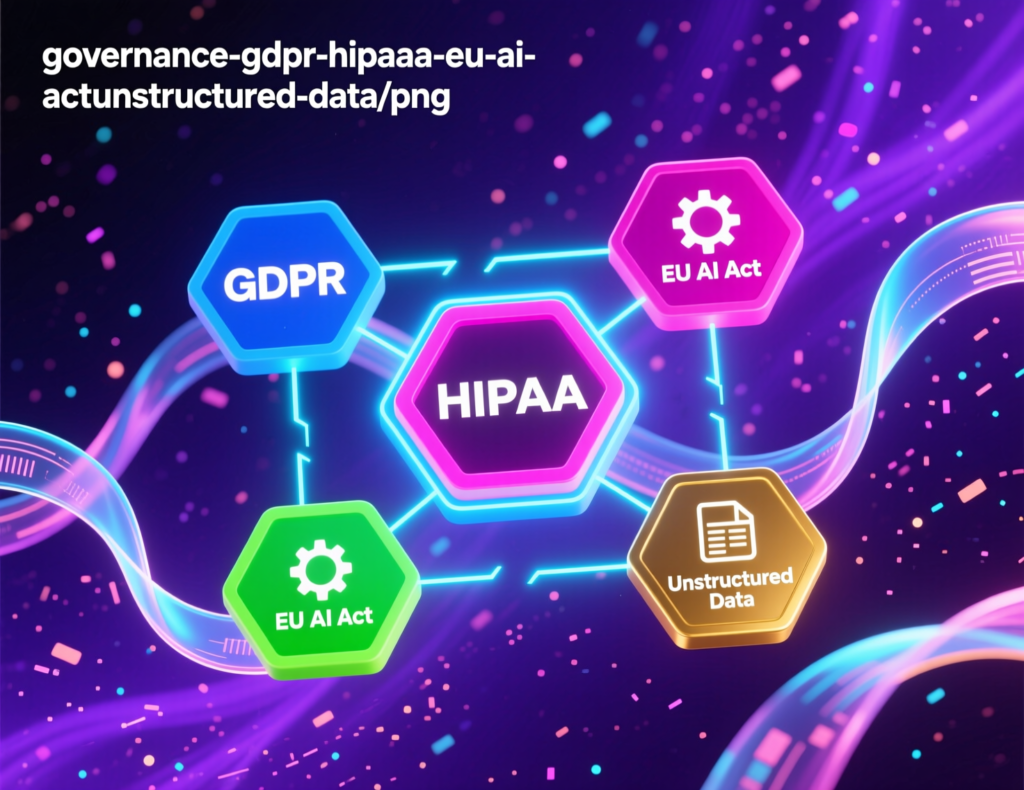
GDPR, UK-GDPR and DSGVO for Unstructured Data and AI Search
GDPR, UK-GDPR and Germany’s DSGVO apply regardless of whether data is structured or unstructured. They require.
A valid legal basis for processing (e.g., contract, legitimate interests, consent)
Data minimisation and purpose limitation
Respecting data subject rights (access, rectification, erasure, objection, portability)
Retention and deletion policies that actually apply to archived emails, logs and documents
This has big implications for AI search, RAG and enterprise copilots: you must ensure access controls, logging and deletion flows extend into your vector stores and AI indexes, not just your core databases.
BaFin, EU AI Act and Sector Regulators in Europe
The EU AI Act introduces obligations for “high-risk” AI systems, including those that influence credit decisions, employment or access to essential services. Combined with BaFin guidance on cloud outsourcing and risk management, this means:
Clear documentation of training data sources and governance
Traceable audit trails for AI-driven decisions
Robust model risk management and monitoring
In financial hubs like Frankfurt, Berlin and Paris, banks must align AI that uses unstructured data (emails, chat, PDFs) with both the EU AI Act and sector rules like PSD2/Open Banking.
Security Controls: Zero Trust, Access Control and E-Discovery
From New York to Manchester, the security baseline for unstructured data analytics with AI should include:
Zero Trust network principles and strong identity
Role-based access control (RBAC) tied to HR and directory data
Encryption and key management for object storage, warehouses and vector DBs
Logging and audit trails for search queries, RAG calls and data exports
E-discovery-ready archiving and legal hold workflows for litigation and audits
Mak It Solutions’ AI in Cybersecurity: Winning the New Digital Arms Race explores how AI both strengthens and depends on robust security controls. Makitsol
Implementation Roadmap and ROI for US, UK and EU Enterprises
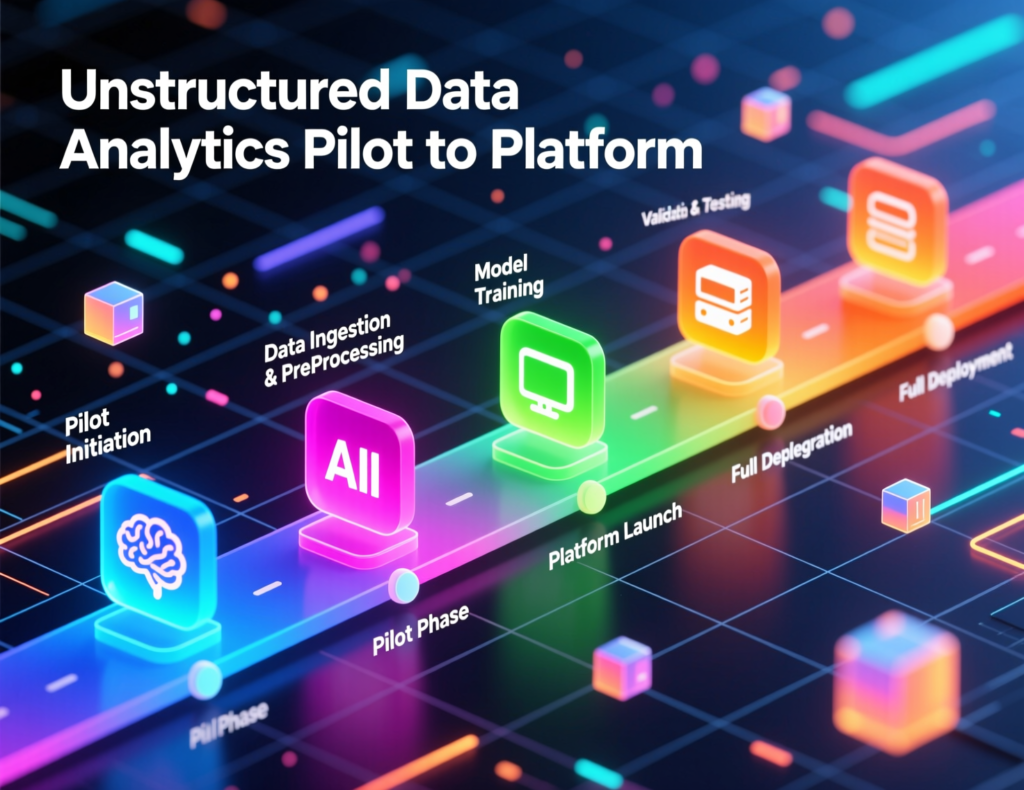
You don’t need a multi-year mega-program to start. The best unstructured data analytics initiatives move from pilot to platform in deliberate steps, showing ROI at each stage.
Start Small: High-Impact Pilot Use Cases by Region
Focused, regional pilots work best.
US
Call centre analytics and fraud alerts in banking emails and chat logs (for example, in New York or Seattle).
UK
AI document processing for NHS trusts and UK retailers mining reviews in London or Manchester.
Germany/EU
Factory image analytics in Munich, and German-language enterprise search across engineering documentation for DACH manufacturers.
These pilots should include clear business owners, measurable KPIs and early engagement from legal, compliance and security.
Scaling from Pilot to Production-Grade Unstructured Data Platform
Once the pilot proves value, you can:
Establish a platform team (data, ML, security, product)
Standardise ingestion, classification and embedding patterns
Define data ownership for major content domains (customer, product, risk, HR)
Create a Center of Excellence for RAG and enterprise search patterns
Harden SLAs, monitoring and incident response
Mak It Solutions often helps clients at this stage align unstructured data platforms with broader data strategies, as discussed in their Real-Time Analytics vs Batch Processing and Data Lakehouse Architecture for US & EU Enterprises guides. Makitsol Makitsol
Measuring ROI and Building the Business Case
To build a compelling business case, tie outcomes to metrics the C-suite already cares about:
Reduced handling time (AHT) in contact centres
Faster approvals for loans, claims or onboarding cases
Fewer errors and rework in document-heavy workflows
Higher NPS/CSAT from better self-service and agent support
Lower regulatory and audit risk, especially under GDPR, HIPAA and PCI DSS
Recent surveys show that organisations investing in unstructured data management report AI as a top driver—and that data quality strongly correlates with AI project success.
Next Steps: How to Choose a Partner for Unstructured Data Analytics
When selecting a partner.
Look for domain expertise in your sector (healthcare, banking, public sector, manufacturing).
Check geo-compliant hosting options across US, UK and EU regions.
Ask for reference architectures for your cloud of choice (AWS, Azure, Google Cloud).
Verify security certifications and attestations (SOC 2, ISO 27001, HIPAA-ready, PCI-aware).
Prefer teams who speak both “architecture” and “change management” and can work with stakeholders from CIO and CISO to frontline teams.
Mak It Solutions works with US, UK and European organisations to design, build and scale these platform from initial pilots through production-grade unstructured data analytics with AI programs.
Key Takeaways
Unstructured data now accounts for the majority of enterprise information, and AI is the only realistic way to analyse it at scale.
High-value use cases span CX, IDP, risk and operations across sectors like healthcare, finance, retail and manufacturing.
A robust pipeline ingest, classify, clean, enrich, embed, index, analyse and act is essential for reliable RAG and enterprise search.
Existing data lakes, warehouses and lakehouses can be extended with vector databases and AI services rather than replaced.
Governance under GDPR, UK-GDPR, HIPAA, PCI DSS, BaFin, FCA and the EU AI Act must be baked into architecture and operations.
Starting with focused pilots, then scaling to a platform with clear ownership and KPIs, is the most reliable way to deliver ROI.
If you’re sitting on terabytes of tickets, PDFs, chats and images but only trusting your dashboards, you’re leaving value and risk on the table. Mak It Solutions can help you audit your current landscape, prioritise high-impact unstructured data analytics with AI use cases, and design a compliant architecture across AWS, Azure, Google Cloud or hybrid environments.
Ready to turn unstructured chaos into ROI? Reach out to Mak It Solutions to book a consultation and get a practical roadmap for unstructured data analytics with AI tailored to your US, UK or EU operations.( Click Here’s )
FAQs
Q : What skills and team roles do we need to start an unstructured data analytics program?
A : You’ll typically need a mix of data engineers (for pipelines and storage), ML engineers or data scientists (for NLP, computer vision and embeddings), and platform engineers (for cloud, security and observability). Product managers and business analysts are critical to translate use cases into measurable KPIs, while legal, compliance and security stakeholders ensure GDPR, HIPAA, PCI DSS and sector rules are met. Many organisations start with a small core team and then expand into a virtual Center of Excellence as pilots succeed.
Q : How do unstructured data analytics projects typically fail, and how can we reduce the risk?
A : The most common failure modes are unclear business goals, underestimating data quality issues, and ignoring governance until late in the project. Projects also stall when they over-invest in models and under-invest in pipelines and change management. To reduce risk, start with one or two high-value use cases, define “success” in business terms, run a content and risk assessment early, and design your architecture so it can evolve (for example, swapping out LLMs or moving vector DBs between regions).
Q : Can we use existing data warehouse or lakehouse investments for AI on unstructured data, or do we need a new stack?
A : In most cases, you can extend your existing lakehouse and warehouse investments rather than replace them. Object storage and lakehouse tables remain the system of record for raw and curated data, while you add services for OCR, embeddings and vector search on top. Some metadata and features may still live in your warehouse for reporting, but embeddings and semantic search typically sit in a dedicated vector database. This “platform extension” approach lowers cost and allows you to reuse governance, lineage and access control patterns you already trust.
Q : How do licensing and model choices (open-source vs proprietary LLMs) affect unstructured data analytics in regulated industries?
A : Model choice affects data residency, IP risk, explainability and long-term cost. Proprietary LLMs can provide strong performance and managed security, but may limit fine-tuning or require sending data to specific regions. Open-source models can be deployed in your own VPC or on-prem for stricter control, but you inherit responsibility for patching, monitoring and hardening. In regulated industries, many organisations adopt a hybrid approach: proprietary LLMs for generic tasks and open-source models for sensitive workloads that must stay within specific US, UK or EU data boundaries.
Q : What’s the difference between enterprise search and RAG-based copilots for unstructured data?
A : Traditional enterprise search returns ranked documents or snippets based on keyword or semantic similarity. RAG-based copilots go a step further: they retrieve relevant chunks from your content and use an LLM to synthesise a natural-language answer, often with suggested actions (like drafting an email or generating a summary). Enterprise search is great for discovery and exploration; RAG copilots shine when users need “just-in-time” answers inside their workflow (CRM, service desk, EMR, ERP). Both rely on the same foundation: well-governed, embedded and indexed unstructured data.