
Website Trust Signals GCC: Win Saudi Buyers
Website Trust Signals GCC: Win Saudi Buyers
Website Trust Signals GCC: Win Saudi Buyers
GCC users do not trust a website just because it looks modern. They trust it when it feels local, secure, Arabic-friendly, and credible from the first screen. For brands in Riyadh, Dubai, Abu Dhabi, Doha, and Jeddah, website trust signals GCC buyers expect can directly influence leads, checkout confidence, and repeat sales.
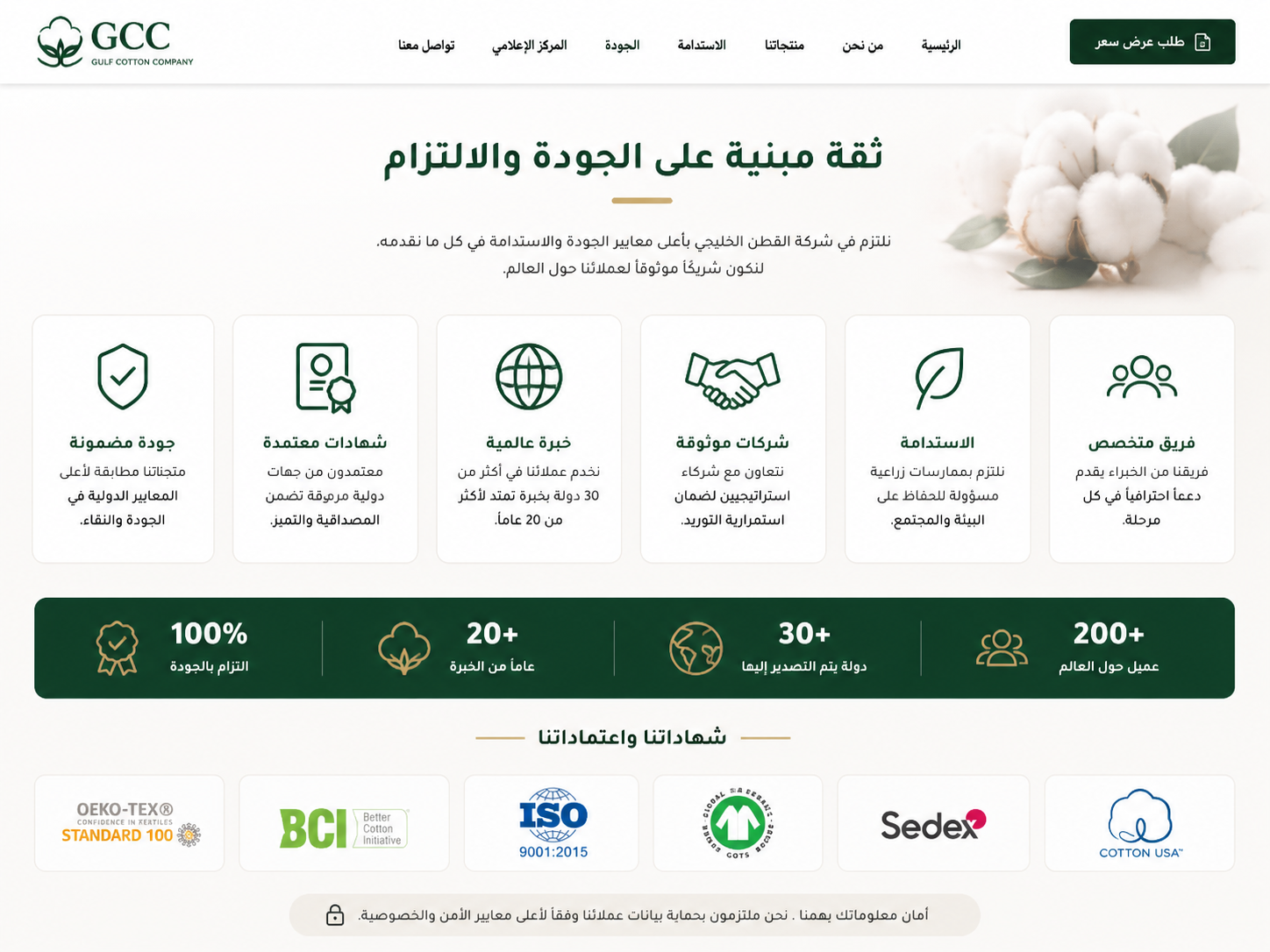
Website trust signals GCC businesses need are the visible proof points that make Saudi, UAE, and Qatar users feel safe before buying, booking, or sending a WhatsApp message. The strongest signals combine Arabic UX, local contact details, secure checkout, real reviews, clear policies, and accurate compliance references.
What Are Website Trust Signals GCC Buyers Expect?
Website trust signals are the visible elements that reduce hesitation before a visitor buys, books a call, submits a form, or starts a WhatsApp chat.
They include things like.
Local phone numbers and office details
Arabic and English content
Secure checkout badges
Verified reviews and client logos
Clear refund, privacy, and terms pages
Local payment options
Accurate regulator or compliance references
In the GCC, generic trust badges are not always enough. A Saudi customer may look for Mada, VAT clarity, or Arabic support. A UAE buyer may check for a UAE number, business licensing details, or local reviews. A Qatar customer may want bilingual support, Doha presence, and clear payment or ownership information.
There is also a difference between visual trust and legal trust. Visual trust comes from clean design, testimonials, case studies, and client logos. Legal trust comes from privacy policies, terms, CR or VAT details, data handling notes, and regulator references used only when they are accurate.
Why Website Trust Signals GCC Users Care About
Arabic UX, RTL Layout, and Bilingual Content
Arabic-first navigation, right-to-left readability, bilingual service pages, and Arabic forms make users feel understood. For GCC businesses rebuilding their online presence, strong web development services should treat Arabic UX as a trust layer, not a translation task.
Small details matter. A form that works properly in Arabic, a readable RTL layout, and clear Arabic FAQs can make the difference between a user bouncing and a user asking for a quote.
WhatsApp, Local Numbers, and Office Addresses
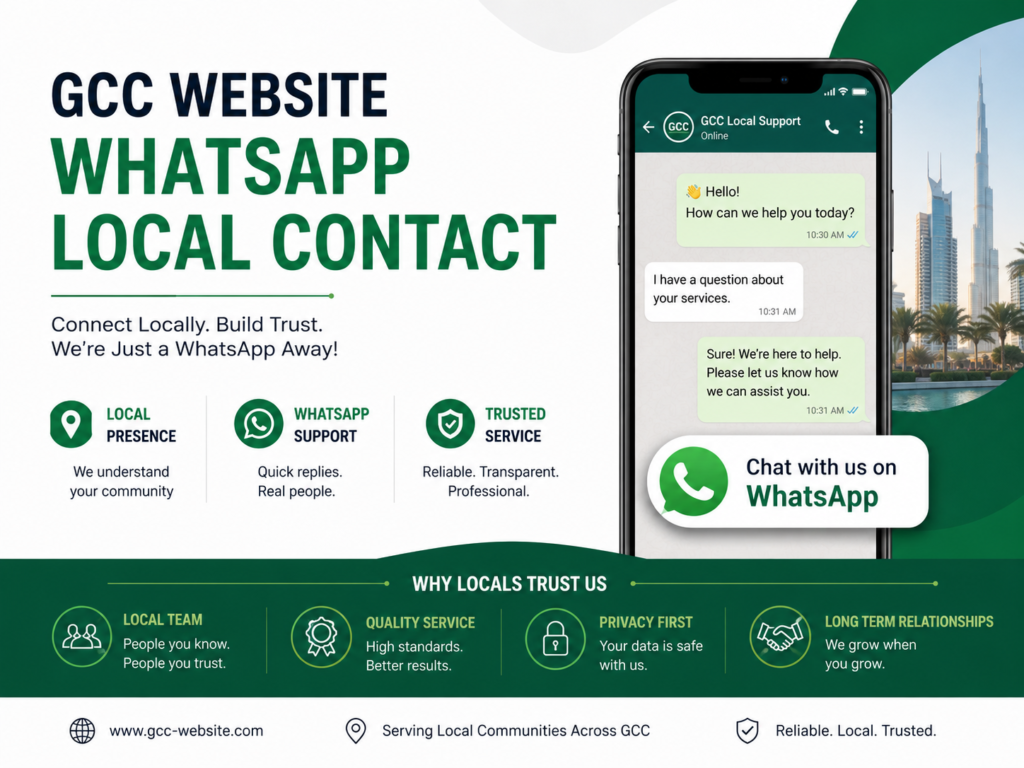
Many GCC users prefer direct contact before making a decision. A visible WhatsApp CTA near pricing, service pages, checkout, and quote forms can reduce hesitation.
Riyadh, Dubai, Abu Dhabi, Doha, and Jeddah phone numbers, map pins, and office details show that the business is reachable and accountable. Even when the final purchase happens online, human contact still builds confidence.
Local Reviews, Case Studies, and Client Logos
Local proof is stronger than generic praise.
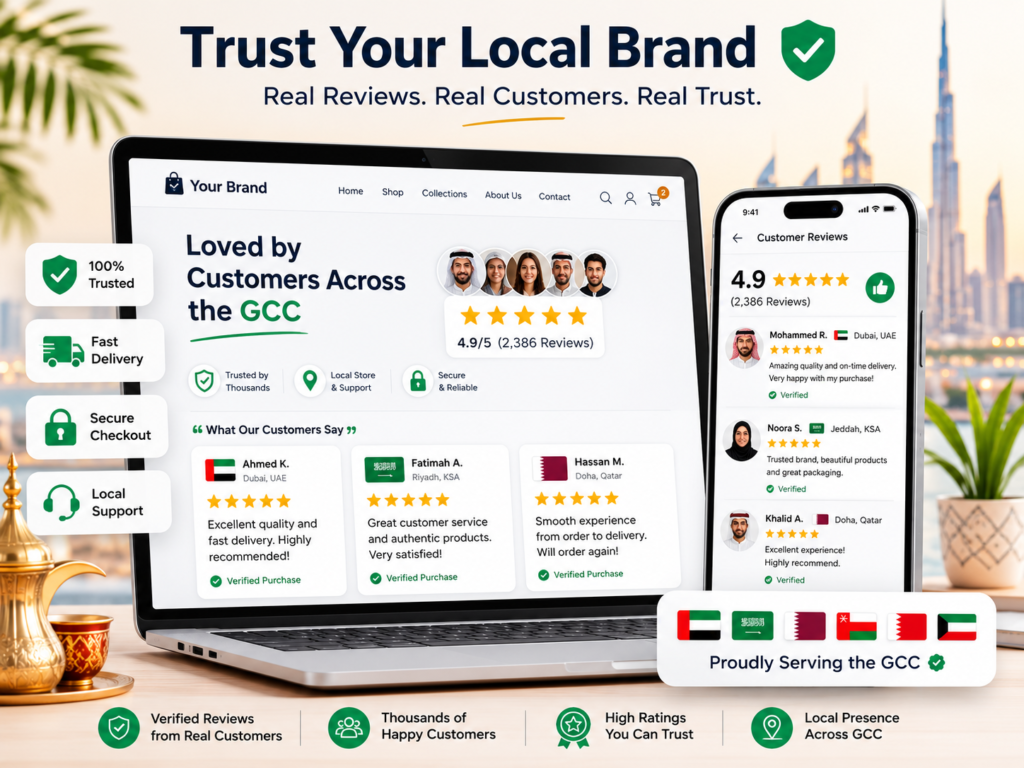
For Saudi, UAE, and Qatar audiences, show testimonials from relevant markets where possible. Add GCC client logos, short case studies, media mentions, and industry-specific proof for sectors like fintech, logistics, healthcare, government, SaaS, and e-commerce.
Core Website Trust Signals for Saudi, UAE, and Qatar
Saudi Website Trust Signals for Riyadh and Jeddah Audiences
For Saudi Arabia, focus on Arabic support, clear ownership details, Commercial Registration or VAT information where relevant, and local payment clarity.
Useful trust cues may include.
Mada, SADAD, STC Pay, Tamara, or Tabby where applicable
Saudi reviews and testimonials
Clear return, refund, or service terms
Arabic FAQs and WhatsApp support
Riyadh or Jeddah service-area signals
Fintech, banking, and payment websites need extra care. SAMA issued its Open Banking Framework in 2022, and in 2026 it announced the start of licensing fintech companies to provide open banking services after the regulatory sandbox phase. Any SAMA-related claim should match the company’s real license, approval, sandbox status, or partnership scope.
UAE Website Trust Signals for Dubai and Abu Dhabi Users
For UAE users, trust often comes from clarity, speed, and recognizable local presence.
Strong UAE trust signals include:
UAE phone number
Business licensing details where appropriate
Dubai, Abu Dhabi, or Sharjah case studies
Google reviews and local testimonials
Arabic and English support
Clear delivery and refund policies
UAE PASS can be relevant for identity-enabled digital services because TDRA describes it as the UAE’s secure national digital identity for citizens, residents, and visitors, with features such as digital signing and document verification. Use this reference only when it genuinely applies to the service.
Qatar Website Trust Signals for Doha Businesses
For Qatar, prioritize local presence and bilingual confidence.
A Doha-focused website should clearly show.
Qatar phone number
Doha service coverage
Arabic-English support
Local payment clarity
Verified reviews
Transparent ownership and policies
For fintech, wallets, and payment services, QCB references should be precise. Qatar Central Bank’s own materials show its role in supervising financial services and regulating payment systems, so unlicensed brands should avoid overstated compliance claims.
Ecommerce Trust Signals GCC Stores Should Prioritize
Secure Checkout and Local Payment Icons
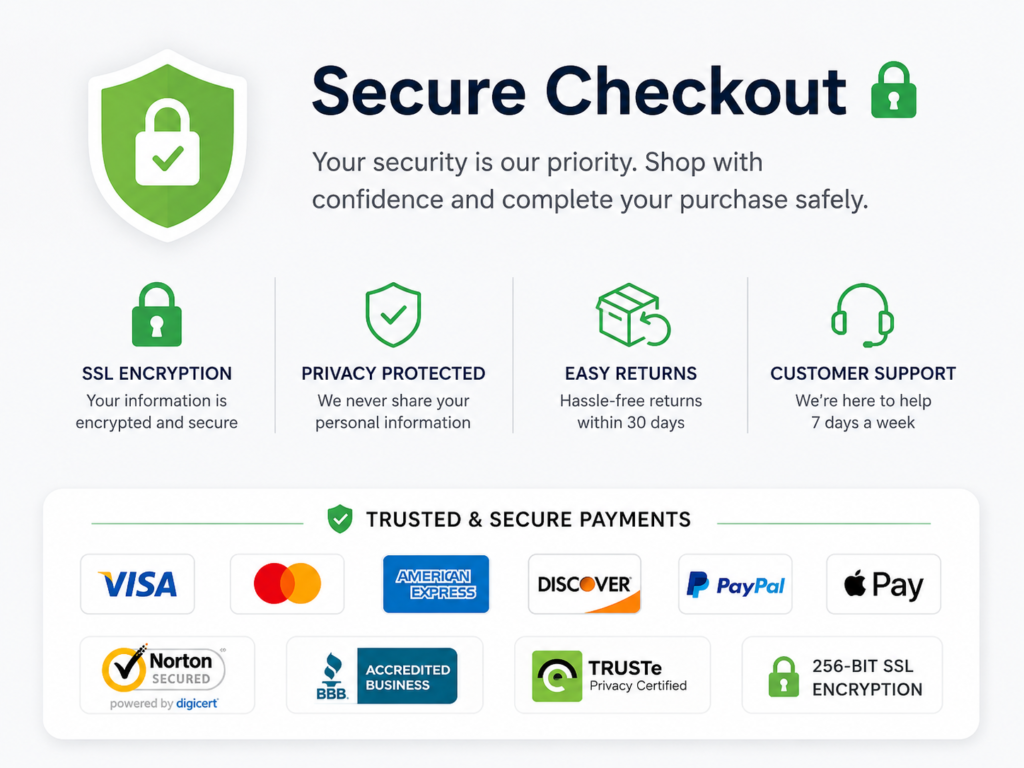
A GCC e-commerce store should make payment feel safe before the customer reaches the final click.
Show HTTPS, accepted card logos, Apple Pay, Mada, STC Pay, Tabby, Tamara, and cash-on-delivery only where they are genuinely available. For stores scaling in Dubai, Riyadh, or Doha, expert e-commerce solutions can connect checkout trust with speed, payment integration, and mobile UX.
Delivery, Returns, Refunds, and Warranty Clarity
Do not hide delivery and return information deep in the footer.
Show delivery timelines for Saudi Arabia, the UAE, and Qatar separately if you sell across markets. Add Arabic refund policies, warranty details, and simple return windows so users do not feel trapped after payment.
A clear policy often converts better than a vague promise.
Product Reviews, UGC, and Marketplace-Style Proof
Verified reviews, real product photos, star ratings, and user-generated content make an online store feel active and safer.
For mobile-first buyers, trusted mobile app development services should also support secure login, fast checkout, Arabic notifications, and easy access to customer support.
Compliance, Data Residency, and Authority Signals
Use Regulator Names Carefully
Regulator names can build trust, but they can also create risk if used loosely.
Mention SAMA, NDMO, TDRA, QCB, ADGM, DIFC, or any other authority only when the claim is legally accurate. A fintech website should not display regulator logos or approval language unless the company has a real license, sandbox entry, partnership, or regulated relationship.
Safer wording can still build confidence. For example: “Built with financial-sector security expectations in mind” is more responsible than implying approval that does not exist.
This content is general marketing guidance, not legal or financial advice. Regulated businesses should review compliance language with qualified legal or regulatory advisors.
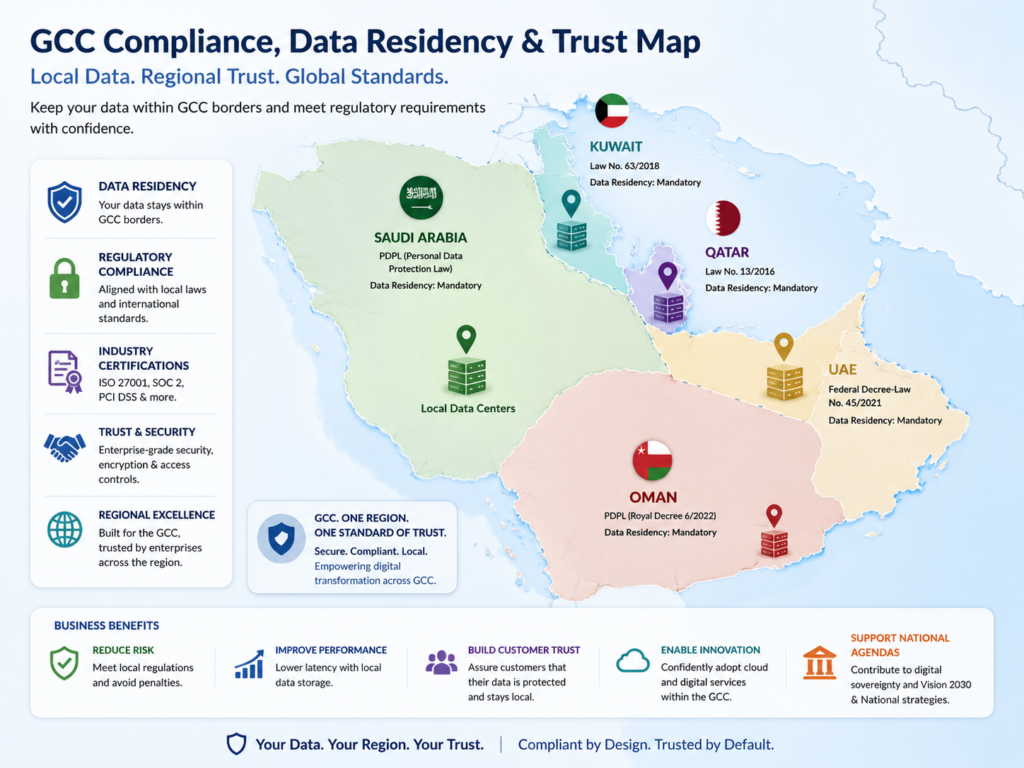
Data Residency Signals for GCC Buyers
Data residency matters more for regulated, enterprise, financial, healthcare, and government-facing workloads.
Useful cloud trust signals may include AWS Middle East regions, Azure UAE Central, Azure Qatar Central, and Google Cloud Doha, depending on the actual infrastructure used. AWS currently lists announced plans for a Saudi Arabia Region, Microsoft lists UAE Central and Qatar Central among Azure regions, and Google Cloud announced its Doha region in 2023.
Do not turn cloud logos into decoration. If you mention a cloud region, explain what it means for performance, data handling, uptime, or compliance expectations.
Privacy Policy, Terms, Cookies, and Cybersecurity Basics
A visible privacy policy, terms page, cookie notice, refund policy, and plain-language data explanation create confidence.
Users should understand.
What data you collect
Why you collect it
How you protect it
How they can contact you
What happens after payment or form submission
Businesses can also connect trust with business intelligence services to monitor conversion rates, form drop-offs, checkout friction, and trust badge performance.
How to Audit Website Trust Signals GCC Businesses Need
Review First-Screen Credibility
Open your homepage on mobile.
Ask yourself: does the first screen explain who you serve, where you operate, how users can contact you, and why GCC buyers should trust you?
The first screen should not only look polished. It should remove doubt.
Check Conversion Pages and Checkout Gaps
Audit your landing pages, service pages, product pages, checkout, payment screens, forms, and WhatsApp CTAs.
Look for missing trust cues such as unclear pricing, weak refund details, no Arabic support, no reviews, or no local contact option. Pair this with search engine optimization support so your trust signals also support rankings, AI search visibility, and user experience.
Fix Quick Wins Before Advanced Claims
Start with the basics.
Arabic UX
Local contact details
Real reviews
Clear policies
Secure checkout
Local payment options
GCC client proof
After that, add advanced authority signals such as regulator references, cloud-region language, or sector-specific compliance messaging only after proper review.
Concluding Remarks
The best website trust signals GCC buyers respond to are not random badges or copied global templates. They are local, clear, and believable proof points that help Saudi, UAE, and Qatar users feel safe enough to act.
Your GCC website should not only look good. It should make people feel understood, protected, and ready to contact you. Contact Mak It Solutions to book a consultation, explore services, or request a custom Saudi, UAE, and Qatar trust strategy for your website, app, or e-commerce store.( Click Here’s )
FAQs
Q : What makes a website trustworthy for Saudi customers?
A : Saudi customers often trust websites that feel local, clear, and secure. Important signals include Arabic content, RTL readability, Saudi contact options, visible CR or VAT details where relevant, Mada or SADAD payment clarity, Saudi reviews, and transparent refund or service terms.
Q : Do UAE e-commerce websites need Arabic content to build trust?
A : Arabic content can strongly improve trust for UAE e-commerce brands, especially when targeting Emirati and Arabic-speaking residents in Dubai, Abu Dhabi, and Sharjah. English-only websites can still convert, but bilingual pages, Arabic FAQs, Arabic return policies, and Arabic WhatsApp support reduce hesitation.
Q : Which trust badges should Qatar e-commerce websites display?
A : Qatar e-commerce websites should display secure checkout badges, accepted card logos, local payment options, warranty details, refund clarity, verified reviews, and bilingual support cues. Doha-based businesses should also show local contact details and clear ownership information.
Q : Is WhatsApp an important trust signal for GCC lead generation?
A : Yes. WhatsApp is a strong trust and conversion signal across Saudi Arabia, the UAE, and Qatar because many users prefer a fast human conversation before buying, booking, or requesting a quote. Place it near decision points, not only in the footer.
Q : How can fintech websites in the GCC show credibility without false compliance claims?
A : Fintech websites should use accurate language and focus on real security, privacy, onboarding, and support controls. Mention SAMA, QCB, ADGM, DIFC, or other regulators only when there is a genuine license, sandbox entry, partnership, or regulated relationship.