


Google Preferred Sources: GCC Publisher Growth Guide
Google Preferred Sources: GCC Publisher Growth Guide
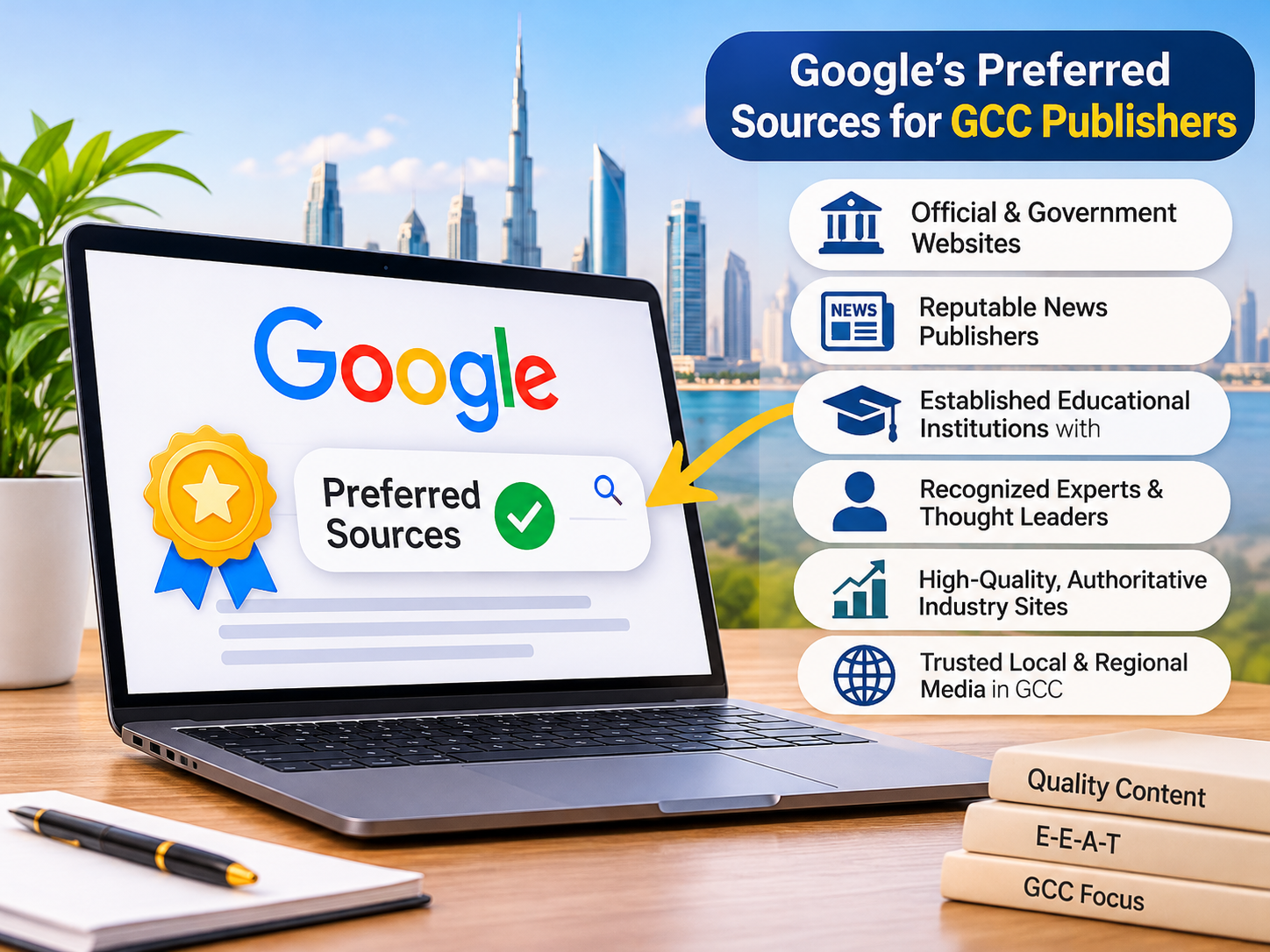
Google Preferred Sources: GCC Publisher Growth Guide
For news publishers in Saudi Arabia, the UAE and Qatar, appearing in Google Search is no longer just about traditional organic rankings. Readers increasingly discover news through Top Stories, AI Overviews and AI Mode, making trusted publisher visibility more important.
Google Preferred Sources allows readers to select news websites and publications they want to see more often in Google’s supported search experiences. Selected publishers can appear more prominently in Top Stories, while their links may receive preferred-source labels in AI Overviews and AI Mode. It offers GCC publishers an opportunity to strengthen reader loyalty, although it does not guarantee rankings, AI citations or additional traffic.
Google expanded Preferred Sources into AI Search on May 27, 2026, creating another way for Arabic- and English-language publishers to connect with their audiences.
What Is Google Preferred Sources and How Does It Work?
Google Preferred Sources is a reader-controlled personalization feature that helps people find more content from websites they already value.
Rather than allowing publishers to purchase preferred placement, Google gives individual users the choice of which eligible publications to prioritize.
How readers select their favorite news sources
Readers can use Google’s source preferences tool to find and select eligible publisher domains.
Once a publication is selected, Google can use that preference in supported search experiences.
The process is voluntary. Publishers can invite readers to select their websites, but readers remain in control of their choices.
Preferred Sources in Top Stories, AI Overviews and AI Mode
Top Stories
Preferred publications are more likely to appear when relevant content qualifies for the Top Stories experience.
AI Overviews
Eligible publisher links included in AI-generated search responses may be highlighted with a preferred label.
AI Mode
Readers may recognize links from publications they have selected through preferred-source labels.
Preferred Sources became available across languages supported by Google Search for Top Stories in April 2026. Availability in AI Overviews and AI Mode depends on whether those features support the user’s language and location.
Google Preferred Sources vs. Google News
Google News helps readers discover reporting from different publications. Preferred Sources adds a separate layer of personalization to eligible Google Search experiences.
Neither feature provides an editorial certification, automatically improves search rankings or guarantees inclusion in an AI-generated answer.
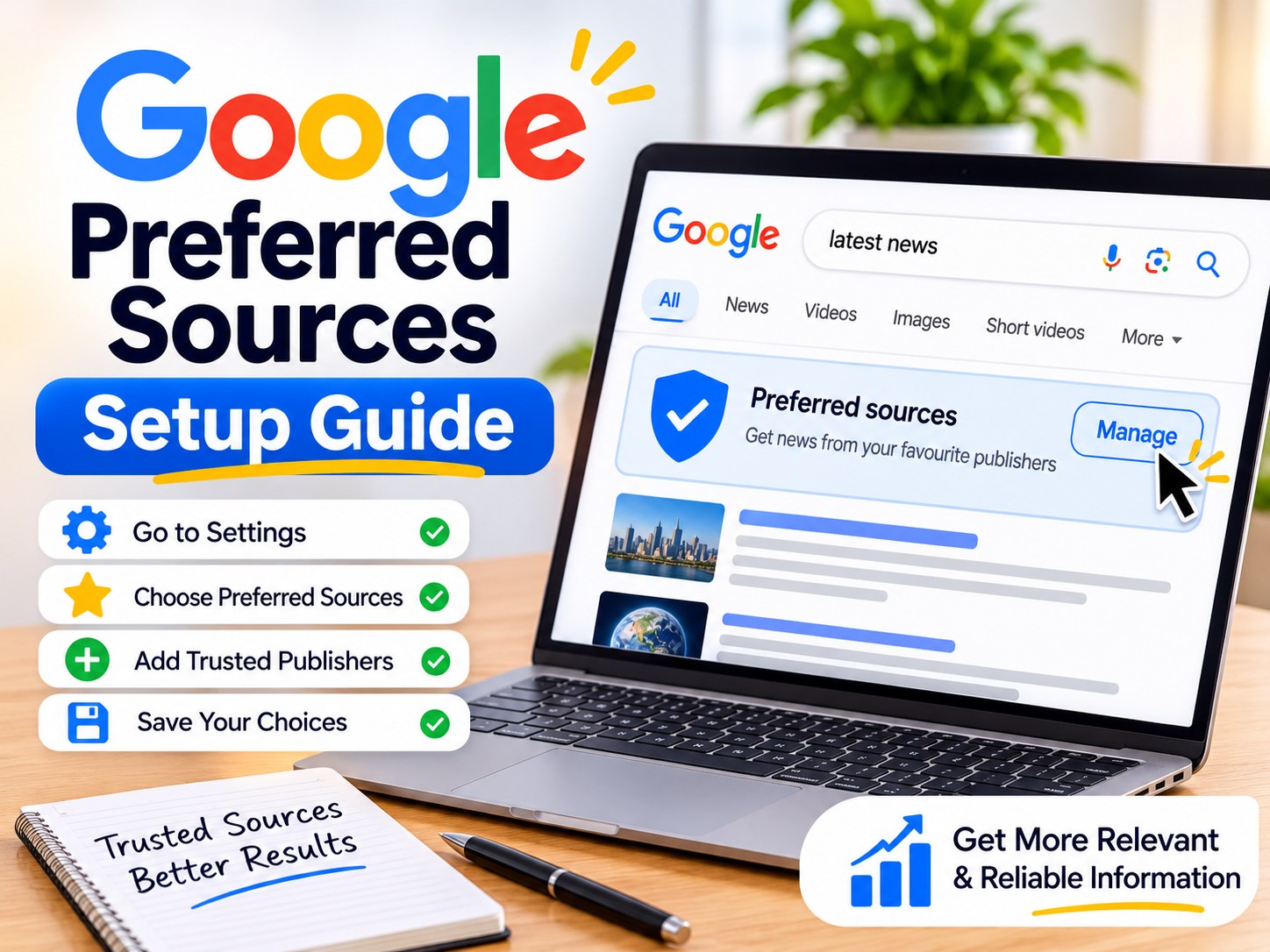
Why Google Preferred Sources Matters to GCC Publishers
For publishers across the Gulf Cooperation Council (GCC), the opportunity is closely connected to an existing challenge: turning occasional visitors into loyal readers.
Saudi Arabia.
A Riyadh-based newsroom covering Saudi Vision 2030, economic diversification and government initiatives can encourage regular readers to select its publication as a preferred source.
Established news organizations such as Arab News demonstrate the importance of consistent regional reporting.
Smaller publishers can compete by concentrating on original coverage, clear attribution and useful local perspectives.
Strong publisher SEO optimization remains essential because Preferred Sources does not replace technical or editorial search best practices.
UAE.
Dubai and Abu Dhabi publishers often serve multilingual audiences interested in business, technology, property, finance and regional developments.
Publications such as Khaleej Times and The National provide useful examples of established editorial positioning.
A UAE publisher could introduce Preferred Sources invitations in newsletters, article footers and returning-reader campaigns.
These efforts can complement broader digital marketing strategies without relying entirely on organic search discovery.
Qatar and smaller GCC markets.
Doha-based publications such as The Peninsula and Doha News illustrate the value of locally relevant coverage.
Publishers in Kuwait, Bahrain and Oman can pursue a similar approach by developing loyal audiences around specialized topics, including finance, energy, public policy and community affairs.
Preferred Sources may give these readers another way to find publications they already trust.
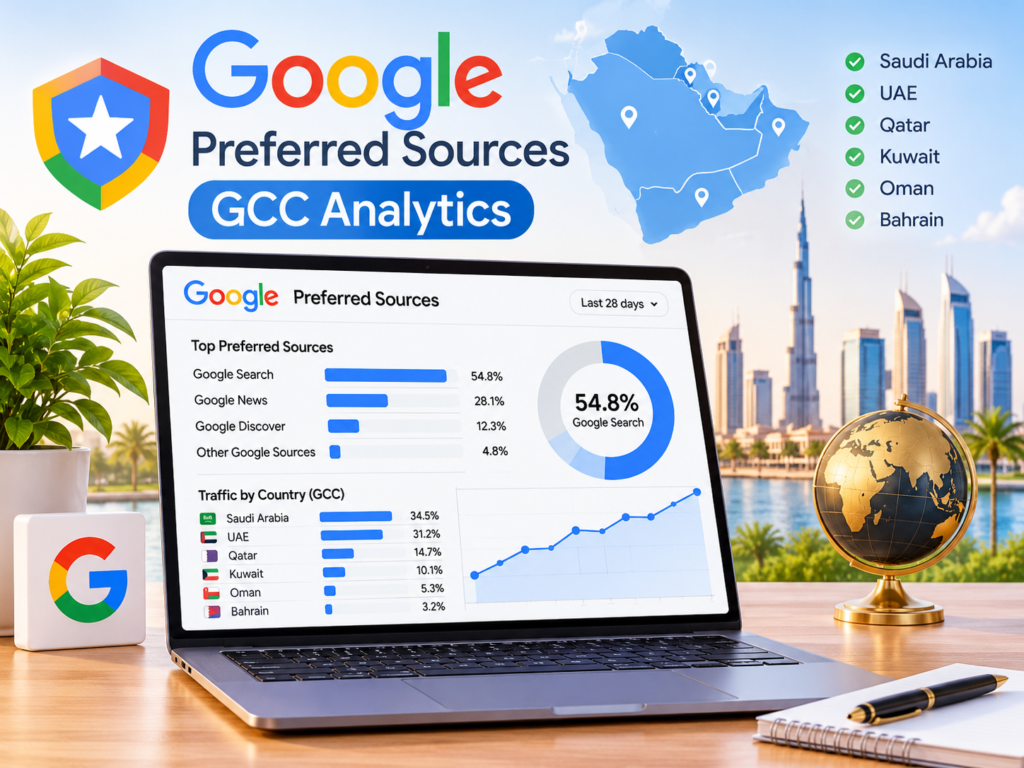
Google Preferred Sources Eligibility Requirements
Before promoting the feature, publishers should confirm that their websites meet Google’s technical conditions.
Eligible domains and subdomains
Google supports eligible domains and subdomains in its source preferences tool. Individual subdirectories cannot be selected independently as Preferred Sources.
|
Website structure |
Eligible for separate selection? |
|---|---|
| example.com | Yes, if Google lists it |
| news.example.com | Yes, if Google lists it |
| example.com/news/ | No, not as a separate source |
For publishers operating multiple editorial brands, domain structure matters.
A publication hosted on a dedicated subdomain may be separately eligible, while a news section within a larger domain cannot be selected independently.
Search Console settings and technical readiness
Publishers hoping to appear as preferred sources within AI Overviews and AI Mode should review their Google Search Console configuration.
Google provides a Search generative AI control under Search Console settings. Sites excluded from these features are not eligible to appear in them.
Technical checks should also cover crawlability, canonical URLs, article accessibility, mobile performance and language handling.
Reliable web development foundations can help prevent technical problems that limit search visibility.
Why selection does not guarantee AI citations
Adding a publication to Preferred Sources does not instruct Google to cite its articles.
Content relevance, indexing, source selection and Google’s search systems still influence which links appear.
Publishers should review the official Google Preferred Sources implementation guide before deploying the feature.
How GCC Publishers Can Set Up Google Preferred Sources
The setup process is straightforward when a publisher’s domain is already available in Google’s tool.
Verify your publisher domain
Visit Google’s source preferences tool and search for your publication. Confirm that the correct domain or subdomain is listed before encouraging readers to select it.
Add the official button or deep link
Google recommends its JavaScript button, which supports localization and returns readers to their original page. Publishers can also use a domain-specific link.
Replace example.com with your verified publication domain. WordPress-based newsrooms can use custom WordPress development for implementation.
Add clear invitations to news articles, newsletters and relevant social content. Test Arabic right-to-left presentation, mobile responsiveness and the reader’s return journey.
For bilingual publications, thoughtful front-end development can help keep these interactions accessible.
GCC Media Compliance, Editorial Trust and Localization
Google’s technical eligibility rules are separate from local media laws and publishing obligations.
Saudi Arabia, UAE and Qatar media requirements
Publishers should check applicable national requirements before launching or expanding digital news operations.
Saudi Arabia: Review applicable rules administered by the General Authority of Media Regulation.
United Arab Emirates: Consult relevant UAE Media Council regulations and licensing requirements.
Qatar: Review applicable Ministry of Culture requirements and other relevant publishing obligations.
A media license should not be presented as Google endorsement or evidence of preferential search treatment.
Arabic-English publishing and editorial transparency
For bilingual GCC newsrooms, translation quality is an important part of editorial credibility.
Machine-translated headlines can distort meaning, particularly when covering public policy, financial regulation or legal developments.
Publishers should prioritize accurate translation, identifiable authors, source attribution, clear corrections and consistent terminology.
Accessible navigation and professional visual design also contribute to a credible reading experience.
Financial and government reporting
Specialized journalism requires additional care.
A Jeddah publication covering Saudi Central Bank (SAMA) regulations should reference authoritative regulatory material.
Likewise, reporting on ADGM or DIFC in the UAE, or Qatar Central Bank (QCB) decisions in Doha, should distinguish official announcements from interpretation.
These authorities do not administer Google Preferred Sources. Their relevance concerns accurate regional reporting and compliance.
Looking to scale your store in UAE/Saudi Arabia? Contact our expert IT team today for a free consultation ( Click Here’s )
How to Measure Google Preferred Sources Visibility
Preferred Sources should be evaluated alongside broader audience and search performance indicators rather than treated as a standalone growth guarantee.
Monitor AI Search impressions in Google Search Console
Google’s Generative AI performance report became available worldwide on August 31, 2026.
It provides impression data for AI Overviews and AI Mode, including breakdowns by page, country, device and date.
However, it does not directly report how many users have selected a publication as a Preferred Source.
Evaluate organic traffic and returning readers
GCC publishers should compare Search Console data with engagement and audience trends from GA4.
|
Measurement |
What it helps evaluate |
|---|---|
| AI Search impressions | Visibility in supported generative AI experiences |
| Organic search trends | Broader search discovery changes |
| Returning readers | Repeat audience engagement |
| Country-level performance | Visibility in Saudi Arabia, UAE and Qatar |
| Newsletter engagement | Reader response to source-selection campaigns |
These indicators can help identify meaningful changes, but they cannot independently establish that Preferred Sources caused them.
A consolidated business intelligence dashboard can make performance reviews easier.
Plan a 30-day editorial review
After implementing Preferred Sources invitations, review button placement, mobile usability, bilingual presentation, indexing health and changes in search visibility.
Treat the review as an opportunity to improve the reader experience.
For publishers, the strongest long-term strategy remains original reporting, accurate information and dependable website performance.
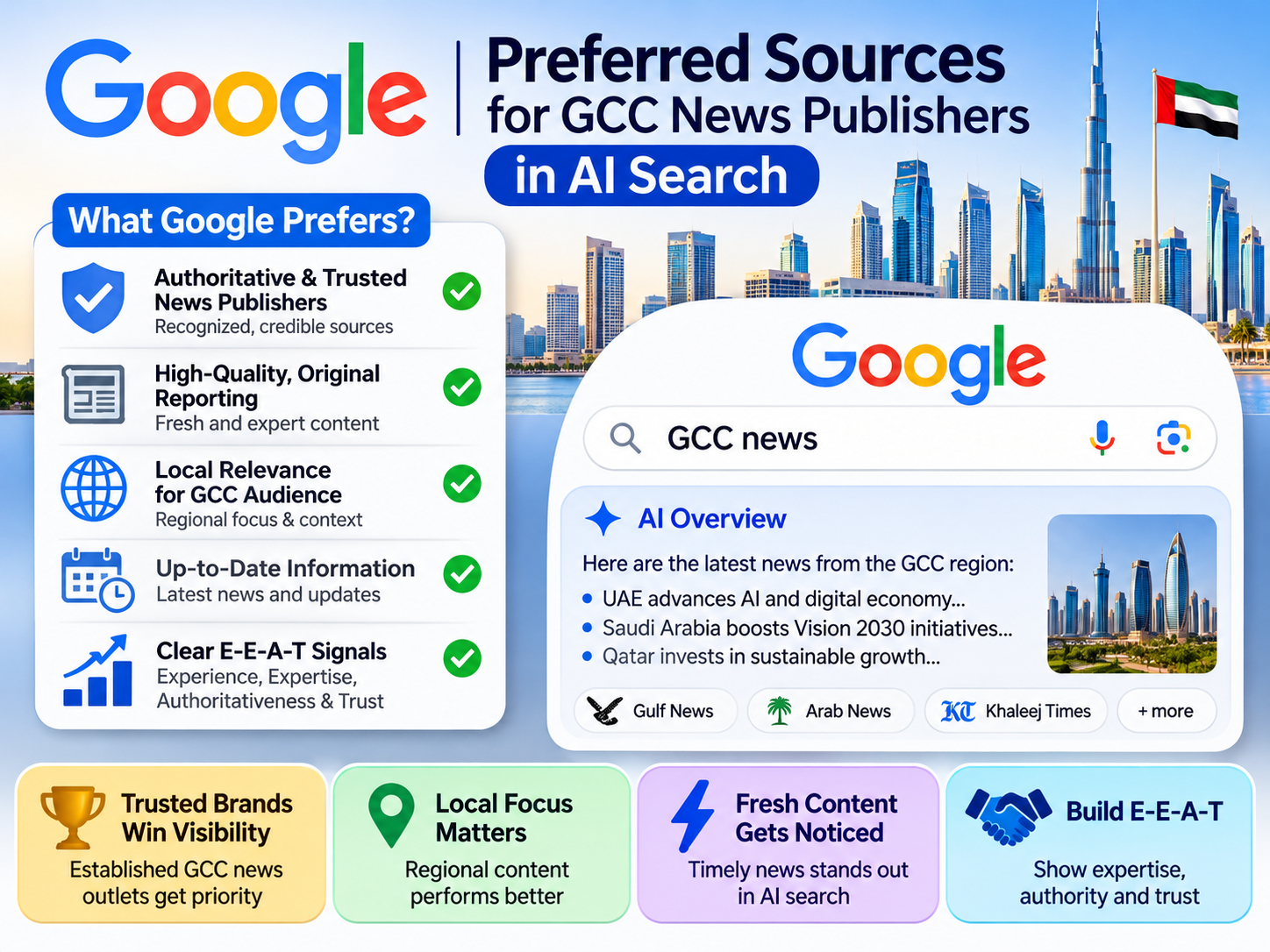
Concluding Remarks
Google Preferred Sources gives news publishers across Saudi Arabia, the UAE, Qatar and the wider GCC another way to connect with readers who already value their work.
Its integration with Top Stories, AI Overviews and AI Mode makes it relevant to modern publisher SEO and AEO strategies.
However, the feature works best as part of a broader editorial and technical approach. Strong journalism, accurate regional reporting, accessible bilingual experiences and consistent measurement remain essential.
For GCC newsrooms, the practical next step is to check domain eligibility, implement the official selection method and make it easy for loyal readers to find the publication again.
Ready to strengthen your publication’s visibility across GCC search experiences?
Contact Mak It Solutions to discuss publisher SEO, bilingual website optimization and AI Search performance.
You can also explore our technology and digital marketing services for tailored support.
Looking to scale your store in UAE/Saudi Arabia? Contact our expert IT team today for a free consultation ( Click Here’s )
FAQs
Q : Can Arabic-only Saudi news websites use Google Preferred Sources?
A : Yes. Eligible Arabic-language publications in Saudi Arabia can participate if their domains appear in Google’s source preferences tool.
Top Stories supports Preferred Sources across Google Search languages, while AI Overviews and AI Mode depend on regional and language availability.
Q : Do Dubai publishers need Google News Publisher Center registration?
A : No. Google does not identify Publisher Center registration as a requirement for Preferred Sources.
Publishers should verify their domains directly through Google’s source preferences tool and follow its implementation documentation.
Q : Can Qatar publishers use Preferred Sources on bilingual websites?
A : Yes. Eligible Qatar-based publications can promote their domains to Arabic- and English-speaking audiences.
They should maintain accurate translations, appropriate language annotations, accessible navigation and correctly configured indexing signals.
Q : Does a Saudi media license improve Preferred Sources eligibility?
A : No special eligibility advantage is identified for Saudi media licenses in Google’s documentation.
Media compliance and Google feature eligibility are separate responsibilities. A license does not guarantee preferred placement or Google endorsement.
Q : Can Kuwait, Bahrain and Oman publishers use Preferred Sources links in newsletters?
A : Yes. Publishers can share official source-selection links through newsletters, websites and social channels.
Readers must choose whether to add the publication themselves. Publishers should avoid suggesting that selection guarantees rankings, traffic or AI citations.
Looking to scale your store in UAE/Saudi Arabia? Contact our expert IT team today for a free consultation ( Click Here’s )