
Zero-Click Search: Turn Visibility Into Pipeline
Zero-Click Search: Turn Visibility Into Pipeline
Zero-Click Search: Turn Visibility Into Pipeline
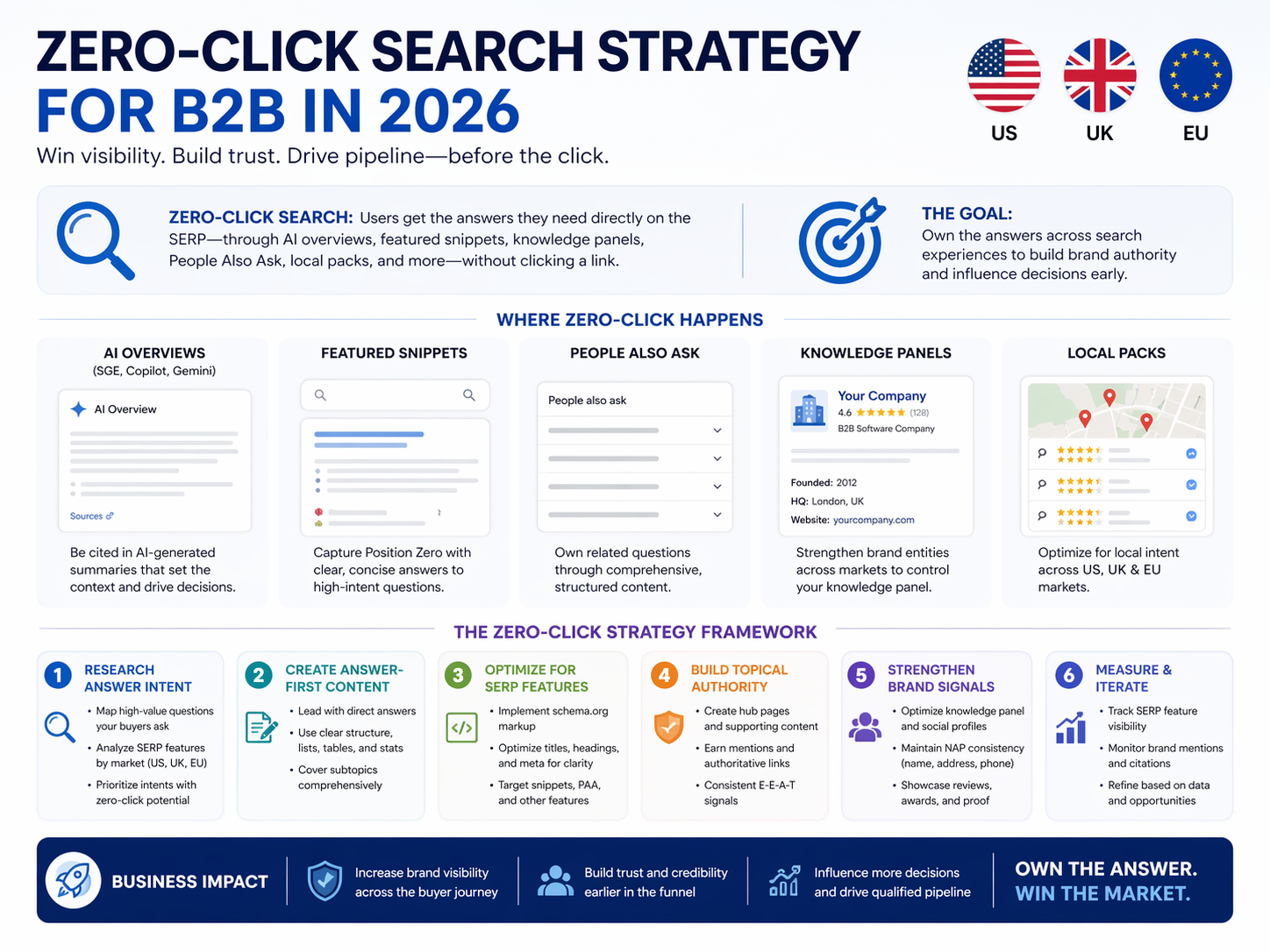
Zero-click search strategy is now a core part of B2B growth, not a side topic for SEO teams. Buyers are getting answers directly on Google, AI Overviews, featured snippets, and other search surfaces, which means your brand can shape the decision before a site visit ever happens.
For B2B companies, that changes the goal. The job is no longer just to win clicks. It is to earn visibility, build trust early, and create the kind of brand recall that turns into branded searches, demos, and pipeline later.
A simple way to think about it: zero-click search happens when someone gets enough information from the search results page or an AI-generated answer that they do not need to click right away. That does not mean search stopped influencing revenue. It means the influence often happens before the visit instead of during it.
Why Zero-Click Search Matters More for B2B in 2026
B2B buying journeys were already messy. Now they are even less linear.
A prospect in New York might first see your brand in an AI Overview. A revenue operations lead in London may notice your company again in a comparison query a week later. A buyer in Berlin could return through a branded search after sharing your solution internally.
None of those moments may look impressive in a last-click SEO report. All of them can still affect pipeline.
That is why zero-click search should be treated as a visibility and market influence problem first. Traffic still matters, of course. But traffic alone is no longer a complete picture.
What Zero-Click Search Means Today
Zero-click search covers any search experience where the user gets the answer, summary, comparison, or next step without needing to visit a website immediately.
For B2B marketers, the most important examples include.
AI Overviews
Featured snippets
People Also Ask
Knowledge panels
Local and branded SERP features
Quick-answer and calculator-style results
These features matter because they shape perception early. In many cases, the buyer is forming a shortlist before your analytics platform even records a session.
Why this is not just a traffic story
It is easy to look at lower click-through rates and assume organic search is losing value.
That is too narrow.
A page can lose clicks while gaining impressions, stronger brand familiarity, and more assisted conversions. In practice, that often shows up later through branded search, direct visits, demo requests, or sales conversations that mention your company by name.
For B2B SaaS, enterprise services, and regulated industries, that delayed effect is especially important.
Why B2B Teams Should Care About Zero-Click Search Strategy
A good zero-click search strategy helps you stay visible in the moments when buyers are researching, comparing, and validating options.
That matters because B2B buyers rarely convert on the first touch. They read. They compare. They ask colleagues. They revisit. They look for proof.
If your brand appears clearly in those answer surfaces, you still influence the buying process even when the click comes later.
What changes for SEO, demand gen, and RevOps
This shift pushes teams closer together.
SEO can no longer report in isolation. Demand generation should care about non-click visibility because it affects branded demand. RevOps needs cleaner ways to connect early search exposure to later opportunities and revenue.
The strongest teams now align around questions like these:
Which non-branded queries are driving visibility?
Are branded searches increasing after visibility grows?
Are demo requests rising from the same markets and categories?
Can we see assisted conversions or influenced pipeline tied to those themes?
That is a much better model than staring at sessions alone.
How to Build a Zero-Click Search Strategy
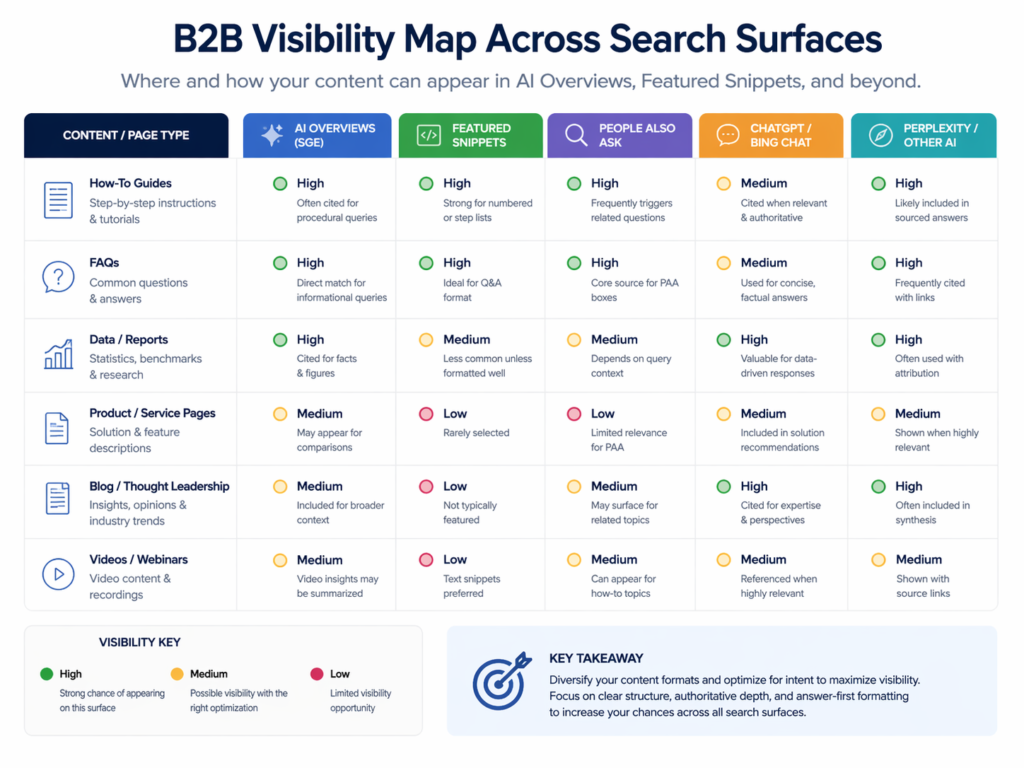
The best zero-click search strategy is surprisingly practical. Focus on the searches where being the visible answer matters more than getting the immediate click.
Start with query types that shape vendor selection early, such as.
Definitions
“What is” and “how does it work” queries
Product and service comparisons
“Best software for” searches
Pricing framework queries
Integration questions
Compliance and implementation explainers
These searches often sit near the start or middle of a B2B buying journey. They may not convert instantly, but they influence who gets remembered.
Answer the search intent fast
Lead with a direct answer in the first few lines of a section.
Do not bury the point under a long introduction. If the query is about zero-click search strategy, define it quickly. If the page is about software comparison, make the core difference obvious right away.
This helps both people and answer engines understand the page faster.
Structure content for extraction
Pages that perform well in zero-click environments are usually easier to scan.
Use.
Clear H2 and H3 headings
Short paragraphs
Lists and comparison blocks
Tight definitions
Straightforward summaries near the top of sections
This is also where related content starts to matter. A thoughtful internal linking structure, plus supporting topical pages, can reinforce your authority around a subject.
Helpful supporting resources might include Entity SEO: Build Brand Authority for AI Search and an internal linking strategy.
Build entity-level trust, not just page relevance
B2B buyers want signals that your company is real, credible, and experienced.
That means your content should reflect more than keywords. It should also show:
Clear service positioning
Named expertise where appropriate
First-hand examples or implementation notes
Relevant industries and markets
Consistent brand associations
From a practical B2B point of view, this is where service depth helps. Supporting pages like Search Engine Optimization services, digital marketing support, and business intelligence services can strengthen the overall topic cluster.
How to Optimize for AI Overviews and Other Answer Engines
If you want more visibility in AI Overviews and similar answer layers, your content needs to do three things well:
Answer the question clearly
Prove expertise quickly
Make your brand easy to understand as a trusted entity
That sounds simple, but most B2B content still misses one of those three.
Use concise definitions and tight summaries
The clearest pages often win more visibility.
Start sections with a short answer paragraph. Then expand with context, examples, and nuance. This format gives search engines something extractable while still giving human readers depth.
Add real buyer-oriented detail
Generic copy does not get remembered. It usually does not get cited well either.
What helps more.
Implementation considerations
Pricing context
Integration notes
Compliance implications
Market-specific considerations
Common trade-offs
For example, a US SaaS buyer may care about speed and integration flexibility. A UK team may pay closer attention to governance and consent. A German buyer may expect stronger proof, more precise language, and clearer handling of DSGVO-related concerns.
That kind of specificity makes content more useful and more credible.
Support the topic with related solution pages
Supporting topical pages can strengthen authority across the site, especially when they connect naturally to the subject.
Depending on your offer, that may include pages such as web development services, mobile app development services, React Native development services, or e-commerce solutions.
The point is not to force links everywhere. The point is to help both users and search systems understand the breadth of what you do.
How to Get Leads From Zero-Click Search
Zero-click visibility does not generate value by magic. It needs a conversion path that acknowledges how B2B buyers actually behave.
The goal is not to force every informational search into an immediate click.
The goal is to become familiar enough that the buyer returns later with intent.
Three ways zero-click visibility turns into pipeline
| Visibility Moment | What the Buyer Does Next | Business Impact |
|---|---|---|
| Sees your brand in an AI Overview | Remembers the name | Increases branded search likelihood |
| Finds you in a comparison or explainer | Shares internally or revisits later | Supports shortlist creation |
| Notices your expertise across multiple SERPs | Searches directly or requests a demo later | Improves inbound intent quality |
To capture that value, make sure your branded search experience is strong. Your pricing pages, solution pages, proof points, and demo journeys should all be ready when the buyer comes back.
Connect search visibility to CRM outcomes
This is where mature B2B teams separate themselves.
Look beyond rankings and clicks. Track whether visibility gains are followed by.
Branded search lift
Direct traffic increases
Assisted conversions
More demo intent
Higher-quality pipeline from target markets
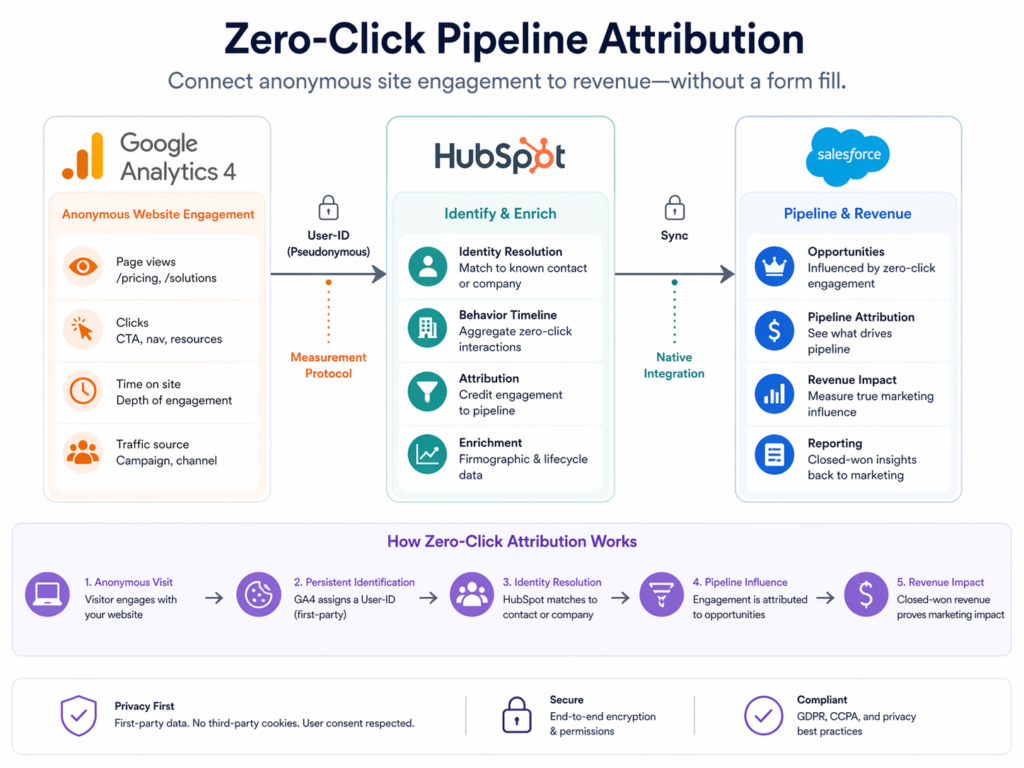
If your company already uses platforms like HubSpot or Salesforce, connect SEO reporting to opportunity-level outcomes instead of stopping at sessions.
How to Measure Zero-Click SEO Without Losing the Story
The easiest way to under-report zero-click SEO is to measure only visits.
A better model includes both attention and outcome.
What to track
At a minimum, measure.
Search impressions
Query-level visibility trends
Branded search growth
Click-through rate changes
Assisted conversions
Demo requests and pipeline influence
Market-level performance by region
This lets you see whether lower CTR is actually a problem or simply a shift in where the buyer is making decisions.
What matters in the US, UK, and EU
Regional context matters more in B2B than many teams admit.
In the US, especially in competitive markets like New York and San Francisco, buyers often self-educate heavily before contacting sales.
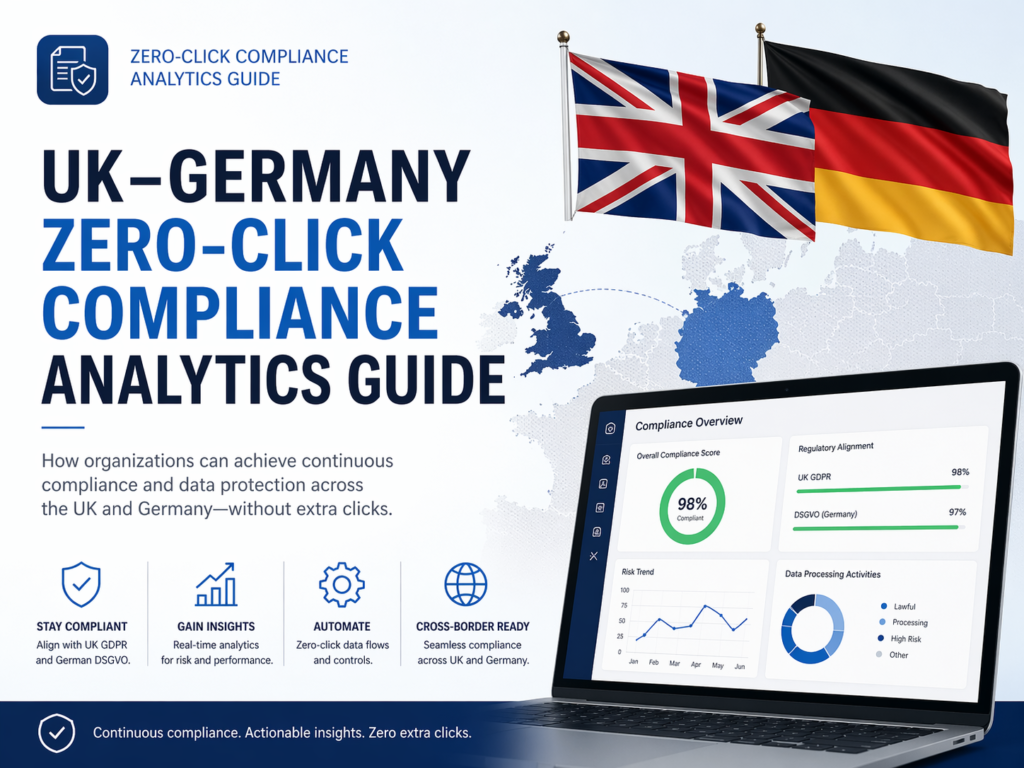
In the UK, reporting quality, consent handling, and governance can affect how confidently you measure influence.
In Germany and the wider EU, trust signals, privacy expectations, and precise wording often matter more. Buyers may respond better to careful claims, stronger implementation detail, and clear handling of compliance topics.
That does not mean building three completely separate strategies. It means localizing examples, proof points, and measurement expectations where it counts.
Common Zero-Click Search Mistakes B2B Brands Still Make
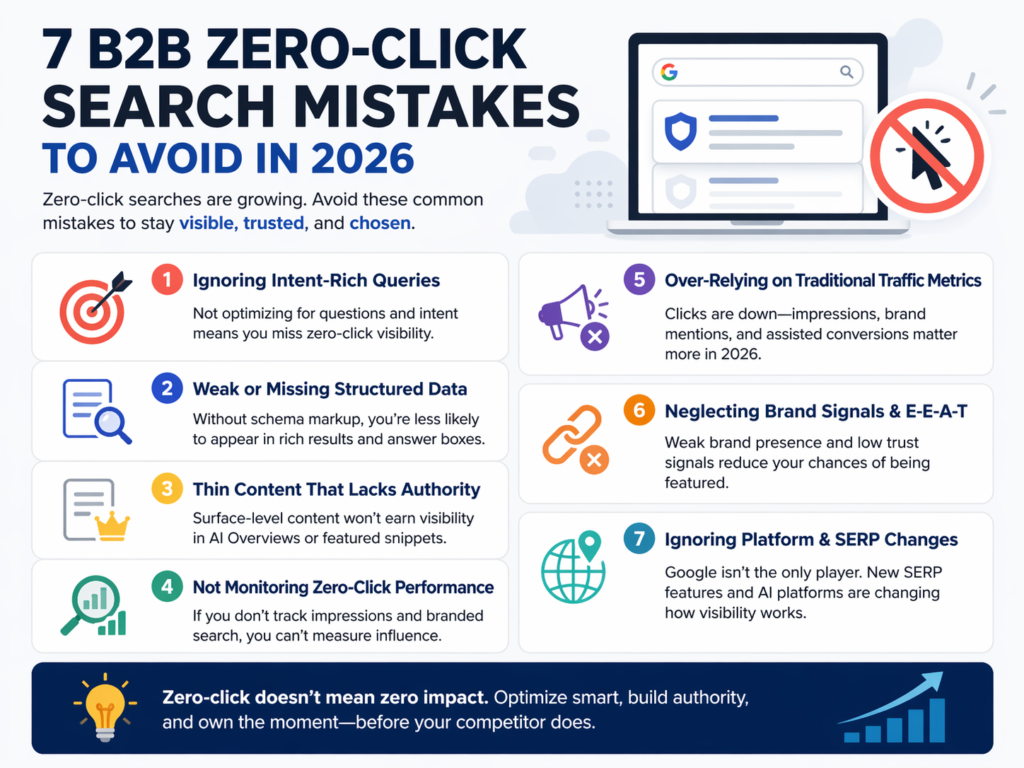
Even now, many companies are reacting to zero-click search in the wrong way.
Treating rankings as the full goal
A number-one blue link is not enough if the answer layer shapes the decision before the user reaches it.
Reporting traffic without reporting influence
Traffic matters, but it is not the whole story. If branded search, assisted conversions, and qualified pipeline are growing, the channel may be healthier than raw click numbers suggest.
Publishing generic content
Generic content is forgettable. It tends to sound the same as everything else in the category.
Specific content wins more often. Clear content wins more often. Credible content wins more often.
Separating SEO from commercial teams
When SEO, demand gen, and RevOps work from different definitions of success, zero-click search becomes harder to explain internally.
Shared reporting fixes that.
The Real Goal of Zero-Click Search Strategy
The new SEO goal is not maximum traffic at any cost.
It is qualified influence before the click, then better measurement after it.
That is the heart of a modern zero-click search strategy for B2B brands. You want your company to be visible in the answers, remembered in the market, and chosen when the buyer is ready to act.
For teams across the US, UK, and EU, that usually means clearer content, stronger entity signals, smarter internal linking, and reporting that connects visibility to revenue instead of vanity metrics.
If your current model still treats SEO like a traffic channel only, 2026 is a good time to fix that.
To Sum Up
Zero-click search strategy is no longer optional for B2B brands that want to stay visible in competitive markets. When buyers can evaluate vendors directly from AI answers and rich SERP features, the brands that show up clearly, credibly, and consistently gain an edge before the first visit ever happens.
The upside is real. A smart zero-click search strategy can strengthen brand recall, improve branded demand, and support better pipeline reporting across the US, UK, and EU. The teams that win in 2026 will be the ones that stop chasing clicks alone and start building influence where modern search decisions are actually made.( Click Here’s )
FAQs
Q : What is a zero-click search strategy?
A : A zero-click search strategy is an SEO and content approach built around winning visibility in search results and AI answer surfaces, even when the user does not click immediately. For B2B brands, the aim is to influence trust, recall, and future pipeline rather than relying only on instant traffic.
Q : Does zero-click search hurt B2B SEO?
A : It can reduce direct clicks on some queries, but it does not automatically reduce business value. In many cases, it changes where the value appears by pushing more influence into branded search, assisted conversions, and later-stage visits.
Q : How do I optimize content for AI Overviews?
A : Answer the main question early, use clear structure, add useful supporting detail, and show real expertise. Strong internal links, entity consistency, and practical examples also help.
Q : Can zero-click search strategy work for enterprise SEO?
A : Yes. Enterprise buyers often research across several sessions and stakeholders before converting. That makes early answer-layer visibility especially valuable.
Q : How should B2B teams measure zero-click search?
A : Track impressions, visibility by query, branded search lift, assisted conversions, and CRM outcomes alongside clicks. That gives you a more realistic view of how search supports pipeline.