


Entity SEO: Build Brand Authority for AI Search
Entity SEO: Build Brand Authority for AI Search
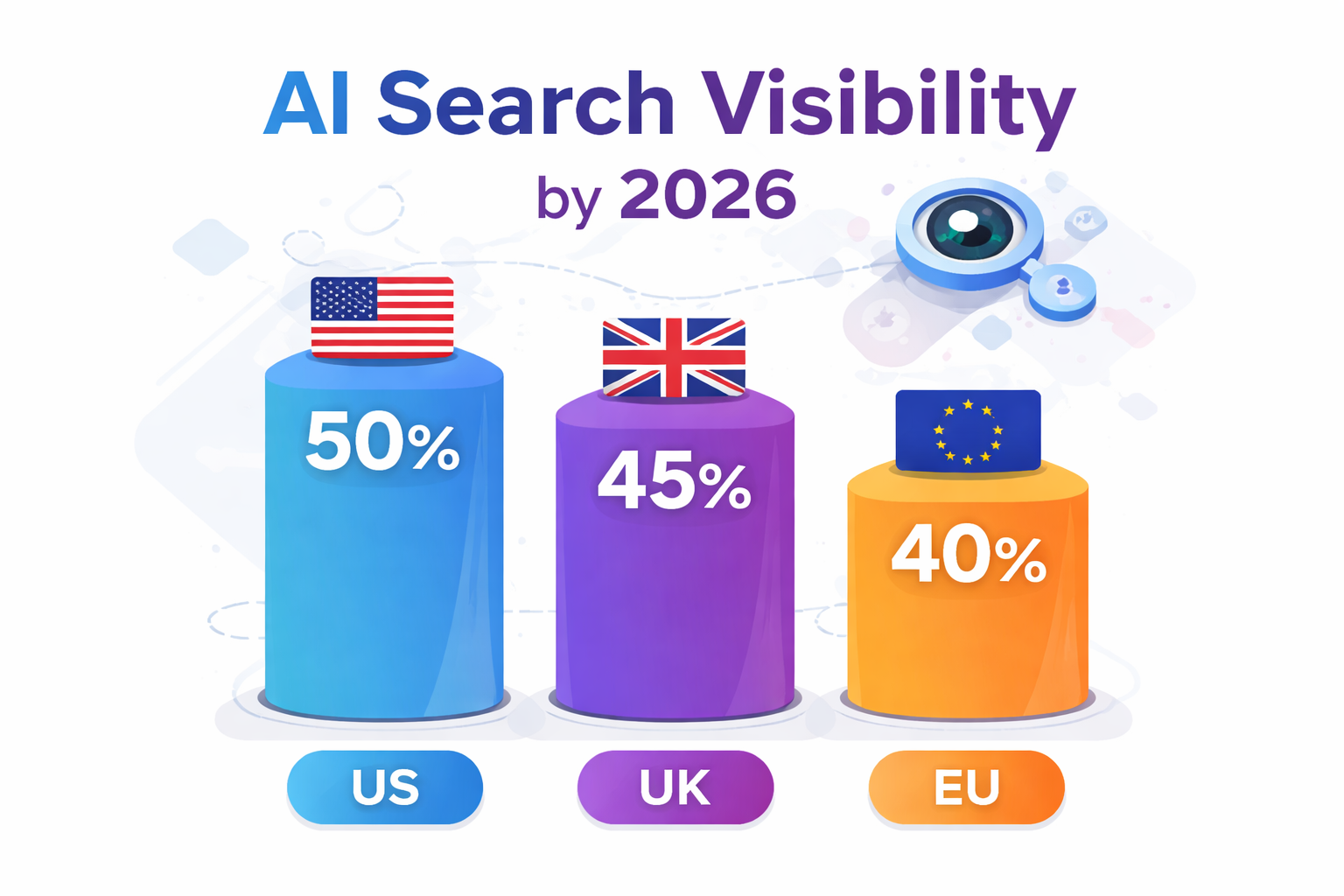
Entity SEO: Build Brand Authority for AI Search
Entity SEO is how you help Google and AI systems understand your brand as a real, trustworthy entity, not just a website targeting keywords. That matters for AI search visibility because platforms like Google AI Overviews, Chat GPT, and Gemini are more likely to surface brands they can clearly identify, verify, and connect to expert sources.
If your content is solid but your brand still is not showing up in AI-driven discovery, the issue is often not content volume. It is entity clarity. When your site, authors, brand profiles, schema, and third-party mentions all reinforce the same identity, your business becomes easier to trust and easier to cite.
Entity SEO is becoming one of the most practical ways to improve visibility beyond traditional rankings. As search shifts toward summaries, answer engines, and AI-assisted recommendations, brands that look consistent, credible, and well-connected across the web have a clear edge.
What Is Entity SEO and Why Does It Matter Now?
Entity SEO is the process of helping search engines and AI systems understand your company, people, products, or services as distinct entities with clear attributes and relationships.
In plain terms, it means answering a few basic questions without ambiguity.
Who are you?
What do you do?
Who creates your content?
Which topics are you known for?
Which trusted sources confirm your credibility?
That is different from older SEO models that focused mainly on matching pages to keywords.
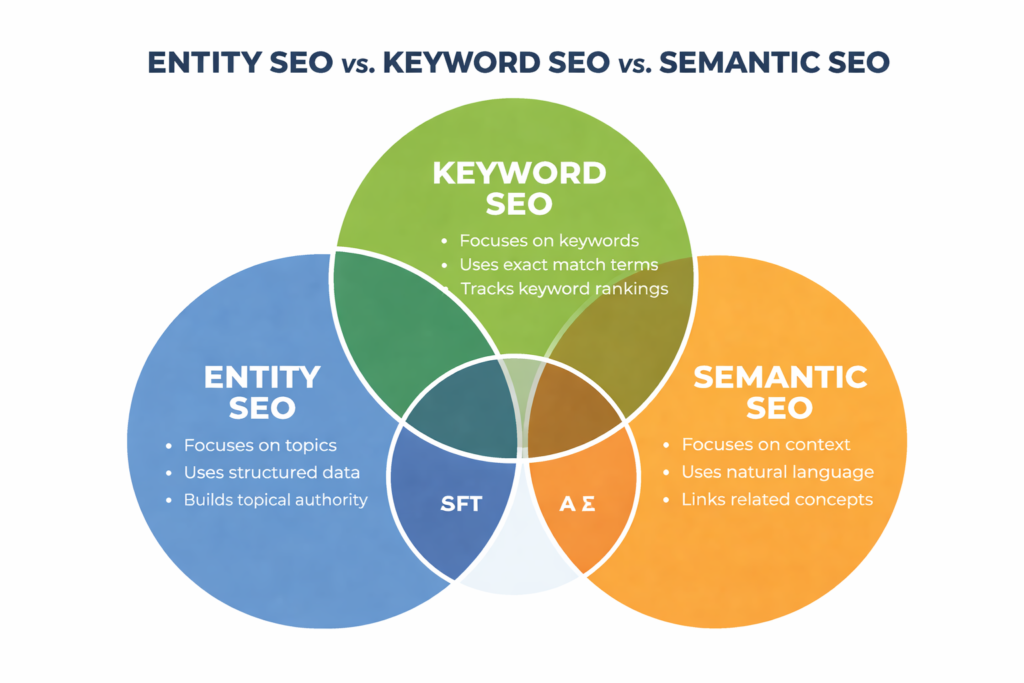
Entity SEO vs. Keyword SEO vs. Semantic SEO
Keyword-first SEO focuses on phrases you want a page to rank for.
Semantic SEO improves topic coverage, context, and relevance.
Entity SEO adds another layer. It asks whether search engines and AI systems understand your brand as a known, verifiable thing. Not just a page. Not just a topic cluster. A real business with expertise, relationships, and authority signals.
That distinction matters more now because AI systems do not just retrieve pages. They interpret brands, authors, and sources before deciding what to mention.
Why Entity Recognition Matters for AI Search Visibility
AI search systems work better when identity is clear.
A brand with a consistent name, expert authors, strong about pages, valid schema, and trusted mentions across the web is easier to understand and safer to cite. That is especially important for Google AI Overviews, LLM-based search experiences, and assistant-style discovery.
In practice, entity SEO improves AI search visibility by making your brand.
Easier to disambiguate
Easier to verify
Easier to associate with a topic or category
Easier to trust in high-stakes or competitive markets
This is one reason some brands appear repeatedly in AI-generated answers while others stay invisible, even when they publish decent content.
How AI Search Uses Brand Entities and Trust Signals
AI systems look at more than page-level optimization. They try to piece together a broader picture of your brand from multiple signals.
That picture usually includes.
Your organization details
Author identity and expertise
Topical depth on your site
Structured data
Consistency across profiles
Third-party mentions and references
Schema helps machines interpret that information, but schema alone is not enough. It works best when it reflects what is already visible and verifiable on the page and across the wider web.
The Role of E-E-A-T in Entity SEO
E-E-A-T still matters because AI systems and modern search features lean heavily on signals of experience, expertise, authority, and trust.
For example, a healthcare software company should not only talk about compliance. It should show who wrote the content, what expertise is behind it, and how the business presents itself consistently across its site and external references.
The same goes for fintech, enterprise SaaS, legal, and other trust-sensitive sectors. In these spaces, vague branding and thin authorship can hold you back, even when your pages are technically optimized.
Core Components of a Strong Entity SEO Strategy
A good entity SEO strategy is not about gaming a knowledge graph. It is about making your brand easier to understand everywhere it appears.
Here are the core pieces that usually matter most.
Clear Brand Identity Across Key Pages
Your homepage, About page, Contact page, service pages, and author pages should all reinforce the same business identity.
That includes.
Brand name
Services or solutions
Target industries
Locations or markets served
Ownership or editorial responsibility
Contact and company information
On Mak It Solutions, that clarity can be strengthened through pages like Home, Contact, Mobile App Development Services, and Business Intelligence Services.
Expert Authorship and Editorial Transparency
Author bios matter more than many brands realize.
If your content covers technical, strategic, financial, or regulated topics, readers and AI systems both benefit from knowing who created it. Clear author pages, editorial standards, and visible expertise reduce ambiguity and support trust.
For B2B companies, this does not have to be overcomplicated. A clean author profile, a consistent bio, and transparent editorial ownership already go a long way.
Topical Depth Around a Defined Category
You cannot build entity authority around everything.
Brands become easier to associate with a category when they publish connected content around a clear problem space. For a technical services company, that may include themes like AI search, cloud cost optimization, data strategy, or scalable workflows.
Mak It Solutions already has relevant adjacent content, including.
Schema Strategy for AI Search in 2026
B2B Landing Page Framework for IT Growth
FinOps Cloud Cost Optimization for US, UK, and EU Teams
Human-in-the-Loop AI Workflows That Actually Scale
This kind of cluster helps reinforce what the brand is known for.
Knowledge Graph Optimization and Schema Markup
Knowledge graph optimization supports entity SEO by reducing confusion around who your brand is and how it connects to trusted references online.
Schema markup plays a supporting role here. It helps search engines interpret your organization, authors, articles, and linked profiles more accurately.
Which Schema Types Usually Matter Most
For most service-based and B2B brands, the useful foundation includes.
Organization
Person
Article
BreadcrumbList
FAQPage, where appropriate
The biggest gains usually come from accuracy, not volume. It is better to have clean, consistent schema tied to visible page content than to add extra markup that does not reflect reality.
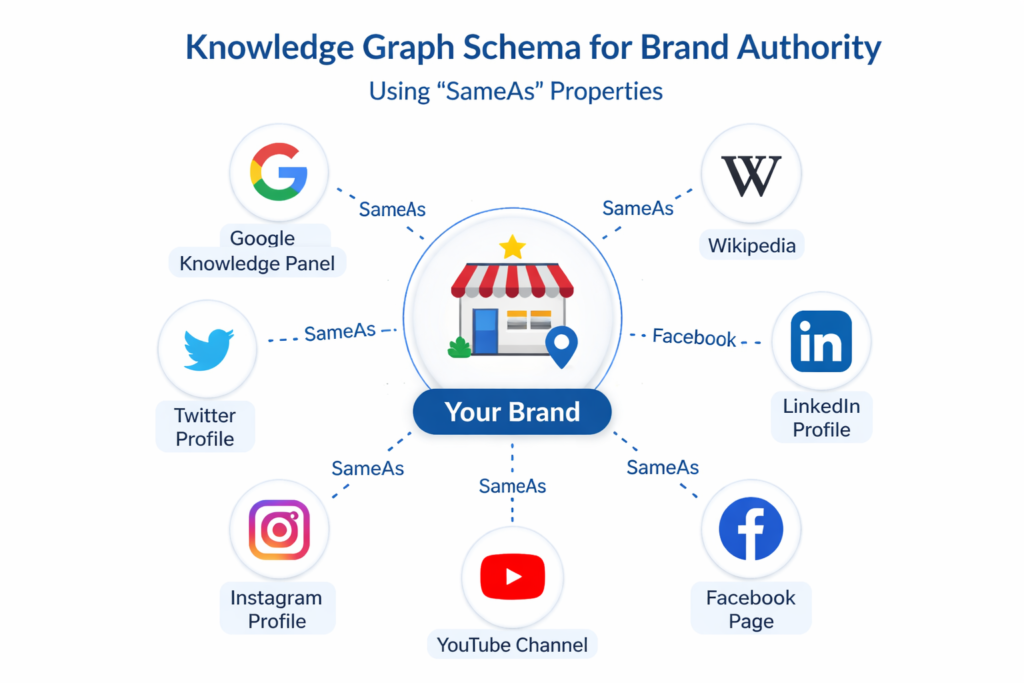
Why sameAs Matters
The sameAs property can help connect your brand to official profiles and authoritative references such as.
Crunchbase
Trusted business directories
Other official brand-owned platforms
Used properly, it helps search engines reconcile identity across the web.
Common Entity SEO Mistakes
A few issues come up again and again.
Inconsistent business names across pages
Weak or missing author pages
Off-page profiles that do not match on-site messaging
FAQ markup that does not reflect visible content
SameAs links pointing to irrelevant or low-value profiles
Structured data describing claims the page does not actually support
These problems make it harder for search engines and AI systems to trust what they are seeing.
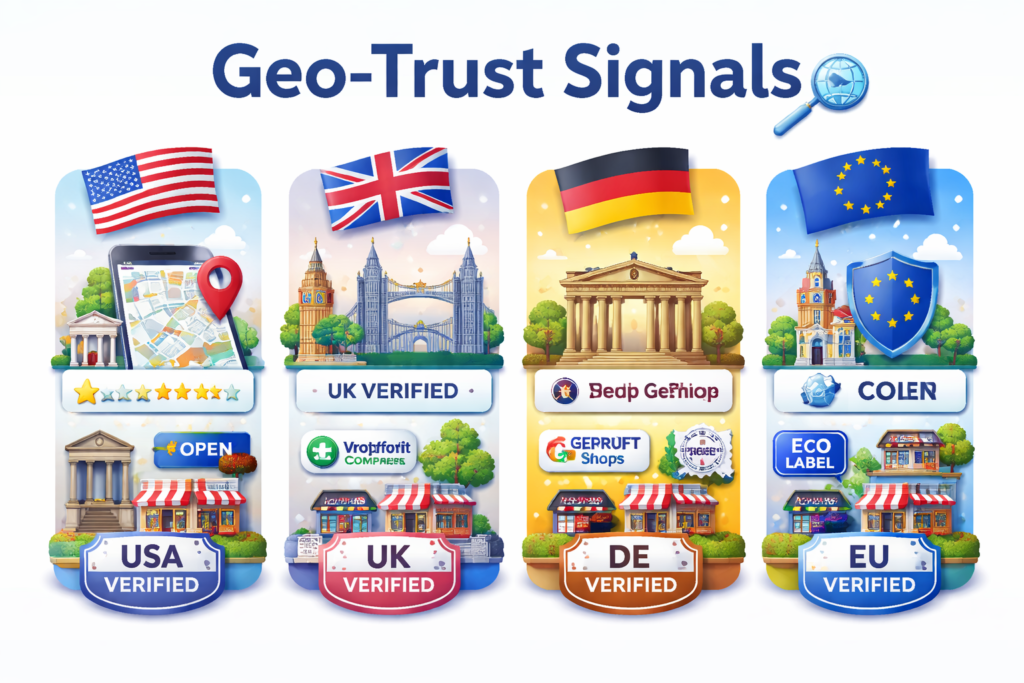
Entity SEO for AI Search Across the US, UK, Germany, and the EU
Entity SEO is not exactly the same in every market. The core principles stay consistent, but trust signals often vary by region.
United States
In the US, buyers often respond well to.
Clear category pages
Comparison content
Strong solution-led messaging
Case studies and proof points
Visible experts and commercial clarity
A SaaS buyer in New York or a tech decision-maker in San Francisco may first find you through educational content, then validate you through service pages, leadership bios, and supporting trust signals.
United Kingdom
In the UK, trust often leans more heavily on clarity, governance, and local proof.
For privacy-sensitive services, UK GDPR language can reinforce credibility. In public-sector or health-adjacent work, straightforward, evidence-led presentation tends to perform better than overly promotional claims.
Germany and the Wider EU
In Germany and across the EU, compliance language is often more visible in the buying journey.
Many buyers notice details like.
GDPR or DSGVO alignment
Data handling clarity
Regional operating context
Multilingual consistency
Stronger governance messaging in regulated sectors
For fintech or enterprise services, showing awareness of regional compliance expectations can support trust. For multilingual sites, consistent translation of service names, legal claims, and brand language matters because inconsistency can split entity signals.
How to Improve Brand Authority for AI Search Visibility
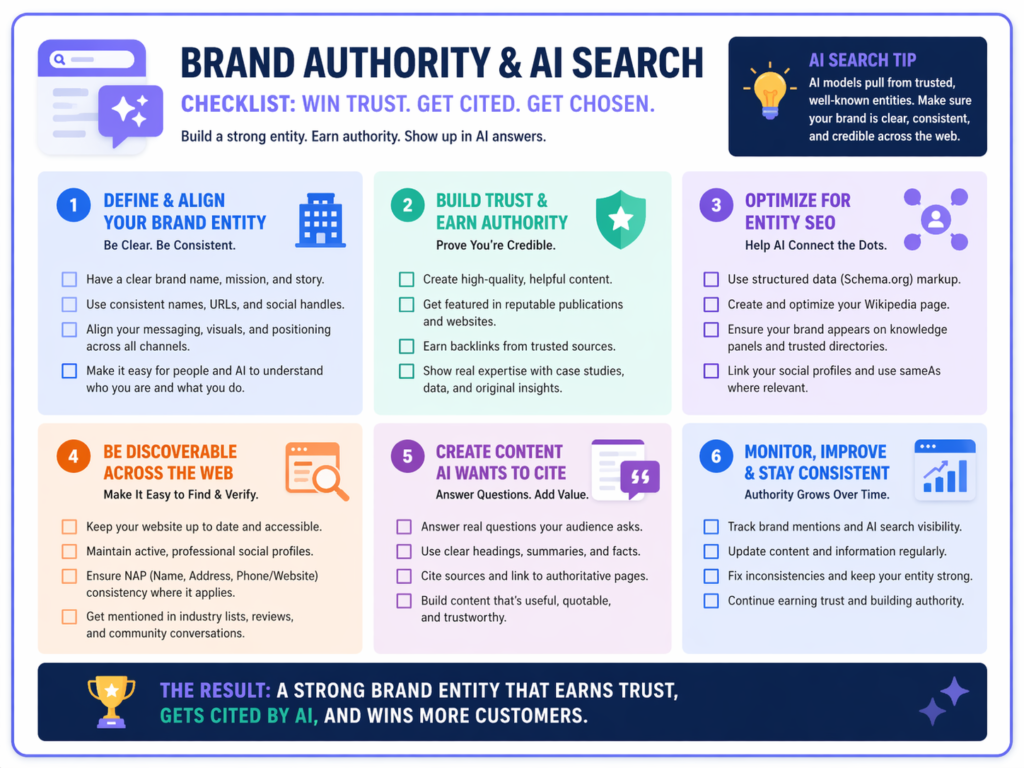
If you want to improve brand authority for AI search visibility, the fastest wins usually come from alignment.
Your content, schema, profiles, PR, and brand messaging should all describe the same company in the same way.
Focus on Trusted Mentions
Trusted third-party mentions work like corroboration.
That can include.
Respected publications
Associations
Partner ecosystems
Review platforms
Industry directories
Expert contributors
Smaller brands can compete here. In practice, precise positioning and credible references often beat raw size.
Align SEO, PR, and Brand Messaging
A lot of companies treat SEO, PR, and schema as separate tasks. That creates fragmented signals.
A stronger approach is to align.
Organization wording on your site
Executive and author bios
Profile descriptions
Off-site mentions
Structured data
Key category pages
When these pieces reinforce each other, your brand becomes easier to understand and more likely to earn mentions in AI-driven search.
Prioritize Regulated and High-Trust Industries
Entity SEO matters even more in sectors where trust is part of the purchase decision.
That includes.
B2B SaaS
Fintech
Healthcare
Enterprise technology
Legal and compliance-led services
In these categories, AI systems are more likely to favor brands with visible expertise, clear identity, and corroborating evidence. This is not a shortcut, and it is not a guarantee. It is a credibility strategy.
How to Measure Entity SEO Success
Traditional rankings still matter, but they do not tell the whole story.
For entity SEO, better indicators include.
Growth in branded search impressions
Stronger brand-query coverage
More consistent brand SERPs
Improved author visibility
Richer organization signals in search
More citations or mentions in AI-assisted discovery
Better conversion quality from informational content
These are the signs that your brand is becoming easier to recognize and trust.
What to Audit First if Your Brand Is Missing in AI Search
Start with the basics.
Identity Audit Checklist
Is your brand name consistent across major pages?
Do your About and Contact pages clearly explain who you are?
Are your service pages aligned with your positioning?
Do your author bios show real expertise?
Does your schema reflect visible page content?
Are your official profiles connected and up to date?
Do credible third-party sources mention your brand in the right context?
This usually reveals the biggest gaps faster than obsessing over isolated ranking changes.
Final Thoughts
Entity SEO is no longer a side tactic for advanced SEO teams. It is becoming a practical foundation for AI search visibility.
If your brand already publishes useful content but still struggles to appear in AI-driven discovery, focus on entity clarity before simply producing more pages. Tighten your organization signals, strengthen authorship, align your profiles, and build topical authority around the areas you want to own.( Click Here’s )
That is how entity SEO starts turning content into brand visibility.
Key Takeaways
Entity SEO helps search engines and AI systems understand your brand as a trusted entity, not just a collection of keyword-targeted pages.
Strong AI search visibility depends on identity clarity, expert authorship, topical depth, schema accuracy, and trusted corroboration.
US, UK, Germany, and broader EU markets often respond to different trust cues, so localized messaging can help.
Knowledge graph optimization works best when your on-site and off-site signals are aligned.
For regulated or credibility-sensitive industries, entity SEO is often a competitive advantage rather than a nice extra.
FAQs
Q : How long does entity SEO take to improve AI search visibility?
A : Entity SEO usually takes longer than a basic on-page update because it depends on consistency, crawling, corroboration, and trust. Some brands notice early improvements in branded search clarity within a few months, but stronger AI search visibility often takes longer.
Q : Can smaller brands compete with bigger companies using entity SEO?
A : Yes. Smaller brands can compete when they are easier to verify, more focused, and more credible in a defined niche. Entity SEO rewards clarity and corroboration, not just brand size.
Q : Does entity SEO still matter if my site already ranks well?
A : Yes. Rankings alone do not guarantee AI search visibility. A page can rank for keywords while the brand behind it remains weakly understood as an entity.
Q : What off-page signals help with entity SEO?
A : The strongest signals usually come from relevant trusted mentions, authoritative profiles, industry directories, reviews, and expert references that reinforce the same brand identity shown on your site.
Q : How do multilingual websites affect entity SEO in Europe?
A : They can help or hurt. Multilingual sites support entity SEO when brand names, services, author details, and legal language stay consistent across versions. They weaken it when translation creates confusion or conflicting signals.