


Internal Linking Strategy for MENA Blogs in Saudi & UAE
Internal Linking Strategy for MENA Blogs in Saudi & UAE
Internal Linking Strategy for MENA Blogs in Saudi & UAE
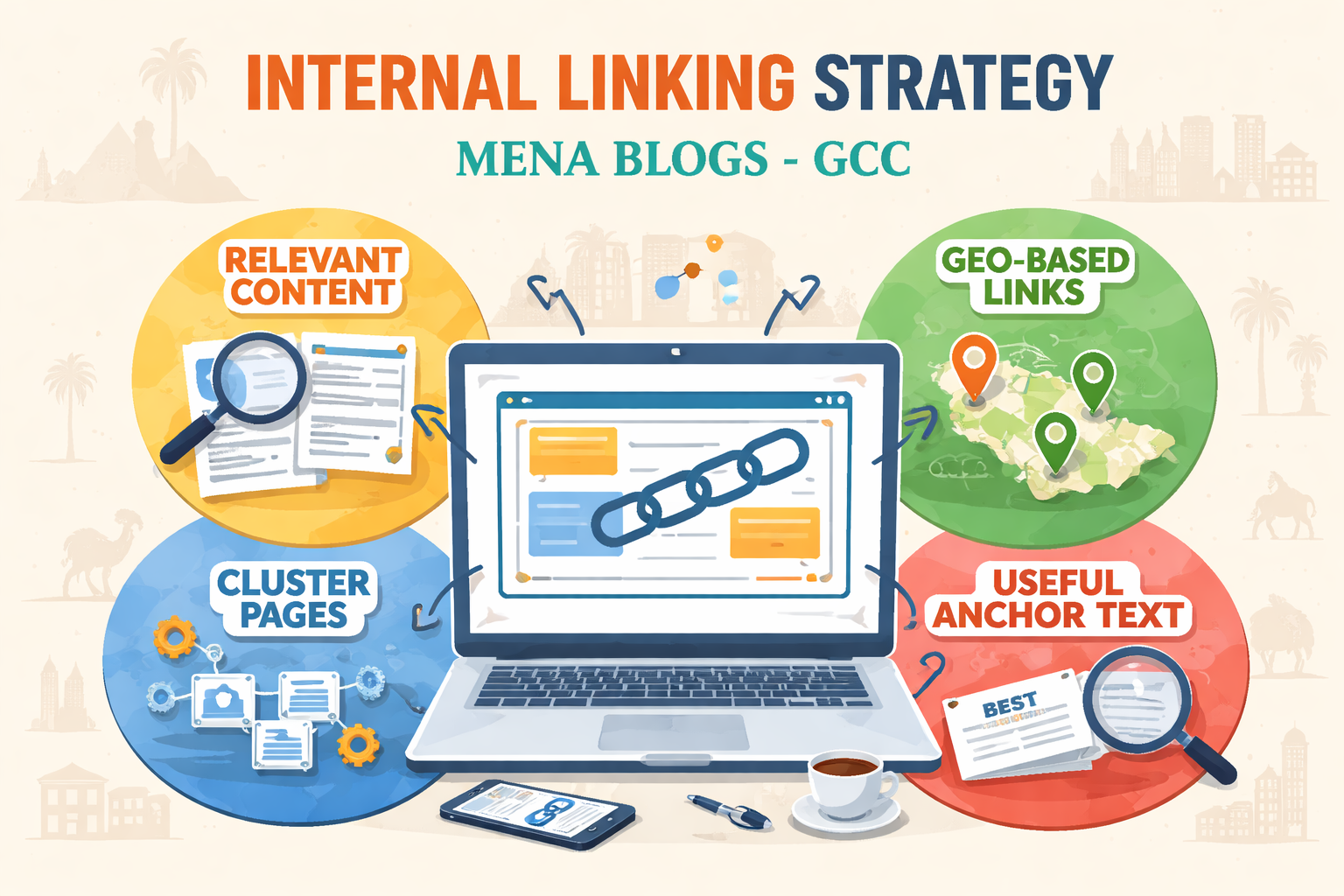
If your site has strong content but weak rankings, the problem is often not the writing. It is the structure behind it. A smart internal linking strategy for MENA blogs helps search engines find your most important pages faster, understand topic relationships more clearly, and pass authority where it matters most.
For teams targeting Saudi Arabia, the UAE, and Qatar, that structure matters even more. Bilingual websites, regulated industries, and mixed user intent can all make internal linking more complex. The goal is simple: connect pillar pages, support content, and commercial pages in a way that feels natural for users and clear for search engines.
What Is an Internal Linking Strategy for MENA Blogs?
An internal linking strategy for MENA blogs is the system you use to connect blog posts, service pages, category pages, and pillars across your website. Done well, it improves crawlability, strengthens topical authority, and helps users move through the site without friction.
This matters across GCC markets because many websites publish useful content but leave key pages buried too deep. On bilingual Arabic-English sites, the issue gets worse when both language sections compete or overlap instead of supporting each other.
How internal links affect crawling and indexing
Internal links help search engines discover pages and understand which ones deserve more attention. When your strongest pages link to strategic articles, categories, and service URLs, you create clearer crawl paths and reinforce site hierarchy.
That is one reason pages related to search engine optimization and supporting educational content usually perform better when they sit inside a deliberate content structure.
Why MENA blogs need a system, not random links
Random internal links may help a little, but they rarely build momentum. A real system passes authority from high-visibility pages to high-value commercial and educational pages.
For GCC content teams, that often means using blog traffic to support service pages, category hubs, and bilingual topic clusters tied to real buyer intent.
Why bilingual content changes the strategy
Arabic-English websites need coordination, not duplication. Arabic pages should mostly support Arabic clusters. English pages should mostly support English clusters.
The two can align at the architecture level, but they should not mirror each other so closely that they create cannibalization. That is especially important for brands targeting search demand in Saudi Arabia and the UAE, where multilingual SEO requires tighter structure.
Why Internal Linking Matters for Saudi, UAE, and Qatar SEO
Internal linking is not just a technical cleanup task. It is part of how your site earns trust, distributes authority, and guides visitors toward the pages that matter most.
Better discoverability in Riyadh, Dubai, and Doha
In competitive markets like Riyadh, Dubai, and Doha, strong internal pathways help search engines reach key pages quickly. That includes service pages, location-relevant content, and high-converting commercial URLs such as web development services.
Stronger topical authority for GCC content hubs
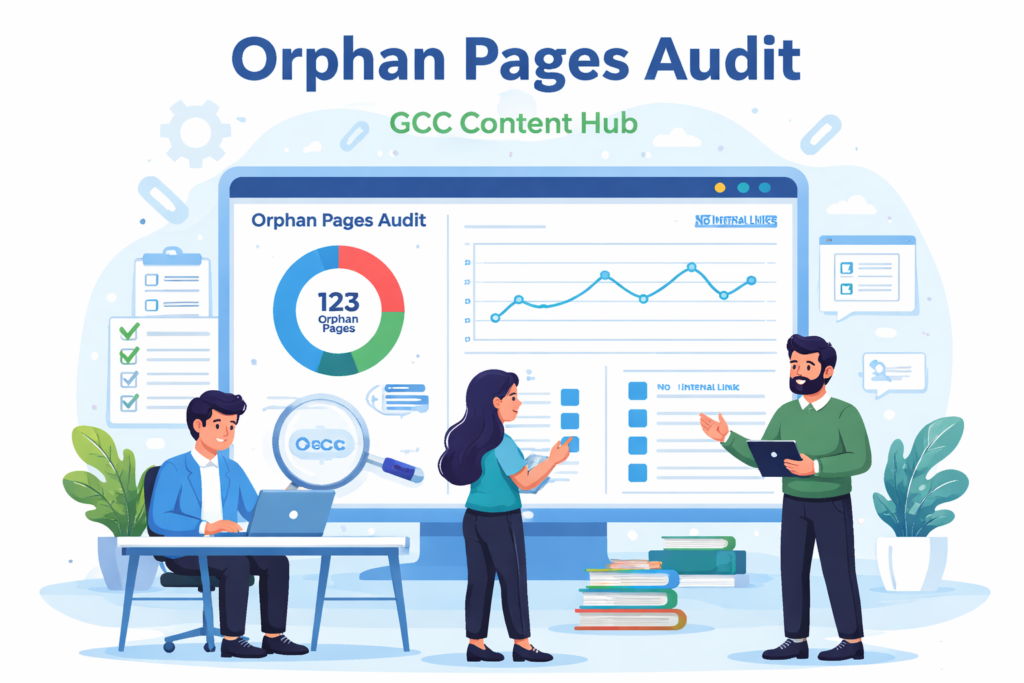
Orphan pages weaken your authority. A great article on AI SEO, Arabic UX, or cloud strategy may still underperform if nothing important links to it.
When pages sit inside clear clusters, they support one another. That sends stronger relevance signals and makes your expertise easier to understand.
More trust for regulated and enterprise sectors
For fintech, healthcare, logistics, and government-adjacent businesses, trust is part of SEO. Internal links can guide readers from educational content into pages focused on compliance, services, governance, and technical expertise.
In Saudi Arabia, UAE, and Qatar, that becomes especially useful when content touches regulated environments shaped by bodies such as SAMA, TDRA, QCB, ADGM, or DIFC.
Exact Internal Linking Rules for MENA Blogs
A practical internal linking strategy should be clear enough for writers, editors, and SEO teams to follow every time they publish.
Use descriptive anchor text
Anchor text should tell users what they will find next. Avoid vague phrases like “click here” or “read more” when a clearer option exists.
For example, technical SEO checklist for Arabic GCC websites is far more useful than a generic link label. It improves clarity for both readers and crawlers.
Link from authority pages to priority pages
Your homepage, strongest blog posts, and category pages should pass authority to strategic URLs.
That can include service pages and related resources such as topic cluster strategy for Saudi brands, AI SEO for MENA tech companies, and GCC content localization guidance.
Keep link placement relevant
Do not force internal links into every paragraph. In most cases, 5 to 8 highly relevant internal links are enough for a standard blog post.
Too many links can weaken focus and make the content feel mechanical. Relevance matters more than volume.
Make every page part of a path
Each new article should connect upward, sideways, and downward.
Upward to a pillar or category page
Sideways to related supporting content
Downward to a service or conversion page
That simple rule helps prevent orphan pages and keeps the site structure intentional.
How to Structure Topic Clusters for GCC Content Teams
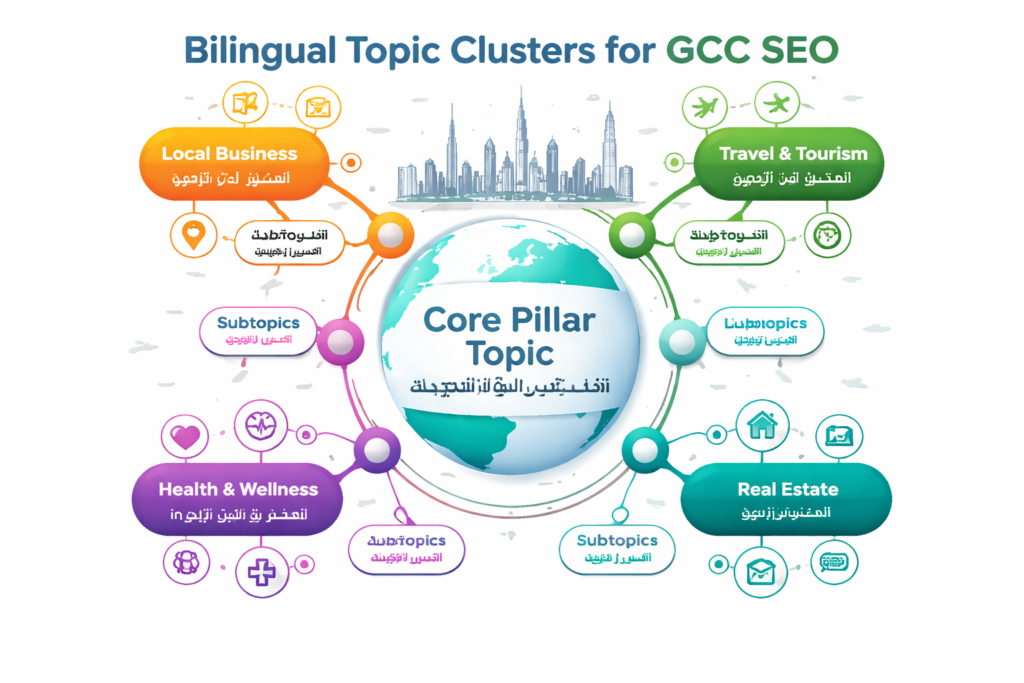
A strong internal linking strategy for MENA blogs usually works best when built around topic clusters.
Build pillar pages around core business themes
Start with core themes tied to revenue, authority, or brand positioning. For one business, that may be SEO, multilingual content, and web development. For another, it may be fintech compliance, cloud infrastructure, or digital transformation.
Each pillar should act as a central node that supports multiple related pages.
Connect supporting content by intent and funnel stage
Top-of-funnel posts should lead to mid-funnel explainers. Mid-funnel content should support commercial pages.
A clean journey might connect topic clusters, Arabic web design, and multilingual SEO content in a way that reflects how a real buyer researches solutions.
Separate Arabic and English clusters carefully
For bilingual sites, keep Arabic and English content aligned by topic but separated by intent, language behavior, and SERP targeting.
This is especially relevant in GCC markets where Arabic-first audiences may browse differently from English-speaking corporate buyers. In practice, teams in Saudi Arabia often need stronger Arabic trust paths, while UAE-focused brands may need tighter bilingual UX across service and blog pages.
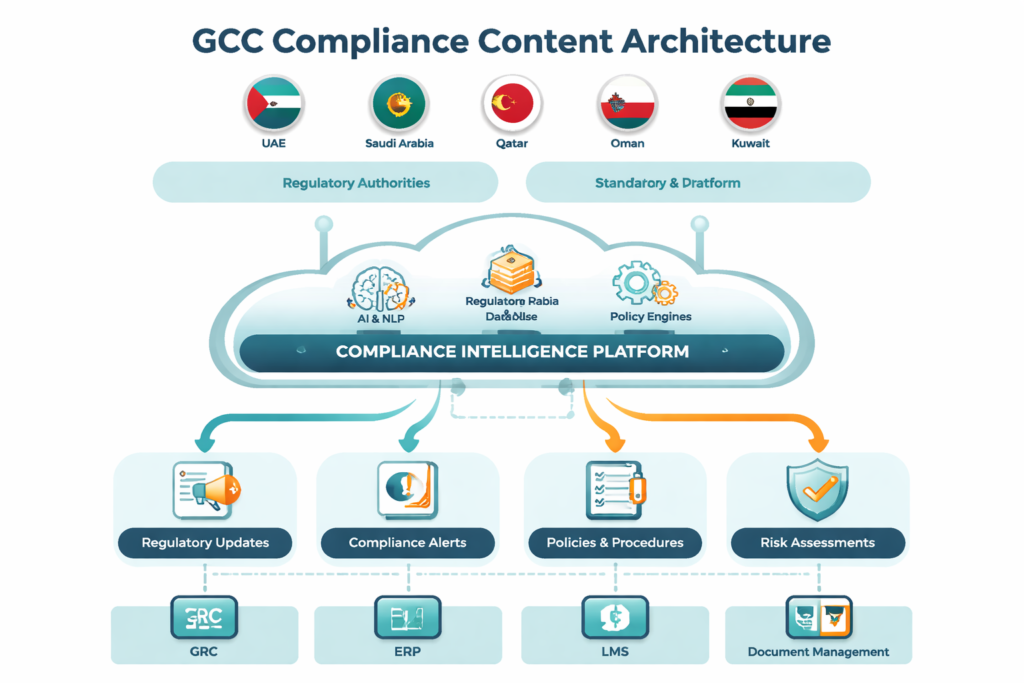
GCC Compliance and Governance Signals That Affect Internal Linking
Some content needs more than good structure. It needs governance-aware structure.
Mention relevant authorities where they support trust
In regulated topics, internal links should help users reach trust-building pages naturally. That may include content mentioning.
SAMA for Saudi fintech and payments
QCB for fintech and financial supervision in Qatar
TDRA for digital accessibility and service standards in the UAE
ADGM and DIFC for UAE finance and innovation contexts
These references should support the content flow, not distract from it.
Make policy and trust pages easy to reach
Pages about compliance, privacy, governance, and technical standards should not be buried. They should sit within easy reach of commercial pages and educational content.
That is especially useful for sectors such as fintech, government, retail, and logistics, where credibility shapes both conversions and rankings.
Treat governance as a navigation issue too
Many sites think of governance only as a content issue. It is also a structural issue. If users and crawlers cannot reach trust pages easily, the site sends weaker signals overall.
Common Internal Linking Mistakes on GCC Websites
Even strong content teams make the same linking mistakes again and again.
Repeating the same anchor text across both languages
Using near-identical anchors on Arabic and English pages can blur topical targeting and increase cannibalization risk.
Leaving important pages too deep
A useful page may exist, but if no category, hub, or pillar links to it, it stays hidden.
Adding links without intent alignment
Links should support the reader’s next logical step. If they feel forced, they hurt readability, especially on mobile-heavy traffic patterns common across GCC markets.
Ignoring older posts
Older articles often hold untapped value. Updating them with fresh internal links is one of the fastest ways to strengthen weak sections of a site.
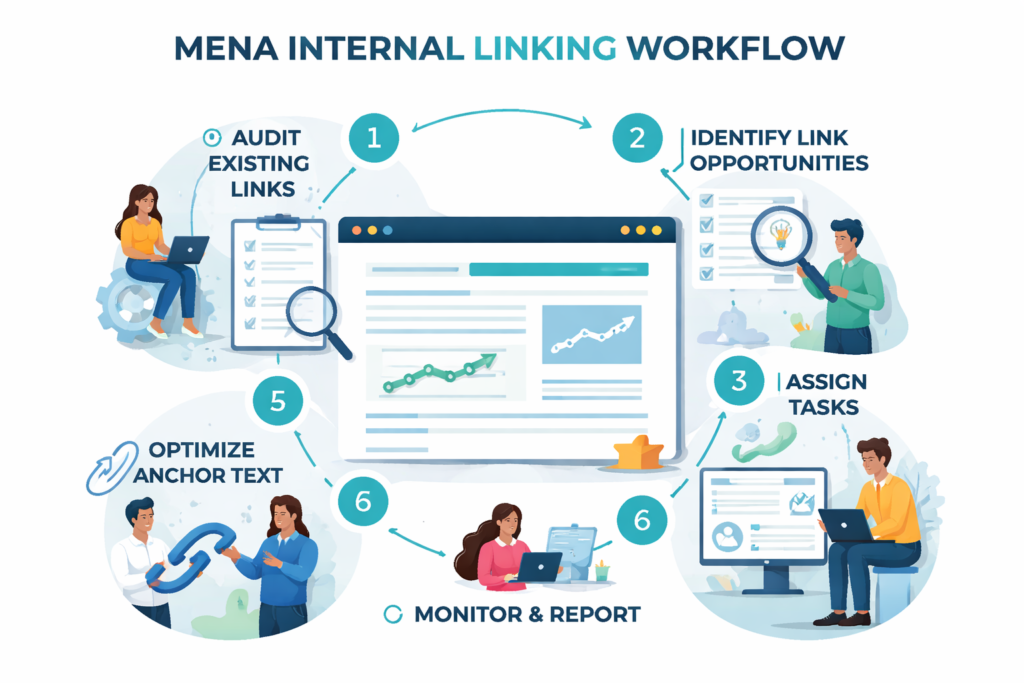
How to Build a Repeatable Internal Linking Workflow for MENA Teams
The best system is one your team can actually repeat.
Set editorial rules for every new page
Create a simple publishing checklist:
Link to one relevant pillar or category page
Link to two supporting articles
Link to one commercial or conversion-focused page
Check whether the article supports the correct language cluster
This keeps structure consistent even when multiple writers are involved.
Audit orphan pages regularly
Quarterly reviews usually work well for growing blogs. Identify underlinked pages, then add strategic links from older posts, category pages, and high-authority articles.
For many bilingual sites, this delivers fast gains without needing new content.
Assign ownership across teams
From a small business point of view, internal linking gets messy when nobody owns it. The strongest setup usually splits responsibility like this.
| Team | Main responsibility |
|---|---|
| SEO | Anchor text, crawl paths, priority pages |
| Content | Relevance, readability, editorial placement |
| Compliance | Regulated references, governance-sensitive pages |
For GCC brands, this shared model works well because SEO, content, and compliance often need to align closely.
Final Thoughts
A strong internal linking strategy for MENA blogs turns content from a collection of pages into a real growth system. It helps search engines understand your site, helps users move through it with less friction, and helps your most important pages earn more authority over time.
For Saudi, UAE, and Qatar teams, the winning approach is usually not more links. It is better links, clearer clusters, and smarter pathways between Arabic and English content. If your content hub already has strong articles, improving the structure behind them may be the fastest SEO win available.( Click Here’s )
FAQs
Q : Is the same internal linking strategy suitable for Saudi and UAE blogs?
A : The framework can stay similar, but execution should change by market. Saudi-focused sites often need stronger trust pathways around Arabic-first and regulated content, while UAE sites usually need more attention on bilingual UX, accessibility, and conversion journeys.
Q : How should bilingual Arabic-English websites handle internal links in Qatar?
A : They should build parallel clusters rather than copy the same linking pattern across both languages. That helps reduce cannibalization and keeps each language section more useful for its own audience.
Q : Do finance blogs in Saudi Arabia need different internal linking rules?
A : Usually, yes. Finance content often benefits from stronger links between educational pages, governance pages, licensing-related content, and service pages so the trust journey is clearer.
Q : What is the best way to fix orphan pages on a Dubai-based content hub?
A : Start with high-value pages that have little internal support. Then add relevant links from blog hubs, category pages, and strong older articles using natural anchor text tied to real search intent.
Q : Should category pages link differently from blog posts on multilingual GCC websites?
A : Yes. Category pages should act as broader hubs, while blog posts should use more selective links that match the reader’s next step and keep the journey focused.